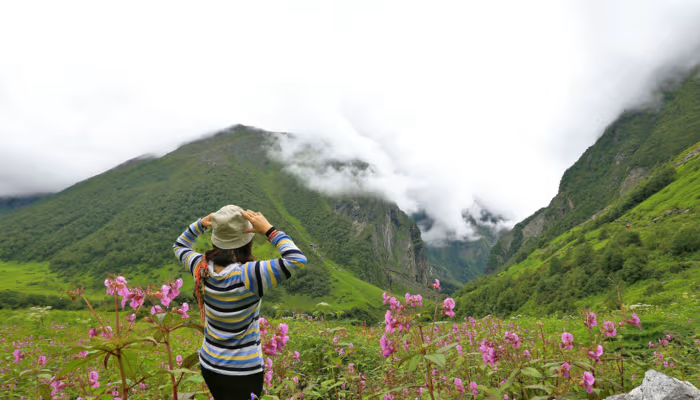
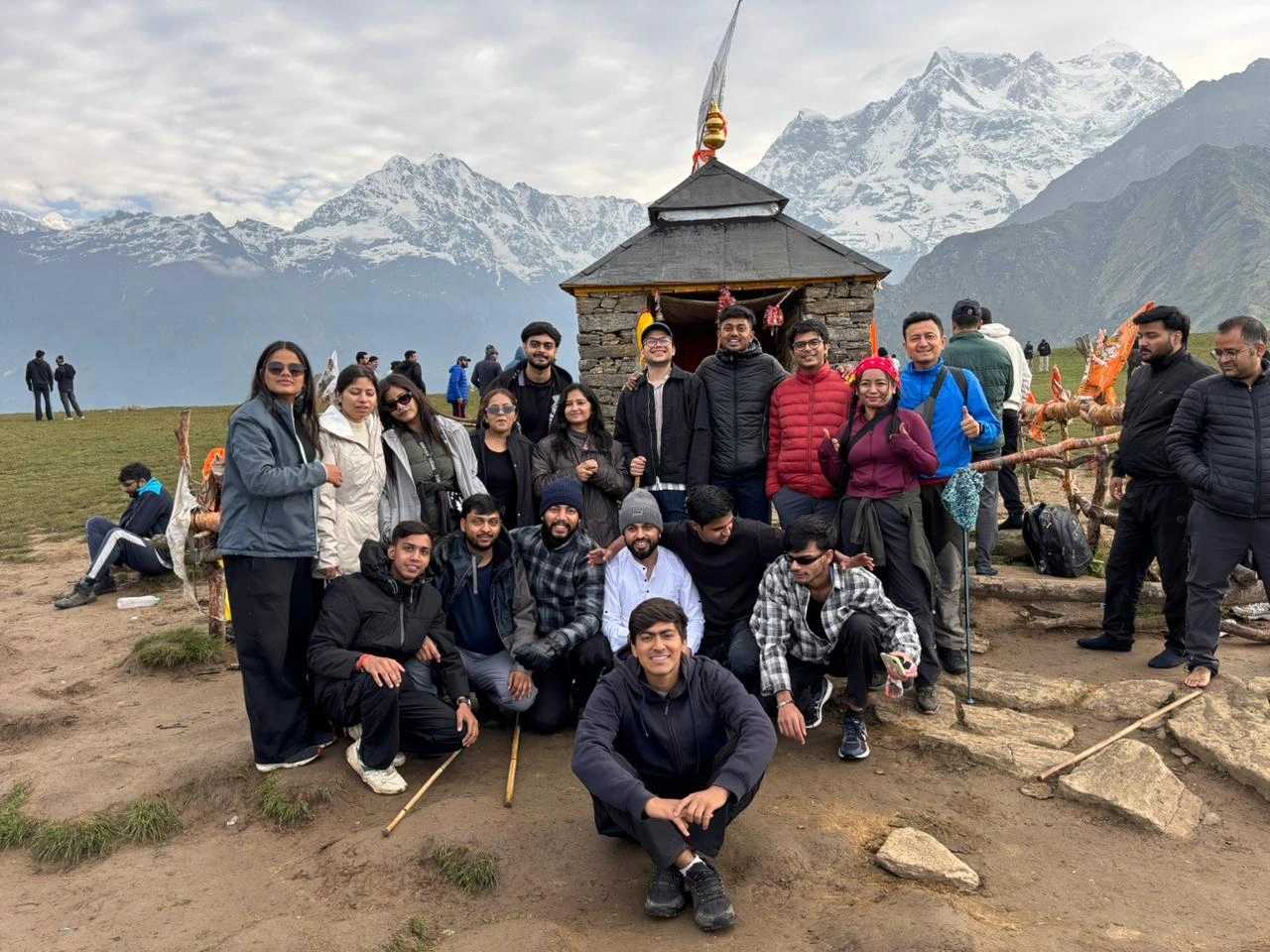
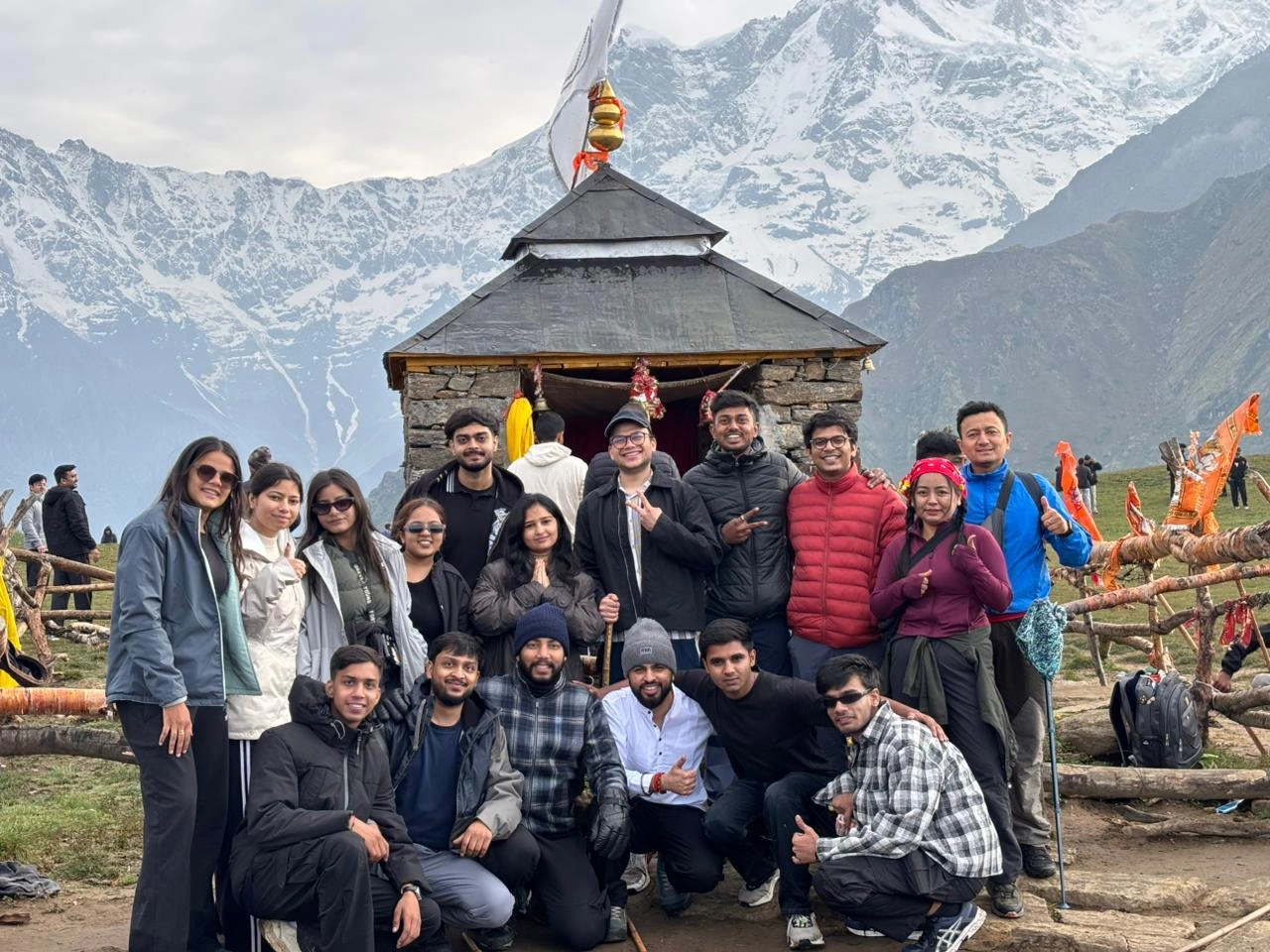
Madhmaheshwar trek
is considered a moderate to difficult trek, making it suitable for trekkers who
have basic fitness and some prior trekking experience. The total trek distance from Ransi village to
Madhmaheshwar Temple is around 16–18 km one way, depending on the route taken.
The trail involves long walking hours, steady ascents, and a few steep sections, especially after
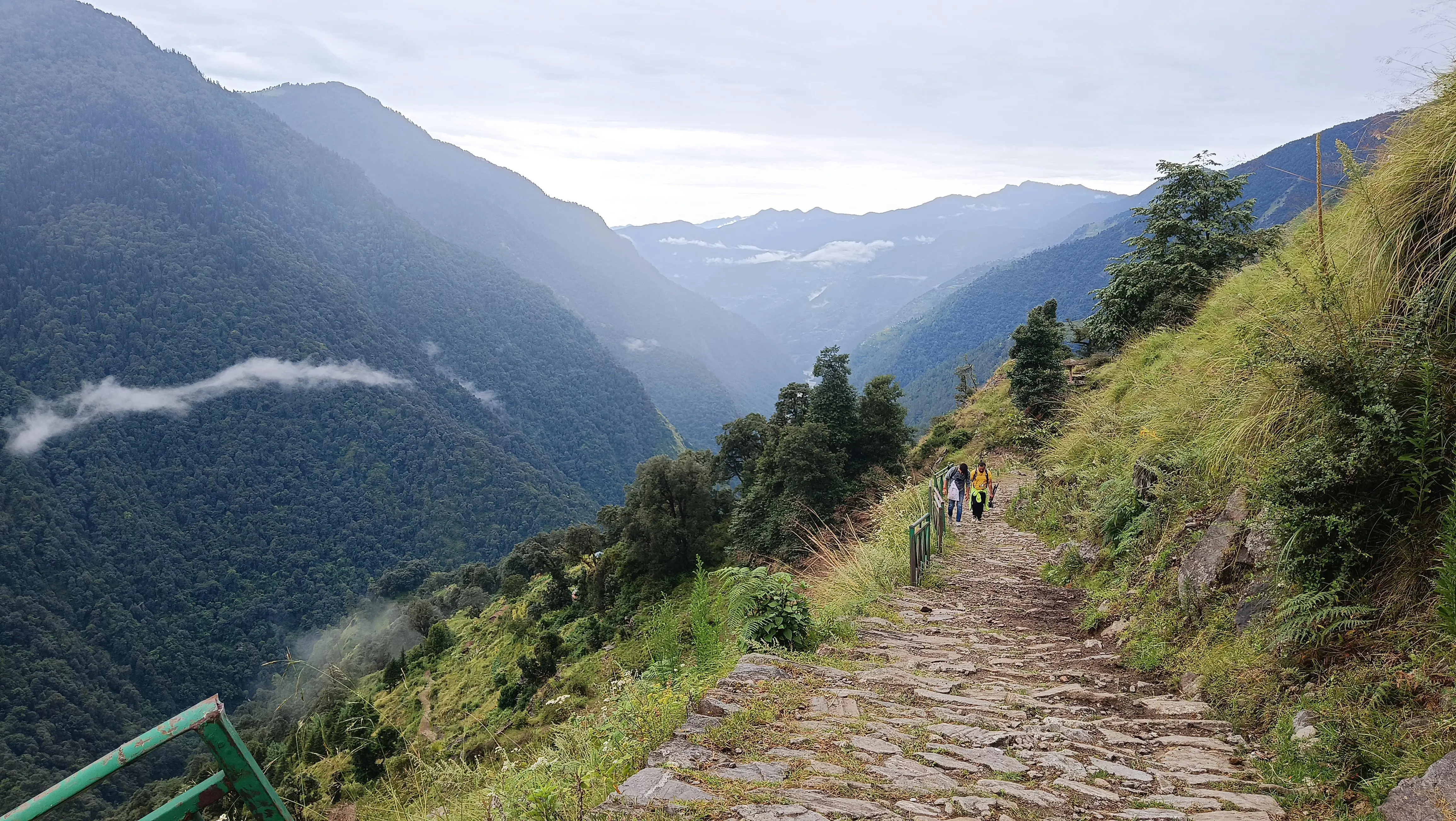
Bantoli and Khatara. The path is well-marked but becomes narrow and rocky at certain points, with sharp
bends and exposed ridges that require careful footing. During the monsoon season, the trail can be
slippery due to rain, increasing the difficulty level. In early summer or late autumn, weather
conditions are more stable, making the trek comparatively easier.
Altitude also plays a role in the challenge. Madhmaheshwar Temple is located at an elevation of
approximately 3,497 meters (11,473 ft), and some trekkers may experience mild altitude-related
discomfort such as breathlessness or fatigue.
Although no technical climbing skills are required, the trek demands good stamina, leg strength, and
mental endurance. First-time trekkers should consider hiring a local guide or porter. With proper
preparation, the Madhmaheshwar trek is challenging yet deeply rewarding, offering stunning Himalayan
views and a spiritually enriching experience.
Madhmaheshwar trek reaches a high altitude of approximately 3,497 meters (11,473 feet), where trekkers
may start feeling the effects of reduced oxygen levels. Although it is not an extreme-altitude trek,
altitude-related discomfort such as mild headache, shortness of breath, dizziness, nausea, or loss of
appetite can occur, especially in those coming directly from lower regions.
To stay healthy, it is important to ascend gradually and take proper rest breaks during the trek.
Spending a night at intermediate stops like Bantoli or Khatara helps the body acclimatize naturally.
Staying well-hydrated, avoiding alcohol and smoking, and consuming light, nutritious food can
significantly reduce altitude stress.
Trekkers with asthma, heart conditions, or high blood pressure should consult a doctor before planning
the trek. Carrying basic medicines, ORS, and personal prescriptions is strongly recommended. If symptoms
worsen, immediate descent is the safest option.
With proper preparation and awareness, most trekkers can complete the Madhmaheshwar trek safely while
enjoying its spiritual and natural beauty.
Madhmaheshwar trek requires a moderate to good level of physical fitness, as the journey involves long
walking distances, continuous ascents, and high-altitude conditions. Trekkers should be comfortable
walking 6–8 hours a day on uneven mountain trails. Strong leg muscles, core strength, and cardiovascular
endurance are essential to handle steep climbs and rocky paths.
Before starting the trek, it is advisable to follow a fitness routine for at least 3–4 weeks, including
brisk walking, jogging, cycling, or stair climbing. Basic strength training for legs and breathing
exercises can significantly improve stamina. Since the trek reaches an altitude of nearly 3,500 meters,
good lung capacity helps reduce fatigue and breathlessness.
While experienced trekkers may manage the route independently, beginners should prepare well or choose a
guided Madhmaheshwar tour package,
which usually includes planned acclimatization, support staff, and
medical assistance. People with medical conditions should seek medical advice before booking.
With proper fitness preparation, the Madhmaheshwar trek becomes a rewarding experience that blends
physical challenge, spiritual devotion, and breathtaking Himalayan landscapes.
Weather in Madhmaheshwar is unpredictable due to high altitude (approx. 3,497 m); temperatures can drop
suddenly, even in summer
Follow a layered clothing system for comfort and safety
1. Carry light full-sleeve T-shirts for daytime trekking
2. Pack fleece or woollen layers for early mornings and evenings
3. A heavy jacket or down jacket is essential for night stays near the temple
4. Bring a waterproof jacket / rain poncho, especially during monsoon season
5. Wear trekking pants or quick-dry lowers for ease of movement
6. Thermal innerwear is recommended for cold weather months
7. Use sturdy trekking shoes with strong grip for rocky and slippery trails
8. Carry woollen socks, gloves, and a warm cap to protect from cold winds
9. Sun cap, sunglasses, and sunscreen are important due to strong UV rays at altitude
Even if you book a Madhmaheshwar tour package from Delhi, personal clothing preparation is very
important. Proper gear ensures safety, comfort, and an enjoyable trekking experience.
Choosing the right footwear is crucial for the Madhmaheshwar trek route, which includes rocky paths,
steep climbs, and uneven forest trails
1. Wear high-ankle trekking shoes with strong grip and good ankle support to prevent injuries
2. hoes should be water-resistant and already broken in before the trek
3. Carry extra pairs of woollen and quick-dry socks to keep feet warm and dry
4. Trekking poles are highly recommended to reduce knee pressure during ascents and descents
5. Use a lightweight backpack (30–40 liters) with padded shoulder straps
6. Pack rain cover, headlamp/torch, power bank, and reusable water bottle
7. Keep a basic first-aid kit, personal medicines, and blister care essentials
8. Gloves and a cap help protect against cold winds at higher sections
Proper footwear and reliable trekking gear make walking on the Madhmaheshwar trek route safer, more
comfortable, and less tiring, especially for first-time trekkers.
Mobile network and internet connectivity on the Madhmaheshwar trek are limited and unreliable due to the
remote Himalayan location. Up to Ukhimath and Ransi village, basic mobile signals are usually available,
with BSNL providing the most stable coverage. Private operators like Jio, Airtel, and Vodafone may work
intermittently but cannot be fully relied upon.
Once you start trekking beyond Ransi, network connectivity drops significantly. At Bantoli and Khatara,
signals are weak and often available only at specific spots. Near the Madhmaheshwar Temple, mobile
networks are mostly unavailable, and internet access is almost nonexistent. This makes the trek ideal
for those seeking a digital detox and spiritual experience.
Trekkers should inform family members in advance about limited communication. Carrying a fully charged
phone, power bank, and offline maps is strongly recommended. Online payments may not work, so keep
sufficient cash.
Those traveling through a Madhyamaheshwar package are usually supported by guides who manage
coordination without mobile networks, ensuring safety despite low connectivity.
Cash availability is an important consideration while planning a visit to the Madhmaheshwar trek and the
sacred Madhyamaheshwar Temple, as banking facilities are very limited in this remote region. ATMs are
available only in major towns such as Rudraprayag, Ukhimath, and Guptkashi. Beyond these points,
especially after Ransi village, there are no ATMs or banking services available.
During the trek route, small villages like Bantoli and Khatara may have basic shops or local dhabas, but
they accept cash only. Digital payment options such as UPI, cards, or net banking generally do not work
due to poor mobile network connectivity. Near the Madhyamaheshwar Temple, facilities are minimal, and
cash is required for food, accommodation, offerings, porter charges, and emergencies.
Trekkers are strongly advised to withdraw sufficient cash in advance and keep it safely in waterproof
pouches. Carrying small denominations is helpful for local expenses. Proper cash planning ensures a
smooth, stress-free pilgrimage to the Madhyamaheshwar Temple without financial inconvenience.
Accommodation options on the Madhmaheshwar trek are basic and limited, as the region is remote and
eco-sensitive
1. At Ransi village, trekkers can find simple guesthouses and homestays with basic rooms and local food
2. During the trek, places like Bantoli and Khatara offer GMVN rest houses, local lodges, or
dharamshalas
3. Near the Madhmaheshwar Temple, accommodation is mainly in GMVN guesthouses and temple dharamshalas
4. Rooms are usually shared, with simple bedding and minimal furniture
5. Electricity supply is limited or solar-based, and power cuts are common
6. Hot water may not be available regularly; bucket water is usually provided
7. Mobile network and internet facilities are almost non-existent near the temple
Other basic facilities include:
1. Simple vegetarian meals at local dhabas and guesthouses
2. Drinking water from natural sources or supplied by lodges (carry purification tablets)
3. Basic medical help available at lower villages; no hospitals near the temple
4. Toilets are mostly Indian-style and shared
Those booking a Madhmaheshwar tour package should be mentally prepared for simple living conditions, but
the peaceful environment and spiritual atmosphere make the stay deeply rewarding.
The Kedarnath Tungnath trek is a blend of spirituality, adventure, and Himalayan beauty.
However, one of the most important aspects that travelers must consider before planning their journey
is the weather. The Kedarnath Tungnath weather plays a crucial role in deciding the right time
to travel, the type of clothes to carry, and the overall trekking and camping experience.
Since the altitude varies from Chopta’s meadows (around 2,700 meters) to Tungnath Temple (3,680 meters)
and Kedarnath Temple (3,583 meters), the climate changes drastically. Understanding
the weather conditions ensures a safe and memorable Kedarnath Tungnath tour package experience.
General Weather Conditions:
The Kedarnath weather and Tungnath climate remain cold for most of the year due to high altitude.
Summers are short and pleasant, while winters bring heavy snowfall, making the region inaccessible.
Chopta, often called “Mini Switzerland of Uttarakhand,” experiences a moderate climate compared to
Kedarnath and Tungnath. At higher altitudes, even in summer, nights are chilly with temperatures
dropping close to 0°C. Pilgrims and trekkers must always carry layered clothing, rain protection,
and warm woolens, irrespective of the season.
Summer Weather (April – June):
This is the peak season for Kedarnath Tungnath trek. During summer, daytime temperatures
in Chopta range from 12°C to 20°C, while Tungnath and Kedarnath remain cooler with averages between
5°C to 15°C. Nights are cold, often dropping to 2°C–5°C. The weather is clear, skies are bright,
and trails are snow-free, making it the best time for Kedarnath darshan and Tungnath Chandrashila trek.
This is also when most Kedarnath Tungnath tour packages operate at full swing, offering safe trekking
and camping opportunities.
Monsoon Weather (July – August):
Monsoon brings heavy rainfall across Uttarakhand, including Chopta, Kedarnath, and Tungnath.
Kedarnath weather in monsoon is often marked by landslides, slippery trails, and unpredictable
conditions. Daytime temperatures hover between 10°C to 15°C, but due to constant rains, the climate
feels colder. Trekking becomes risky, and camping in Chopta meadows is often avoided. Pilgrims
traveling during monsoon must keep buffer days in their Kedarnath Tungnath tour itinerary as
roadblocks and weather-related delays are common. However, the mountains look lush green,
and misty landscapes add mystical beauty to the region.
Post-Monsoon Weather (September – November):
This is considered the best season to visit Kedarnath and Tungnath. After the rains, the skies
clear up, giving breathtaking views of snow-clad Himalayan peaks like Chaukhamba and Nanda Devi.
Chopta climate during this period remains cool, with daytime temperatures ranging between 10°C–16°C,
while Kedarnath and Tungnath experience 5°C–12°C during the day and sub-zero temperatures at night.
Pilgrims enjoy smooth trekking routes, pleasant weather, and the chance to witness crystal-clear
Himalayan landscapes. October and November bring early snowfall, especially near Tungnath and
Chandrashila, making the trek even more enchanting.
Winter Weather (December – March):
Winters in Kedarnath and Tungnath are extremely harsh. The temples close after Diwali,
and heavy snowfall blocks the trekking routes. Temperatures in Kedarnath and Tungnath
drop to -5°C to -15°C, while Chopta also experiences snowfall with sub-zero nights.
During this time, Kedarnath remains inaccessible, and Tungnath is covered under deep snow.
However, Chopta becomes a popular destination for snow trekking, winter Chopta camping,
and birdwatching. Only well-prepared trekkers with proper winter gear can enjoy
Chopta Tungnath trek during this season.
Weather Tips for Trekkers and Pilgrims:
1. Always carry layered clothing including thermals, jackets, and raincoats.
2. Keep buffer days in your Kedarnath Tungnath tour package for weather delays.
3. Avoid monsoon season if you want a safe and smooth journey.
4. Carry waterproof shoes, ponchos, and warm sleeping bags while trekking.
5. Acclimatize properly at Chopta or Gaurikund before heading towards higher altitudes.
In conclusion, Kedarnath Tungnath weather is highly unpredictable yet breathtaking.
While summer and post-monsoon are the best times for a comfortable journey, monsoon
and winter bring challenges that require extra preparation. Whether it’s the clear
skies of May, the misty monsoon trails of July, or the snow-covered peaks of November,
the climate adds both beauty and adventure to the Kedarnath Tungnath trek. By choosing
the right season and preparing well, pilgrims and trekkers can enjoy a safe, spiritual,
and unforgettable Himalayan journey.
The Madhmaheshwar trek is a challenging yet spiritually rewarding journey, and for many pilgrims and
trekkers, ponies, porters, and local support play a crucial role in making the trek safe and manageable.
The trek begins from Ransi village, and from here, experienced local porters and pony owners are
available for hire.
Porters are commonly hired to carry backpacks, making the trek easier for those who are not used to
long-distance walking or heavy loads. They are familiar with the Madhmaheshwar trek route, weather
patterns, and resting points, which adds an extra layer of safety. For elderly pilgrims, families, or
devotees visiting the Madhyamaheshwar Temple, porters can also assist with guidance and pacing.
Ponies are available on certain stretches of the trek, especially during the main pilgrimage season (May
to October). While ponies do not operate on every narrow section, they are extremely helpful for senior
citizens or people with knee issues. Availability may vary depending on weather and local demand, so
advance arrangement is recommended.
Local guides can also be hired from Ransi or nearby villages. They provide valuable insights into local
culture, temple history, and safe trail navigation. In case of sudden weather changes, injuries, or
health issues, local support teams are often the first responders, offering timely help.
Most organized Madhmaheshwar tour packages include pre-arranged porters, ponies, and ground support,
ensuring comfort and safety throughout the journey. Hiring local services not only reduces physical
strain but also supports the livelihoods of mountain communities, making your trek more responsible and
meaningful.
The Madhmaheshwar trek is not only a journey to a sacred Himalayan temple but also an opportunity to
practice environmental responsibility. The region around the Madhyamaheshwar Temple is part of the
fragile Garhwal Himalayan ecosystem, featuring dense forests, alpine meadows, and glacial streams. Being
a high-altitude and ecologically sensitive area, human activities can have a long-lasting impact on its
environment.
Waste management is a major concern. Trekkers are strongly advised to carry back all non-biodegradable
waste, including plastic bottles, wrappers, and disposable utensils. Many local lodges and dharamshalas
have minimal waste disposal facilities, so responsible waste practices ensure the area remains pristine
for both wildlife and future visitors.
Water conservation is equally important. Streams and rivers along the trail are primary sources of
drinking water for both locals and pilgrims. Avoid contaminating water sources with soap, detergents, or
leftover food. Use water sparingly in guesthouses and lodges, especially during peak season.
Respecting flora and fauna is vital. The forests around Madhmaheshwar are home to diverse plant species
and wildlife such as Himalayan birds and small mammals. Avoid picking flowers, damaging trees, or
disturbing animals. Stay on marked trails to prevent soil erosion and habitat disruption.
Energy use should be minimal. Most accommodations operate on solar power or limited electricity. Avoid
excessive use of gadgets, and switch off lights and heaters when not in use.
For those traveling with a Madhmaheshwar tour package, choose operators who follow eco-friendly
practices, including responsible trekking, community support, and low-impact accommodation. Local
communities also encourage donations for conservation efforts and participate in trail maintenance
programs.
Practicing environmental responsibility not only preserves the natural beauty of the Madhmaheshwar
region but also enhances the spiritual experience. A trek that respects nature allows pilgrims and
adventurers to enjoy clean air, serene landscapes, and a sustainable connection with the Himalayas,
ensuring that the sacred Madhyamaheshwar Temple and its surroundings remain unspoiled for generations to
come.
Humanize 321 words