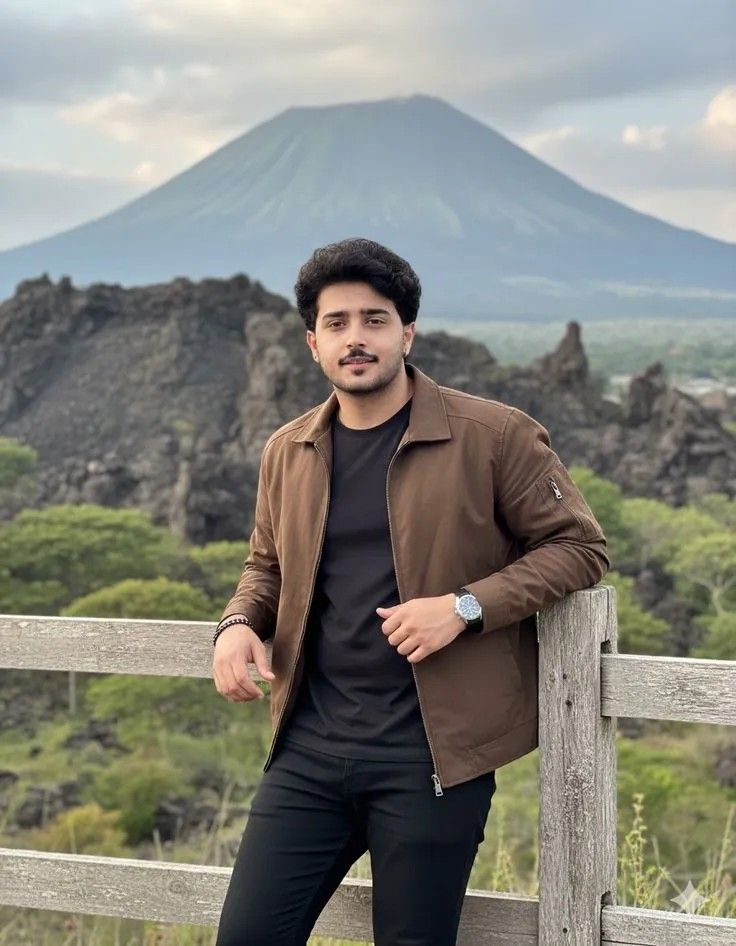
The entire trip was seamless and enjoyable, thanks to the professionalism and expertise of the Tour My Holiday team. I would highly recommend them to anyone planning a similar trip.
Itinerary
Pickup from Delhi.
Overnight Journey from Delhi.
Departure Time: Around 9:00 PM by tempo traveller or Volvo.
Begin your journey with an early pick-up from Dehradun, where you'll meet your fellow trekkers.
Embark on a scenic drive to Barsu, a picturesque village in the Uttarkashi district of Uttarakhand.
Arrive in Barsu, check in to your accommodation, and rest after the journey.
Spend the evening exploring the picturesque surroundings and interacting with the locals.
Wake up early & have a delicious breakfast.
Receive a briefing about the trek.
Begin your trek towards Barnala Tal, a serene lake surrounded by lush greenery.
Trek through dense oak and rhododendron forests, with occasional glimpses of the majestic Himalayas.
Reach Barnala Tal by late afternoon, where you'll set up camp for the night beside the tranquil waters of the lake.
Dinner & overnight stay at the camps.
Start your day with an early morning breakfast. After breakfast, embark on a scenic trek from Barnala Tal to Dayara Bugyal.
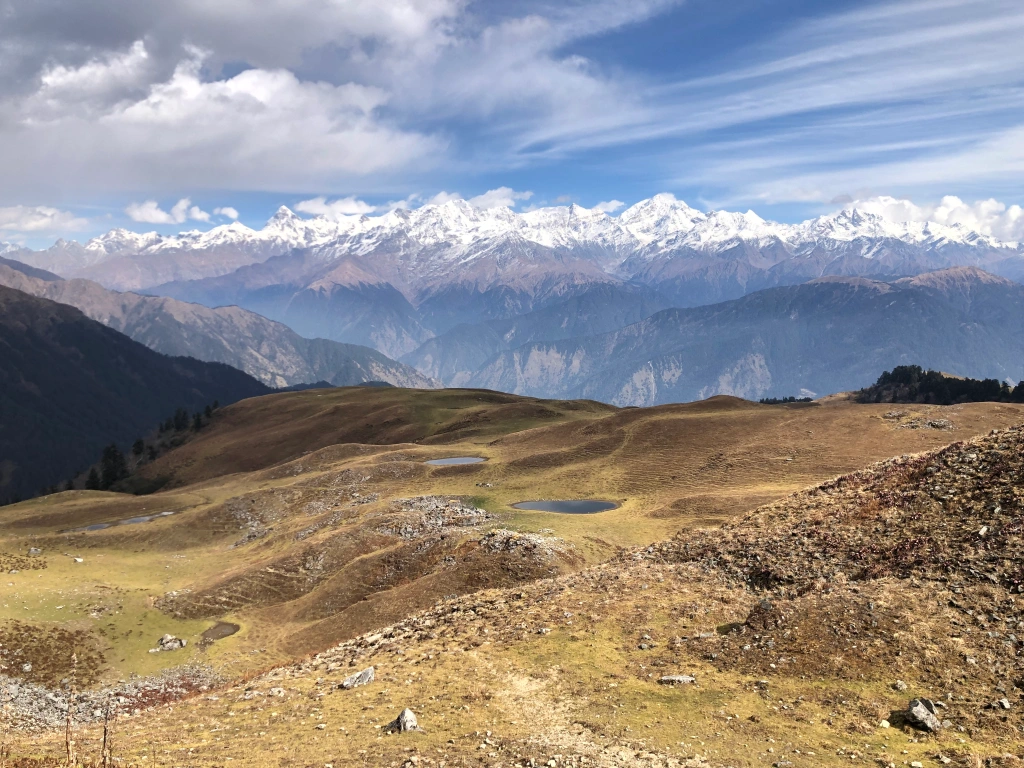
Reach Dayara Bugyal explore the expansive meadows. Wander through the lush grasslands, admiring the vibrant colours of the wildflowers and the tranquillity of the surroundings.
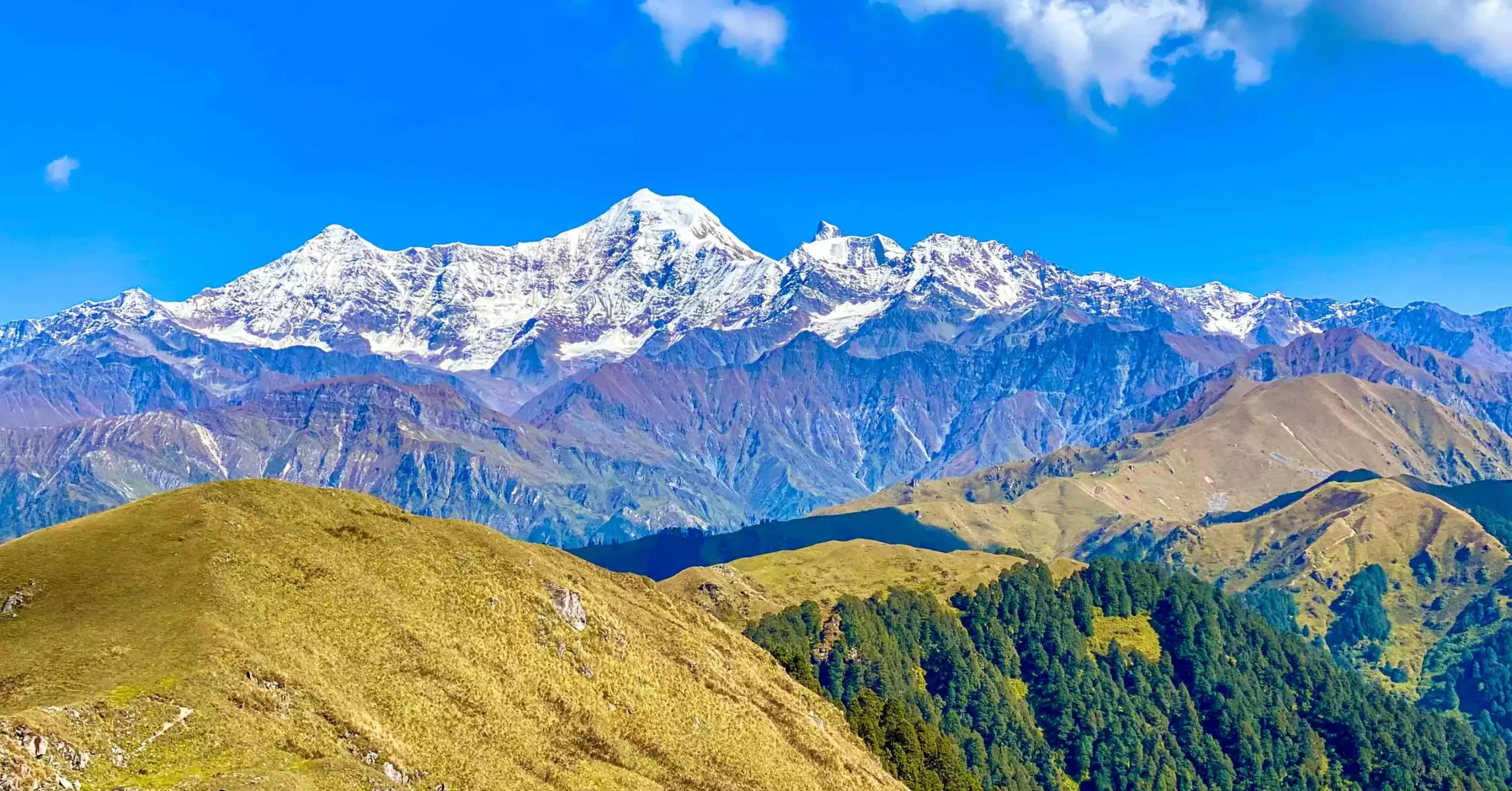
Take breaks to soak in the panoramic vistas of Bandarpoonch and Draupadi Ka Danda peaks.
Trek back to Barnala Tal Campsite by evening.
Dinner and overnight stay.
Early morning breakfast.
Trek back to Barsu & depart for Dehradun/Delhi
What is Dayara Bugyal famous for?
Dayara Bugyal is renowned for being one of India’s most stunning alpine meadows, offering lush green expanses in summer and snow-covered wonderland scenes in winter. The trek is especially loved for its wide-open landscapes, panoramic views of the Himalayas, and relatively easy trail, making it ideal for beginners and seasoned trekkers alike.
How difficult is the Dayara Bugyal trek?
The Dayara Bugyal trek is considered an easy to moderate trek, suitable even for first-time trekkers. The trails are well-defined, and although there are gradual ascents, they are manageable with a basic level of fitness. The journey starts from Raithal or Barsu village, and takes you through dense oak forests, quaint villages, and open meadows.
When is the best time to visit Dayara Bugyal?
The meadow is accessible almost year-round, but the best time to visit depends on your preference. For vibrant greenery and blooming wildflowers, May to July is perfect. For snow lovers, December to February offers a magical winter experience with the entire landscape draped in snow. Autumn (September–November) also offers clear skies and crisp mountain views.
Is camping allowed at Dayara Bugyal?
Yes, camping is allowed and is in fact one of the highlights of the Dayara Bugyal trek. Trekkers often set up tents in the Bugyal itself or nearby campsites like Barnala Tal. Spending the night under the stars, with snowy peaks like Bandarpoonch in the background, makes for an unforgettable Himalayan experience.
How to reach the starting point of the Dayara Bugyal trek?
To begin your trek to Dayara Bugyal, you first need to reach Raithal or Barsu village, which are the two main trailheads. These villages are located in Uttarkashi district of Uttarakhand. From Delhi, you can take a bus or drive to Uttarkashi, and then a local cab to the starting point. The journey from Delhi usually takes about 10–12 hours by road.
Nestled in the lap of the Garhwal Himalayas in Uttarakhand, India, Dayara Bugyal stands as one of the most captivating high-altitude alpine meadows, often described as a "sea of grass" that stretches endlessly under the watchful gaze of towering peaks. At an elevation of approximately 3,000 meters (9,800 feet), this vast expanse covers around 28 square kilometres, offering a pristine canvas where the earth meets the sky in harmonious symmetry. Unlike rugged terrains scarred by rocks or abrupt tree lines, Dayara's meadows roll out like a perfectly manicured lawn, framed by dense forests of oak, maple, pine, and rhododendron that descend into oak groves and ascend toward glacial horizons. This surreal landscape has earned it the moniker of "Himalaya's most beautiful meadow," a place where the mundane gives way to the ethereal, inviting wanderers to lose themselves in its boundless greenery.
Geographically, Dayara Bugyal is perched in the Tehri Garhwal district, accessible from the Yamunotri Valley and flanked by the majestic Bandarpoonch massif to the north, along with sentinels like Kala Nag, Srikanth, Jaonli, and the formidable Draupadi Ka Danda. Small glacial lakes dot the periphery, their crystal-clear waters reflecting the surrounding alpine drama, while seasonal streams carve gentle paths through the soil, sustaining a fragile yet resilient ecosystem. The meadow's unique topography—flat, undulating plateaus interspersed with subtle ridges—creates microclimates that shift dramatically with the sun's arc, casting shadows that dance across the grass like living brushstrokes.
What truly sets Dayara apart is its seasonal metamorphosis, a symphony of nature's palette. In spring (March to May), the air hums with the perfume of blooming rhododendrons in shades of crimson and pink, transforming the slopes into a floral tapestry. Summer (June to August) unleashes a riot of wildflowers—blue poppies, yellow potentillas, and purple asters—carpeting the bugyal in vibrant hues, with clear skies unveiling unobstructed views of snow-capped giants. Autumn (September to November) bathes the landscape in golden ochre and fiery reds as maple leaves ignite the forests, offering a melancholic yet majestic farewell to warmth. Winter (December to February) cloaks everything in a pristine white shroud, turning the meadow into a silent, snow-draped wonderland where the crunch of fresh powder underfoot echoes the purity of isolation. Each season reveals a new facet, making Dayara not just a destination, but a living, breathing entity.
Dayara Bugyal pulses with ecological vitality, serving as a biodiversity hotspot in the fragile Himalayan alpine zone. Its flora is a treasure trove of high-altitude adaptations: beyond the rhododendrons and oaks, you'll find medicinal herbs like brahmi (Bacopa monnieri) and rare orchids clinging to mossy boulders, alongside grasses that form the meadow's verdant base. These plants, many endemic to the Garhwal region, play a crucial role in soil stabilisation, preventing erosion on these steep slopes.
Fauna here is subtler but no less enchanting. The meadows teem with Himalayan birds—cheerful monal pheasants with iridescent plumage, whistling thrushes, and sky-piercing Himalayan griffons soaring overhead. Ground dwellers include the elusive Himalayan black bear foraging in berry-laden thickets, musk deer with their spiralled antlers grazing at dawn, and the occasional blue sheep scaling rocky outcrops. Smaller creatures like pikas and marmots add playful energy, their burrows riddling the earth like hidden villages. This interplay of species underscores Dayara's role as a vital corridor in the Himalayan wildlife network, supporting migration patterns disrupted by climate shifts.
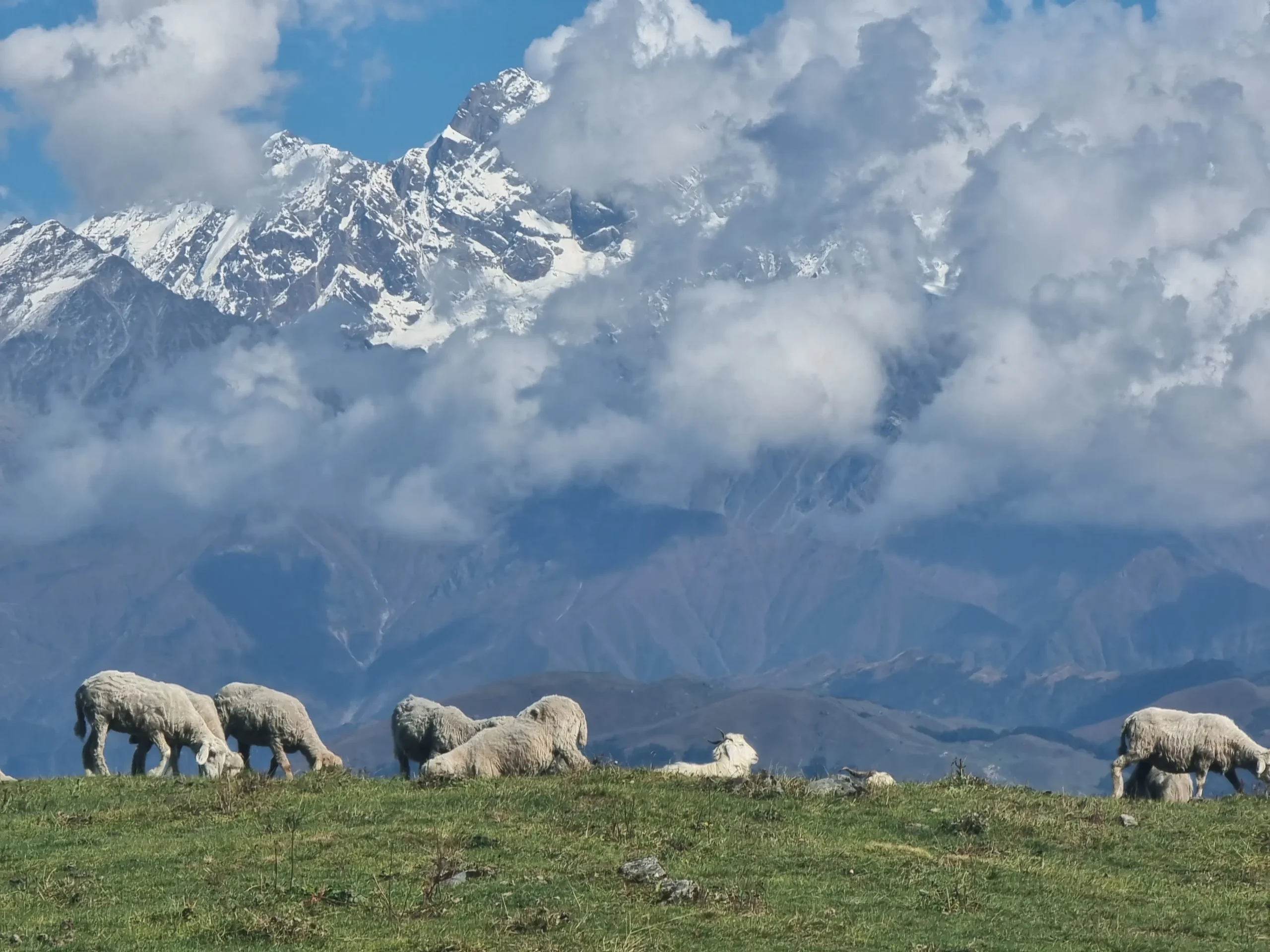
Dayara's story is woven into the ancient fabric of Garhwali lore, tracing back to pastoral nomads who traversed these heights millennia ago. Local shepherds, known as Jaunsaris, have long revered the bugyal as a summer grazing ground, their transhumance traditions linking it to the rhythm of seasons. Mythologically, it's tied to the Mahabharata; legends whisper that the Pandavas, exiled warriors, sought solace here, with Draupadi Ka Danda peak named after the epic heroine, symbolising feminine strength amid adversity. Culturally, Dayara hosts the vibrant Butter Holi Festival (Anduri), a highland celebration where communities gather to smear butter on each other, honouring fertility and abundance with milk-based rituals—a nod to the meadow's dairy heritage. This fusion of history and heritage elevates Dayara beyond scenery, embedding it in Uttarakhand's spiritual and communal identity.
In recent years, Dayara has become a beacon for ecological restoration, addressing threats like overgrazing and tourism pressures. Pioneering efforts by the Uttarakhand Forest Department, led by officers like IFS Sandeep Kumar, have reduced livestock loads from unsustainable highs (up 33 cattle units annually in the early 2000s) through regulated grazing zones and community-led monitoring. Initiatives include planting native grasses, constructing check dams to curb soil runoff, and educating locals on waste segregation—transforming the bugyal from a degraded pasture into a model of alpine revival. These measures not only preserve its unique flora but also mitigate climate impacts, ensuring the meadow's resilience against warming temperatures.
Dayara Bugyal's allure lies in its unfiltered authenticity—a realm where the Himalayas whisper secrets of endurance and beauty. For nature enthusiasts, it's a meditative escape; for cultural seekers, a portal to living folklore; and for eco-conscious souls, a testament to harmonious coexistence. In an era of fleeting digital distractions, this timeless meadow reminds us of the profound simplicity found in vast, open spaces. Whether blanketed in snow or blooming in defiance, Dayara endures as the heart of the Himalayas, beckoning those ready to embrace its quiet grandeur.
✅ Dayara Bugyal Trek – One of the most beautiful alpine meadows in India
✅ Barnala Tal – A serene high-altitude lake surrounded by oak forests
✅ Camping in Meadows – Sleep under the stars with 360° Himalayan views
✅ Mt. Bandarpoonch Views – Breathtaking panorama of snow-capped peaks
✅ Winter Snow Trekking – Ideal for snow lovers and first-time trekkers
✅ Raithal Village – Traditional village life and base for the Dayara trek
✅ Flora & Fauna – Rich with wildflowers, dense oak, and rhododendron forests
✅ Photography & Stargazing – Unpolluted skies perfect for astrophotography
| Mode | Price |
| Quad Sharing | ₹ 7500 |
| Triple Sharing | ₹ 8000 |
| Double Sharing | ₹ 8500 |
Reach out to us
Testimonials, Reviews, Experiences, Virtual Tours & Much More
Virtual Tours & Much More
Testimonials, Reviews, Experiences, Virtual Tours & Much More