
Madmaheshwar vs Tungnath Trek – Which Panch Kedar is Better for You?
Published on April 10, 2026 | Updated on September 14, 2026
The Panch Kedar circuit is one of the most spiritually and physically rewarding pilgrimages in the Indian Himalayas. Among its five sacred shrines, Madhmaheshwar and Tungnath Temple attract the highest number of trekkers — and for good reason. Both offer breathtaking Himalayan panoramas, deep mythological roots, and a rare blend of adventure and devotion.
But if you can only do one, which should you choose?
This guide gives you a no-fluff, experience-backed comparison so you can make the right call for your fitness level, schedule, and spiritual goals.
What Are the Panch Kedar?

The Panch Kedar are five sacred temples in Uttarakhand's Garhwal Himalayas, all dedicated to Lord Shiva. According to Hindu mythology, after the Kurukshetra war, the Pandavas sought Lord Shiva's blessings here, and he appeared as a bull — with different body parts surfacing at five locations.
The five shrines are: Kedarnath → Madmaheshwar → Tungnath → Rudranath → Kalpeshwar
Tungnath is where Shiva's arms (bahu) appeared, while Madmaheshwar marks his navel (nabhi). This mythological distinction already sets the spiritual tone of each trek apart.
Travellers planning to visit all five sacred shrines can explore our Panch Kedar Yatra Package 2026, designed to make the pilgrimage easier with planned travel, accommodation and trek support.
Quick Comparison: Madmaheshwar vs Tungnath
| Feature | Madmaheshwar | Tungnath |
|---|---|---|
| Altitude | 3,497 m (11,473 ft) | 3,680 m (12,073 ft) |
| Trek Distance | ~24 km (one way) | ~4 km (one way) |
| Difficulty | Moderate to Difficult | Easy to Moderate |
| Duration | 4–5 days | 1–2 days |
| Best Time | May–June, Sep–Oct | April–June, Sep–Nov |
| Nearest Base | Ukhimath / Ransi | Chopta |
| Crowd Level | Low | Moderate to High |
| Scenic Highlight | Kedarnath-Chaukhamba views | Chandrashila Summit |
Madmaheshwar Trek – The Hidden Gem of Panch Kedar
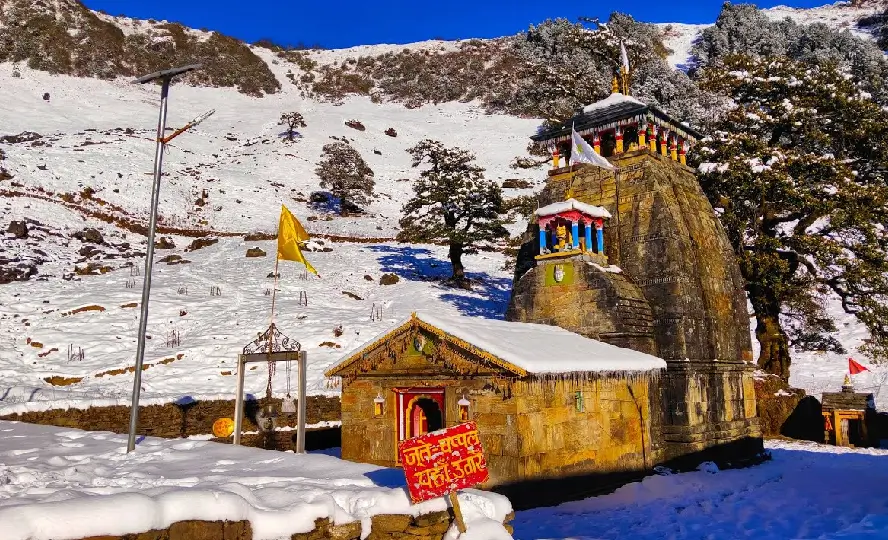
Who it's for: Seasoned trekkers, those seeking solitude and a deep wilderness experience.
The Madhmaheshwar trek is the most underrated trail in Uttarakhand. Starting from Ransi village near Ukhimath, the trail winds through dense oak and rhododendron forests, alpine meadows (bugyals), and high-altitude camping grounds. The approach to the temple offers unobstructed views of Kedarnath, Chaukhamba, Neelkanth, and Kedardome peaks — a 360° panorama that few trails in India can match.
The trek demands 4 to 5 days of sustained effort, covering approximately 24 km one way. You'll gain significant elevation and camp at remote sites like Bantoli and Kharchula Kharak, which see very few tourists even during peak season.
What makes Madmaheshwar special: Madmaheshwar is ideal for trekkers who value raw, undisturbed Himalayan beauty. The trail rarely feels crowded. The temple sits beside a pristine glacial stream, and on clear mornings, the reflection of snow peaks in the kund (sacred pond) near the shrine is genuinely awe-inspiring. This is the trek that serious pilgrims and adventure trekkers both hold close to heart.
Challenges to be aware of: The trail involves steep ascents, river crossings, and limited facilities at higher camps. It is not suitable for beginners or those with limited trekking experience.
Tungnath Trek – The World's Highest Shiva Temple

Who it's for: Beginners, families, short-trip seekers, and those combining the trek with the Chandrashila summit.
At 3,680 metres, Tungnath holds the record as the highest Shiva temple in the world — and it's one of the most accessible Himalayan treks in Uttarakhand. The trail begins at Chopta, often called the "Mini Switzerland of India," and covers just 4 km to the temple.
What Tungnath lacks in length, it more than compensates for in drama. The short climb rewards trekkers with sweeping views of Nanda Devi, Trishul, Kedarnath, and Chaukhamba. Most trekkers extend the hike by another 1.5 km to reach Chandrashila Peak (4,130 m) — one of the finest sunrise viewpoints in all of Uttarakhand.
What makes Tungnath special: The sheer accessibility of Tungnath makes spiritual trekking available to people who may not have the fitness or time for longer expeditions. The ancient stone temple, believed to be over 1,000 years old, has an intimate atmosphere despite its popularity. The Chopta meadows leading to the trail are stunning in spring (when rhododendrons bloom) and winter (when the entire landscape is snow-covered).
Challenges to be aware of: Altitude sickness can affect unprepared trekkers, especially those rushing from the plains. The trail gets crowded on weekends and during peak season.
The Verdict: Which Trek Should You Choose?
Choose Madmaheshwar if:
- You have 4–5 days available
- You're an intermediate to experienced trekker
- You want solitude and untouched wilderness
- A multi-day Himalayan camping experience is your goal
Choose Tungnath if:
- You have 1–2 days or a short weekend trip
- You're a beginner or travelling with family
- You want a high-altitude temple experience without a demanding trail
- You plan to summit Chandrashila for sunrise views
Both treks share one truth: they deliver a Himalayan experience that goes beyond the physical — they are journeys into mythology, landscape, and self.
Best Time to Visit
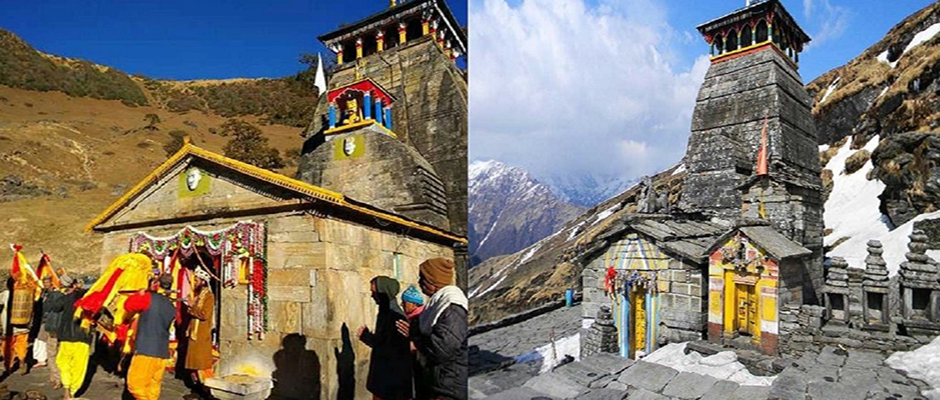
Madmaheshwar: The temple opens in May (usually post-Akshaya Tritiya) and closes in November. The best windows are May–June and September–October, avoiding the heavy monsoon months of July–August when trails become slippery and dangerous.
Tungnath: Also opens in May and closes by November. However, winter trekkers visit Chopta in December–February for snow-covered trails (the temple remains closed, but the landscape is magical). Best pilgrimage season: May–June and September–November.
How to Reach the Base Camps
For Madmaheshwar (Base: Ransi/Ukhimath): Rishikesh → Rudraprayag → Ukhimath → Ransi (approx. 220 km by road)
For Tungnath (Base: Chopta): Rishikesh → Rudraprayag → Ukhimath → Chopta (approx. 200 km by road)
Interestingly, both treks share a common route from Rishikesh to Rudraprayag — making it possible for seasoned trekkers to combine them into a single 7–8-day Uttarakhand trip.
✅ Madmaheshwar Trek Packages (3–4 Days Experience):
Explore our complete trekking packages with stay, meals, and guided support:
- Book your Madmaheshwar tour package here:
- Alternative Madmaheshwar packages:
Madhyamaheshwar Tour Package From Delhi, Madmaheshwar Tour Package From Haridwar
✅ Chopta Tungnath Packages (2–3 Days Trip):
Perfect for short trips and beginners looking for a Himalayan escape:
- Book your Chopta Tour Package here:
- Explore another Chopta package:
Chopta Chandrashila Trek From Delhi, Chopta Tungnath Trek From Delhi
✨ All packages include comfortable stays, local support, and a well-planned itinerary so you can focus on the experience — not the logistics.
Whether you choose the intimate wilderness of Madmaheshwar or the legendary heights of Tungnath, you're walking paths that pilgrims have walked for centuries. Both are valid. Both are sacred. The mountains will reward whoever shows up with an open heart.
FAQs: Madmaheshwar vs Tungnath
Q1. Which is harder — Madmaheshwar or Tungnath?
Madmaheshwar is significantly more challenging. It is a 4–5-day trek covering ~24 km one way, with steep ascents and remote camping. Tungnath is just 4 km from Chopta and is suitable for beginners.
Q2. Can I do both Madmaheshwar and Tungnath in one trip?
Yes. Since both base camps are near Ukhimath and Chopta, respectively — which are only about 30–40 km apart — experienced trekkers can combine both in 7–8 days. Do Madmaheshwar first (4–5 days), rest a day, then do Tungnath-Chandrashila (1–2 days).
Q3. Is Tungnath open in winter?
The temple closes in November, but Chopta and the trail remain accessible for snow trekking in December–February. The experience is stunning but requires proper winter gear.
Q4. Which trek has better views — Madmaheshwar or Tungnath?
Both are exceptional. Madmaheshwar offers closer proximity to peaks like Kedarnath and Chaukhamba with 360° views from the meadows. Tungnath's Chandrashila summit offers a wider panorama, including the Nanda Devi range. It's a close call — Madmaheshwar edges ahead for camping views, Chandrashila wins for sunrise.
Q5. Do I need a permit for these treks?
No special trekking permit is required for either Madmaheshwar or Tungnath. However, forest entry fees may apply at some checkpoints. Carry a valid photo ID.
Q6. Is Madmaheshwar safe for solo trekkers?
It can be done solo, but it's advisable to hire a local guide since the trail has limited mobile network, few tea shops at higher stretches, and trail markers can be unclear in bad weather. Tungnath is well-marked and safe for solo trekkers.
Q7. What is the accommodation like on these treks?
On the Tungnath trail, basic guesthouses and tents are available at Chopta and near the temple. For Madmaheshwar, camping is the primary option at Bantoli and Kharchula Kharak — carry or hire camping gear.
Q8. Which Panch Kedar should a first-timer do?
Tungnath is the ideal first Panch Kedar — it's accessible, spiritually powerful, and gives you a genuine Himalayan high-altitude experience without overwhelming physical demands.
Helpful Resources for Trek Planning:
- Madmaheshwar Opening Ceremony 2026
- Ransi village to madmaheshwar temple - village by village guide
- Madmaheshwar Group Trek vs Private Package – Which Should You Book?
- Madmaheshwar vs Kedarnath Trek: Which One Should You Choose in 2026?
- Madmaheshwar Trek for Families – Is It Safe for Kids & Senior Citizens?
- Kanchani Tal Trek from Madmaheshwar – Complete Guide 2026
- Omkareshwar Temple Ukhimath – Why It's the Soul of Madmaheshwar Yatra


