
Kedarnath Temple Uttarakhand
Published on February 28, 2026
About the Author
Ashutosh Sharma is a passionate Uttarakhand travel expert with over 7 years of experience exploring the Garhwal Himalayas. He specializes in spiritual journeys like the Madmaheshwar trek, Kedarnath Yatra, and the Panch Kedar circuit, sharing practical travel guides, trekking insights, and local knowledge to help pilgrims and adventurers plan safe and meaningful Himalayan experiences
Table of Contents
- Introduction to Kedarnath Dham
- Meaning of the Name Kedarnath
- Ancient Mythology and Legends of Kedarnath
- Connection with Lord Vishnu and Nar–Narayan
- Historical and Architectural Facts of Kedarnath Temple
- Kedarnath During the 2013 Floods – A Living Miracle
- Spiritual Importance of Kedarnath Jyotirlinga
- Geography and Natural Setting
- Kedarnath Temple Opening and Winter Rituals
- Weather and Climate Reality
- The Kedarnath Yatra Journey
- Religious Practices and Daily Rituals
- Facts Most People Don’t Know About Kedarnath
- Important Rules and Ethics for Pilgrims
- Nearby Sacred Sites Around Kedarnath
- Why Kedarnath Is More Than a Place
- Frequently Asked Questions
Kedarnath Dham is one of the most sacred Hindu pilgrimage sites, dedicated to Lord Shiva in his Jyotirlinga form. Located in the upper Garhwal Himalayas of Uttarakhand, Kedarnath stands at an altitude of approximately 3,583 meters (11,755 feet) near the origin of the Mandakini River.
It is one of the 12 Jyotirlingas of Lord Shiva, the most powerful manifestations of Shiva worshipped across India, and an integral part of the Char Dham Yatra as well as the Panch Kedar circuit.
The Meaning of the Name “Kedarnath”
The word Kedarnath is derived from:
-
“Kedar”, meaning field or land
-
“Nath”, meaning lord
Together, Kedarnath means “The Lord of the Field”, symbolising Lord Shiva as the protector of the cosmic land and all living beings.
Ancient Mythology & Legends of Kedarnath
The Pandavas and the Bull Form of Shiva
One of the most powerful legends associated with Kedarnath comes from the Mahabharata:
After the Kurukshetra war, the Pandavas were burdened with guilt for killing their relatives. Seeking absolution, they searched for Lord Shiva. Shiva, unwilling to forgive them easily, took the form of a bull (Nandi) and hid in the Garhwal Himalayas.
When Bhima recognised the bull and tried to stop it, Shiva dived into the ground. Different parts of his body emerged at five locations, which later became known as the Panch Kedar:
-
Kedarnath – Hump
-
Tungnath – Arms
-
Rudranath – Face
-
Madhyamaheshwar – Navel
-
Kalpeshwar – Hair
Kedarnath is considered the most sacred because the hump (symbol of strength) appeared here.
“Embrace the divine journey of Panch Kedar Yatra and experience the blessings of all five sacred shrines together — a complete spiritual path that unites devotion, adventure, and inner awakening in the lap of the Himalayas
Connection with Lord Vishnu & Nar–Narayan
According to another legend:
-
Nar and Narayan, incarnations of Lord Vishnu, performed severe penance here.
-
Lord Shiva appeared and granted them a boon to reside eternally at Kedarnath.
-
This is why both Shaivites and Vaishnavites revere Kedarnath equally.

Historical & Architectural Facts of Kedarnath Temple
-
The original temple is believed to be over 1,200 years old
-
Rebuilt or renovated by Adi Shankaracharya in the 8th century
-
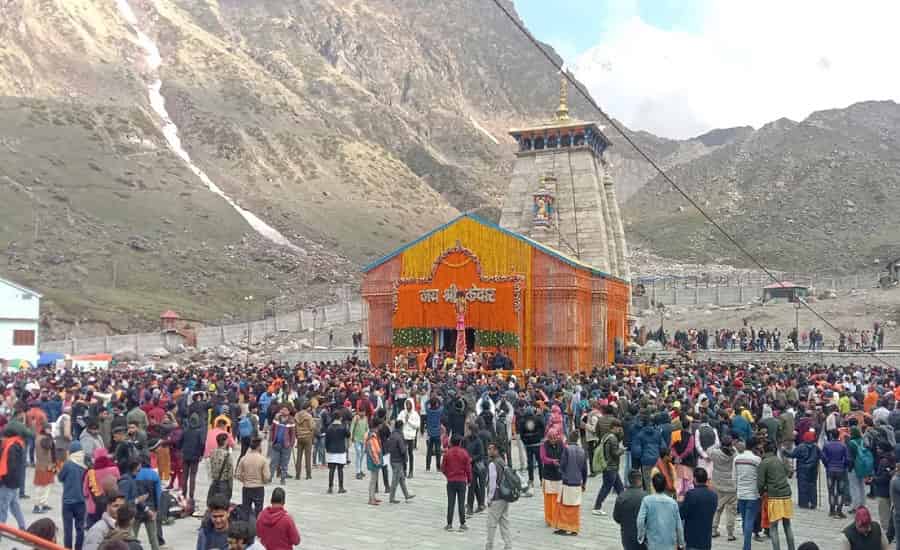
Constructed using massive stone slabs placed without mortar
-
The temple faces west, which is rare in Hindu temple architecture
-
Inside the sanctum is a conical, irregular-shaped Jyotirlinga, representing Shiva’s hump
A large stone behind the temple, known as Bheem Shila, protected the temple during the devastating 2013 Uttarakhand floods by diverting floodwaters.
Kedarnath During the 2013 Floods – A Living Miracle
In June 2013, massive floods destroyed much of Kedarnath town.
Despite widespread destruction:
-
The Kedarnath Temple remained largely unharmed
-
The Bheem Shila acted as a natural barrier
-
This event strengthened devotees’ belief in divine protection
Post-2013, the area was rebuilt with improved infrastructure and safety planning.
Spiritual Importance of Kedarnath Jyotirlinga
Among the 12 Jyotirlingas:
-
Kedarnath is considered the most remote and spiritually intense
-
Worship here is believed to destroy past-life karmas
-
It is said that a visit to Kedarnath leads the soul toward moksha (liberation)
Geography & Natural Setting
-
Located between Kedarnath Peak, Bharatekuntha, and Kedar Dome
-
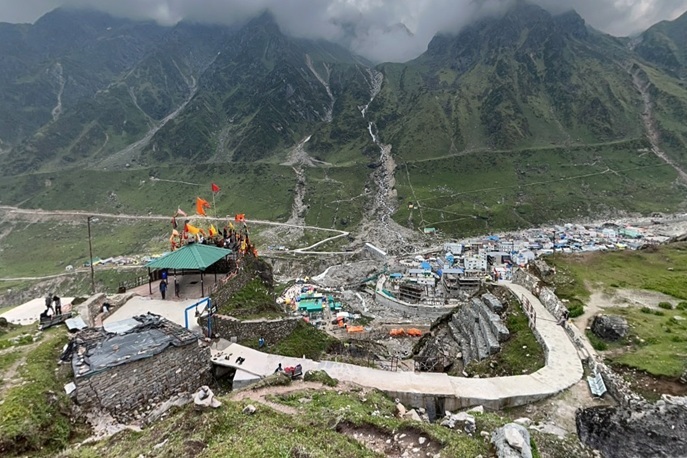
Near the source of the Mandakini River
-
Surrounded by glaciers such as Chorabari Glacier
The isolation and altitude contribute to the temple’s mystical aura.
Kedarnath Temple Opening & Winter Rituals
-
Opens around Akshaya Tritiya (April–May)
-
Closes around Bhai Dooj (Oct–Nov)
During winter:
-
Idol is moved to Omkareshwar Temple, Ukhimath
-
Kedarnath region remains inaccessible due to heavy snowfall
As Kedarnath Temple opens its sacred doors on 2 May 2026, begin your divine journey with faith and devotion — plan your Kedarnath Yatra in advance and be among the blessed devotees to witness the first darshan of the season. Har Har Mahadev!
Weather & Climate Reality
-
Summer day temperature: 10°C to 15°C
-
Night temperature: often below 0°C
-
Snowfall can occur even in May
-
Sudden fog and rain are common
This harsh climate is why Kedarnath was traditionally visited only by sages and ascetics.
The Kedarnath Yatra Journey
Traditional Route
Trek Details
-
Distance: 16–18 km
-
Elevation gain is steep
-
Trek follows the Mandakini River valley
Pilgrims often describe the trek as physically exhausting but spiritually uplifting.
Religious Practices & Daily Rituals
-
Morning, Abhishek, with ghee
-
Midday darshan
-
Evening aarti
-
Simple yet powerful worship style due to harsh conditions
Facts Most People Don’t Know About Kedarnath
-
Kedarnath is aligned with cosmic energy points
-
Temple stones interlock using ancient techniques
-
No permanent population exists here
-
Even animals are believed to show calm behaviour near the shrine
-
Silence around the temple is deeply meditative
Important Rules & Ethics
-
Non-vegetarian food is strictly prohibited
-
Alcohol & smoking banned
-
Silence and modest dress are encouraged
-
Photography inside the temple is not allowed
Nearby Sacred Sites
-
Bhairavnath Temple – Protector deity
-
Gaurikund – Where Parvati meditated
-
Triyuginarayan – Wedding site of Shiva & Parvati
-
Vasuki Tal – Sacred high-altitude lake
Why Kedarnath Is More Than a Place
Kedarnath is not just stone and snow.
It is:
-
A test of faith
-
A meeting of nature and divinity
-
A reminder of human humility
Many pilgrims say:
“You don’t go to Kedarnath. Lord Shiva calls you.”
Kedarnath Dham represents the eternal presence of Lord Shiva amidst the harshest elements of nature. Its myths, miracles, and unmatched spiritual energy make it one of the most profound pilgrimage sites in the world.
A journey to Kedarnath is not a vacation — it is a transformation.
Frequently Asked Questions (FAQs)
Q1. Where is Kedarnath Temple located?
Kedarnath Temple is located in the Rudraprayag district of Uttarakhand, in the Garhwal Himalayas, at an altitude of about 3,583 meters (11,755 feet) near the Mandakini River.
Q2. When does Kedarnath Temple open and close each year?
The temple usually opens around Akshaya Tritiya (April–May) and closes around Bhai Dooj (October–November), depending on the Hindu calendar.
Q3. How long is the Kedarnath trek?
The trek to Kedarnath is approximately 16–18 km from Gaurikund and involves a steep ascent through the Himalayan valley.
Q4. Why is Kedarnath considered one of the most important Jyotirlingas?
Kedarnath is one of the 12 Jyotirlingas of Lord Shiva and is believed to be especially powerful due to its remote Himalayan location and deep spiritual energy.
Q5. Is Kedarnath safe to visit after the 2013 floods?
Yes, after the 2013 floods, the area was redeveloped with improved infrastructure, safety measures, and better route planning, making the yatra safer for pilgrims today.
Also Read
-
Kedarnath Yatra 2026 – A Sacred Journey to the Abode of Lord Shiva
-
Kedarnath Tour Package 2026 – Complete Guide: Opening Date, Registration, Itinerary, Cost
-
Kedarnath Tour Package from Delhi – Complete Travel Guide 2026
Choose TourMyHoliday for a safe, well-planned Kedarnath Yatra and experience the divine blessings of Lord Shiva without worry — Kedarnath is calling, Har Har Mahadev!