
Kanchani Tal Trek from Madmaheshwar: Route, Difficulty and Safety Guide
Published on April 09, 2026 | Updated on September 14, 2026
Kanchani Tal is a remote high-altitude lake situated beyond Madhyamaheshwar in the Garhwal Himalayas of Uttarakhand. Unlike the established pilgrimage trail leading to Madhyamaheshwar Temple, the journey toward Kanchani Tal enters a much quieter and more demanding mountain environment.
This is not a regular sightseeing excursion or an extension that every Madhyamaheshwar visitor should attempt. The route is strenuous, facilities are extremely limited, and weather can affect access without warning. Appropriate fitness, reliable local guidance, sufficient time and confirmation of current access conditions are essential.
According to the official Uttarakhand Tourism and Garhwal Mandal Vikas Nigam destination information, Kanchani Tal is approximately 16 km from Madhyamaheshwar and is accessible only by trekking. GMVN describes the trek as strenuous and reports that reaching the lake can take eight hours or more.
This guide focuses only on the Kanchani Tal trek from Madmaheshwar—its official distance, route planning, difficulty, safety considerations, preparation and suitability. For the standard pilgrimage trail, use our separate Madhmaheshwar Temple trek guide.
Important: Kanchani Tal is a remote mountain objective. Route conditions, access rules, local support and weather may change. Do not begin the extension solely on the basis of an online article, map or GPS track. Confirm the route locally and travel with an experienced local guide who has recently completed it.
Kanchani Tal Trek at a Glance
| Detail | Planning information |
|---|---|
| Location | Beyond Madhyamaheshwar, Rudraprayag district, Uttarakhand |
| Starting area | Madhyamaheshwar Temple region |
| Officially reported distance | Approximately 16 km from Madhyamaheshwar |
| Access | Trekking only |
| Reported walking time | Eight hours or more to reach the lake |
| Difficulty | Strenuous |
| Trail character | Remote high-altitude terrain |
| Facilities beyond Madhyamaheshwar | Do not expect dependable facilities |
| Local guide | Strongly recommended |
| Suitable for | Fit and experienced trekkers with local support |
| Suitable for casual pilgrims | No |
| Monsoon travel | Not recommended |
| Winter travel | Not recommended without official/local confirmation |
Distances and walking times are approximate. Mountain conditions, the exact route used, starting point, weather, fitness, load and acclimatization can substantially affect the journey.
What Is Kanchani Tal?
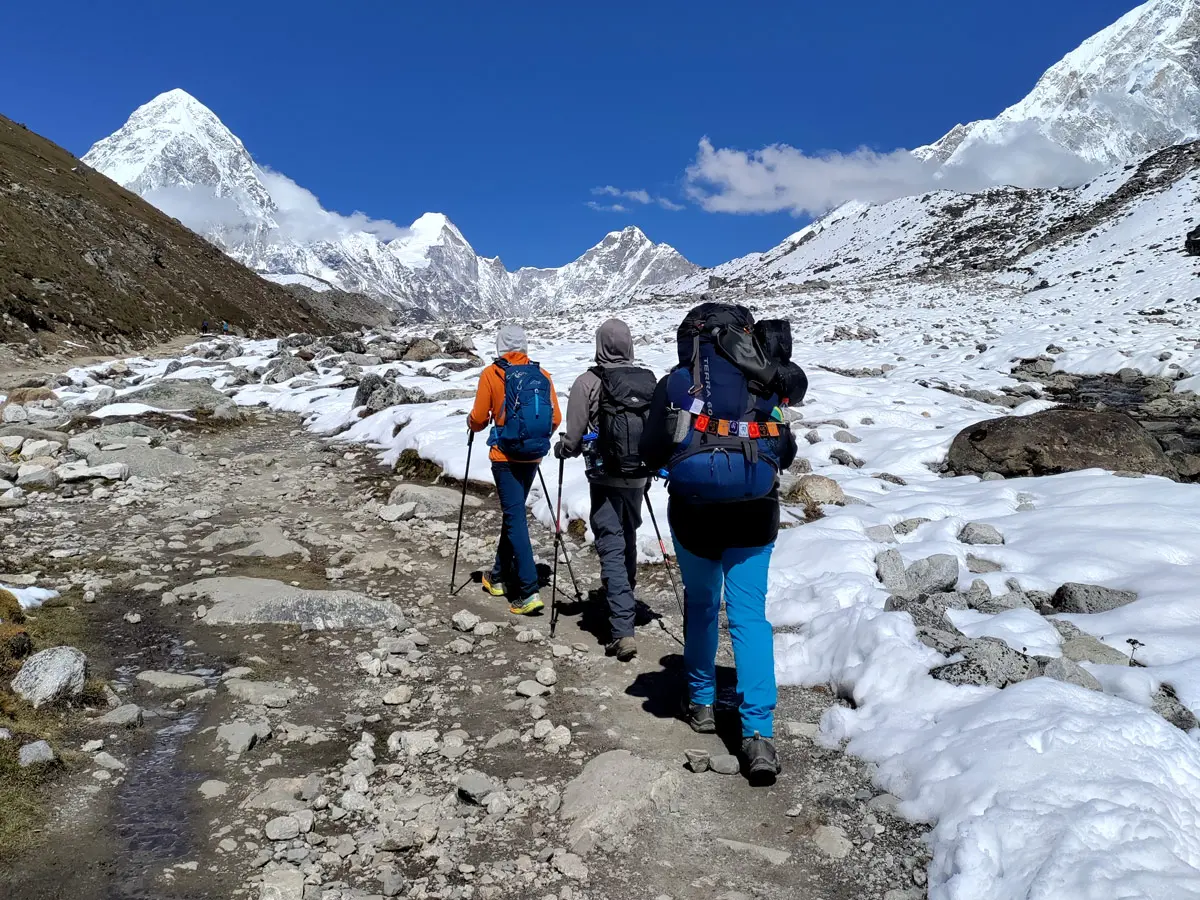
Kanchani Tal is described by Uttarakhand Tourism as a high-altitude glacial lake located approximately 16 km from Madhyamaheshwar. It forms part of the remote mountain landscape beyond the better-known Madhyamaheshwar pilgrimage area.
The lake should not be confused with Budha Madhyamaheshwar. Budha Madhyamaheshwar is a shorter uphill excursion above the main temple and is popularly visited for sunrise and views of the Chaukhamba massif. Kanchani Tal is a substantially longer and more demanding objective requiring separate planning.
Visitors interested only in the sunrise viewpoint should read the dedicated Budha Madhyamaheshwar guide. Completing that shorter excursion does not automatically mean that a traveler is prepared for Kanchani Tal.
Why Is Kanchani Tal Different from the Main Madhyamaheshwar Trek?
The primary Madhyamaheshwar trail is a recognized pilgrimage route connecting settlements and the temple. Kanchani Tal lies beyond the normal objective of most pilgrims.
The differences include:
- A much more remote mountain environment
- Longer exposure to high-altitude conditions
- Limited or nonexistent food and accommodation facilities
- Greater dependence on weather and visibility
- Fewer people available to provide assistance
- Greater navigation and emergency-planning requirements
- The need to carry additional food, water and safety equipment
- Possible access restrictions or local conditions that may not appear online
Travelers should first complete the journey to Madhyamaheshwar, rest properly and assess their physical condition before deciding whether to continue toward Kanchani Tal.
Kanchani Tal Distance from Madmaheshwar
Both Uttarakhand Tourism’s Madhyamaheshwar destination page and the GMVN Madhyamaheshwar destination guide place Kanchani Tal approximately 16 km from Madhyamaheshwar.
This figure should be treated as an approximate route distance rather than a precise GPS measurement. Remote Himalayan routes can vary because of:
- Seasonal snow
- Landslide damage
- Stream conditions
- Changes in the locally used trail
- The exact starting point near Madhyamaheshwar
- Detours selected by the guide
- Weather-related route adjustments
Do not rely on unverified articles claiming that Kanchani Tal is only four to eight kilometers from the temple. The currently available official destination information reports approximately 16 km.

Kanchani Tal Trek Route
GMVN states that the trek toward Kanchani Tal begins from Kanchani Khal, situated behind the Madhyamaheshwar Temple area. Beyond this broad description, travelers should not expect a continuously marked tourist trail.
A practical journey can be understood in three stages.
Stage 1: Reach Madhyamaheshwar Temple
First reach Madhyamaheshwar through the standard road-and-trek approach. Ransi is the principal road-access point used by most travelers before beginning the pilgrimage trail.
Detailed transportation options from Delhi, Haridwar, Rishikesh and Dehradun are covered in our How to reach Madhyamaheshwar guide.
Do not combine the road journey, the main Madhyamaheshwar ascent and the Kanchani Tal extension into an overly compressed schedule.
Stage 2: Rest and confirm conditions at Madhyamaheshwar
Stay near Madhyamaheshwar before considering the extension. Use this time to:
- Recover from the main trek
- Speak with experienced local residents or guides
- Confirm whether the route has been used recently
- Check the weather forecast
- Confirm access or permission requirements
- Arrange food, water and emergency equipment
- Evaluate every group member’s physical condition
- Establish turnaround times and an emergency plan
A traveler who arrives exhausted, unwell or late should not continue toward Kanchani Tal.
Stage 3: Madhyamaheshwar to Kanchani Tal
The route proceeds toward Kanchani Khal behind the temple area and continues through remote high-altitude terrain toward the lake.
GMVN reports that reaching Kanchani Tal can require eight hours or more. This makes the journey unsuitable for casual, last-minute exploration. The actual plan—day movement, possible camp, turnaround point and return schedule—must be decided with a knowledgeable local guide according to current conditions.
Do not assume that a same-day round trip is safe or practical. A 16-km approach followed by the return journey can create an extremely long day at altitude. Overnight logistics, camping permission and the availability of suitable locations must be confirmed locally rather than assumed.
Is the Kanchani Tal Route Marked?

Travelers should prepare for limited route markings and should not depend on signboards. Conditions can change after snowfall, rain, landslides or periods of low use.
A downloaded map or GPS track may be useful as a backup, but it cannot replace local knowledge. Old digital tracks may lead toward damaged, unsafe or seasonally blocked sections.
For this reason:
- Hire a guide familiar with the current Kanchani Tal route.
- Confirm when the guide last completed the trek.
- Do not follow an unknown online GPS file blindly.
- Avoid separating from the group.
- Set a fixed turnaround time.
- Return immediately if visibility deteriorates.
- Do not take shortcuts across snow, steep grass or loose rock.
Kanchani Tal Trek Difficulty
The Kanchani Tal trek should be treated as strenuous. Its difficulty comes from the combination of distance, remoteness, altitude, terrain and limited support—not from distance alone.
Long mountain day
Official destination information reports that reaching the lake may take eight hours or more. That duration can increase when the group moves slowly, carries equipment or encounters difficult terrain.
High-altitude exposure
Travelers have already gained substantial elevation by the time they reach Madhyamaheshwar. Continuing higher without sufficient rest may increase fatigue and the possibility of altitude-related symptoms.
Remote terrain
Beyond Madhyamaheshwar, immediate assistance may not be available. A minor injury or navigation error can become serious when the group is several hours from shelter.
Rapid weather changes
Cloud, rain, wind, cold and poor visibility can develop quickly. Conditions experienced near the temple may not represent conditions farther along the route.
Limited supplies
Do not expect reliable tea stalls, accommodation, drinking water or mobile connectivity. The group must carry what it needs without creating an excessively heavy load.
Who Should Attempt the Kanchani Tal Trek?
The trek may be considered by travelers who:
- Have previous experience with long mountain hikes
- Can walk for several hours while carrying a backpack
- Have recovered properly after reaching Madhyamaheshwar
- Are comfortable in remote terrain
- Are traveling with a knowledgeable local guide
- Can keep additional buffer days
- Are willing to turn back when conditions become unsafe
- Have appropriate clothing and emergency supplies
- Have no unresolved health condition that could be aggravated by exertion or altitude
Who Should Avoid It?
Kanchani Tal is generally unsuitable for:
- First-time trekkers
- Travelers seeking a casual sightseeing walk
- Children without relevant mountain experience
- Senior travelers with limited walking capacity
- Anyone experiencing headache, nausea, dizziness or unusual breathlessness
- Travelers with significant heart, respiratory, mobility or uncontrolled medical conditions
- Solo travelers without verified local support
- Groups following a tightly scheduled return plan
- Anyone attempting the route during severe rain, snowfall or poor visibility
People with health concerns should obtain personalized medical advice before attempting strenuous high-altitude travel.
Best Time for the Kanchani Tal Trek
There is no permanently guaranteed safe month for a remote Himalayan route. The practical window depends on snow, rain, visibility, trail damage and local access.
Late spring and early summer
The period after the Madhyamaheshwar Temple opens may offer longer daylight, but snow can remain on higher sections. Snow cover may hide the trail and increase navigation difficulty.
Do not assume that the opening of Madhyamaheshwar Temple means Kanchani Tal is automatically accessible.
Monsoon
July and August generally bring rainfall, cloud, slippery terrain, stream changes and landslide risks across Uttarakhand’s mountain districts. Kanchani Tal should not be treated as a routine monsoon trek.
Travelers considering Madhyamaheshwar during the rainy season should read the separate Madmaheshwar monsoon and landslide-risk guide.
Post-monsoon
Late September and parts of October may provide clearer visibility in a typical year. However, colder temperatures, frost or early snow remain possible. Local confirmation is still necessary.
Late autumn and winter
Once winter conditions develop, the area may become inaccessible because of snow, cold and the seasonal closure of the temple. Do not attempt the route after the pilgrimage season without authorization, specialist support and reliable local information.
For month-by-month conditions around the main destination, consult the Madhyamaheshwar weather and best-time guide.
Suggested Kanchani Tal Planning Framework
This is a planning framework, not a guaranteed itinerary.
Day 1: Reach the Garhwal base
Travel to Ukhimath or another confirmed overnight base. Complete last-minute purchases and local transportation arrangements.
Day 2: Reach Ransi and begin the Madhyamaheshwar trail
Begin early and walk only as far as appropriate for your group. Use confirmed accommodation along the established route.
Day 3: Continue to Madhyamaheshwar
Reach the temple area without rushing. Eat, hydrate and rest properly.
Day 4: Rest and assess
Use this as an acclimatization and preparation day. Confirm the Kanchani Tal route, weather, local guide, permissions, equipment and group condition. Visit the temple according to the current darshan schedule.
Day 5 onward: Kanchani Tal movement according to local advice
The guide must determine whether the journey requires an overnight plan and where stopping is permitted and safe. Do not publish or follow a fixed camping location without current local authorization.
Return days
Keep adequate time for returning to Madhyamaheshwar, descending to Ransi and completing the road journey. Include at least one buffer day for weather or transportation delays.
Use the Madhyamaheshwar Trip Plan for the broader road, accommodation and scheduling framework.
What to Carry for Kanchani Tal
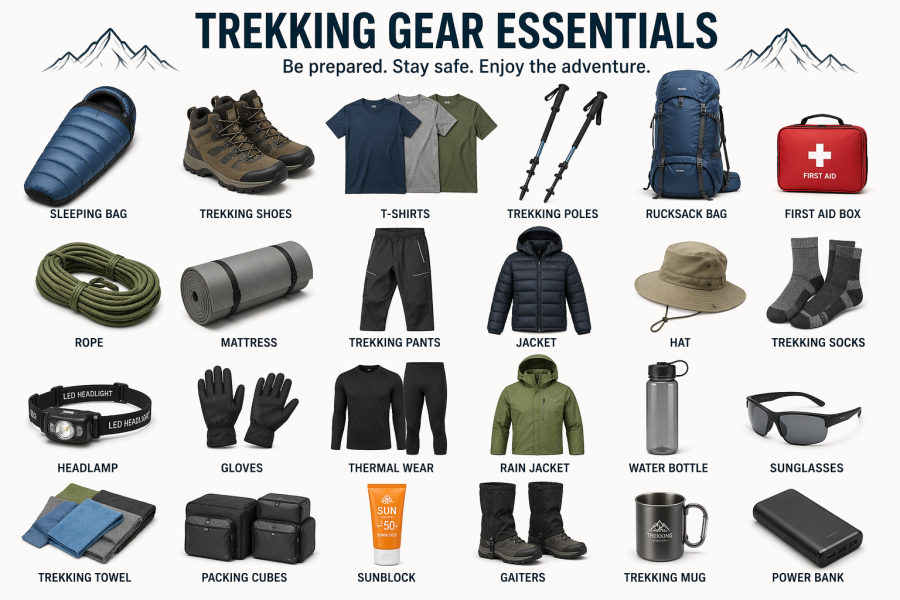
Your final equipment should be selected with the guide according to season and route conditions.
Clothing
- Moisture-managing base layers
- Warm fleece or insulated mid-layer
- Insulated outer jacket
- Waterproof and wind-resistant shell
- Trekking pants
- Warm cap and sun hat
- Gloves
- Multiple pairs of trekking socks
- Spare dry clothing stored in a waterproof bag
Footwear and trail equipment
- Broken-in trekking boots with strong grip
- Trekking poles
- Backpack with rain cover
- Headlamp with spare batteries
- Gaiters or additional snow equipment when advised
- Sunglasses with proper UV protection
- Sunscreen and lip protection
Food and water
- Sufficient water-carrying capacity
- Water-treatment method
- High-energy food
- Emergency food reserve
- Electrolytes
- Meals appropriate for any locally confirmed overnight plan
Navigation and communication
- Offline map
- Guide’s local route plan
- Fully charged phone
- Power bank
- Emergency whistle
- Satellite communication device when available and appropriate
- Written emergency contacts
Health and documentation
- Government-issued identification
- Personal medication
- Compact first-aid kit
- Blister-management supplies
- Oral rehydration salts
- Any locally required registration or permission
- Details of insurance coverage, if applicable
Use the complete Madmaheshwar trek packing list for general equipment, but confirm additional expedition-specific items with your Kanchani Tal guide.
Altitude and Health Safety
Reliable official destination pages confirm that Kanchani Tal is a high-altitude lake, but publicly available sources provide inconsistent elevation figures. For that reason, travelers should not base health decisions on an unverified altitude number copied from a blog or social media post.
Pay attention to symptoms rather than assuming that previous fitness guarantees safety.
Possible warning signs include:
- Persistent headache
- Nausea or vomiting
- Dizziness
- Unusual exhaustion
- Loss of coordination
- Difficulty breathing while resting
- Confusion
- Inability to walk normally
Do not climb higher when symptoms are worsening. Inform the guide, stop exertion and descend when necessary. Severe symptoms require urgent medical assistance.
Permissions and Local Confirmation

Do not state that Kanchani Tal is “permit-free” without checking current rules. Madhyamaheshwar lies within an environmentally sensitive Himalayan landscape, and rules concerning trekking, camping, forest access and group movement can change.
Before departure:
- Ask the local administration or forest check point whether additional permission is required.
- Inform your accommodation provider of the group’s plan.
- Confirm whether camping is permitted.
- Record the guide’s name and contact details.
- Share the route and expected return time with a responsible contact.
- Check current weather and disaster advisories.
- Carry identification and any registration documents.
Check weather alerts through the India Meteorological Department and disaster-related updates through the Uttarakhand State Disaster Management Authority.
Responsible Trekking at Kanchani Tal
Kanchani Tal’s remoteness is part of its value. Visitors must avoid damaging the landscape while trying to experience it.
- Carry all plastic, food wrappers and batteries back.
- Do not leave religious offerings, cloth or packaged food at the lake.
- Do not use soap or chemicals in the water.
- Do not play loud music.
- Do not disturb wildlife.
- Do not create new shortcuts through fragile vegetation.
- Use existing or guide-approved routes.
- Camp only where permitted.
- Avoid lighting open fires.
- Do not fly a drone without checking applicable restrictions.
- Keep the group small and controlled.
The goal should be to leave no visible evidence of the visit.
Local Guide and Support Checklist
Before hiring a guide, ask:
- When did you last complete the Kanchani Tal route?
- What were the latest trail and snow conditions?
- Is an overnight camp necessary?
- Where is camping currently permitted?
- Are any permissions or registrations required?
- What emergency equipment will the group carry?
- What is the turnaround time?
- What happens if the weather changes?
- Is food and group equipment included?
- What is excluded from the quoted price?
- How will an injured traveler be assisted?
- Is there any communication coverage on the route?
Do not select support solely on the lowest price.
Planning Kanchani Tal with TourMyHoliday
Travelers who want the Kanchani Tal extension included in their journey can review the Madmaheshwar Trek Package.
Before booking, request written confirmation of:
- Whether Kanchani Tal is included or optional
- The guide’s recent experience on the route
- Number of trekking days
- Accommodation or camping arrangements
- Meals and drinking-water arrangements
- Required permissions
- Group size
- Safety equipment
- Porter support
- Emergency procedures
- Cancellation rules if access is unsafe
A standard Madhyamaheshwar package does not automatically include Kanchani Tal. The extension should be confirmed separately.
Final Safety Checklist
Attempt the Kanchani Tal trek only after confirming:
- The route has been used recently
- A qualified local guide is available
- Weather is suitable
- No severe-weather advisory is active
- Access and camping rules have been checked
- The group is physically prepared
- Everyone has recovered after reaching Madhyamaheshwar
- Sufficient food and water are available
- Warm and waterproof clothing is packed
- Navigation and emergency equipment are ready
- The itinerary has buffer time
- A responsible person knows the route and return time
- Every member agrees to turn back if conditions deteriorate
.jpg)
Final Assessment
Kanchani Tal is not simply another attraction near Madhyamaheshwar. It is a remote and strenuous trekking objective requiring more preparation than the standard temple journey.
Official tourism information places the lake approximately 16 km from Madhyamaheshwar, while GMVN indicates that reaching it may take eight hours or more. These details make careful planning, local guidance and sufficient time essential.
For many visitors, Madhyamaheshwar Temple and Budha Madhyamaheshwar provide a complete and rewarding experience. Kanchani Tal should be considered only by appropriately prepared trekkers when local experts confirm that the route is accessible.
Frequently Asked Questions
1. How far is Kanchani Tal from Madmaheshwar?
Uttarakhand Tourism and GMVN report that Kanchani Tal is approximately 16 km from Madhyamaheshwar. Treat this as an approximate mountain-route distance and confirm the current route locally.
2. How long does it take to reach Kanchani Tal?
GMVN states that reaching the lake can take eight hours or more. Actual time depends on weather, terrain, group fitness, load and route conditions.
3. Can Kanchani Tal be completed as a day trek?
Travelers should not assume that a same-day return is practical. With an approximate 16-km approach and a reported travel time of eight hours or more to reach the lake, the final plan must be made with an experienced local guide.
4. Is a guide required for Kanchani Tal?
A knowledgeable local guide is strongly recommended because the journey goes beyond the standard pilgrimage route into remote terrain with limited facilities and potentially unclear trail sections.
5. Is Kanchani Tal suitable for beginners?
It is not recommended for first-time trekkers. The route is better suited to fit travelers with prior mountain experience, adequate time, proper equipment and local support.
6. Is Kanchani Tal the same as Budha Madhyamaheshwar?
No. Budha Madhyamaheshwar is a shorter uphill excursion above the main temple, known for sunrise and Chaukhamba views. Kanchani Tal is a much longer and more strenuous remote trek.
7. What is the best time for Kanchani Tal?
Late spring, early summer and the post-monsoon period may provide possible windows in a typical year. Actual accessibility depends on snow, rain, visibility and local restrictions. Confirm conditions immediately before the journey.
8. Can Kanchani Tal be visited during the monsoon?
It is not recommended as a routine monsoon trek. Rain, cloud, landslides, stream changes and slippery terrain can make the remote route unsafe.
9. Are food and accommodation available at Kanchani Tal?
Do not expect dependable facilities at or near the lake. Food, water, camping arrangements and permission must be organized in advance with local support.
10. Is permission required for the Kanchani Tal trek?
Requirements can change. Confirm trekking, forest-access, registration and camping rules with the relevant local authorities before starting. Do not rely on an old online statement saying that no permission is required.


