
Madmaheshwar vs Rudranath Trek – Which Panch Kedar is Better?
Published on April 11, 2026 | Updated on September 14, 2026
If you have already decided to do a Panch Kedar trek but are stuck between Madmaheshwar and Rudranath — you are asking exactly the right question.
These two temples are the most underrated destinations in the entire Panch Kedar circuit. While the whole world knows Kedarnath, while Tungnath gets famous for Chopta, and while Kalpeshwar is the easiest — Madmaheshwar and Rudranath quietly sit in their own corners of the Garhwal Himalaya offering experiences that are deeper, wilder, and more honest than almost anything else in Uttarakhand trekking.
But they are very different from each other.
Different terrain. Different altitude. Different trek character. Different spiritual energy. Different kind of beauty.
This is the most honest and detailed comparison of Madmaheshwar vs Rudranath trek you will find anywhere — written for people who genuinely want to make the right choice for 2026.
Quick Overview — Madmaheshwar and Rudranath
Before the detailed comparison, here is a quick factual snapshot of both destinations:
| Detail | Madmaheshwar | Rudranath |
|---|---|---|
| Panch Kedar Position | Fourth temple | Third temple |
| Body Part of Shiva | Navel (Nabhi) | Face (Mukha) |
| Temple Altitude | 3,497 meters | 3,600 meters |
| Trek Base Village | Ransi, Ukhimath | Sagar village, Gopeshwar |
| One Way Trek Distance | 24 km | 20 to 24 km |
| Total Days Required | 4 to 5 days | 5 to 6 days |
| Difficulty Level | Moderate | Difficult |
| Nearest Town | Ukhimath, Rudraprayag | Gopeshwar, Chamoli |
| Best Time | May-June, Sep-Oct | May-June, Sep-Oct |
| Crowd Level | Very Low | Extremely Low |
The Trek Route — How Different Are They?
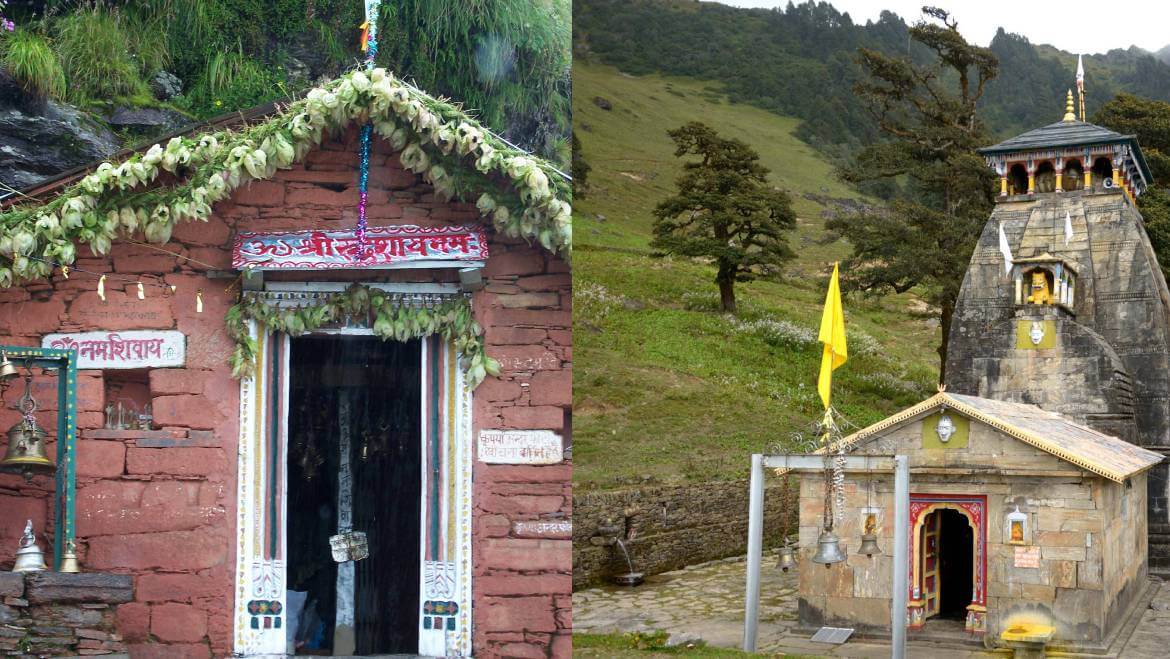
Madmaheshwar Trek Route
The Madhmaheshwar trek starts from Ransi village near Ukhimath in Rudraprayag district. The trail covers 24 km one way over two main trekking days with an overnight halt at Bantoli village.
The route character is: village trail through Gangi, dense oak and rhododendron forest between Gangi and Bantoli, river crossings near Nanu village, and then the dramatic opening into the Madmaheshwar bugyal before the temple.
The trail is well-marked, has regular tea stalls and rest points, and local guides are readily available at Ransi. The Madmaheshwar trekking route is accessible and manageable for trekkers with moderate fitness and no prior high-altitude experience.
Rudranath Trek Route
The Rudranath trek starts from Sagar village near Gopeshwar in Chamoli district. The trail covers approximately 20 to 24 km one way depending on the starting point and route taken.
But the character of this trail is completely different from Madhmaheshwar. The Rudranath trekking route is longer in terms of days — most trekkers take 5 to 6 days for the complete return journey. The trail passes through incredibly dense and old-growth forest — some of the most pristine rhododendron and oak woodland in the entire Garhwal Himalaya. It crosses the beautiful alpine meadow of Panar bugyal and Pitordhar before reaching the temple.
The Rudranath trail is significantly less maintained than Madmaheshwar. There are fewer tea stalls, fewer rest points, and trail markings can be unclear in sections. An experienced local guide is not just recommended for Rudranath — it is essentially mandatory.
Altitude and Terrain — Which is More Challenging?
Both temples are at similar altitudes — Madmaheshwar at 3,497 meters and Rudranath at 3,600 meters. The difference of 103 meters is not significant from an altitude sickness perspective.
However the terrain difficulty is noticeably different.
Madmaheshwar terrain: Dense forest giving way to open alpine bugyal. The steepest section is Day 2 from Bantoli to the temple — a sustained but manageable climb. The trail is consistently navigable with clear path throughout.
Rudranath terrain: Much more varied and technically demanding. The trail involves long stretches through dense old-growth forest that can be disorienting without a guide, steep sections through rhododendron woodland, open meadow traverses at Panar and Pitordhar, and a final approach to the temple that requires careful navigation.
The Rudranath trek difficulty is genuinely higher than Madmaheshwar — not because of altitude but because of trail length in days, remoteness, and less maintained path. First-time trekkers should choose Madmaheshwar. Experienced trekkers who have done multiple high-altitude Himalayan treks will find Rudranath a perfectly appropriate next challenge.
Natural Beauty — Which Wins?
This is where the comparison gets genuinely difficult because both are extraordinarily beautiful — just in completely different ways.
Madmaheshwar Beauty
The defining visual experience of Madmaheshwar is the bugyal moment — when the forest ends and you step into the wide open alpine meadow with the Kedarnath peak, Chaukhamba, Neelkanth, and Meru all visible at once above the ancient temple.
This is a horizontal beauty — wide, open, panoramic, and instantly overwhelming. The Madmaheshwar bugyal in June wildflowers or September golden light is one of the finest natural compositions in Uttarakhand. The view from Budha Madhmaheshwar at 3,700 meters adds a 360-degree panoramic dimension that very few Himalayan viewpoints can match.
Rudranath Beauty
The beauty of Rudranath is more intimate and atmospheric. The trail passes through some of the most ancient and undisturbed forest in the Garhwal Himalaya — rhododendron trees so old and large they form natural cathedrals of twisted branches and red blooms in spring.
The Panar bugyal section of the Rudranath trek opens into a different kind of meadow beauty — softer, more enclosed, with the feeling of being inside the mountain rather than above it. The Rudranath temple itself sits in a dramatic rocky setting very different from the open meadow setting of Madmaheshwar.
Honest verdict on beauty: Madmaheshwar wins on panoramic grandeur. Rudranath wins on atmospheric depth and forest beauty. If you are a photographer who loves wide mountain panoramas — Madmaheshwar. If you love ancient forest and intimate mountain landscapes — Rudranath.
If you want to explore the route and trekking experience in more detail, check our Rudranath Temple Trek Guide.
Spiritual Experience — Which Feels More Sacred?
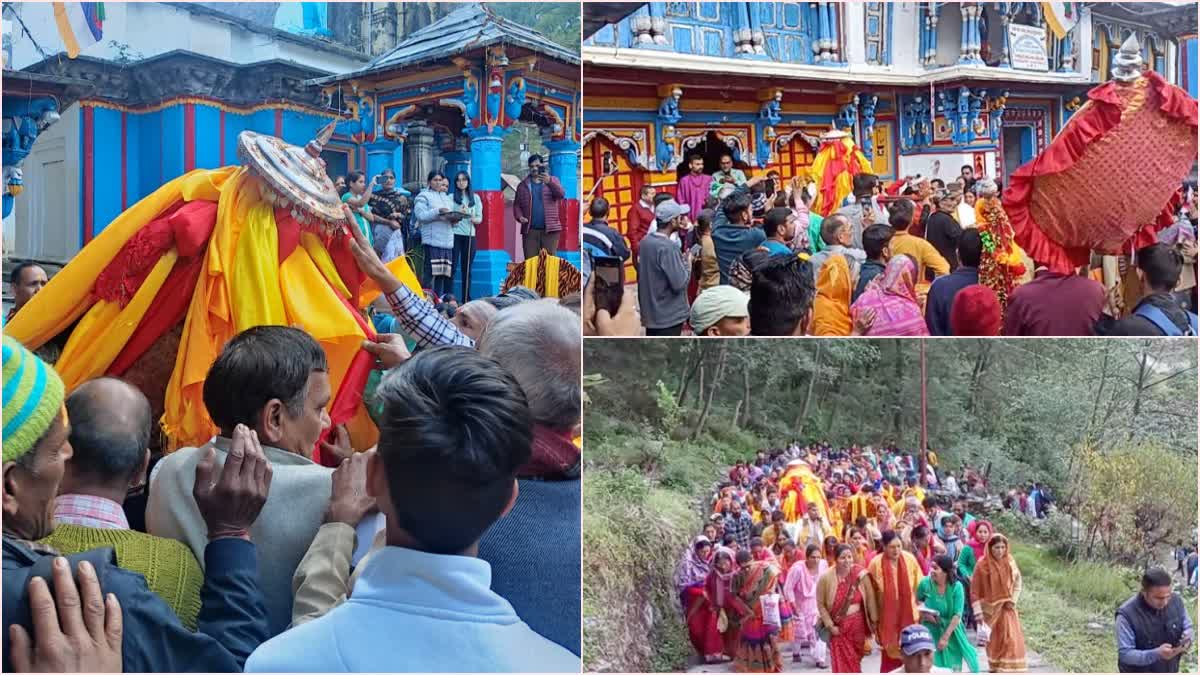
Both temples are deeply sacred Panch Kedar shrines and both carry centuries of spiritual tradition. But the nature of the spiritual experience is noticeably different.
Madmaheshwar has a more accessible spiritual energy. The open bugyal setting, the clear mountain views, and the relatively regular stream of pilgrims give it a vibrant and communal spiritual atmosphere. The evening aarti at Madmaheshwar with the Himalayan peaks glowing behind the temple is genuinely moving.
Rudranath has a more isolated and raw spiritual character. Because so few people visit this temple, darshan at Rudranath feels deeply personal and solitary. The temple is dedicated to the face of Lord Shiva — Shiva Mukha — which is worshipped here in the form of a natural rock face. The remote location, the ancient forest approach, and the almost complete absence of other visitors give Rudranath a sacred atmosphere that is unlike anything else on the Panch Kedar circuit.
For purely spiritual seekers who want a deeply personal and undisturbed darshan experience — Rudranath is unmatched in the entire Panch Kedar circuit.
Crowd Comparison — Which is More Peaceful?
Both Madmaheshwar and Rudranath are significantly less crowded than Kedarnath or Tungnath — but there is a meaningful difference between them.
Madmaheshwar receives a few thousand trekkers per season — making it peaceful but not completely solitary. You will encounter other trekkers and pilgrims on the trail, especially during peak season in May and June.
Rudranath receives only a few hundred serious trekkers per season — making it one of the least visited Panch Kedar temples. On the Rudranath trail you can trek for hours without seeing another person. At the temple itself you may be completely alone for your entire visit.
If absolute solitude and off-the-beaten-path experience is your priority — Rudranath wins decisively.
Facilities and Logistics — Which is Easier to Plan?

Madmaheshwar is significantly easier to plan and execute than Rudranath. Ransi village has clear homestay options, guides are easily arranged, tea stalls exist at regular intervals on the trail, and GMVN accommodation is available near the temple. Most travel operators offer organized group packages for Madmaheshwar.
Rudranath requires more careful advance planning. Sagar village near Gopeshwar is the base but accommodation and guide options are more limited than Ransi. Trail facilities are minimal with very few tea stalls between Sagar and the temple. Very few organized group packages exist for Rudranath — most trekkers plan it independently or through specialized operators.
For first-time visitors to Panch Kedar: Madmaheshwar is the clearly easier and more accessible choice for logistics and planning.
Who Should Choose What — Simple Decision Guide
Choose MADMAHESHWAR if:
✅ This is your first Panch Kedar trek
✅ You want panoramic Himalayan views from an open alpine meadow
✅ You prefer a well-marked accessible trail
✅ You want organized group package options
✅ You have 4 to 5 days available
✅ You want good facilities on the trail
✅ You are trekking with family or beginners

Choose RUDRANATH if:
✅ You have previous Himalayan trek experience
✅ You want absolute solitude and wilderness
✅ You love ancient forest and intimate mountain landscapes
✅ You want the most personal darshan experience in Panch Kedar
✅ You have 5 to 6 days available
✅ You are comfortable with unmarked trail
✅ You are an experienced trekker who has already done Madmaheshwar or similar
Can You Do Both in One Trip?
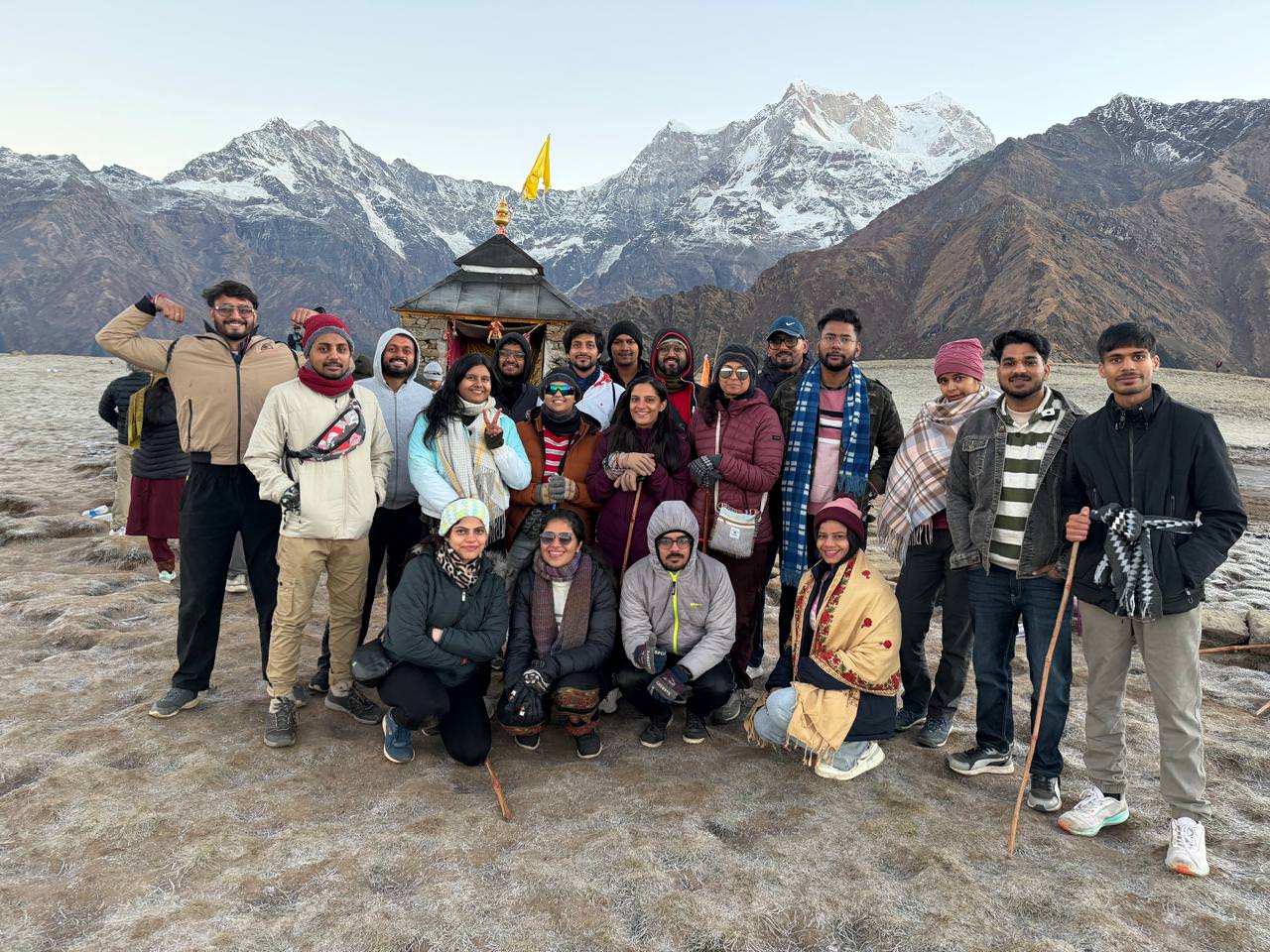
Yes — and combining Madmaheshwar and Rudranath in a single extended Uttarakhand trip is something serious Panch Kedar pilgrims and trekkers increasingly plan.
Since Madmaheshwar is in Rudraprayag district and Rudranath is in Chamoli district, the two are accessible from different base towns — Ukhimath for Madmaheshwar and Gopeshwar for Rudranath. The road distance between Ukhimath and Gopeshwar is approximately 80 to 90 km — roughly 2 to 3 hours by car.
A combined Madmaheshwar and Rudranath itinerary requires approximately 12 to 15 days total from Delhi — making it a serious commitment but an extraordinarily rewarding one.
Final Verdict — Madmaheshwar vs Rudranath
Choose Madmaheshwar in 2026 if you are doing Panch Kedar for the first time, want accessible logistics, love panoramic mountain views, and prefer a trail with good facilities and organized package options.
Choose Rudranath in 2026 if you are an experienced trekker seeking genuine wilderness, absolute solitude, ancient forest beauty, and the most undisturbed and personal Shiva darshan in the entire Panch Kedar circuit.
Honestly — both temples deserve their own dedicated trip. Madmaheshwar first. Rudranath when you are ready for the deeper wilderness.
The Panch Kedar is not a competition. Every temple gives you something different. Every trail teaches you something new.
The mountain will always have more to show you.
✅ Planning your Madmaheshwar trek in 2026? TourMyHoliday offers fully guided Madhyamaheshwar package from Delhi starting ₹7,000 per person — transport, stay, meals, experienced local guide, and 24/7 support included.
View Madmaheshwar Tour Package | Enquire About Rudranath Tour Package
6 FAQs — Madmaheshwar vs Rudranath
1 Q. Which is harder — Madmaheshwar trek or Rudranath trek?
A. Rudranath trek is significantly harder than Madmaheshwar trek. Both temples are at similar altitudes — Madmaheshwar at 3,497 meters and Rudranath at 3,600 meters — but Rudranath involves more trekking days, a less maintained and partially unmarked trail, denser forest navigation, and fewer facilities on the route. Madmaheshwar is rated moderate and suitable for fit beginners. Rudranath is rated difficult and recommended only for trekkers with previous Himalayan trekking experience above 3,000 meters.
2 Q. Which Panch Kedar temple is more beautiful — Madmaheshwar or Rudranath?
A. Both temples are extraordinarily beautiful but in completely different ways. Madmaheshwar wins on panoramic grandeur — the wide open bugyal with Kedarnath peak, Chaukhamba, Neelkanth and Meru all visible at once is one of the finest mountain panoramas in Uttarakhand. Rudranath wins on atmospheric and forest beauty — the ancient rhododendron forest approach, Panar bugyal, and intimate rocky temple setting create a deeper and more atmospheric mountain experience. Photographers who love wide panoramic views prefer Madmaheshwar. Those who love ancient forest and intimate landscapes prefer Rudranath.
3 Q. Which temple is less crowded — Madmaheshwar or Rudranath?
A. Rudranath is significantly less crowded than Madmaheshwar. Madmaheshwar receives a few thousand trekkers and pilgrims per season while Rudranath sees only a few hundred serious trekkers annually — making it one of the least visited temples in the entire Panch Kedar circuit. On the Rudranath trail you can trek for hours without encountering another trekker. If complete solitude and off-the-beaten-path wilderness experience is your priority, Rudranath is the clear choice between the two.
4 Q. Which is better for first-time Panch Kedar trekkers — Madmaheshwar or Rudranath?
A. Madmaheshwar is much better for first-time Panch Kedar trekkers. The trail is well-marked, facilities are good, organized group packages are available, guides are easily hired at Ransi village, and the overall logistics are straightforward to plan and execute. Rudranath requires prior Himalayan trekking experience, careful independent planning, and comfort with partially unmarked wilderness trail. Always do Madmaheshwar first — Rudranath when you have built the confidence and experience for a more demanding Himalayan trail.
5 Q. Can I do Madmaheshwar and Rudranath in the same trip?
A. Yes, combining Madmaheshwar and Rudranath in one Uttarakhand trip is possible but requires careful planning and approximately 12 to 15 days total from Delhi. Madmaheshwar is based in Rudraprayag district from Ukhimath while Rudranath is based in Chamoli district from Gopeshwar — about 80 to 90 km apart by road. Complete Madmaheshwar first, drive to Gopeshwar, rest for one day, and then begin the Rudranath trek. This combination covers two Panch Kedar temples in one extended trip and is highly recommended for serious pilgrims and experienced trekkers.
6 Q. Which trek has better views — Madmaheshwar or Rudranath?
A. For panoramic peak views Madmaheshwar is better — the open bugyal provides unobstructed 360-degree views of Kedarnath peak, Chaukhamba, Neelkanth, Meru and Trishul from the meadow level and even better from Budha Madmaheshwar at 3,700 meters. Rudranath offers dramatic rocky terrain views and excellent peak visibility from Panar bugyal and Pitordhar but the temple itself sits in a more enclosed rocky setting without the wide open meadow panorama of Madmaheshwar. For pure mountain panoramic photography Madmaheshwar wins. For overall landscape variety and forest beauty Rudranath offers a richer visual experience across the multiple days of trekking.
More Madhyamaheshwar & Trekking Guides
- Madmaheshwar vs Rudranath Trek
- Kanchani Tal Trek from Madmaheshwar – Complete Guide 2026
- Madmaheshwar Trek for Families – Is It Safe for Kids & Senior Citizens?
- Omkareshwar Temple Ukhimath – Why It's the Soul of Madmaheshwar Yatra
- Madmaheshwar vs Tungnath Trek – Which Panch Kedar is Better for You?
- Madmaheshwar Group Trek vs Private Package – Which Should You Book?
- Ransi Village to Madmaheshwar Temple – Village by Village Guide
- Madmaheshwar Opening Ceremony 2026


