
10 Scams to Avoid During Pushkar Holi 2026 (Tourist Alert)
Published on February 14, 2026 | Updated on August 28, 2026
Table of Contents
- Introduction
- Why Pushkar Holi Attracts Scammers
- Top 10 Scams to Watch Out For
- Bhang/Thandai Overdose Scam
- Fake Tour Guide Fraud
- Colour Powder Extortion
- Accommodation Price Gouging
- Fake Taxi Meters and Transport Scams
- Photography Fee Trap
- Temple Donation Scams
- Camel Ride Overcharging
- Pickpocketing in Crowds
- Counterfeit Currency Exchange
- Red Flags Every Tourist Should Recognise
- Smart Safety Strategies for Holi 2026
- What to Do If You're Scammed
- FAQs
- Conclusion
1. Introduction
Pushkar's Holi celebration stands among India's most enchanting festivals, where spirituality meets explosive colour in a town that seems frozen in time. As March 4, 2026, approaches, tens of thousands of travellers will descend upon this sacred Rajasthan destination, eager to experience Holi's authentic magic at the banks of the holy Pushkar Lake.
However, this annual tourist surge creates a perfect storm for scammers who view the festival as their most profitable season. From doctored drinks to elaborate tour guide schemes, unsuspecting visitors lose thousands of rupees—and sometimes their entire trip's joy—to well-orchestrated frauds.
Having covered Indian festivals for fifteen years and witnessed countless tourist scams firsthand, I've compiled this essential guide to help you navigate Pushkar Holi 2026 safely. This isn't about spreading fear; it's about empowering you with knowledge so you can celebrate fearlessly while protecting yourself from those who prey on the excitement of festivals.
2. Why Pushkar Holi Attracts Scammers
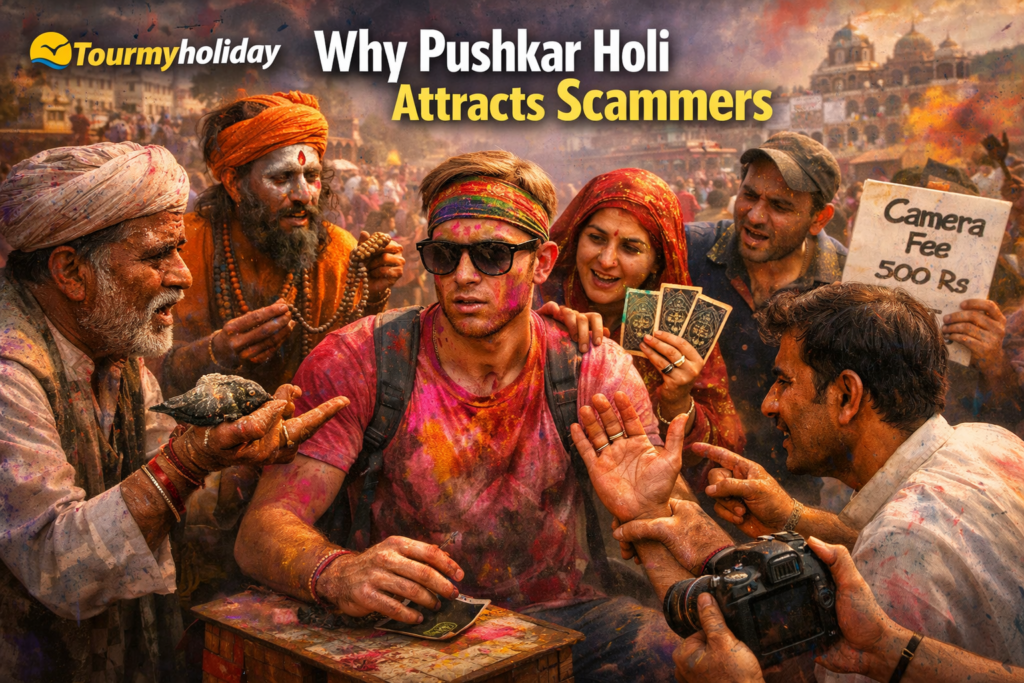
Pushkar's unique combination of factors creates an ideal environment for scammers. The town's population of approximately 15,000 swells to over 100,000 during Holi week. This dramatic influx overwhelms local infrastructure, creating chaos that scammers exploit expertly.
Foreign tourists, unfamiliar with Indian cultural norms and fair pricing, become primary targets. The language barrier compounds vulnerability. Additionally, Holi's atmosphere of uninhibited celebration—where boundaries blur, and strangers interact freely—provides cover for those with malicious intent.
Understanding this context helps you maintain healthy scepticism without losing the festival's joyful spirit. Awareness doesn't mean paranoia; it means preparation.
3. Top 10 Scams to Avoid During Pushkar Holi 2026
1. Bhang/Thandai Overdose Scam
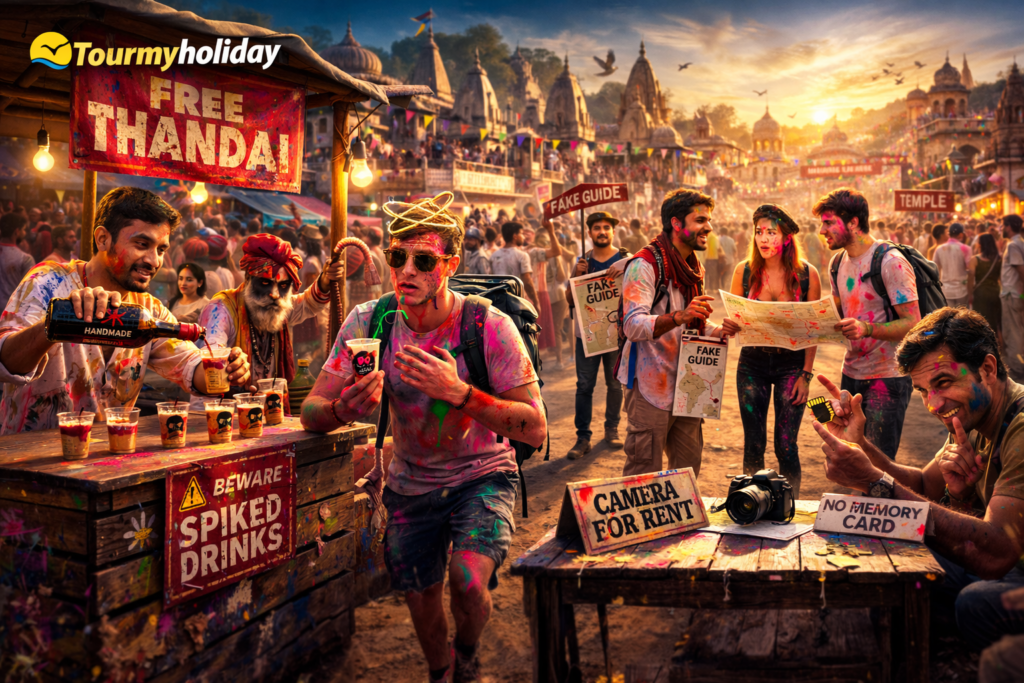
The bhang scam represents one of Pushkar Holi's most dangerous frauds. Bhang, a cannabis-based preparation traditionally consumed during Holi, affects people differently based on tolerance, body weight, and concentration levels.
The Scam in Detail: Street vendors specifically target foreign tourists, offering "authentic Holi experience" through bhang-laced thandai (milk-based drink) or lassi. They deliberately serve extremely potent mixtures without disclosing strength levels. Within 30-90 minutes, victims experience severe disorientation, nausea, paranoia, or unconsciousness.
In this vulnerable state, accomplices rob tourists of valuables, drain ATM accounts using stolen PINs, or transport victims to remote locations demanding ransom for "medical help." Some victims have reported waking up hours later with no memory and empty wallets.
Real Incident: During Holi 2024, a British tourist consumed bhang from a street vendor near Brahma Temple. Within an hour, he lost consciousness. When he regained awareness in a "clinic," operators demanded ₹25,000 for "emergency treatment" before releasing him.
Protection Protocol:
- Purchase bhang only from licensed government shops displaying permits
- Start with minimal doses—even experienced users should be cautious with unfamiliar preparations
- Never consume alone; stay with trusted companions
- Avoid drinks from street vendors, regardless of how authentic they appear
- If you feel unexpectedly intoxicated, immediately seek help from hotel staff or police
2. Fake Tour Guide Fraud
Unauthorised guides operate extensively during Holi, preying on tourists seeking authentic cultural experiences.
The Scam Mechanics: These individuals loiter near hotels, bus stands, and railway stations, approaching arriving tourists with offers of "exclusive temple access," "VIP darshan," or "hidden Pushkar experiences." They display fake ID cards, fabricated testimonials, and convincing knowledge of local history.
After collecting upfront fees (₹2,000-8,000), they either disappear mid-tour, provide worthless services, or transport tourists to shops, paying commissions for forced purchases. Some escalate to more sinister activities, isolating victims in remote areas and demanding additional payments.
Warning Signs:
- Approaching you aggressively rather than waiting at the official tourism counters
- Demanding full payment before services begin
- Inability to show a government-issued photo ID with hologram security features
- Offering rates significantly below market (legitimate guides charge ₹1,500-2,500 for half-day tours)
- Pressuring immediate decisions without allowing research time
Legitimate Verification: Official Rajasthan Tourism guides carry laminated photo ID cards featuring government seals, unique registration numbers, and validity dates. You can verify credentials through the Rajasthan Tourism website or by calling their helpline: +91-141-511-0598.
3. Colour Powder Extortion
This scam exploits Holi's central tradition—applying colored powder—turning a joyful celebration into intimidation.
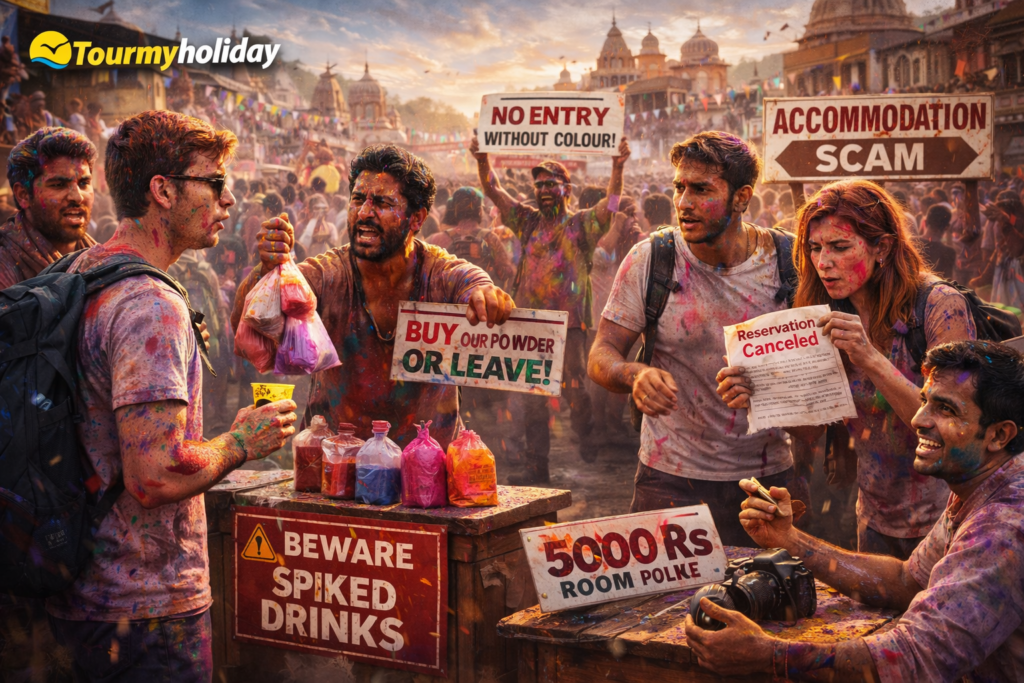
How It Operates: Groups of 3-5 individuals target isolated tourists, particularly in narrow lanes around Pushkar Lake or less-crowded ghat areas. They enthusiastically apply colours while surrounding the victim, creating a sense of obligation and blocking escape routes.
Once thoroughly colored, they demand payment ranging from ₹500 to ₹2,000, claiming the powder was "imported organic gulal" or "special festival blessing." When tourists refuse, the group becomes aggressive, sometimes threatening physical confrontation or damaging belongings.
Strategic Defense:
- Purchase your own colour packets (₹50-100 each) from established shops before festival day
- Keep small denominations (₹10, ₹20 notes) for genuine celebrants you choose to interact with
- If approached by suspicious groups, firmly decline and move toward crowded areas
- Never allow yourself to be isolated in narrow lanes during peak celebration hours
- Travel with companions who can intervene if situations escalate
4. Accommodation Price Gouging
Hotel scams during Pushkar Holi have become increasingly sophisticated and widespread.
The Fraud Pattern: Hotels and guesthouses employ multiple tactics. The most common involves "losing" confirmed reservations made months in advance, then offering the same room at 400-700% markup, claiming "system errors." Others demand additional "festival charges" upon check-in despite advertised rates including all taxes.
Some properties show attractive photos online but provide significantly inferior rooms, refusing refunds for bait-and-switch tactics. The worst operators accept bookings through multiple platforms for the same room, then choose the highest-paying guest and cancel others at the last minute.
2025 Case Study: A group of Australian travellers booked rooms at ₹2,500 per night six months ahead. Upon arrival, the hotel claimed no record existed and offered rooms at ₹12,000 per night. With limited alternatives during peak season, they paid under duress.
Protective Measures:
- Book through reputable platforms (Booking.com, Airbnb) with strong buyer protection policies
- Request and save written confirmations with booking reference numbers
- Read recent reviews specifically mentioning festival periods
- Pre-pay when possible through secured platforms
- Consider accommodations in Ajmer (15 km away), where price manipulation is less severe
- Contact properties directly 48-72 hours before arrival to reconfirm
5. Fake Taxi Meters and Transport Scams
Transportation scams flourish during Holi when demand dramatically exceeds supply.
Common Variations: Rigged meters run 3-4 times normal speed. Drivers claim meters are "broken" and quote exorbitant fixed rates. Some accept agreed fares, then stop mid-journey demanding more money. Others take unnecessarily long routes, inflating costs.
A sophisticated version involves drivers collaborating with shops, hotels, or "tour guides," earning commissions by delivering tourists to predetermined locations under pretences.
Fair Pricing Reference:
- Pushkar Railway Station to the town centre: ₹150-200
- Ajmer to Pushkar: ₹300-400
- Within Pushkar town: ₹50-100
- Full-day hire (8 hours): ₹1,500-2,000
Protection Strategy: Use app-based services (Ola, Uber) when available. For traditional auto-rickshaws, negotiate complete terms before boarding: final destination, route, and total price. Show drivers Google Maps routes to prevent detours. Keep small change ready to avoid "no change" scams.
6. Photography Fee Trap
This scam exploits tourists' desire for authentic cultural photographs.
The Setup: Colourfully dressed locals or sadhus (holy men) position themselves at photogenic locations—temple entrances, lakeside ghats, or festival gathering points. They pose willingly, even encouragingly, for photographs. Once images are captured, they aggressively demand payments of ₹200-1,000.
Some escalate by threatening to delete images, create public scenes, or claim cultural disrespect requiring compensation. Accomplices often materialise, surrounding the photographer and amplifying pressure.
Prevention Tactics:
- Always request permission before photographing anyone
- Explicitly ask, "Is there any charge?" before taking photos
- If someone actively solicits photos, negotiate the price beforehand
- Most genuine Holi participants happily pose freely, while professional photo-scammers exhibit rehearsed poses
- Keep your camera/phone secured when not actively photographing
7. Temple Donation Scams
Fake priests and self-appointed temple officials operate extensively at Pushkar's numerous temples.
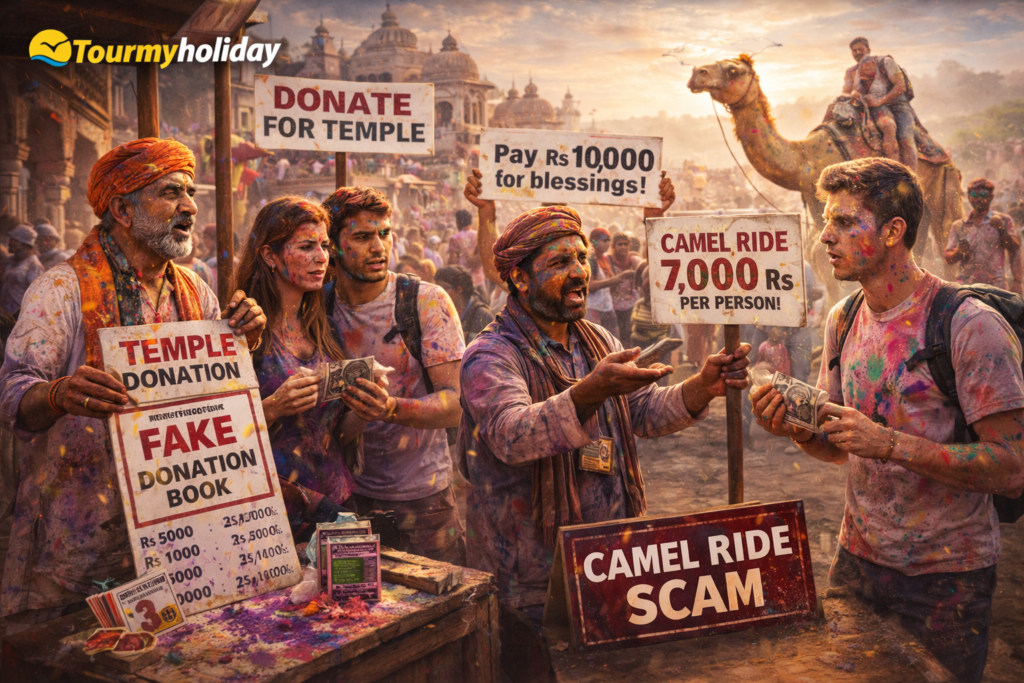
Scam Methodology: These fraudsters wear religious attire and position themselves near temple entrances. They offer unsolicited blessings, apply tilak (forehead marks), or perform brief rituals before demanding substantial donations (₹1,000-5,000).
Some use psychological manipulation, claiming to detect "negative energies" requiring expensive pujas for removal. Others promise special blessings for health, wealth, or fertility in exchange for donations.
Identification Guide: Legitimate temple priests don't follow tourists demanding money. Official donation boxes exist at all genuine temples. Real priests accept whatever devotees voluntarily offer without pressure or specified amounts.
Safe Practices: Make donations only at marked temple collection boxes. Politely decline unsolicited blessings from individuals outside official temple premises. If genuinely interested in religious rituals, inquire at the main temple offices about authentic services and their costs.
8. Camel Ride Overcharging
Camel rides represent quintessential Rajasthan experiences, but pricing disputes plague tourists regularly.
The Scam: Owners quote seemingly reasonable rates (₹200-300) for "short rides." Once tourists mount camels, handlers lead them on brief 5-10 minute walks, then demand ₹1,500-3,000, claiming original quotes were "per person" or misunderstood.
Some refuse to return tourists to their starting points without additional payment, effectively holding them hostage. Others stage mid-ride "emergencies" requiring extra fees.
Fair Market Rates:
- 15-minute ride: ₹200-300
- 30-minute ride: ₹400-600
- 1-hour ride: ₹800-1,200
Negotiation Protocol: Before mounting, establish in writing if possible: duration, route landmarks, whether price is per person or group, and total cost. Bring a companion who doesn't ride to witness agreements. Record video of verbal negotiations if dealing with non-English speakers.
9. Pickpocketing in Crowds
Professional pickpocket gangs from across India converge on Pushkar during Holi, recognising exceptional opportunities.
Operation Methods: Teams employ distraction techniques. One member creates commotion (spilling something, a fake argument, a sudden crowd surge) while accomplices rifle through bags and pockets. Others use razor blades to slash bag bottoms, catching falling contents.
During colour-throwing chaos, when everyone's covered in powder and distracted, theft becomes remarkably easy. Victims often don't notice losses until hours later.
High-Risk Locations and Times:
- Main ghat areas during morning celebrations (9 AM-12 PM)
- Evening aarti at Pushkar Lake (6-8 PM)
- Narrow market lanes during afternoon shopping hours
- Holika Dahan gathering on March 13
Anti-Theft Strategies:
- Use anti-theft backpacks with hidden zippers and slash-proof materials
- Wear money belts under clothing for passports and large amounts of currency
- Distribute money across multiple locations—never keep everything together
- Carry only necessary cash (₹2,000-3,000 daily)
- Keep your phone in your front pocket with your hand covering it in crowds
10. Counterfeit Currency Exchange
Currency exchange scams target international tourists unfamiliar with Indian rupee security features.
Scam Techniques: Street exchangers offer rates 5-10% better than official channels. During counting, they employ sleight-of-hand, substituting genuine notes with counterfeits or simply short-changing during rapid counting.
Some use confusion tactics—mixing denominations, recounting multiple times, or claiming calculation errors—to distract from theft.
Protection Methods: Exchange currency exclusively at:
- Nationalised banks (SBI, PNB, Bank of Baroda)
- ATMs attached to major banks
- Authorised forex dealers displaying RBI licenses
- Reputable hotel front desks (though rates are slightly lower)
Never use street money changers regardless of claimed rates. The savings disappear when you receive counterfeit currency that banks and merchants refuse to accept.
4. Red Flags Every Tourist Should Recognise
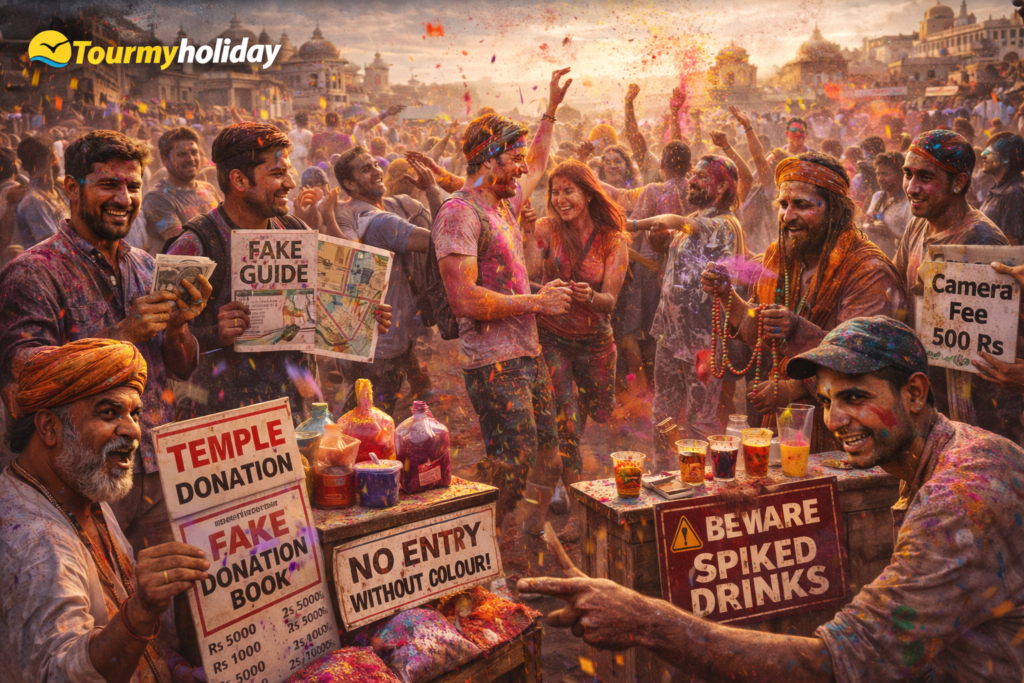
Certain warning signs appear consistently across scams:
- Unsolicited offers are approaching you rather than waiting at official locations
- Pressure for immediate decisions without time to research or consult
- Requests for full upfront payment before services begin
- Prices are dramatically different (higher or lower) than market averages
- Inability or unwillingness to provide official credentials
- Aggressive responses to simple questions or reasonable requests
- Creating urgency through "limited time" or "special festival" claims
Trust your instincts. If something feels wrong, it probably is. Politely decline and seek alternatives.
5. Smart Safety Strategies for Holi 2026
Pre-Trip Preparation:
- Research fair prices for common services and purchases
- Download offline maps (Google Maps, Maps.me)
- Share complete itineraries with family/friends
- Purchase comprehensive travel insurance covering theft and medical emergencies
- Register with your embassy if travelling from abroad
- Learn basic Hindi phrases for emergencies: "Madad chahiye" (I need help), "Police bulao" (Call police)
During Festival:
- Travel in groups, especially after sunset
- Keep photocopies of important documents separately from originals
- Use hotel safes for valuables you don't need daily
- Stay hydrated with sealed bottled water only
- Set daily spending limits and don't carry excess cash
- Avoid isolated areas, particularly early morning and late evening
- Be especially cautious if consuming alcohol—reduced awareness makes you vulnerable
Emergency Contacts:
- Police Emergency: 100
- Tourist Police: 1363
- Pushkar Police Station: +91-145-277-2015
- Rajasthan Tourism Helpline: +91-141-511-0598
- Ajmer District Hospital: +91-145-262-1329
6. What to Do If You're Scammed
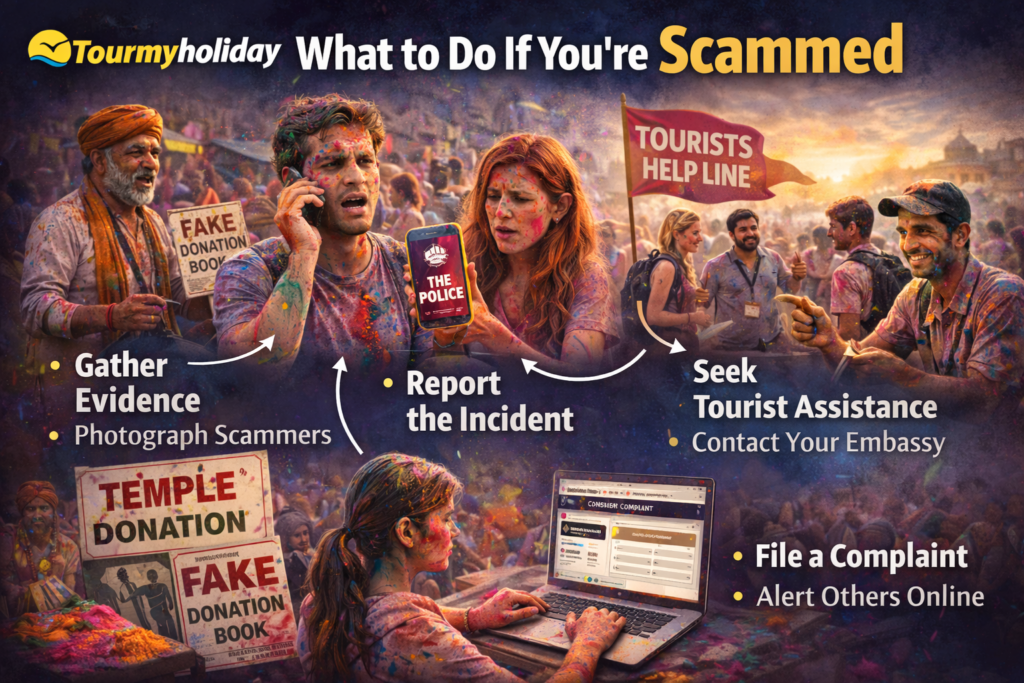
Despite precautions, scams sometimes succeed. Take immediate action:
- Document Everything: Photograph or video record the scammer, location, and any witnesses. Note exact times and amounts involved.
- Report Immediately: File a complaint at the nearest police station. Insist on an FIR (First Information Report) for insurance claims. Tourist police stations operate specifically during festival periods.
- Contact Your Embassy: For significant losses or if you feel unsafe, contact your country's embassy or consulate in Jaipur or Delhi.
- Inform Your Bank: If cards were stolen or compromised, immediately call your bank's international emergency number to block cards and dispute fraudulent charges.
- Share Your Experience: Post detailed warnings on travel forums (TripAdvisor, Lonely Planet Thorn Tree) and social media groups to prevent others from falling victim.
- Pursue Compensation: Travel insurance often covers theft if you have proper documentation (FIR copy, receipts, photographs). Submit claims promptly.
FAQs
Q1: Is Pushkar Holi safe for solo female travellers?
Yes, with heightened awareness. Pushkar is generally safer than larger Indian cities due to its religious significance and tourist infrastructure. However, solo women should: stay in well-reviewed accommodations, avoid isolated areas after dark, dress modestly (covering shoulders and knees), decline drinks from strangers, and consider joining organised group tours. The main festival area during daylight hours is typically safe with a heavy police presence.
Q2: How much money should I budget daily for Pushkar Holi?
Budget ₹3,000-5,000 daily for mid-range travellers, including meals (₹800-1,200), transport (₹500-800), entrance fees and activities (₹500-1,000), and shopping (₹1,000-2,000). Carry cash in small denominations as digital payments often fail during peak festival days due to network congestion. Keep emergency funds (₹5,000-10,000) locked in hotel safes.
Q3: What are the safest areas to stay during Holi?
The area between Brahma Temple and Pushkar Lake offers maximum safety with heavy police deployment, established hotels, and constant tourist presence. Varah Ghat and Gau Ghat neighbourhoods provide good mid-range options. Avoid extremely budget accommodations in remote lanes. Alternatively, stay in Ajmer (15 km away) for better prices and quieter evenings, travelling to Pushkar for daytime celebrations.
Q4: Can I drink tap water in Pushkar?
Absolutely not. Pushkar's water quality is poor even normally. During Holi, chemical colours further contaminate water sources. Consume only sealed bottled water from recognised brands (Bisleri, Kinley, Aquafina). Budget ₹100-150 daily for water. Avoid ice in drinks and fresh juices made with tap water.
Q5: What should I do if someone spikes my drink?
If you suspect drink tampering and feel unusual symptoms (extreme drowsiness, confusion, memory gaps), immediately: tell your companions, move to a safe public space, contact hotel staff or police, seek medical attention at Ajmer District Hospital, and save the drink as evidence if possible. Never leave drinks unattended and watch bartenders prepare your beverages.
Q6: Are credit cards widely accepted in Pushkar?
Limited acceptance exists. Most small shops, street vendors, and budget accommodations operate cash-only. Higher-end hotels and some restaurants accept cards, but network failures during Holi are common. Carry sufficient cash but distributed across multiple secure locations. Inform your bank of India travel dates to prevent fraud alerts blocking legitimate transactions.
Q7: What's the best time to visit temples to avoid scams?
Early morning (6-8 AM) sees mostly genuine devotees and fewer scammers. Evening aarti (6-7 PM) offers authentic experiences, but larger crowds increase pickpocketing risks. Avoid mid-morning to afternoon when tour groups and aggressive touts peak.
Conclusion
Pushkar Holi 2026 promises unforgettable memories—vibrant colours exploding in sacred spaces, spiritual energy palpable in ancient temple courtyards, and genuine cultural immersion unavailable anywhere else on earth. Don't let fear of scams prevent you from experiencing this extraordinary festival.
Instead, approach Pushkar with informed awareness. Recognise that while scammers exist, they represent a tiny fraction of Pushkar's population. Most locals genuinely welcome tourists and take pride in sharing their cultural heritage. By understanding common scams and implementing simple protective measures, you can navigate Holi confidently and safely.
The key lies in balance: maintain healthy scepticism without becoming paranoid, protect yourself without isolating from authentic interactions, and trust your instincts while remaining open to magical spontaneous moments that make travel transformative.
Prepare thoroughly, stay alert during your journey, and focus your energy on the incredible experience awaiting you. Pushkar Holi 2026 will reward prepared travellers with memories, photographs, and stories you'll treasure forever.
Final Thought: Connect with fellow travellers through verified communities like "Pushkar Holi Tour Package 2026" Facebook group or Reddit's r/IndiaTravel for real-time scam alerts, safety updates, and shared experiences. Collective awareness makes everyone safer while preserving the festival's joyful spirit.
Happy and safe Holi celebrations!
Pushkar Holi 2026 – Complete Blog Guide
- Pushkar Holi Festival 2026: Everything You Need to Know (March 3-4 Guide)
- Is Pushkar Holi Safe for Girls? Solo Female Travel Guide 2026
- Pushkar Holi 2026: Live Updates, Road Closures & Parking Guide
- Holika Dahan in Pushkar 2026: Exact Timings & Best Ghats for Rituals
- How to Protect Your iPhone & DSLR during Pushkar Holi (2026 Gear Guide)
- Pushkar Holi 2026: A Complete Guide to Celebrating India's Most Vibrant Festival in the Sacred City
- Pushkar Holi 2026 from Delhi: Best Packages, Dates & Guide
- Pushkar Holi 2026 from Ahmedabad: Packages, Dates & Travel Guide
- Pushkar Holi 2026 from Jaipur: Ultimate Day Trip & Weekend Getaway Guide
- Pushkar Holi 2026: Dates, Itinerary & Complete Celebration Guide
- Pushkar Holi Party 2026: Your Complete Guide to the Best Celebrations, Venues & Insider Tips
- Pushkar Holi Festival – A Once-in-a-Lifetime Celebration
- Celebrate Holi in Style: Luxury Pushkar Packages Await
- Pushkar Holi Festival 2026 – Celebrate Colours, Culture & Festivities
- Pushkar Holi 2026 Cost Breakdown – Budget vs Premium Tour Experience


