
Is Budha Madmaheshwar Harder Than the Kedarnath Trek? Truth Revealed
Published on April 27, 2026 | Updated on September 14, 2026
Every year, thousands of pilgrims and trekkers head to the sacred Himalayan shrines of Uttarakhand. Among the most revered are Kedarnath — one of the 12 Jyotirlingas — and Budha Madmaheshwar, a lesser-known gem that is part of the Panch Kedar circuit. While Kedarnath needs no introduction, Budha Madmaheshwar is quietly gaining a reputation as one of the most demanding and rewarding treks in the Garhwal Himalayas.
But here is the question that most trekkers ask before planning: Is Budha Madmaheshwar harder than the Kedarnath trek?
Having spoken to experienced trekkers, local guides, and pilgrims who have completed both routes, the answer is nuanced — and might surprise you.
Understanding the Two Treks at a Glance
Before we compare difficulty, it helps to understand what each trek actually involves.
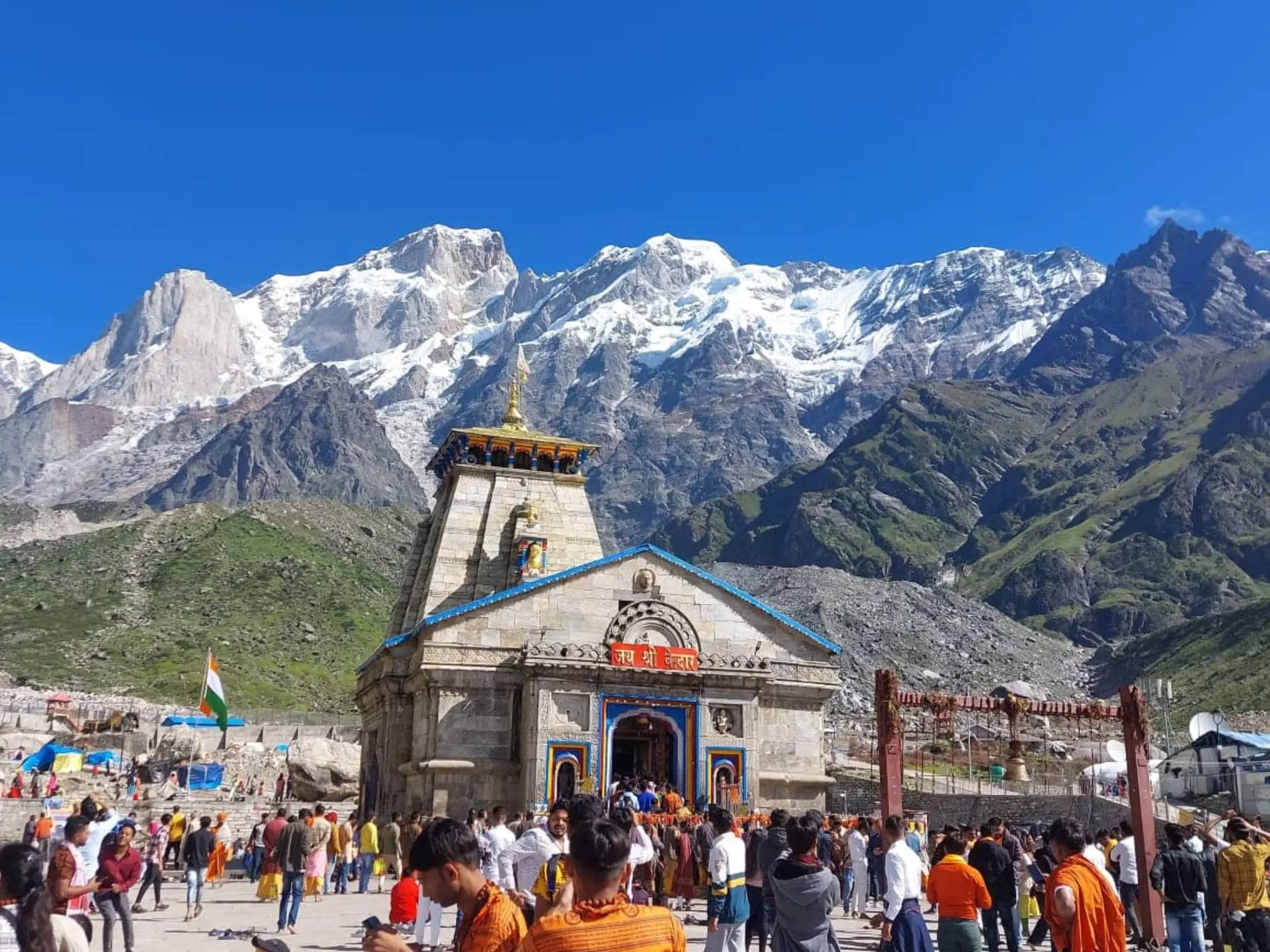
Kedarnath Trek starts from Gaurikund (1,982 m) and ends at the Kedarnath temple (3,583 m). The one-way distance is approximately 16–18 km, and most fit individuals complete it in a single day. The trail is extremely well-developed, paved in many sections, and served by mule tracks, ponies, dolis (palanquins), and even helicopter services. Thousands of pilgrims — including elderly individuals and small children — complete this trek every season.
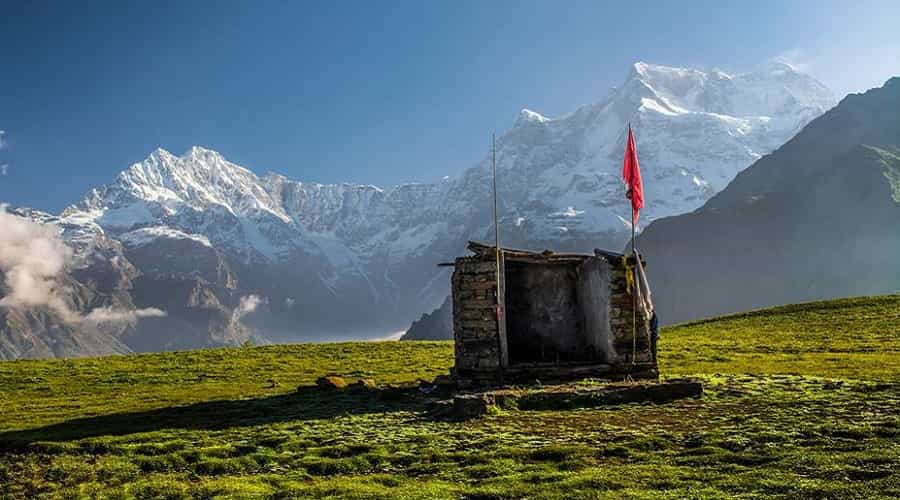
Budha Madmaheshwar Trek begins from Ransi village (2,010 m) in the Ukhimath area and reaches the Budha Madmaheshwar temple ~3,580 m (11,745 ft), with the trail extending further to upper meadows approaching 4,000+ m. The distance is approximately 24 km one way, spread over 2–3 days minimum. The trail is narrow, less frequented, involves river crossings, dense forest sections, and high-altitude alpine meadows with no paved sections whatsoever.
Trail Difficulty: A Detailed Comparison
Distance and Elevation Gain
Kedarnath gains roughly 1,600 m in 16–18 km. Budha Madmaheshwar gains approximately 1,500 m in 24 km. On paper, the elevation gain is similar — but Budha Madmaheshwar's longer trail, multi-day structure, and technical terrain make the cumulative effort significantly higher.
The Kedarnath trail, being wide and paved in several stretches, allows for a predictable, manageable climb. Budha Madmaheshwar, by contrast, has steep, narrow, and often slippery sections — especially after rain — that demand far more energy and caution per kilometre walked.
Trail Infrastructure
This is where the gap between the two treks becomes most apparent. Kedarnath is one of the most infrastructure-heavy pilgrimage routes in India. It has tea stalls, rest houses, medical camps, and porter services at frequent intervals. You are never too far from help or food.
Budha Madmaheshwar is the opposite. Facilities are minimal. Apart from a small dharamshala near the temple, there is very limited lodging or food beyond what you carry or find at the base village. You must be largely self-sufficient, particularly on the higher stretches of the trail.
Remoteness and Rescue Access
If something goes wrong on the Kedarnath trek, help is accessible. Helicopter evacuations happen regularly. Army posts and medical facilities are stationed along the route.
Budha Madmaheshwar is far more remote. Emergency access is limited. If a trekker gets injured or faces altitude-related illness on the upper sections, evacuation requires significant time and resources. This remoteness adds a serious dimension of risk management that the Kedarnath route simply does not require.
Terrain Type
The Kedarnath trail is a well-worn mule path. While steep in sections and demanding for unfit individuals, the surface underfoot is predictable. Budha Madmaheshwar weaves through oak and rhododendron forests, crosses streams, traverses exposed ridges, and ends in open alpine meadows where the weather can turn rapidly. The terrain is genuinely wild and requires navigational awareness.
Altitude and Acclimatisation
Both destinations sit at similar altitudes — around 3,500 m. However, the way altitude is experienced differs between the two treks.
On the Kedarnath route, most trekkers ascend and descend within 1–2 days, leaving limited time for altitude sickness to set in. On Budha Madmaheshwar, you spend multiple nights at altitude, and if you venture to the upper meadows beyond the temple — which reward you with stunning views of Kedarnath, Chaukhamba, and Neelkanth peaks — you are operating at 3,800–4,000 m.
That prolonged high-altitude exposure, especially without proper acclimatisation planning, makes Budha Madmaheshwar the more technically demanding of the two.
Fitness Requirements
For Kedarnath, a moderate level of fitness is enough. People of all ages, including senior citizens, complete the trek regularly. The availability of mules and dolis means that even those who struggle can complete the journey.
For Budha Madmaheshwar, you need to be in good cardiovascular shape. Prior trekking experience — even a day or two on moderate Himalayan terrain — is highly recommended. You should be comfortable carrying a backpack for 6–8 hours a day on uneven trails. There are no mules, no shortcuts, and no dolis.
Crowd vs. Solitude
Kedarnath witnesses lakhs of pilgrims every season. During peak months (May–June and September–October), the trail can be overwhelmingly crowded, which paradoxically can slow your pace, create bottlenecks, and reduce the sense of a wilderness experience.
Budha Madmaheshwar draws a fraction of that crowd. You may walk for hours, encountering only a handful of fellow trekkers. This solitude is one of the trek's greatest gifts — but it also means you cannot rely on others being nearby if something goes wrong.
Verdict: Which Trek Is Harder?

Yes — Budha Madmaheshwar is objectively harder than the Kedarnath trek for most trekkers.
The longer trail, the absence of proper infrastructure, a multi-day commitment, technically demanding terrain, a remote location, and the need for genuine self-sufficiency all contribute to a significantly higher level of difficulty. Kedarnath, while spiritually profound and physically tiring for beginners, is made accessible by its infrastructure and human support systems.
That said, "harder" does not mean "better" or "worse." Kedarnath is one of the most powerful spiritual experiences in India — and not every trek needs to be a wilderness challenge. Budha Madmaheshwar suits those who want both the sacred and the adventurous, the divine and the demanding.
If you have completed Kedarnath and are looking for your next Himalayan challenge, Budha Madmaheshwar is a natural and deeply rewarding progression.
Best Time to Do Each Trek
Kedarnath: May to June and September to mid-November (the shrine is closed in winter).
Budha Madmaheshwar: May to June and September to October. The upper meadows are at their most spectacular in late September when the skies are crystal-clear post-monsoon.
Quick Comparison Table
| Feature | Kedarnath | Budha Madmaheshwar |
|---|---|---|
| Distance (one way) | ~16–18 km | ~24 km |
| Duration | 1–2 days | 3–4 days |
| Max Altitude | ~3,583 m | ~4,000 m+ (upper meadows) |
| Infrastructure | Excellent | Minimal |
| Crowd | Very high | Very low |
| Fitness Required | Moderate | Good to High |
| Mule/Doli Available | Yes | No |
| Difficulty | Moderate | Moderately Hard |
Budha Madmaheshwar sees limited trekkers each season — and we'd like to keep it that way. Seats in our guided package fill fast during May–June and September–October windows. Check This Package Madmaheshwar Tour Package
Kedarnath season is short, and the demand is huge. Don't wait until the last minute — our peak-season packages sell out weeks in advance. Secure your dates today. Check This Package Kedarnath Tour Package
FAQs
Q1. Is Budha Madmaheshwar safe for beginners?
Budha Madmaheshwar is not recommended for first-time Himalayan trekkers. It is best suited to those who have prior experience on multi-day mountain trails. If you are a beginner, start with a moderate trek like Kedarnath before attempting Budha Madmaheshwar.
Q2. Can I do Budha Madmaheshwar in a single day?
No. The minimum recommended itinerary is 3–4 days, including travel to the base village of Ransi. Attempting it in a single day would be unsafe and physically irresponsible given the distance and terrain.
Q3. Which trek has better views — Kedarnath or Budha Madmaheshwar?
Both are stunning, but for panoramic Himalayan views of multiple peaks, including Kedarnath, Chaukhamba, and Neelkanth, the upper meadows of Budha Madmaheshwar are exceptional and far less visited, offering a more pristine experience.
Q4. How do I reach the base of Budha Madmaheshwar?
The nearest major town is Ukhimath in Rudraprayag district. From there, a short drive brings you to Ransi village, which is the trailhead. Ukhimath is accessible from Rishikesh and Haridwar via road.
Q5. Do I need a guide for Budha Madmaheshwar?
While the trail is marked, a local guide is strongly recommended — especially for first-timers. Given the remote nature of the trek and limited mobile connectivity, a guide provides safety, navigation support, and local knowledge that significantly enhances both safety and experience.
Q6. What is the difference between Madmaheshwar and Budha Madmaheshwar?
Madmaheshwar (also spelt Madhyamaheshwar) is the main Panch Kedar shrine at approximately 3,497 m. Budha Madmaheshwar refers to a secondary shrine slightly further up on the ridge, associated with the "old" (budha) deity form, offering even more elevated views and a deeper sense of seclusion.


