
Why Hampta Pass Is Called the Most Dramatic Crossover Trek in India
Published on June 24, 2026 | Updated on August 28, 2026
The Hampta Pass Trek stands out because the landscape does not simply become higher as you walk—it changes character completely.
The journey begins on the greener Kullu side near Manali, moves through forests, riverside meadows and alpine terrain, climbs to Hampta Pass, and then descends into the more rugged landscape of Lahaul Valley.
Within a few trekking days, dense vegetation gives way to exposed mountains, wider valleys and drier terrain. This sharp visual transition is why Hampta Pass is often described as one of India’s most dramatic crossover treks.
The change is not just a travel-marketing phrase. The Lahaul region lies north of the Pir Panjal ranges in a rain-shadow zone, which contributes to its significantly drier character compared with the greener valleys on the southern side. The District Lahaul and Spiti administration documents this rain-shadow effect in its official geographical information.
What Is a Crossover Trek?
A crossover trek starts in one valley or region and finishes on the other side of a mountain pass rather than returning along exactly the same trail.
Hampta Pass follows this pattern particularly well.
Trekkers begin from the Kullu-Manali side, cross the high mountain pass and descend towards Lahaul. That means the scenery after crossing the pass is genuinely different from what you experienced while climbing towards it.
This makes Hampta Pass different from an out-and-back trek where the return journey largely repeats the same landscape.
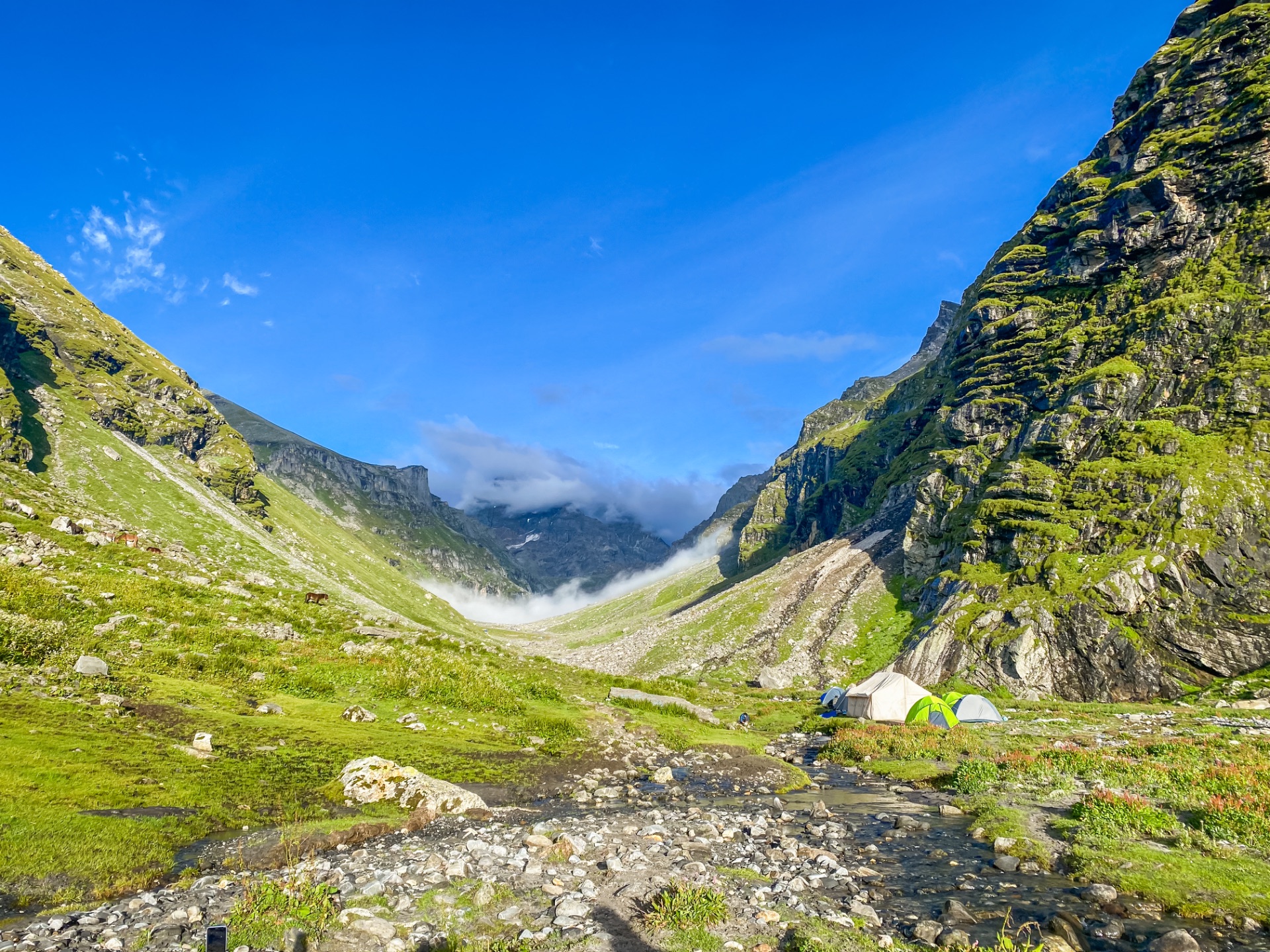
The Green Beginning Near Jobra
The trekking journey begins around Jobra, above the Manali side of Kullu.
TourMyHoliday’s current route drives from Manali to Jobra before beginning the trek towards Chika. The lower section passes through forested terrain before opening into broader mountain landscapes.
This side of Hampta Pass feels distinctly Himalayan and green:
- Forested slopes
- Flowing streams
- Grassy sections
- Alpine vegetation
- Mountain meadows
- Waterfalls and seasonal wildflowers
At this stage, there is little indication of how different the landscape will become after crossing the pass.
Balu Ka Ghera: Where the Landscape Starts Changing
As the trek gains altitude, vegetation gradually becomes thinner and rocky terrain becomes more prominent.
Balu Ka Ghera is an important stage in this transition. The current itinerary reaches the campsite after following Rani Nallah through meadows, rocks and alpine terrain.
From here, the mountains feel larger and more exposed.
The green Kullu landscape has not disappeared entirely, but the route is clearly moving towards the harsher high-altitude environment around the pass.
This gradual build-up makes the eventual crossover more dramatic.
Crossing Hampta Pass
The main transformation happens on the pass-crossing day.
Hampta Pass reaches approximately 14,100 ft under TourMyHoliday’s current operating itinerary. From Balu Ka Ghera, trekkers climb towards the pass before descending towards the Lahaul side.
Near the pass, the trail becomes much more exposed.
Depending on seasonal snow and current conditions, the landscape may include:
- Snow patches
- Rocky slopes
- High mountain ridges
- Scree
- Glacial features
- Broad views across neighbouring valleys
This is where the word crossover begins to make visual sense.
The landscape behind you and the terrain ahead can look like two different trekking regions.
The Lahaul Side Feels Completely Different
After crossing Hampta Pass, the descent leads towards Shea Goru and eventually Chatru on the Lahaul side. TourMyHoliday’s current itinerary specifically describes the pass crossing as a descent into Lahaul Valley.
Vegetation becomes noticeably thinner.
The terrain is more exposed, colours shift towards brown, grey and ochre, and the wider valley has a much drier appearance than the Kullu side.
This contrast has a geographical explanation. The District Lahaul and Spiti administration notes that Lahaul lies in the rain shadow north of the Pir Panjal ranges, receiving much less monsoon influence than areas south of the range.
Himachal Tourism similarly describes Lahaul as a region where the landscape changes from greener valleys and forested hillsides to sandy, rocky highland terrain. Read the official Himachal Tourism guide to Lahaul Valley.

Why the Crossover Feels So Dramatic
Hampta Pass does not depend on one single viewpoint to make the trek memorable.
Its appeal comes from continuous change.
Forest to Alpine Terrain
The journey begins among vegetation and gradually climbs above the greener lower landscape.
Meadows to Rock and Snow
Higher sections around Balu Ka Ghera and the pass become more exposed and rugged.
Kullu to Lahaul
Crossing the pass moves trekkers from the wetter Kullu side towards the drier Lahaul landscape.
Narrow Valley to Open Terrain
The early trekking sections can feel enclosed by mountain walls, while the Lahaul side opens into a broader and more austere landscape.
This sequence is what gives Hampta Pass its visual storytelling.
You do not simply arrive at the scenery—you watch it change while walking through it.
Is Hampta Pass a Kullu-to-Spiti Crossover?
Not exactly.
This is an important geographical distinction.
The actual Hampta Pass crossing takes trekkers from the Kullu side into Lahaul Valley. Spiti lies further east within the larger Lahaul and Spiti district.
Some travel content loosely uses “Spiti landscape” because the dry terrain resembles the cold-desert scenery associated with Spiti, and many Hampta itineraries continue towards Chandratal.
But describing the primary crossover as Kullu to Lahaul is more accurate.
If you want the geographical location explained separately, read Where Is Hampta Pass Situated?.
Where Chandratal Fits Into the Experience
After reaching Chatru, many itineraries add a road excursion towards Chandratal Sarovar.
Chandratal is not the actual Hampta Pass crossover. It is an additional excursion after the trekking section and depends on road and weather conditions.
TourMyHoliday’s current itinerary visits Chandratal from Chatru on Day 4 when access permits, before returning to Chatru for the night.
Keeping this distinction clear prevents the lake from overshadowing the actual reason Hampta Pass is such an unusual trek: the landscape transition experienced while crossing the mountain range on foot.
Is the Crossover Difficult?
The landscape transformation may be the focus of this article, but reaching the pass still requires high-altitude trekking.
The summit day includes a steep climb followed by descent into Lahaul, and current conditions can change the physical challenge significantly.
For a detailed assessment rather than repeating it here, read Is Hampta Pass Trek Difficult?.
Himachal Tourism also advises trekkers to use appropriate equipment and experienced trekking support for high-altitude routes. See the official Himachal Tourism trekking guidance.
Why Photographers Like the Hampta Pass Crossover
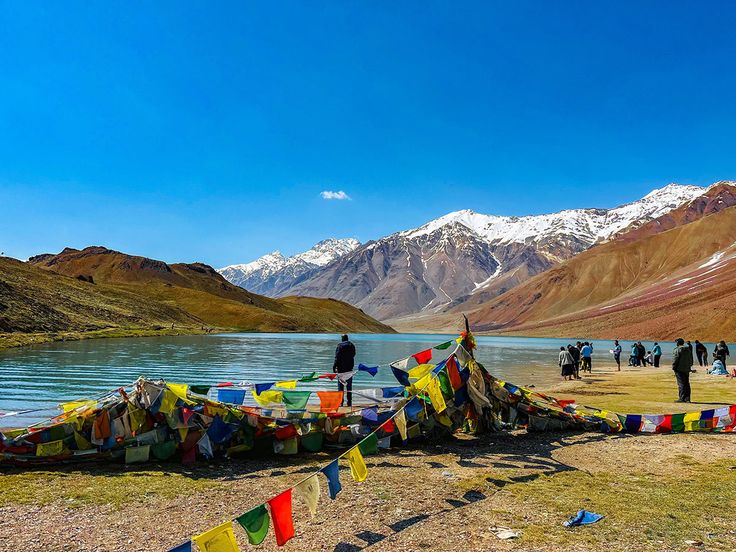
Hampta Pass offers several visual environments within the same trip.
A photographer can move from:
green forests → open meadows → rocky high-altitude terrain → snow patches → dry Lahaul landscape
without travelling between completely separate trekking regions.
Weather can change the appearance dramatically, so specific views should never be guaranteed, but the geographic contrast itself is one of the route’s most consistent characteristics.
Frequently Asked Questions
1. Why is Hampta Pass called a crossover trek?
Hampta Pass is a crossover trek because the route begins on the Kullu-Manali side, crosses a high mountain pass and descends into the contrasting terrain of Lahaul rather than returning by the same trail.
2. Does Hampta Pass connect Kullu and Spiti?
The primary trek crosses from Kullu into Lahaul. Some itineraries later continue towards Chandratal and the wider Lahaul-Spiti region, which is why Spiti is often mentioned in travel descriptions.
3. What makes the Hampta Pass landscape so different?
The trek moves between areas with different elevation, vegetation and rainfall influence. Lahaul lies north of the Pir Panjal in a rain-shadow region, contributing to its much drier appearance.
4. Where does the Hampta Pass crossover begin?
Most organised itineraries begin the trekking section around Jobra near Manali before moving towards Chika and Balu Ka Ghera.
5. Where do trekkers descend after Hampta Pass?
Trekkers generally descend towards Shea Goru and then Chatru on the Lahaul side.
6. Is Chandratal part of the Hampta Pass Trek?
Chandratal is usually an optional or itinerary-based road excursion after the main trek, not part of the actual Hampta Pass crossing. Access depends on road and weather conditions.
Why Hampta Pass Deserves Its Crossover Reputation
Hampta Pass is memorable because the trek is built around transition rather than one isolated attraction.
You begin among the greener landscapes of Kullu, gradually enter the high mountains, cross Hampta Pass and descend into the drier terrain of Lahaul.
That visible change reflects real geographical differences across the mountain range, making the trail an unusually clear example of how quickly Himalayan landscapes can transform.
Travellers who want the complete itinerary, current inclusions, camping arrangements and Chandratal excursion details can explore the Hampta Pass Trek Package with Chandratal.
More Hampta Pass Trek Guides
➜ Hampta Pass Trek Complete Guide
➜ Hampta Pass Packing Mistakes for First-Time Trekkers
➜ How Far Is Hampta Pass from Manali?
➜ Best Month for Hampta Pass Trek
➜ Hampta Pass Trek During Monsoon
➜ Is Hampta Pass Good for Beginners?


