Hampta Pass Trek 2026 — Complete Guide with Itinerary, Difficulty, Chandratal Lake & Travel Tips
Published on February 18, 2026
By TourMyHoliday | Updated: 2026 | Reading Time: ~10 minutes
Imagine starting a trek in a lush green valley carpeted with wildflowers, thick pine forests, and the sound of a crystal-clear river rushing beside you. Then, four days later, you are standing on a high-altitude pass at 14,100 feet — and on the other side, everything has changed. The green is gone. In its place is a vast, silent, lunar landscape of bare brown mountains, glacial valleys, and endless sky. Two completely different worlds. One trek.
That is the magic of the Hampta Pass Trek.
The Hampta Pass Trek is a classic Himalayan crossover trek located in Himachal Pradesh, starting near Manali and ending in the remote Lahaul region. What makes Hampta Pass special is its contrast — in just a few days, you walk through pine forests, open grasslands, glacial valleys, river crossings, snowfields, and finally descend into a completely different landscape. For trekkers who want variety without committing to a long expedition, Hampta Pass offers maximum Himalayan diversity in minimal time.
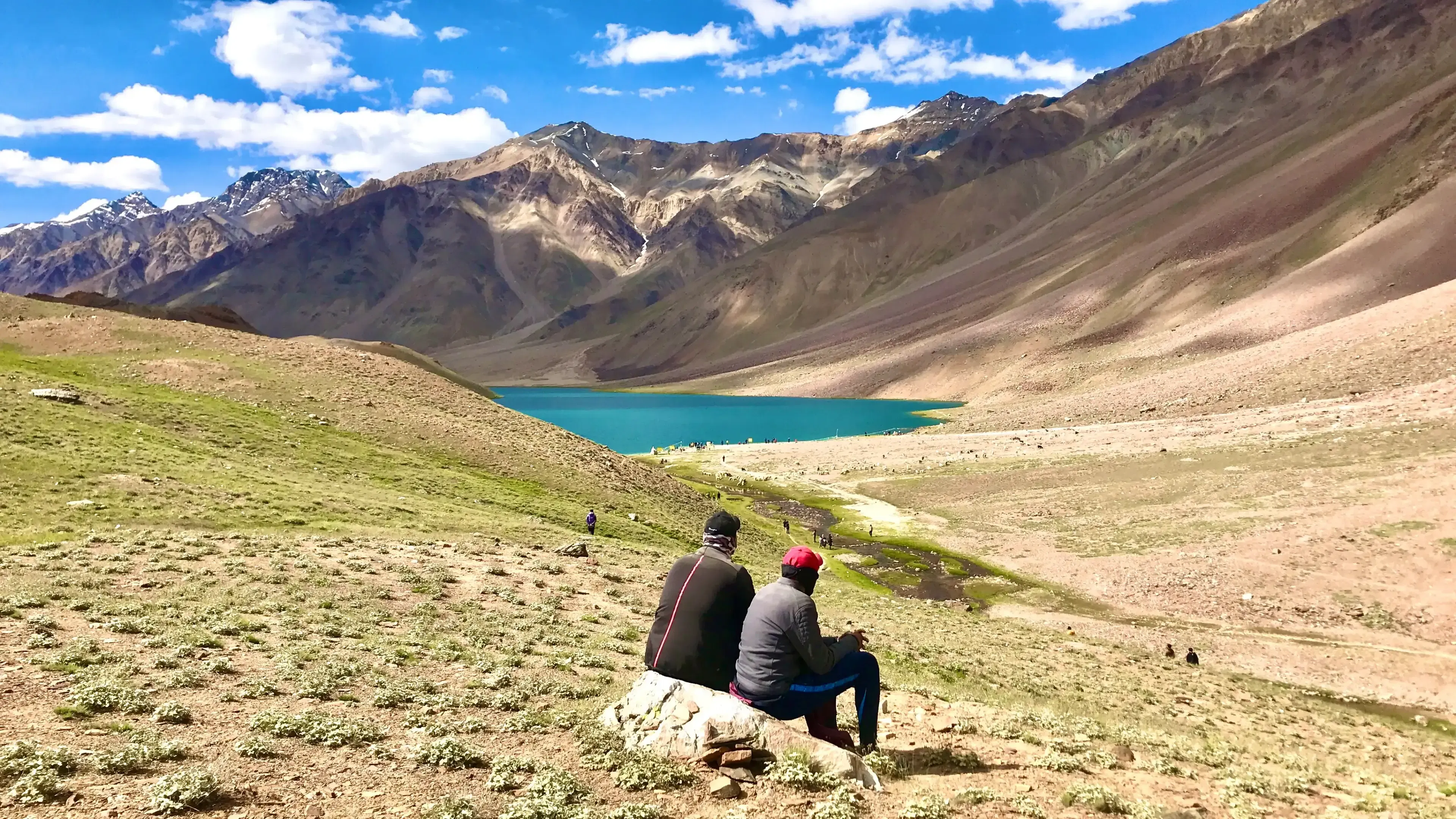
And then there is Chandratal Lake — a crescent-shaped alpine jewel at 14,100 feet in the Spiti Valley — glittering blue and impossibly beautiful under a star-filled Himalayan sky. Add it to your itinerary, and Hampta Pass becomes not just a trek, but a journey you will talk about for the rest of your life.
This is your complete 2026 guide to the Hampta Pass Trek — everything you need to know before you go.
Hampta Pass Trek — Key Facts at a Glance

| Detail | Information |
|---|---|
| Trek Type | Crossover (starts and ends in different valleys) |
| Maximum Altitude | 14,100 ft (4,270 m) — Hampta Pass |
| Total Trek Distance | ~26 km |
| Duration | 5 days (6 days with Chandratal Lake) |
| Difficulty Level | Moderate |
| Base Camp | Manali / Jobra |
| Starting Point | Jobra (18 km from Manali) |
| End Point | Chatru (Lahaul side) — drive back to Manali |
| Trek Season 2026 | Mid-June to early October |
| Best Time | June–July (snow) or September (clarity) |
| Suitable For | Beginners with good fitness, experienced trekkers |
| Nearest City | Manali, Himachal Pradesh |
What Is the Hampta Pass Trek?
Hampta Pass is a high-altitude ridge in the Pir Panjal range of Himachal Pradesh. Located at 14,100 ft, it connects the Kullu Valley with the Lahaul Valley, marking a transition zone between their contrasting topography. As a beginner, this trek will introduce you to almost all the features of Himalayan geography — from the fast-flowing Beas River, forest trails, waterfalls, and meadows to barren slopes, bouldered regions, an alpine lake, and snowy tracks — you experience it all in one place.
Hampta Pass is a high-altitude crossover trek that connects the lush green Kullu Valley to the stark, arid landscapes of the Lahaul region. The dramatic shift in scenery during this trek is nothing short of stunning, with every day bringing a new backdrop.
The trek begins at Jobra (the road head, 18 km from Manali) and follows the Rani Nallah river through meadows and valleys before the dramatic high-altitude pass crossing. On the other side, the trail descends into the barren, otherworldly landscape of Lahaul. Most trekkers then drive from Chatru to Chandratal Lake for an overnight camping experience before returning to Manali via the Atal Tunnel.
Why Do the Hampta Pass Trek in 2026?

There are dozens of treks in the Indian Himalayas, so why choose Hampta Pass? Here are five reasons this trek stands apart:
1. The Most Dramatic Landscape Contrast in the Himalayas. On one side, you have the lush greenery of Kullu Valley — thick forests, open meadows, and wildflowers lining the trail. On the other side of Hampta Pass, you step into the barren, rugged beauty of Lahaul. The terrain is stark, the mountains bare, and the skies endlessly blue. This shift, from one landscape world to another, happens within a single trekking day — and is unlike anything else you will experience in the Indian Himalayas.
2. Perfect for First-Time High Altitude Trekkers The Hampta Pass Trek difficulty is graded as moderate, making it suitable for fit first-time trekkers as well as experienced hikers. No prior high-altitude trekking experience is required, making it an ideal first Himalayan crossover trek when done with a guided group.
3. Chandratal Lake — A Once-in-a-Lifetime Add-On A major highlight of the Hampta Pass Trek is the visit to the stunning Chandratal Lake, a crescent-shaped alpine lake with unreal blue hues. Camping beside the lake under a sky blazing with stars is one of the most extraordinary overnight experiences available on any Indian Himalayan trek.
4. Short Duration, Maximum Reward The basic Hampta Pass Trek takes five to six full days to finish well making it ideal for working professionals, college students, and anyone who wants a genuine Himalayan adventure within a limited holiday window.
5. Year-Round Accessibility from Manali Manali is one of India's best-connected mountain towns — accessible by road, air (via Bhuntar Airport), and overnight bus from Delhi. The Hampta Pass trek starts just 18 km from Manali town, making logistics simple and stress-free.
Hampta Pass Trek Season 2026 — When Does It Open?
The trail opens in mid-June 2026. The full trekking season runs from mid-June to early October, though each month offers a very different experience on the trail.
Best Time to Do the Hampta Pass Trek 2026
| Month | Conditions | Recommended? |
|---|---|---|
| Mid-June | Heavy snow near the pass, lush green Kullu Valley, cold nights | ✅ Excellent (snow lovers) |
| Late June–July | Snow patches, wildflowers blooming, vibrant green meadows, occasional rain | ✅ Very Good |
| August | Monsoon season, lush but wet trails, potential landslides on road sections | ⚠️ Good (prepare for rain) |
| September | Post-monsoon clarity, cool temperatures, dramatic skies, fewer crowds | ✅ Best Overall |
| Early October | Getting colder, trail still open, quiet and peaceful | ✅ Good (for experienced trekkers) |
| After mid-October | Trail closes, snowfall, not recommended | ❌ Season Closed |
TourMyHoliday Recommendation: June and early July are ideal for those seeking snow, while September offers outstanding post-monsoon clarity. For a first-time trekker, September is the single best month — stable weather, clear views, cooler temperatures, and fewer fellow trekkers on the trail.
Hampta Pass Trek Difficulty — What to Expect

The Hampta Pass Trek difficulty is graded as moderate. Most of the trail involves gradual ascents through valleys and meadows, allowing the body to acclimatise naturally. However, the pass-crossing day is the longest and toughest, requiring sustained walking for 8–9 hours over snow patches and steep sections near the pass. While the trek does not involve technical climbing, basic physical fitness and endurance are essential. Stream crossings and the descent from the pass towards Shea Goru demand careful footing.
The first two or three days are easy, but the summit day will be a bit challenging. Therefore, you should prepare well for this trek, both physically and mentally, and ensure you have good stamina.
Fitness Preparation (start 6–8 weeks before the trek): Daily brisk walking (5–7 km), stair climbing with a loaded backpack, light jogging, squats and lunges for leg strength, and core exercises. The better your fitness is going in, the more you will enjoy every moment on the trail.
Hampta Pass Trek — Day-by-Day Itinerary 2026
Day 0 — Arrive in Manali (Acclimatisation Day)
Arrive in Manali and check into your hotel or guesthouse. Spend the rest of the day exploring Manali town — visit the Hadimba Devi Temple, stroll through Mall Road, explore the Old Manali cafés, and stock up on any last-minute trek supplies (energy bars, warm layers, trekking socks). An acclimatisation day in Manali is strongly recommended before beginning the trek — the altitude gain over the following days will be significantly easier if your body has had 24 hours to adjust.
Altitude: 6,726 ft (2,050 m) Stay: Hotel in Manali
Day 1 — Manali to Jobra to Chika Camp (Trek Begins)
Drive: Manali → Jobra (18 km, approximately 1 hour by jeep/cab) Trek: Jobra → Chika Camp (approximately 5 km, 3–4 hours) Altitude: Jobra 6,700 ft → Chika Camp 10,100 ft Difficulty: Easy
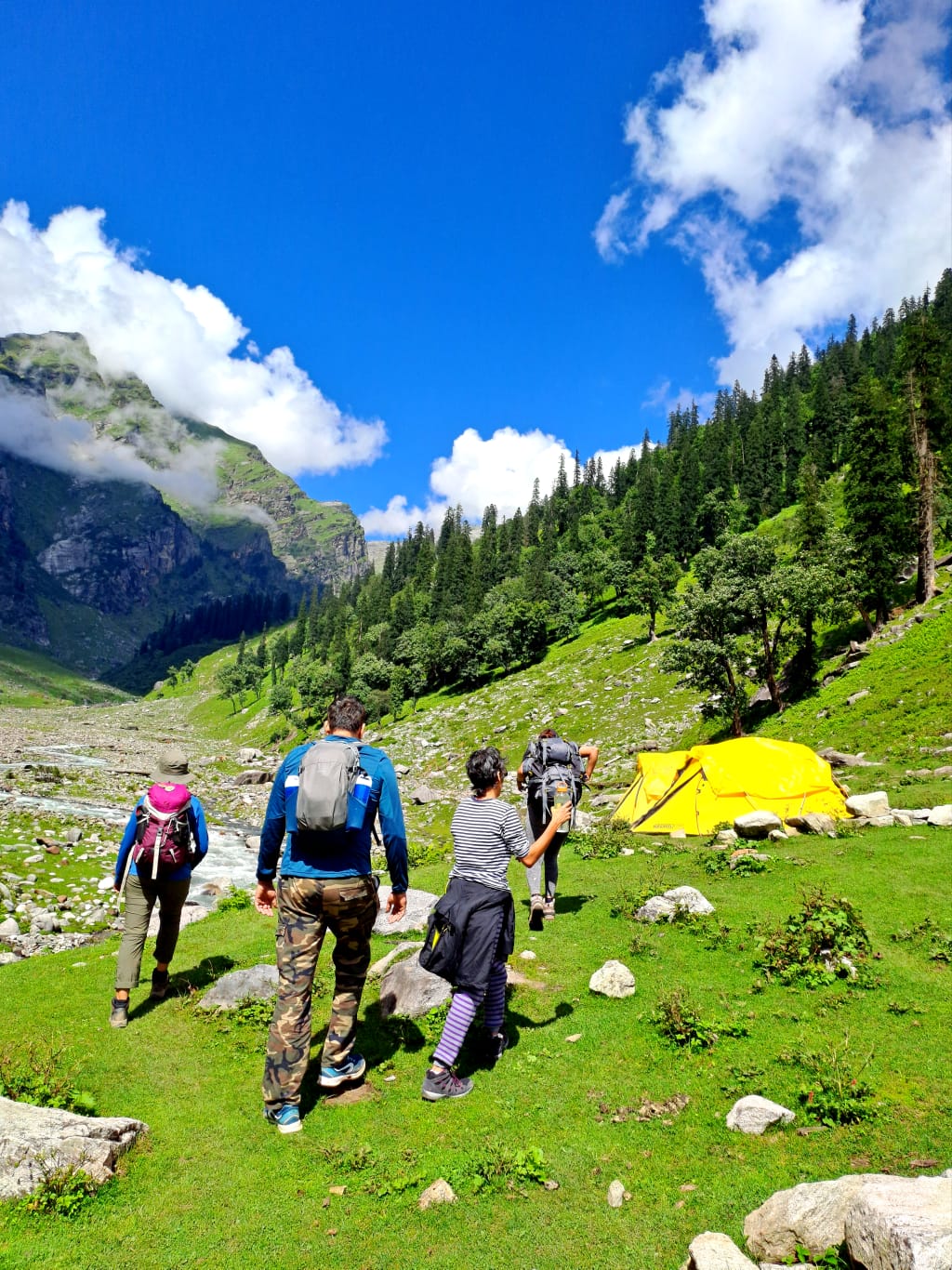
The base camp for the Hampta Pass Trek is Jobra. The picturesque drive, especially from Manali, along with 42 hairpin turns, has panoramic views of the Kullu Valley. The Rani Nallah, which you will trek alongside till it disappears under the snow of Hampta Pass, starts accompanying you from here. From the road head at Jobra, the campsite is a 30-minute trek through a mixed forest of pine, bright green maple trees and luminescent silver birch.
Almost immediately, you're welcomed by dense pine and maple forests. The trail is gentle, well-marked, and ideal for easing your body into trekking mode. As you walk, the Rani Nallah flows alongside — sometimes calm, sometimes roaring after rain.
The Chika campsite is a beautiful open meadow offering your first clear views of the Pir Panjal range. Settle into your tents, enjoy a warm campfire dinner, and sleep under a sky full of Himalayan stars.
Stay: Tents at Chika Camp
Day 2 — Chika Camp to Balu Ka Ghera
Trek Distance: Approximately 9 km Duration: 5–6 hours Altitude: 10,100 ft → 12,500 ft Difficulty: Moderate
You are now about halfway through your trek as you enter a walled valley. On one side of the valley are the rock faces, and on the other end is the river below. Once you cross the river, you are at Jwar, where nature is at her dramatic best. Walk along the Rani River heading into a rectangular valley. On your way, you will find a variety of tiny flowers — purple, yellow, pink. The trees are now left behind.
The Balu Ka Ghera campsite gives you a unique camping experience in the U-shaped valley surrounded by the Pir Panjal ranges. The name Balu Ka Ghera literally means "circle of sand" — and the camp is nestled in a breathtakingly beautiful sandy flat between towering mountain walls.
It is level ground, and behind you are the mountains you will traverse the next day to cross the Hampta Pass. Pitch your tent and enjoy a beautiful sunset behind the Hanuman Tibba peak. You are now close to 12,500 ft above sea level.
Stay: Tents at Balu Ka Ghera
Day 3 — Balu Ka Ghera to Hampta Pass (Summit Day) to Shea Goru
Trek Distance: Approximately 8 km Duration: 7–9 hours Altitude: 12,500 ft → 14,100 ft (Hampta Pass) → 11,600 ft (Shea Goru) Difficulty: Moderate to Difficult — the most demanding day of the trek
This is the day you have been building towards. Start as early as 5:00–5:30 AM to reach the pass before afternoon clouds or weather roll in.
The climb to the pass begins early. Snowfields often cover the trail, especially in June and early July. Each step demands focus. Breathing becomes deliberate. Conversations fade. And then — suddenly — you're standing at Hampta Pass. On one side lies the green Kullu Valley. On the other hand, the stark brown mountains of Lahaul. The contrast is shocking and beautiful.
Standing at over 14,000 ft, the view from Hampta Pass showcases towering peaks and dramatic valleys. The close-up views of Mt. Indrasan and Mt. Deo Tibba are a visual treat for mountain lovers and photography enthusiasts alike.
Take a well-earned break at the top — soak in the views, take photographs, and let the magnitude of the moment settle in. Then begins the descent.
The descent towards Shea Goru is steep and thrilling, often involving snow slides depending on conditions. Two hours of steep descent from the pass, easing off into a flat walk. The landscape around you is now completely transformed — bare, rocky, and vast. You have crossed from one Himalayan world into another.
Stay: Tents at Shea Goru
Day 4 — Shea Goru to Chatru — Drive to Chandratal Lake
Trek Distance: Approximately 4 km (short descent to Chatru) Duration: 2–3 hours trekking + drive to Chandratal Altitude: 11,600 ft → Chatru 10,800 ft → Chandratal Lake 14,100 ft
The final day is a relaxed descent along the Chandra River. The terrain feels alien compared to where you started — dry, rocky, and vast.
From Chatru, vehicles are waiting to drive trekkers to Chandratal Lake — one of the most spectacular high-altitude lakes in India. Chandratal was designated as a Ramsar Wetland Site in 2005. The drive from Chatru to Chandratal is an experience in itself — winding along the Chandra River through the bare, moon-like Lahaul landscape.
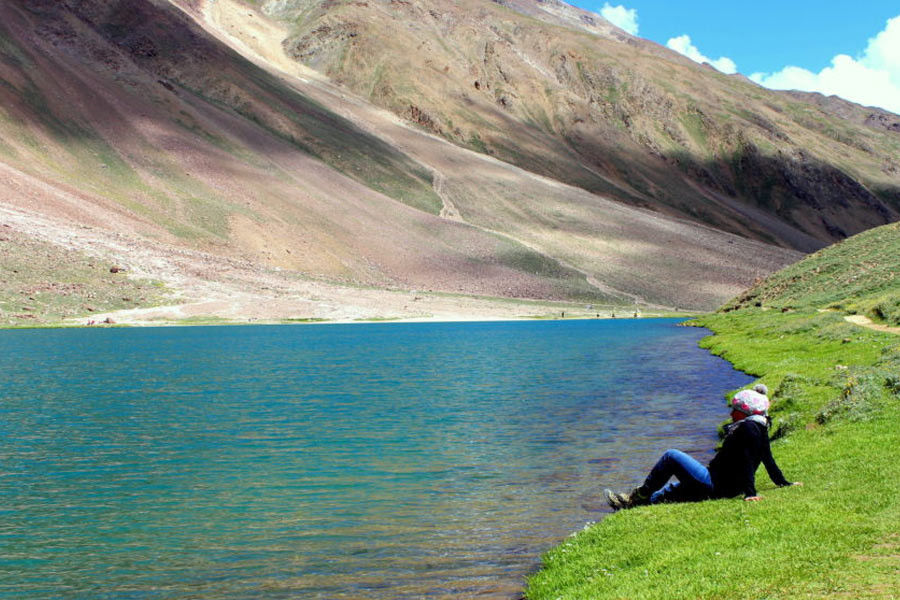
Chandratal means Moon Lake in the local hill language. The lake sits at fourteen thousand one hundred feet high in the Spiti region. Its water stays clear and blue, showing perfect reflections of the tall peaks around.
Camping overnight beside Chandratal under a sky overflowing with stars is the single most memorable experience of the entire trek for most trekkers. A moment that is simply impossible to forget.
Stay: Tents at Chandratal Lake campsite
Day 5 — Chandratal to Manali (Via Atal Tunnel / Rohtang Pass)
Wake up early for sunrise over Chandratal Lake — the lake turns gold, then pink, then brilliant blue as the sun rises over the Spiti peaks. After breakfast, drive back to Manali. The return route goes via the Atal Tunnel (the world's longest highway tunnel above 10,000 ft) or via Rohtang Pass, depending on weather and road conditions. Arrive in Manali by afternoon. Trek concludes.
Chandratal Lake — The Highlight of the Extended Itinerary

The Hampta Pass trek is a mesmerising crossover trek that helps you witness the beauty of Himachal Pradesh. Along the way, you'll also witness Chandratal — an emerald-shaped lake. The trek's highest point is the Hampta Pass, which offers striking sights of snow-capped mountains, valleys, and meadows in every direction.
A few key things to know about Chandratal before you go:
Altitude: 14,100 ft (4,300 m) — same as Hampta Pass itself. Altitude sickness is possible for some visitors. Ascend slowly and stay hydrated.
Access: Chandratal is located approximately 63 km from Kaza (Spiti) and about 65 km from Chatru. The road is open only from June to October. After heavy monsoon rains, the road can be temporarily blocked.
Camping: Designated camping zones surround the lake. A 500-metre eco-protection zone means tents cannot be pitched right at the water's edge — but the designated campsites still offer stunning lake views.
Photography: Chandratal is arguably the most photogenic lake in Himachal Pradesh. At sunrise and sunset, the colours reflected in the still water are extraordinary. Carry a fully charged camera and power bank.
Leave No Trace: Chandratal is a protected Ramsar wetland. Carry out all your waste and do not use soap, shampoo, or detergent anywhere near the lake.
Hampta Pass with Chandratal — What's Included in a Package
A standard Hampta Pass Trek package from a certified trekking operator typically includes the following:
Included: All meals from Day 1 dinner to Day 5 breakfast, tent accommodation throughout the trek, certified trek leader and support staff, basic safety equipment (first aid kit, oxygen cylinder, stretcher), all camping equipment (tents, sleeping bags, mats), forest permits and entry fees, transport from Manali to Jobra (start point) and Chandratal to Manali (return).
Not Included: Travel to and from Manali, accommodation in Manali (pre and post trek), personal trekking gear (boots, jacket, poles), personal travel insurance, porter charges for personal luggage, and any costs arising from medical evacuation.
TourMyHoliday Tip: Always book through certified, registered trekking operators. Ensure your trek leader is a certified Wilderness First Responder or has equivalent mountain rescue training. Check that the operator carries an emergency oxygen cylinder on the trek.
How to Reach Manali (Base for Hampta Pass Trek) 2026
By Road from Delhi (545 km): The most popular option. Overnight Volvo AC buses run from ISBT Kashmiri Gate, Delhi, to Manali every evening. Journey time is approximately 14–16 hours. Tickets cost approximately ₹1,200–₹2,000. A direct road trip by car takes 12–14 hours via Chandigarh and Mandi.
By Air: You can fly to Bhuntar Airport (Kullu-Manali Airport) and take a taxi to Manali — approximately 50 km, taking 1.5–2 hours. Flights operate from Delhi, Chandigarh, and Mumbai. Subject to weather cancellations in the Himalayas — always have a buffer day.
By Train: The nearest major railway station is Chandigarh (approximately 310 km from Manali) or Pathankot(approximately 325 km). From either station, take a bus or taxi to Manali.
From Manali to Jobra (Trek Start): Jobra is 18 km from Manali town. Trek operators arrange shared or private jeeps from Manali to Jobra as part of the package.
What to See and Do in Manali Before the Trek

Since most trekkers arrive in Manali a day early for acclimatisation, use this time well:
Hadimba Devi Temple — A unique four-storeyed wooden pagoda temple dedicated to Hadimba Devi, set amidst ancient deodar cedar trees. One of the most beautiful and atmospheric temples in Himachal Pradesh.
Old Manali — A charming village above Manali town with cafés, guesthouses, apple orchards, and a relaxed bohemian energy. Perfect for a slow acclimatisation walk.
Solang Valley — 14 km from Manali, famous for adventure activities (paragliding, zorbing, skiing in winter) and stunning mountain views. A good day excursion before the trek.
Mall Road, Manali — Stock up on trek supplies, try local Himachali cuisine, and pick up warm woollens if needed.
Vashisht Hot Springs — Natural sulphur hot springs in the village of Vashisht, 3 km from Manali. A wonderful place to soak tired muscles — before or after the trek.
Essential Gear & Packing List for Hampta Pass Trek 2026
Footwear: Waterproof trekking boots with ankle support (non-negotiable). Break them in before the trek. Carry sandals or floaters for camp and stream crossings.
Clothing: Moisture-wicking base layer, fleece mid-layer, waterproof windproof outer shell jacket, full-length trekking trousers, warm trekking socks (3–4 pairs), lightweight gloves, warm beanie/hat, sun hat or cap, buff/neck gaiter.
Backpack: 45–55 litre trekking backpack with rain cover. Pack only what you need — every extra kilogram matters at altitude.
Trek Essentials: Trekking poles (highly recommended for the steep Hampta Pass descent), headlamp with extra batteries, water bottles (carry 2 litres minimum), water purification tablets, sunscreen SPF 50+, UV protection sunglasses, lip balm with SPF.
Health & Safety: Personal first aid kit, Diamox (altitude sickness tablets — consult your doctor before taking), ORS sachets, pain relief tablets, blister pads, and hand sanitiser.
Documents & Misc: Government-issued photo ID, emergency contact details, offline maps downloaded (Google Maps / Maps.me), power bank (fully charged), cash in hand (no ATMs beyond Manali), small dry bags to keep electronics and documents waterproof.
Important Safety Tips for the Hampta Pass Trek
Acclimatise properly: Do not skip your Manali acclimatisation day. The altitude gain over the first two days of the trek is significant. Give your body time to adjust.
Hydrate constantly: At altitude, your body loses moisture faster than you realise. Drink at least 3–4 litres of water every trekking day. Add ORS to your water on summit day.
Know the signs of altitude sickness: Headache, nausea, dizziness, loss of appetite, and difficulty sleeping are early warning signs. If symptoms are severe or worsening, descend immediately and inform your trek leader. Never ignore AMS (Acute Mountain Sickness).
Weather can change instantly: Mountain weather in Himachal Pradesh is highly unpredictable. Clear mornings can turn into thunderstorms in minutes, especially in July and August. Always carry your rain gear, even on a sunny morning.
Never trek alone: Always stay with your group and trek leader. The trail beyond Balu Ka Ghera becomes increasingly remote and difficult to navigate alone, especially in low visibility or snowfall.
River crossings: Stream crossings on the trail can be tricky, especially after monsoon rain or snowmelt. Unbuckle your backpack hip belt before crossing (so you can shed it quickly if you fall). Use trekking poles for balance.
Carry enough cash: There are no ATMs, no UPI signal, and no shops beyond Jobra. Carry sufficient cash for the entire trek, including emergencies.
Frequently Asked Questions (FAQs)
Q1. What is the Hampta Pass Trek altitude?
The maximum altitude of the Hampta Pass Trek is 14,100 ft (4,270 m) at the Hampta Pass summit. The Chandratal Lake is also at a similar altitude of 14,100 ft.
Q2. Is the Hampta Pass Trek suitable for beginners?
Although the Hampta Pass Trek has an altitude of 4,270 metres, its difficulty is rated as moderate, and it is regarded as one of the best Himalayan treks for beginners to sharpen their skills. Good physical fitness and 6–8 weeks of preparation training are recommended.
Q3. When does the Hampta Pass Trek season start in 2026?
The trail opens in mid-June 2026. The season runs until early October.
Q4. How many days does the Hampta Pass Trek take?
The standard Hampta Pass Trek takes 5 days. Adding Chandratal Lake makes it a 6-day itinerary — and is strongly recommended.
Q5. What is the total trek distance of Hampta Pass?
The Hampta Pass trek distance spans approximately 26 km, carefully distributed over a 5-day itinerary to ensure proper acclimatisation.
Q6. What is the best month for the Hampta Pass Trek?
You have a fairly open window from mid-June to early October. June–early July offers snow patches, cold river crossings, and floral valleys. Mid-July to August brings wild green everywhere, but watch for landslides and washed-out trails. September is the best overall month for stable weather and clear views.
Q7. Is the Hampta Pass Trek safe during the monsoon?
July marks the beginning of the monsoon season in India. While the trails are lush and green, the rainfall can lead to slippery paths and potential landslides. Trekking in the monsoon is possible but requires extra caution, good waterproof gear, and a reliable guide.
Q8. Can I do the Hampta Pass Trek without a guide?
Technically possible, but strongly not recommended, especially for first-time Himalayan trekkers. The trail beyond Balu Ka Ghera becomes remote and difficult to navigate in poor visibility or snow. Booking through a certified trekking operator ensures safety, logistics, and emergency support.
Q9. Is there mobile network coverage on the Hampta Pass Trek?
Mobile network coverage is available in Manali and partially in Jobra. Beyond Jobra, network connectivity is very limited to absent. Download offline maps before starting the trek.
Q10. What is Chandratal Lake, and should I add it to my Hampta Pass Trek?
Chandratal Lake is a stunning, crescent-shaped alpine lake at an impressive altitude of 14,100 feet, known for its extraordinary blue hues and unreal reflections of surrounding peaks. Yes — absolutely add it to your itinerary. The one extra day it requires is completely worth it. Camping beside Chandratal under a star-filled Himalayan sky is the highlight of the entire journey for most trekkers.
Hampta Pass Trek 2026 — Complete Quick Reference
| Detail | Information |
|---|---|
| Trek Duration | 5 days (6 days with Chandratal) |
| Total Distance | ~26 km |
| Maximum Altitude | 14,100 ft (Hampta Pass + Chandratal) |
| Difficulty | Moderate |
| Season 2026 | Mid-June to early October |
| Best Month | September |
| Base Town | Manali |
| Trek Start Point | Jobra (18 km from Manali) |
| Trek End Point | Chatru (Lahaul side) → drive to Manali |
| Campsites | Chika, Balu Ka Ghera, Shea Goru, Chandratal |
| Nearest Airport | Bhuntar (Kullu-Manali Airport) |
| Nearest Bus Stand | Manali Bus Station |
| Key Highlights | Pass crossing, landscape contrast, Chandratal Lake, Indrasan & Deo Tibba views |
Also Read:
- How Far is Hampta Pass from Manali?
- Which Month is Best for the Hampta Pass Trek?
- Where is Hampta Pass Situated?
- Is the Hampta Pass Trek Difficult?
- Hampta Pass Trek 2025 – Itinerary, Cost & Trekking Tips
- Hampta Pass During Monsoon – Adventure & Beauty
- Why Hampta Pass is Perfect for Beginners
- Hampta Pass Trek Package with Chandratal – Book Now
Ready to cross from one Himalayan world into another? Let TourMyHoliday plan your perfect Hampta Pass Trek 2026 — certified guides, comfortable camps, seamless logistics, and a trek experience you will never forget. Contact us today.