
Valley of Flowers Trek for Beginners: First-Timer Guide
Published on June 17, 2026 | Updated on August 28, 2026
If the Valley of Flowers is going to be your first Himalayan trek, one question probably matters more than anything else: can a beginner actually do it?
Yes—provided you arrive reasonably fit and understand what the trail involves.
The Valley of Flowers trek does not require technical climbing, ropes or mountaineering experience. However, calling it an effortless trek would also be misleading. Long walking hours, high altitude, uphill sections, rain, slippery trails and consecutive trekking days can make the journey tiring for someone who is completely unprepared.
For a first-time trekker, the right way to approach the Valley of Flowers is therefore not to ask whether it is “easy”, but whether you are prepared enough to enjoy it safely.
Located in Uttarakhand's Chamoli district, Valley of Flowers National Park is internationally recognised for its alpine meadows, endemic flora and remarkable Himalayan landscape. It forms part of the UNESCO-listed Nanda Devi and Valley of Flowers National Parks. You can read more on the official UNESCO World Heritage listing for Nanda Devi and Valley of Flowers National Parks.
This beginner-focused guide explains what the trek actually feels like, how much walking to expect, how fit you should be, what to carry, and the mistakes first-timers should avoid.
Is the Valley of Flowers Trek Suitable for Beginners?
The Valley of Flowers can be a good first Himalayan trek for fit beginners, but that distinction is important.
You do not need previous trekking experience, but you should be comfortable walking for several hours and recovering well enough to walk the following day again.
Official Uttarakhand Tourism material describes the route in the moderate range, while established trekking assessments also emphasise that it is suitable for beginners who arrive physically prepared.
A beginner is more likely to enjoy the trek if they can:
- Walk continuously for 5–6 km without feeling exhausted.
- Climb several flights of stairs without excessive breathlessness.
- Carry a light daypack for a few hours.
- Maintain a steady pace instead of trying to trek quickly.
- Handle rain, mud and changing mountain weather calmly.
- Follow instructions regarding altitude, hydration and turnaround time.
If you want a deeper breakdown of gradient, altitude gain and physically demanding sections, read our guide on how difficult the Valley of Flowers trek is.
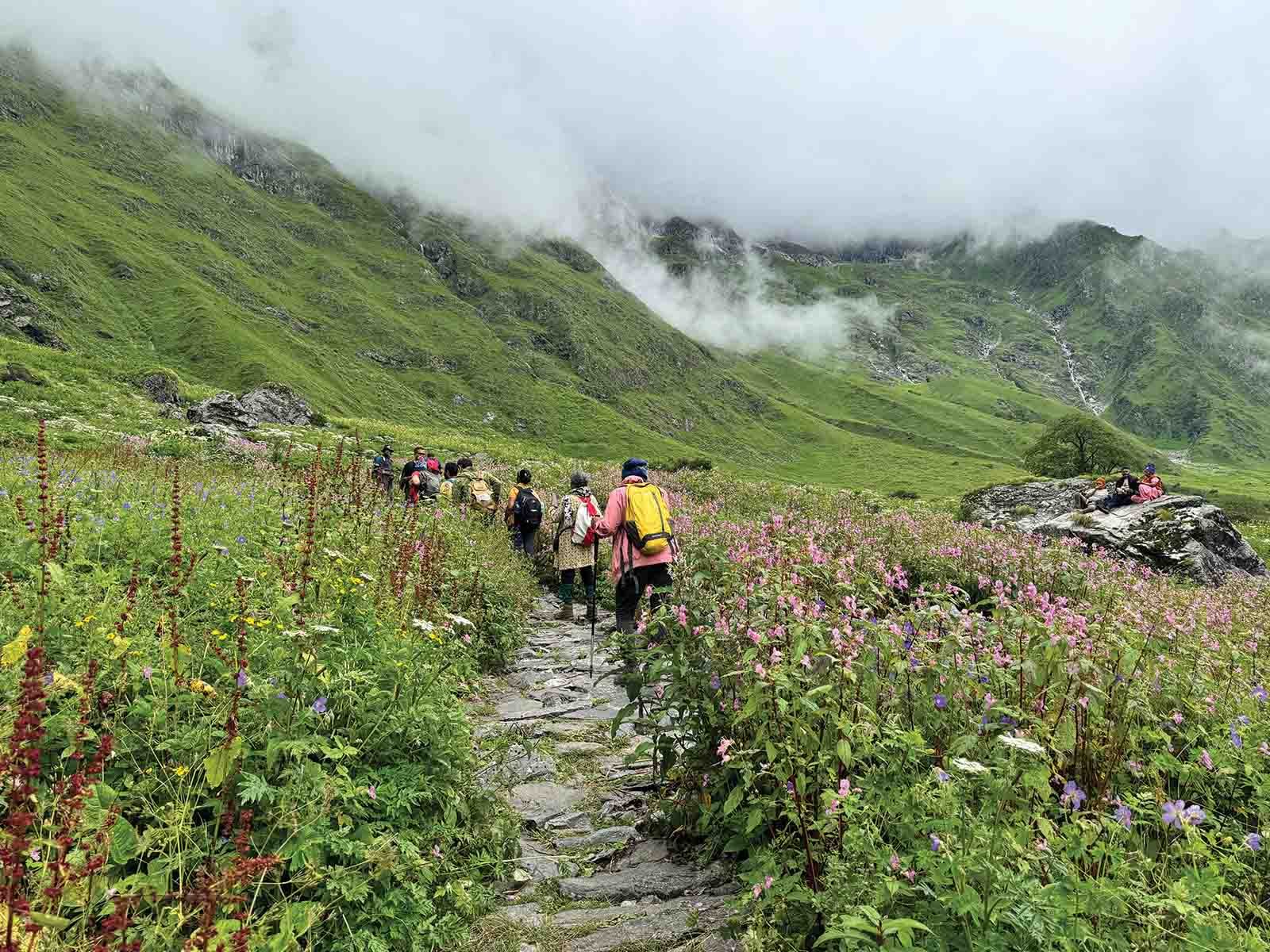
What Makes the Trek Challenging for a First-Timer?
There is no highly technical section on the usual Valley of Flowers trail. The real challenge comes from combining several smaller factors.
1. Long Walking Days
The approach to Ghangaria is the first major test of stamina. Uttarakhand Tourism lists the Govindghat–Ghangaria section at roughly 13–15 km depending on the route measurement used, while the Valley of Flowers lies approximately another 4 km from Ghangaria.
That means a first-timer should prepare for hours of walking rather than judging difficulty only by the number of kilometres.
2. High Altitude
Ghangaria sits at roughly 3,050 metres, while the Valley of Flowers is around 3,600 metres above sea level. At this elevation, some travellers may notice that they tire faster than they do at home.
Do not turn the trek into a race. Walk slowly, hydrate regularly and pay attention to unusual symptoms.
For a detailed elevation breakdown, see our Valley of Flowers altitude and elevation guide.
3. Monsoon Trail Conditions
The Valley is famous for its summer and monsoon-season landscape, with the highest abundance of flowers generally seen between July and September according to Uttarakhand Tourism. Rain, however, can also mean wet stones, mud and slippery sections.
Your shoes and rain protection matter just as much as your stamina.
For seasonal conditions, rainfall and temperature expectations, check the detailed Valley of Flowers weather and climate guide.
Valley of Flowers Trek Route for First-Time Trekkers

The usual journey can be understood in three simple stages:
Govindghat → Ghangaria → Valley of Flowers → Ghangaria
Govindghat is the main road-access point for the trek. Ghangaria acts as the trekking base and the last major inhabited stop before entering the national park. From Ghangaria, trekkers make a day visit to the Valley and return to Ghangaria.
Overnight camping inside Valley of Flowers National Park is not permitted, so visitors must return to Ghangaria the same day. Uttarakhand Tourism currently advises visitors to be back at Ghangaria by evening.
If you are planning the road journey before the trek, our separate guide explains how to reach Valley of Flowers without turning this beginner guide into a transport article.
A Beginner-Friendly Way to Plan the Trek
Do not compress your first Himalayan experience unnecessarily.
A comfortable plan generally gives you enough time to reach the region, trek to Ghangaria, visit the Valley, recover and descend without constantly watching the clock.
A typical flow is:
Day 1: Reach the Joshimath/Govindghat region
Day 2: Trek towards Ghangaria
Day 3: Ghangaria to Valley of Flowers and back
Day 4: Optional rest or Hemkund Sahib excursion
Day 5: Descend towards Govindghat
Day 6: Continue the return road journey
This is only a beginner-friendly framework, not a fixed itinerary. Road conditions, weather and your overall travel plan can change the sequence.
For detailed sightseeing stops, transport and day-wise planning, use our complete Valley of Flowers travel guide and itinerary.
How Fit Should You Be Before the Trek?

You do not need an athlete's fitness level, but arriving without preparation is a mistake.
Ideally, begin basic training several weeks before departure.
Simple Beginner Trek Preparation
Start with brisk walking and gradually increase the distance. Once walking feels comfortable, add stairs or moderate inclines.
A useful routine can include:
- Brisk walking for 30–45 minutes.
- Stair climbing two or three times a week.
- Bodyweight squats and lunges.
- Calf raises for uphill and downhill stability.
- Basic core exercises.
- Regular stretching and mobility work.
Towards the final part of your preparation, complete a few longer walks while carrying the same small backpack you plan to use on the trail.
The objective is not speed. You are training your legs and lungs to maintain a comfortable effort for several hours.
How Should a Beginner Pace the Trek?
One of the biggest first-timer mistakes is starting too fast because the first section feels manageable.
A better strategy is to maintain a pace at which you can still speak comfortably.
Take short breaks rather than sitting for a long time after every climb. Drink water regularly instead of waiting until you feel very thirsty.
On uphill stretches, shorten your steps. On wet descents, focus on balance rather than speed.
You may see experienced trekkers moving much faster. There is no benefit in trying to match them.
A steady trek is usually a better trek.
What Should Beginners Pack?
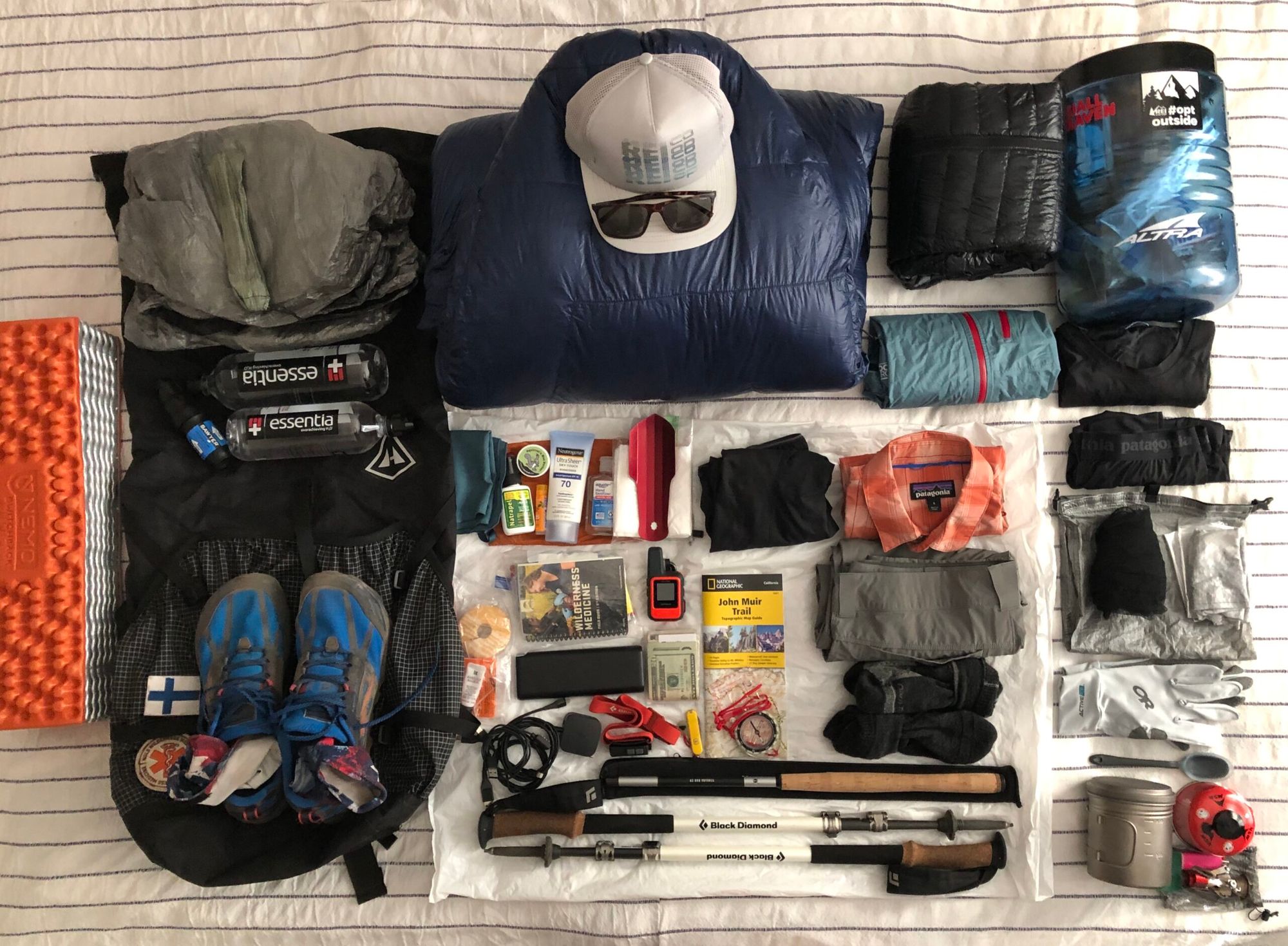
Your backpack does not need to contain everything you own. Carrying unnecessary weight can make an otherwise manageable trek unpleasant.
Prioritise essentials such as:
- Broken-in trekking shoes with reliable grip.
- Lightweight rain jacket or poncho.
- Backpack with rain cover.
- Quick-drying trekking clothes.
- Warm layer for mornings and evenings.
- Extra pair of socks.
- Reusable water bottle.
- Cap or sun protection.
- Personal medicines.
- Basic first-aid essentials.
- ID and required travel documents.
- Waterproof pouch for phone, cash and documents.
- Trekking pole if you are uncomfortable on descents.
Avoid using brand-new trekking shoes for the first time in the Himalayas. Wear them on several training walks beforehand so you know how they feel after a few hours.
For broader planning beyond equipment, read these important things to know before visiting Valley of Flowers.
When Should a Beginner Visit Valley of Flowers?
The Valley is a seasonal high-altitude destination, and the experience changes noticeably through its accessible months.
Uttarakhand Tourism states that flower abundance is generally highest from July to September.
However, a beginner should not choose travel dates only on the basis of flowers. Rainfall, trail condition, road accessibility, crowd levels and personal comfort should also be considered.
Instead of duplicating the full seasonal comparison here, see our dedicated guide to the best time to visit Valley of Flowers.
If July is specifically on your travel calendar, the Valley of Flowers in July guide explains what makes that period different.
Should Beginners Add Hemkund Sahib?
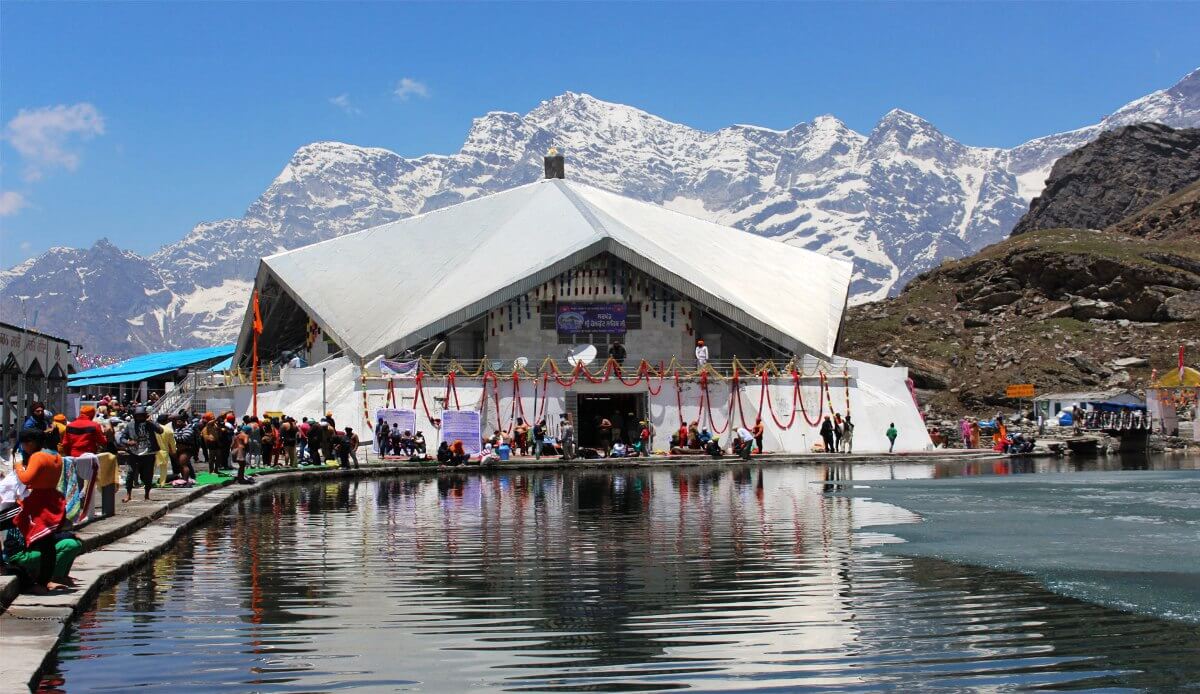
Hemkund Sahib is frequently combined with the Valley of Flowers because Ghangaria serves as a base for both routes.
But beginners should understand that the Hemkund Sahib day is not simply an extension of the flower valley walk. The trail involves a steeper climb and can feel significantly more demanding after previous trekking days. Uttarakhand Tourism also notes steep sections on the Hemkund route.
If you are reasonably fit and recovering well, combining the two can make for a memorable journey. If you are already exhausted after visiting the Valley, forcing another difficult day is unnecessary.
Read the full Valley of Flowers with Hemkund Sahib travel guide before deciding whether to include it.
What Will You See Inside the Valley?
For most first-time trekkers, reaching the landscape is the reward itself.
The national park is recognised for alpine meadows, endemic plants, mountain streams and high-altitude biodiversity. UNESCO specifically highlights the Valley's diverse alpine flora and its importance within the Western Himalayan ecosystem.
You do not need to memorise dozens of flower names before visiting. Walk slowly, observe the landscape and avoid damaging or plucking plants.
Nature-focused travellers can explore our detailed guide to Valley of Flowers biodiversity and flora or learn more about the rare flowers found in Valley of Flowers National Park.
Common Mistakes First-Time Trekkers Should Avoid
Arriving Without Any Fitness Preparation
Being young does not automatically mean you are ready for hours of uphill walking. A few weeks of basic conditioning can change your entire experience.
Carrying Too Much
A heavy backpack adds stress to your shoulders, knees and lower back. Carry what you actually need.
Wearing Ordinary Slippery Shoes
Wet Himalayan trails demand grip. Running shoes with smooth soles are not an ideal substitute for suitable trekking footwear.
Ignoring Rain Protection
Weather can change quickly in the mountains. Keep essential clothing and electronics protected even when the morning starts clear.
Trekking Too Fast
Going faster does not help you acclimatise. Maintain a steady, sustainable pace.
Ignoring Your Body
Persistent headache, unusual nausea, dizziness, severe breathlessness or worsening weakness should not be treated as something to “push through”. Inform your trek leader or local support person and take altitude-related symptoms seriously.
Depending Completely on Mobile Connectivity
Mountain connectivity can be inconsistent. Keep essential booking details, contact numbers and documents available offline.

Do Beginners Need a Guide?
A guide or organised trek is particularly useful if this is your first high-altitude trip, you are travelling alone, or you are uncomfortable handling mountain logistics yourself.
An experienced local guide can help with pacing, trail conditions, changing weather, accommodation coordination and practical decisions during the journey.
Independent travel may suit people who already have trekking experience and understand the region, but beginners should choose based on their confidence and preparedness rather than simply trying to minimise cost.
Before departure, also verify current access conditions, entry requirements and local advisories through Uttarakhand Tourism's official Valley of Flowers information.
Final Verdict: Is Valley of Flowers a Good First Trek?
Yes, the Valley of Flowers can be an excellent first Himalayan trek for a reasonably fit beginner.
It gives you the experience of long mountain walks, changing weather, high altitude and dramatic Himalayan scenery without requiring technical mountaineering skills.
But beginner-friendly does not mean preparation-free.
Train before the trip, pack sensibly, use proper footwear, respect the altitude and avoid rushing. Most importantly, plan enough time to actually enjoy the trail rather than treating every trekking day as a target that has to be completed as quickly as possible.
The first Himalayan trek tends to teach you more about your own pace than about reaching a particular destination. Valley of Flowers is a particularly rewarding place to learn that lesson.
Frequently Asked Questions About Valley of Flowers Trek for Beginners
Is the Valley of Flowers trek easy for beginners?
The trek is achievable for fit beginners, but it should not be treated as an effortless walk. Long distances, altitude, rain and uphill sections require basic fitness and sensible pacing.
How long is the Valley of Flowers trek?
Official tourism information places the Govindghat–Ghangaria route at roughly 13–15 km, with the Valley approximately another 4 km from Ghangaria. Exact walking distance can vary with the route and local access arrangements.
How many days are required for Valley of Flowers?
The core trekking journey can be incorporated into a few trekking days, but travellers coming from major cities generally need additional road-travel days. A relaxed multi-day itinerary is better suited to first-timers than trying to compress the trip.
Do I need previous trekking experience?
No previous Himalayan trekking experience is compulsory, but basic cardiovascular fitness and regular walking practice are strongly recommended.
Is Hemkund Sahib difficult for beginners?
It is more strenuous than the Valley of Flowers day because the climb is steeper. Beginners who include Hemkund Sahib should be physically prepared and allow themselves adequate recovery time.
Can I stay overnight inside Valley of Flowers National Park?
No. Overnight stays and camping inside the Valley of Flowers are not permitted; visitors return to Ghangaria after the day's visit.


