
Best time to visit Valley Of Flowers
Published on September 29, 2025 | Updated on August 28, 2026
The best time to visit Valley of Flowers is generally from July to September, when the alpine landscape is green, and flowering activity is at its strongest.
Uttarakhand Tourism's official guide published on July 13, 2026, also identifies July to September as the best period to visit, when the flowers are in full bloom and the Valley looks especially vibrant.
However, there is no single perfect month for every traveller.
Your ideal month depends on what matters most to you:
- Maximum flower variety
- Lush green landscapes
- Lower rainfall
- Better mountain visibility
- Fewer visitors
- Photography
- A more comfortable trekking experience
The official Uttarakhand Tourism destination page notes that flowers can be seen across a broader May-to-October period, but maximum abundance occurs from July to September.
So instead of asking only “When does Valley of Flowers open?”, a more useful question is:
Which month gives you the experience you actually want?
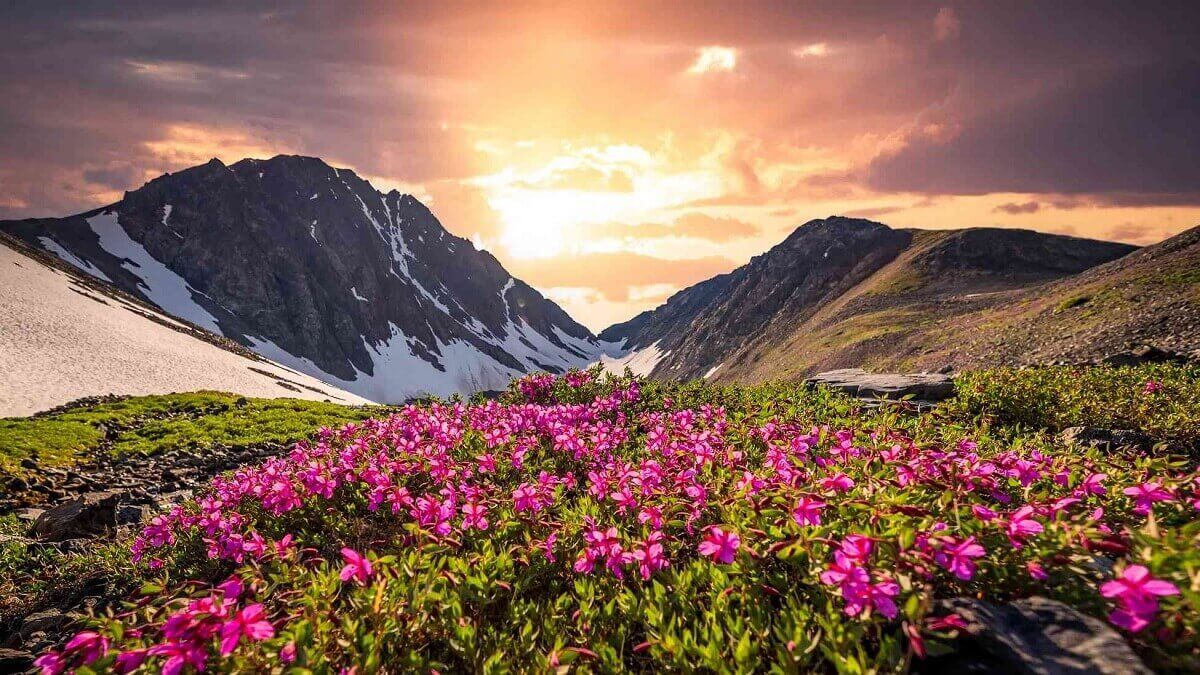
Best Time to Visit Valley of Flowers at a Glance
| Month | Flowering | Rain | Landscape | Best For |
|---|---|---|---|---|
| June | Early season | Low to moderate | Fresh, green, some remaining snow views | Early-season travellers |
| July | Very good | High | Extremely lush | Flowers + classic monsoon Valley |
| August | Excellent | High | Dense greenery and widespread blooms | Maximum floral experience |
| September | Good to very good early in month | Usually less intense than peak monsoon | Clearer-looking late-season landscape possible | Views + flowers + balanced experience |
| October | Flowering declines considerably | Lower | Autumn transition | Only if current park access is confirmed |
Best overall window: July to September
Best for maximum flowers: July to August
Best for a balance of flowers and potentially better visibility: Early September
Best for early-season scenery: June
Which Is the Best Month to Visit Valley of Flowers?
If your main reason for visiting is to see the famous flower-covered landscape, July and August are usually the strongest choices.
Uttarakhand Tourism describes Valley of Flowers as particularly vibrant during the monsoon and notes that flowers appear especially colourful during the rains.
August also receives specific mention on Uttarakhand Tourism's Ghangaria page, which notes extensive flowering during August and September, including several alpine species.
But peak flowering comes with a trade-off:

More flowers often means more monsoon rain, wetter trails and a greater chance of clouds or travel disruption.
Therefore:
-
Choose July or August if flowers are your top priority.
-
Choose September if you want a later-season trip with flowering still present and potentially more settled conditions.
-
Choose June if you prefer an earlier experience and are comfortable seeing fewer flowers.
Valley of Flowers in June
June represents the beginning of the main trekking season rather than the peak flowering period.
The Valley begins transitioning from late spring and snowmelt conditions towards greener summer landscapes.
What June Is Like
You can expect:
- Fresh mountain vegetation
- Early alpine flowers
- Cooler conditions
- Waterfalls and streams fed by snowmelt
- Fewer flowers than peak monsoon months
- Potentially fewer visitors than during peak bloom
June is better for travellers who value the trekking experience and early Himalayan landscape more than maximum floral density.
Is June the Best Time for Flowers?
Usually not.
The official Uttarakhand Tourism guidance identifies July to September as the period of maximum floral abundance, so June should be treated as an early-season option rather than peak bloom.
Who Should Choose June?
June may suit you if:
- You want to travel before peak monsoon.
- You are comfortable seeing fewer flowers.
- Mountain scenery matters as much as flowering.
- You want an earlier-season trek.
If your only priority is seeing the Valley at its most colourful, wait until July or August.
Valley of Flowers in July
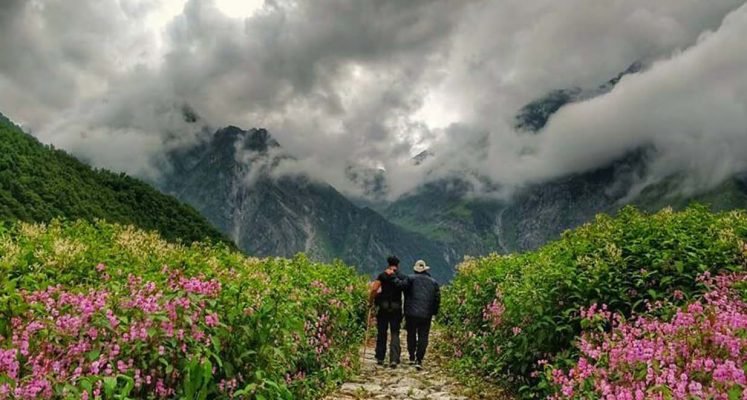
July is one of the most popular months for Valley of Flowers because the monsoon transforms the landscape.
Rain feeds the streams, waterfalls and alpine vegetation, while flowering activity becomes much more noticeable.
Uttarakhand Tourism's current 2026 guidance specifically includes July in its recommended July-to-September visiting period.
Why Visit in July?
July offers:
- Strong flowering
- Bright green meadows
- Active waterfalls
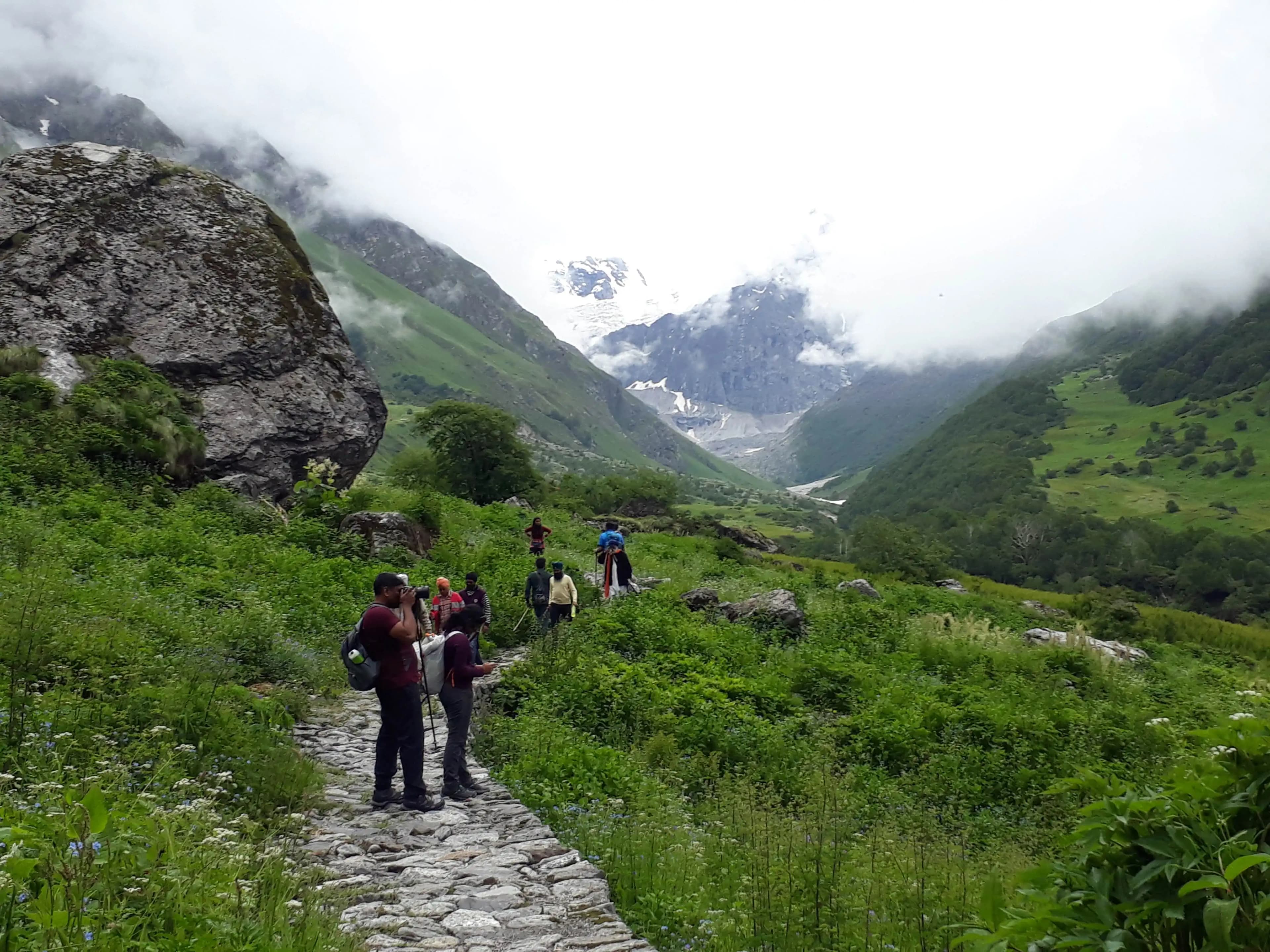
- Mist-covered mountains
- Classic monsoon Himalayan scenery
For travellers imagining Valley of Flowers as a lush green valley filled with colour, July comes close to that classic experience.
The Trade-Off
July is also a monsoon month.
That means you should be prepared for:
- Rain
- Wet trekking trails
- Cloud cover
- Slippery sections
- Possible road delays
- Rapid changes in mountain weather
Do not choose July expecting uninterrupted clear blue skies.
Choose it because rain is part of the ecosystem that creates the lush Valley experience.
For a complete July-specific guide, read our Valley of Flowers in July.
Valley of Flowers in August

August is another excellent month if flowers are your primary reason for visiting.
Uttarakhand Tourism's Ghangaria destination information specifically notes extensive flowering during August and September, while the main Valley destination page places maximum floral abundance between July and September.
Why August Is Popular
August can offer:
- Dense alpine vegetation
- Strong flower diversity
- Very green landscapes
- Numerous streams and waterfalls
- Dramatic cloud-and-mountain scenery
For botanical interest and landscape photography, August can be highly rewarding.
August Is Still Monsoon
The same rainfall that supports flowering can also affect trekking.
Expect the possibility of:
- Frequent showers
- Mud
- Slippery trails
- Reduced mountain visibility
- Road delays
Travellers should therefore choose August for flowers first, not because they expect the driest trekking conditions.
July vs August: Which Is Better?

This is one of the most common decisions when planning Valley of Flowers.
Choose July If:
- You want to experience the Valley as the flowering season builds strongly.
- You enjoy extremely fresh monsoon greenery.
- Waterfalls and streams are an important part of the experience.
- You are comfortable trekking in rain.
Choose August If:
- Maximum flower diversity is your main priority.
- You want dense vegetation and colourful meadows.
- You don't mind monsoon conditions.
- You are comfortable keeping some flexibility in your travel plan.
Which One Wins?
There is no major loser.
July and August are both prime choices.
If flowers are the only criterion, late July through August is generally a strong target period, while recognising that exact flowering patterns vary naturally with snowmelt, rainfall and seasonal conditions.
For detailed temperature and rainfall planning rather than month selection, use our Valley of Flowers Weather & Climate Guide.
Valley of Flowers in September
September can be an excellent choice for travellers who do not necessarily need the absolute peak of monsoon.
Flowering does not suddenly disappear when August ends.
Uttarakhand Tourism includes September within the maximum-abundance period, and its Ghangaria destination information also specifically mentions widespread flowering during August and September.
Why Choose September?
September can offer a useful balance between:
- Remaining alpine flowers
- Green landscapes
- Potentially more open mountain views
- Later-season trekking
- Less dependence on peak-bloom timing
The exact weather cannot be guaranteed, but as the monsoon begins transitioning, some travellers prefer September for its balance.
Are There Fewer Flowers in September?
Generally, the floral character starts changing as the month progresses.
Early September may still provide substantial flowering, while later September increasingly reflects the transition towards autumn.
So if your priority is:
Maximum flowers → July/August
Flowers + potentially improved visibility → Early September
Is October a Good Time to Visit Valley of Flowers?

October should not be treated as a standard best month for Valley of Flowers.
The broader official destination information mentions flowers being viewable into October, but maximum abundance is clearly identified as July to September.
By October:
- Flowering has generally declined significantly.
- Temperatures become colder.
- The landscape begins transitioning towards autumn.
- Seasonal park access may be approaching its end.
Most importantly, opening and closing arrangements can change by season, so do not plan an October trip based purely on an old blog claiming the Valley is definitely open.
Check the current official access status before booking.
If flowers are your main goal, July to September is a much stronger choice.
Best Time to See Maximum Flowers
For most travellers, July through August is the safest period to target if the primary objective is colourful alpine flowering.
Official Uttarakhand Tourism information consistently identifies the broader July-to-September period as the maximum flowering window.
However, Valley of Flowers is a natural ecosystem, not a cultivated flower garden.
There is no fixed date on which every species blooms simultaneously.
Flowering can shift depending on:
- Winter snowfall
- Snowmelt timing
- Rainfall
- Temperature
- Elevation
- Individual species
That is why a broad seasonal window is more useful than searching for one guaranteed “peak bloom date”.
For specific species, see our Rare Flowers in Valley of Flowers National Park.
Best Time for Photography

The best month depends on what type of photography you want.
For Flower Photography
Choose:
July or August
These months generally provide the strongest flowering and lushest vegetation.
For Misty Himalayan Landscapes
Choose:
July or August
Monsoon clouds, waterfalls and green slopes create dramatic landscape photographs.
For a Better Chance of Broader Mountain Views
Consider:
September
While weather is never guaranteed in the Himalayas, the transition away from peak monsoon can sometimes provide more open views.
For Early-Season Landscapes
Choose:
June
You may see fewer flowers, but the fresh mountain landscape has its own character.
For photography inside the protected landscape, stay on established trails and avoid entering flower beds simply to get a closer shot.
Best Time for Fewer Crowds
If crowd avoidance matters more than peak flowering, the edges of the main season can be preferable.
Consider:
-
June
-
Later September, subject to current access and conditions
July and August are popular because they coincide with the strongest flowering season.
However, do not choose an off-peak month purely for fewer crowds if your main goal is seeing abundant flowers.
There is always a trade-off.
Best Time for First-Time Visitors
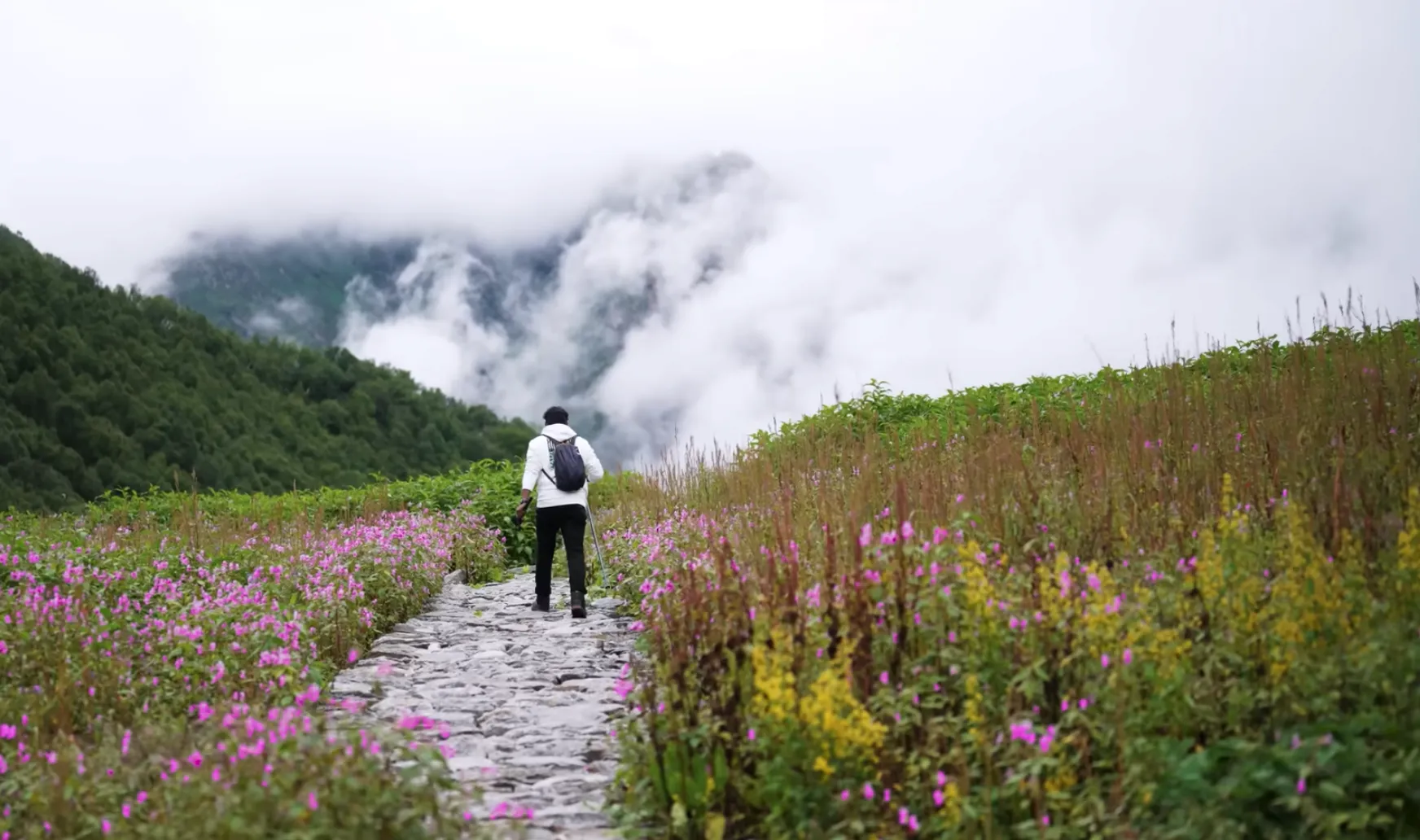
For many first-time visitors, late July to early September offers the most recognisable Valley of Flowers experience.
This period combines:
- Strong flowering
- Green alpine scenery
- Flowing streams
- Active waterfalls
- Established trekking-season operations
But first-time trekkers should understand that peak flowering overlaps with monsoon conditions.
If wet trails and rain are major concerns, September may feel more suitable than peak monsoon.
For beginner fitness, preparation and expectations, read our Valley of Flowers Trek for Beginners.
Best Time for Valley of Flowers and Hemkund Sahib Together
Valley of Flowers and Hemkund Sahib are commonly combined because both use Ghangaria as a base.
If you are planning both, choose a period when both routes are operational and weather conditions allow the trek.
July to September remains the most relevant broad window for combining flowering in the Valley with the Hemkund excursion.
However, Hemkund Sahib is a separate and more demanding high-altitude day.
Do not choose your travel month solely around flowers if you are also concerned about the Hemkund climb.
For combined planning, read our Valley of Flowers with Hemkund Sahib Travel Guide.
Is Monsoon a Bad Time to Visit Valley of Flowers?

No.
In fact, monsoon is a major reason Valley of Flowers becomes so lush and colourful.
Uttarakhand Tourism itself lists Valley of Flowers among Uttarakhand's notable monsoon treks and notes that its flowers become especially vibrant during the rains.
But visiting during monsoon requires realistic expectations.
Advantages
- Strong flowering
- Intense greenery
- Active waterfalls
- Dramatic clouds
- Classic Valley scenery
Disadvantages
- Wet trails
- Rain
- Mud
- Reduced visibility at times
- Potential road disruption
- Need for waterproof gear and itinerary flexibility
So monsoon is neither simply “good” nor “bad”.
It is excellent for the landscape but demanding for logistics.
When Should You Avoid Planning the Trip?
Avoid treating Valley of Flowers as a year-round destination.
Winter conditions make normal tourist trekking access impractical, and annual park access depends on seasonal conditions.
You should also reconsider your travel dates when:
- Severe weather is forecast.
- Official advisories affect the route.
- Roads are disrupted.
- Park access has not yet opened for the season.
- Seasonal closure has already been announced.
Do not rely on an old article's fixed annual opening or closing date.
Check the latest official status close to your trip.
Month-by-Month Decision Guide
Choose June If You Want:
- Early-season scenery
- Cooler trekking conditions
- Fewer visitors
- Some flowers rather than peak flowering
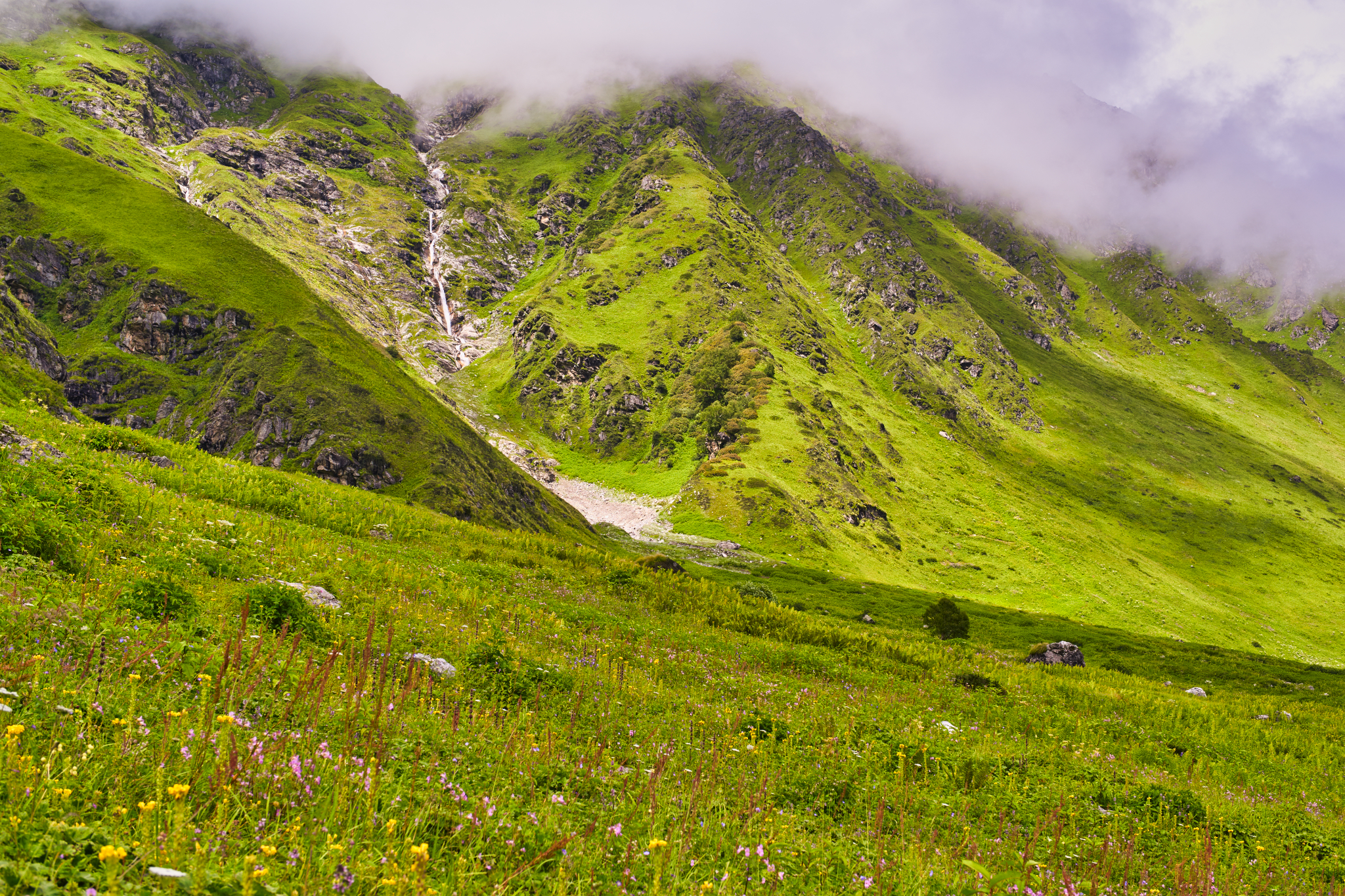
Choose July If You Want:
- Strong bloom
- Lush greenery
- Monsoon atmosphere
- Active streams and waterfalls
Choose August If You Want:
- One of the strongest flower-viewing periods
- Dense vegetation
- Classic colourful Valley landscapes
- A true monsoon trek
Choose September If You Want:
- Remaining flowers
- A later-season experience
- Potential for more open mountain views
- A balance between flowering and seasonal transition
What Is the Best Time According to Your Priority?
| Your Priority | Recommended Period |
|---|---|
| Maximum flowers | July–August |
| Overall best season | July–September |
| Lush green scenery | July–August |
| Monsoon photography | July–August |
| Flowers + potentially better visibility | Early September |
| Fewer peak-season visitors | June or later September |
| Early-season trek | June |
| Valley + Hemkund Sahib | July–September, subject to current access |
Don't Choose Your Month Based Only on Temperature
Temperature is important, but it is not the only factor.
Two days with similar temperatures can feel very different depending on:
- Rain
- Cloud cover
- Wind
- Trail moisture
- Sun exposure
- Elevation
For detailed rainfall, seasonal weather and temperature information, use our Valley of Flowers Weather & Climate Guide.
Keeping weather detail on that page also prevents this Best Time guide from becoming repetitive.
Check Current Access Before Travelling
Seasonal access to Valley of Flowers can be affected by snow, rainfall, road conditions and official park operations.
Before travelling:
- Check the current year's opening status.
- Check current road conditions.
- Review weather alerts.
- Confirm local trekking access.
- Keep some flexibility in your itinerary.
For practical pre-trip preparation, read Things to Know Before Visiting Valley of Flowers.
You can also check the official Uttarakhand Tourism Valley of Flowers page for destination information.
Frequently Asked Questions
1. What is the best time to visit Valley of Flowers?
July to September is the best overall period. Uttarakhand Tourism's current 2026 guidance identifies these months as the best time because flowering is at its strongest and the landscape is especially vibrant.
2. Which is the best month to visit Valley of Flowers?
July and August are excellent if maximum flowers are your priority. Early September can be a better choice if you want flowering along with a later-season experience.
3. Is July a good time to visit Valley of Flowers?
Yes. July is one of the main flowering months and offers lush monsoon scenery. However, you should be prepared for rain, wet trails and possible road delays.
4. Is August the best month for Valley of Flowers?
August is one of the strongest months for flower viewing. Uttarakhand Tourism information specifically notes extensive flowering during August and September around the Valley region.
5. Is September a good time to visit Valley of Flowers?
Yes. September is still included in the official peak-flowering window. Early September can be particularly attractive for travellers looking for flowers with a later-season experience.
6. Is June a good time to visit Valley of Flowers?
June can be good for early-season trekking and fresh Himalayan scenery, but flower abundance is generally lower than during July, August and September.
7. When are flowers in full bloom in Valley of Flowers?
There is no guaranteed single peak-bloom date because flowering varies naturally. Official tourism guidance identifies July to September as the period of maximum flower abundance.
8. Which is better for Valley of Flowers: July or August?
Both are excellent. July offers strong bloom and extremely fresh monsoon greenery, while August can provide dense vegetation and extensive flowering. Both also come with significant chances of rain.
9. Which month has less rain in Valley of Flowers?
Rainfall generally becomes less dominant as the monsoon season progresses, making September worth considering if you want to avoid the heart of peak monsoon. However, mountain weather is variable and dry conditions cannot be guaranteed.
10. Is monsoon a good time for Valley of Flowers?
Yes, if you are prepared for rain. The monsoon supports the lush vegetation and flowering for which the Valley is famous. Uttarakhand Tourism itself highlights Valley of Flowers as a notable monsoon trek.
11. Can I visit Valley of Flowers in October?
Do not assume October access automatically. Flowering is well past its strongest phase and seasonal park operations may be nearing closure. Check the current year's official access status before planning an October trip.
12. What is the best time for photography in Valley of Flowers?
July and August are excellent for flowers, lush greenery, waterfalls and monsoon landscapes. September may suit photographers who prefer a later-season landscape and potentially more open mountain views.
Final Thoughts
For most travellers, the best time to visit Valley of Flowers is between July and September.
If your priority is maximum flowers, choose July or August.
If you want flowers with a later-season experience and the possibility of more open mountain views, consider early September.
If you prefer an early-season trek and don't need peak flowering, June can work.
The most important point is that Valley of Flowers is a natural Himalayan ecosystem. Bloom timing, rainfall and visibility cannot be guaranteed to an exact date.
Choose a broad seasonal window based on your priorities, keep some flexibility for mountain conditions, and check the current official access status before departure.
That approach is much more reliable than trying to find one supposedly “perfect” day when every flower will be in bloom.


