
How to reach Valley Of Flowers
Published on September 29, 2025 | Updated on August 28, 2026
Reaching Valley of Flowers is a journey in stages because there is no direct road, railway line or airport inside the National Park.
For most travellers, the route works like this:
Delhi or another city → Haridwar/Rishikesh/Dehradun → Govindghat → Ghangaria → Valley of Flowers
Uttarakhand Tourism identifies Jolly Grant Airport near Dehradun as the nearest airport, Rishikesh as the nearest railway station, and Govindghat as the main motorable-road gateway to Valley of Flowers. From there, the journey continues on foot through Ghangaria.
This guide explains each stage so you can plan your journey by flight, train, bus, taxi or private vehicle without confusing transport planning with the trek itinerary itself.
How to Reach Valley of Flowers at a Glance
- Nearest Airport: Jolly Grant Airport, Dehradun
- Nearest Railway Station: Rishikesh
- Useful Major Rail Hub: Haridwar
- Main Road Gateway: Govindghat
- Main Trekking Base: Ghangaria
- Final Access: On foot from Ghangaria
- Direct Road to Valley: No
- Direct Train to Valley: No
- Direct Flight to Valley: No
Uttarakhand Tourism states that motorable roads reach Govindghat, after which visitors continue through the trekking route.

Where Is Valley of Flowers Located?
Valley of Flowers National Park is located in the Chamoli district of Uttarakhand in the Garhwal Himalayas.
The Valley itself lies in a high-altitude landscape, so reaching it involves two very different parts of the journey:
-
Road travel through Uttarakhand to Govindghat
-
Trekking from the road-access region towards Ghangaria and Valley of Flowers
Understanding this distinction makes transport planning much easier.
How to Reach Valley of Flowers by Flight
Nearest Airport: Jolly Grant Airport, Dehradun
Jolly Grant Airport near Dehradun is the nearest airport to Valley of Flowers. Uttarakhand Tourism lists it as the nearest air connection for the destination.
After arriving at the airport, you still need to travel by road towards Govindghat.
A practical journey is:
Jolly Grant Airport → Rishikesh → Govindghat → Ghangaria → Valley of Flowers

From Dehradun, Uttarakhand Tourism's trek itinerary describes the road journey to Govindghat as approximately 310 km and around 10–11 hours by car, depending on road and traffic conditions.
Is Flying the Fastest Option?
Flying saves time if you are travelling from cities such as:
- Delhi
- Mumbai
- Bengaluru
- Kolkata
- Hyderabad
- Chennai
However, the flight only brings you to Dehradun. The long mountain-road journey and trekking section remain.
If possible, avoid planning a tight same-day connection between your flight arrival and a late mountain drive. Himalayan road journeys are better handled with buffer time.
How to Reach Valley of Flowers by Train
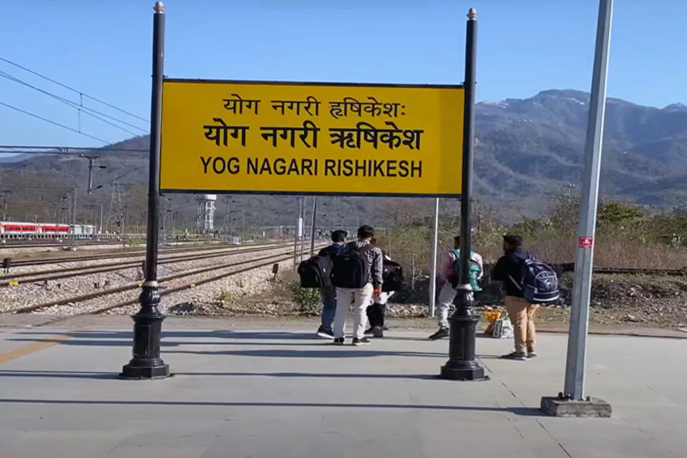
Nearest Railway Station: Rishikesh
Uttarakhand Tourism lists Rishikesh Railway Station as the nearest railway station to Valley of Flowers.
From Rishikesh, travellers continue by road towards Govindghat.
The basic route is:
Rishikesh → Govindghat → Ghangaria → Valley of Flowers
Can You Travel via Haridwar Railway Station?
Yes.
Although Rishikesh is the nearest railhead identified by Uttarakhand Tourism, Haridwar can also be a practical railway gateway, especially when it provides a more convenient train connection from your city.
From Haridwar, continue by road towards Govindghat.
Uttarakhand Tourism describes Govindghat as approximately 300 km from Haridwar, with the mountain journey generally requiring a full day.
So when comparing trains, do not look only at which station is geographically closer. Also consider:
- Train availability
- Arrival time
- Road-transfer options
- Whether you want to stay overnight before continuing
How to Reach Valley of Flowers by Road

Road travel takes you up to the Govindghat region.
Uttarakhand Tourism confirms that Valley of Flowers is connected by motorable road up to Govindghat.
From major Uttarakhand gateways, travellers can continue using:
- Private taxi
- Shared local vehicle, subject to current availability
- Bus services, depending on route and season
- Self-driven car
- Organised tour vehicle
Mountain transport availability can change with season, weather and road conditions, so fixed bus or shared-taxi frequencies should be confirmed shortly before travelling.
How to Reach Valley of Flowers from Delhi
Delhi is one of the most common starting points for Valley of Flowers travellers.
A practical route is:
Delhi → Haridwar/Rishikesh → Govindghat → Ghangaria → Valley of Flowers
Option 1: Delhi to Rishikesh by Road
Rishikesh is well connected with Delhi by road. Uttarakhand Tourism notes that regular bus connections operate between Delhi and Rishikesh.
From Rishikesh, continue towards Govindghat.
Option 2: Delhi to Haridwar/Rishikesh by Train
Take a train towards Haridwar or Rishikesh, then continue by road.
This is often more comfortable than doing the entire Delhi-to-Govindghat journey in one continuous road trip.
Option 3: Delhi to Dehradun by Flight
Fly to Jolly Grant Airport and continue by road towards Govindghat.
Option 4: Delhi to Govindghat by Private Car
Driving is possible, but it is a long mountain journey.
Rather than attempting an overly rushed schedule, many travellers prefer breaking the trip around Haridwar, Rishikesh, Dehradun or another suitable point depending on their arrival time.
How to Reach Valley of Flowers from Rishikesh
Rishikesh is one of the most useful gateways for the journey because it combines railway and road connectivity.
The route is:
Rishikesh → Govindghat → Ghangaria → Valley of Flowers
Uttarakhand Tourism places Govindghat approximately 273 km beyond Rishikesh on its Valley of Flowers destination page.
This is a long mountain drive, so start early.
Depending on current operations, you may find:
- Buses
- Shared vehicles
- Private taxis
- Tour vehicles
Do not depend on an old blog's fixed bus departure time. Confirm current services before travelling.
How to Reach Valley of Flowers from Haridwar
Haridwar is another popular starting point, especially for travellers arriving by train.
The journey is:
Haridwar → Govindghat → Ghangaria → Valley of Flowers
Uttarakhand Tourism's itinerary places Govindghat at approximately 300 km from Haridwar and describes it as a roughly 10-hour road journey under normal conditions.
Actual journey time can increase because of:
- Traffic
- Road works
- Rain
- Landslides
- Meal stops
- Mountain-road conditions
Keep the road day flexible rather than planning around an exact arrival minute.

How to Reach Valley of Flowers from Dehradun
If you arrive at Jolly Grant Airport or Dehradun city, continue towards Govindghat by road.
Uttarakhand Tourism's Valley of Flowers trekking itinerary describes the Dehradun-to-Govindghat road journey as roughly 310 km and 10–11 hours by car.
The route enters the Garhwal Himalayas and requires a full day of mountain travel.
An early departure is strongly preferable.
Govindghat: The Main Road Gateway
Govindghat is the key transition point between the road journey and the trekking portion of your trip.
Uttarakhand Tourism identifies Govindghat as the road-connected gateway from which travellers proceed towards Ghangaria.
At this stage, travellers generally organise:
- Overnight accommodation if required
- Luggage arrangements
- Porter or pony assistance
- Local information about the current trekking roadhead
- The onward journey towards Ghangaria
If you are using information about a road extension beyond Govindghat towards Pulna or another trekking roadhead, confirm the current local access after arrival. Mountain-road access can change, so old fixed-distance claims may no longer reflect the actual starting point.
Govindghat to Ghangaria

Ghangaria is the main base for visitors heading towards Valley of Flowers and Hemkund Sahib.
Uttarakhand Tourism's Ghangaria destination page describes it as approximately 13 km from Govindghat, while another official trekking itinerary uses a figure of approximately 15 km.
Because official sources themselves use slightly different measurements, it is better to treat the approach as approximately 13–15 km, depending on the measurement point and current trekking roadhead.
Ghangaria sits at around 3,050 metres and is the last major inhabited settlement before Valley of Flowers.
Porter and pony services may be available on the approach route. Uttarakhand Tourism also notes the availability of ponies and porters for the Valley of Flowers journey.
For fitness and first-timer preparation rather than transport, read our Valley of Flowers Trek for Beginners.
Ghangaria to Valley of Flowers
From Ghangaria, visitors continue on foot into Valley of Flowers National Park.
Uttarakhand Tourism's trekking itinerary describes the Valley as approximately 4 km from Ghangaria.
There is no direct road into the Valley.
The National Park is explored on foot, and visitors return to Ghangaria after their visit. Uttarakhand Tourism also states that overnight camping or staying inside the Valley of Flowers is not permitted.
For trekking difficulty, trail demands and physical effort, see Is Valley of Flowers a Difficult Trek?.
Can You Reach Valley of Flowers Without Trekking?
No, not completely.
You can travel most of the way towards the region by road, but the final approach to Valley of Flowers requires walking.
Uttarakhand Tourism explicitly describes walking as the main way to explore the high-altitude Valley.
Travellers who need assistance may use available porter or pony services on suitable parts of the approach, but the destination should still be planned as a trekking trip rather than a drive-to sightseeing attraction.
Can You Take a Car Directly to Valley of Flowers?
No.
Private vehicles can travel towards Govindghat, subject to prevailing road access, but they cannot enter Valley of Flowers National Park.
If driving your own vehicle, plan parking and onward local arrangements around Govindghat based on current conditions.
Bus, Shared Taxi or Private Taxi: Which Is Better?
Bus
Usually the more budget-oriented choice, but services can take longer and departure schedules may vary.
Shared Vehicle
Can offer a balance between cost and convenience when operating on your required route.
Private Taxi
Usually provides the most flexibility for:
- Early departures
- Luggage
- Families
- Small groups
- Planned stops
- Direct transfers
Self-Drive
Possible for confident mountain drivers, but the route involves long stretches of Himalayan roads.
Your choice should depend on budget, group size, mountain-driving experience and how much flexibility you want.

How Much Time Should You Keep for the Journey?
Do not think of reaching Valley of Flowers as a single transfer.
You need separate time for:
- Reaching Uttarakhand
- Mountain road journey to Govindghat
- Trekking towards Ghangaria
- Ghangaria to Valley of Flowers and back
If you want a proper day-by-day plan, use our Valley of Flowers Travel Guide & Itinerary.
This article intentionally focuses only on how to reach the destination rather than duplicating the complete itinerary.
Seasonal Access and Road Conditions
Valley of Flowers is a seasonal high-altitude destination.
Road conditions and trekking access can be affected by:
- Snow
- Heavy rain
- Landslides
- Road maintenance
- Local restrictions
Do not rely on an old blog's fixed opening date or road status.
Check current official and local information close to your departure date.
For seasonal trip selection, read our Best Time to Visit Valley of Flowers.
For rainfall and temperature conditions, use our Valley of Flowers Weather & Climate Guide.
Practical Tips for Reaching Valley of Flowers
- Start the mountain-road journey early in the morning.
- Keep buffer time for unexpected road delays.
- Avoid scheduling critical connections immediately after a long mountain drive.
- Confirm current bus and shared-vehicle availability before departure.
- Check the latest roadhead after reaching Govindghat.
- Keep some cash for smaller mountain settlements.
- Carry offline copies of important booking and ID information.
- Check weather and road conditions before beginning the upper Garhwal journey.
- Avoid depending entirely on long-range map travel times for Himalayan roads.
For a broader pre-trip checklist, see Things to Know Before Visiting Valley of Flowers.
Frequently Asked Questions
1. What is the nearest airport to Valley of Flowers?
Jolly Grant Airport near Dehradun is the nearest airport. From the airport, travellers continue by road towards Govindghat before beginning the trekking portion of the journey.
2. What is the nearest railway station to Valley of Flowers?
Rishikesh is the nearest railway station listed by Uttarakhand Tourism. Haridwar can also be a practical option for travellers who find better long-distance train connections there.
3. How do I reach Valley of Flowers from Delhi?
Travel from Delhi to Haridwar, Rishikesh or Dehradun first. Continue by road towards Govindghat, then proceed to Ghangaria and finally walk into Valley of Flowers.
4. Can I reach Valley of Flowers directly by car?
No. Motorable-road access extends towards Govindghat, but there is no direct road into Valley of Flowers National Park.
5. How do I reach Valley of Flowers from Rishikesh?
Travel by road from Rishikesh towards Govindghat. From Govindghat, continue towards Ghangaria before trekking into the Valley.
6. How far is Ghangaria from Govindghat?
Uttarakhand Tourism's destination page quotes approximately 13 km, while its trekking itinerary uses approximately 15 km. Treat the trekking distance as roughly 13–15 km depending on the measurement point and current roadhead.
7. How far is Valley of Flowers from Ghangaria?
Uttarakhand Tourism describes Valley of Flowers as approximately 4 km from Ghangaria.
8. Can I reach Valley of Flowers without trekking?
No. The final approach and exploration of Valley of Flowers require walking. Porter or pony assistance may be available on suitable sections of the approach.
9. Are buses available from Rishikesh or Haridwar towards Govindghat?
Road transport operates into the upper Garhwal region, but direct services, departure points and schedules can change. Confirm current bus or shared-vehicle availability before travelling.
10. Can Valley of Flowers and Hemkund Sahib be reached from the same base?
Yes. Ghangaria serves as the common base for both destinations. For planning both together, read our Valley of Flowers with Hemkund Sahib Travel Guide.
Final Thoughts
The easiest way to understand how to reach Valley of Flowers is to divide the journey into three stages:
Reach Uttarakhand → Drive to Govindghat → Trek via Ghangaria to Valley of Flowers.
Jolly Grant Airport is the nearest airport, Rishikesh is the nearest railway station, and Govindghat is the main road-access gateway identified by Uttarakhand Tourism.
From Govindghat, the journey becomes a Himalayan trekking experience.
Plan enough time for the mountain-road section, avoid depending on overly precise distance or travel-time claims, and verify current road and local transport conditions shortly before departure.
For official destination information, travellers can also refer to Uttarakhand Tourism's Valley of Flowers page.


