
Valley Of Flowers Weather / Climate
Published on September 30, 2025 | Updated on August 28, 2026
Weather is one of the most important factors shaping a trip to Valley of Flowers National Park.
Located at around 3,600 metres above sea level, the Valley experiences a cool high-altitude Himalayan climate where sunshine, cloud, rain, mist and low temperatures can occur within the same trekking day. Uttarakhand Tourism confirms the Valley's approximate elevation and notes that its greatest abundance of flowers occurs from July to September, when monsoon conditions also influence the landscape.
For trekkers, this means the Valley of Flowers weather should never be judged only by the forecast for a nearby lower-altitude town.
Conditions around Govindghat, Ghangaria and the main Valley can differ because elevation changes considerably along the route.
This guide focuses specifically on temperature, rainfall, seasonal climate and what different weather conditions mean on the trail.
Important: The temperatures below are seasonal estimates, not a live forecast. Himalayan weather changes quickly, so always check an official short-range forecast before departure.
Valley of Flowers Weather at a Glance
| Period | General Weather | Typical Trekking Conditions |
|---|---|---|
| June | Cool; lingering snow possible in higher areas | Fresh trails, cool mornings, variable cloud |
| July | Monsoon develops; frequent rain | Wet and increasingly lush |
| August | Strong monsoon influence | Rain, mist, saturated greenery |
| September | Rain gradually reduces | Cooler, often improving visibility |
| October | Colder and increasingly wintry | Chilly mornings and nights; seasonal transition |
| Winter | Snow and severe cold at elevation | Normal tourist trekking season ends |
During the main July–September trekking period, experienced trekking operators report daytime conditions commonly around 10°C–18°C, with nights falling to roughly 3°C–5°C, although cloud, rain and elevation can make conditions feel significantly colder.
Higher destinations such as Hemkund Sahib can be noticeably colder than the Valley itself.

Why Is Valley of Flowers Weather So Changeable?
Altitude is the main reason.
At approximately 3,600 metres, Valley of Flowers sits well above most towns travellers pass through on the journey.
Mountain terrain also influences:
- Cloud formation
- Rainfall
- Wind
- Visibility
- Temperature
- Snow persistence
- How quickly conditions change
A morning may begin with relatively clear skies before clouds build around surrounding peaks.
Rain can arrive quickly during monsoon months, while mist may reduce visibility even without intense rainfall.
This is normal Himalayan weather behaviour and is one reason trekkers should carry protection even when the morning appears clear.
For the elevation profile itself, see our detailed Valley of Flowers altitude and elevation guide.
Valley of Flowers Temperature During the Trekking Season
The Valley remains cool compared with the plains even during summer and monsoon.
During the principal July–September trekking window, typical daytime temperatures on the trekking circuit are often reported between approximately 10°C and 18°C, while nights around the higher camps and settlements can fall into the low single digits.
The actual temperature you experience depends on:
- Elevation
- Cloud cover
- Rainfall
- Time of day
- Wind
- Sun exposure
A cloudy 12°C day with rain and wind can feel much colder than a sunny day at the same measured temperature.
This is why layering is more practical than relying on one heavy jacket.
Valley of Flowers Weather in June
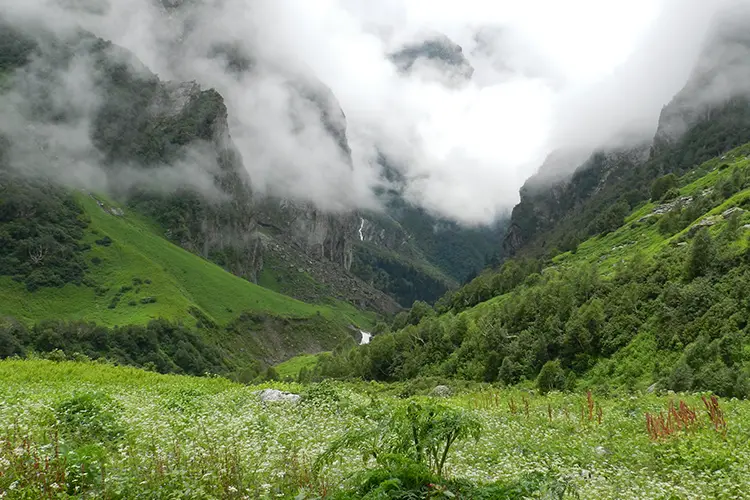
June marks the transition from snow-dominated high-altitude conditions towards the summer trekking environment.
Snow may still remain in parts of the higher landscape, especially earlier in the season. As temperatures rise, melting snow feeds mountain streams and the environment gradually becomes greener.
Typical June conditions may include:
-
Cool mornings
-
Pleasant but variable daytime conditions
-
Lingering snow patches at higher elevations
-
Increasing greenery
-
Occasional rain
-
Cold evenings
June should therefore not be imagined as a hot Himalayan summer.
Even if lower destinations feel comfortable, temperatures decline as you climb towards Ghangaria and Valley of Flowers.
Flowering conditions are also different from peak monsoon months. For bloom timing rather than weather, use our dedicated best time to visit Valley of Flowers guide.
Valley of Flowers Weather in July
July is when monsoon becomes a major part of the Valley's weather pattern.
Uttarakhand Tourism describes Valley of Flowers as one of Uttarakhand's notable monsoon treks, with rainfall playing an important role in bringing the alpine landscape to life.
During July you can expect:
- Increasing rainfall
- Cloudy periods
- Mist
- Wet vegetation
- Muddy sections
- Slippery rocks
- Cool daytime temperatures
- Chilly mornings and evenings

Trekking observations suggest the first half of July can have lighter rain and lingering snow patches, while monsoon activity becomes stronger later in the month.
The important practical lesson is simple: do not start a July trek without proper waterproof protection.
For July-specific bloom, crowd and trekking conditions, see the separate Valley of Flowers in July guide.
Valley of Flowers Weather in August
August usually has a strong monsoon influence.
Clouds, mist and rain are normal parts of the experience.
At lower points such as Govindghat, rainfall may be heavier, while higher-altitude sections can experience persistent drizzle, cloud, and rapidly changing visibility. Indiahikes notes this difference between Govindghat and higher parts of the route during August.
Typical August conditions include:
- Regular showers
- Mist-covered slopes
- Wet trails
- Flowing streams and waterfalls
- High moisture levels
- Cool temperatures
- Reduced visibility during cloudy periods
Waterproof shoes with good grip become especially valuable.
A cheap rain cover over your backpack alone is not enough if clothing, documents and electronics inside the bag are unprotected. Use waterproof inner pouches for important items.
Valley of Flowers Weather in September
September brings a gradual transition away from peak monsoon conditions.
Rainfall generally becomes less persistent as the month progresses, and clearer periods can become more common.
At the same time, temperatures begin to feel cooler, particularly during mornings and evenings.

Typical September weather can include:
- Reduced rainfall compared with peak monsoon
- Cooler mornings
- Crisp evenings
- Periods of better visibility
- Increasingly clear mountain views
- Occasional rain despite the seasonal transition
Trekking observations commonly describe September as having clearer skies and less rain than peak monsoon months.
Do not interpret “less rain” as “no rain”. Rain protection should still remain in your backpack.
Valley of Flowers Weather in October
By October, the high Himalayas begin transitioning towards colder conditions.
Nights become considerably colder, plant growth slows, and the mountain environment starts moving towards winter.
Visitors travelling late in the accessible season should be prepared for:
- Cold mornings
- Cold nights
- Frost-like conditions at elevation
- Possible sudden weather changes
- Reduced floral cover
- Greater dependence on warm layers
Seasonal access conditions can change from year to year, so travellers planning a late-season visit should verify official park and local conditions before departure rather than relying on an old blog post.
What Is Valley of Flowers Like During Winter?
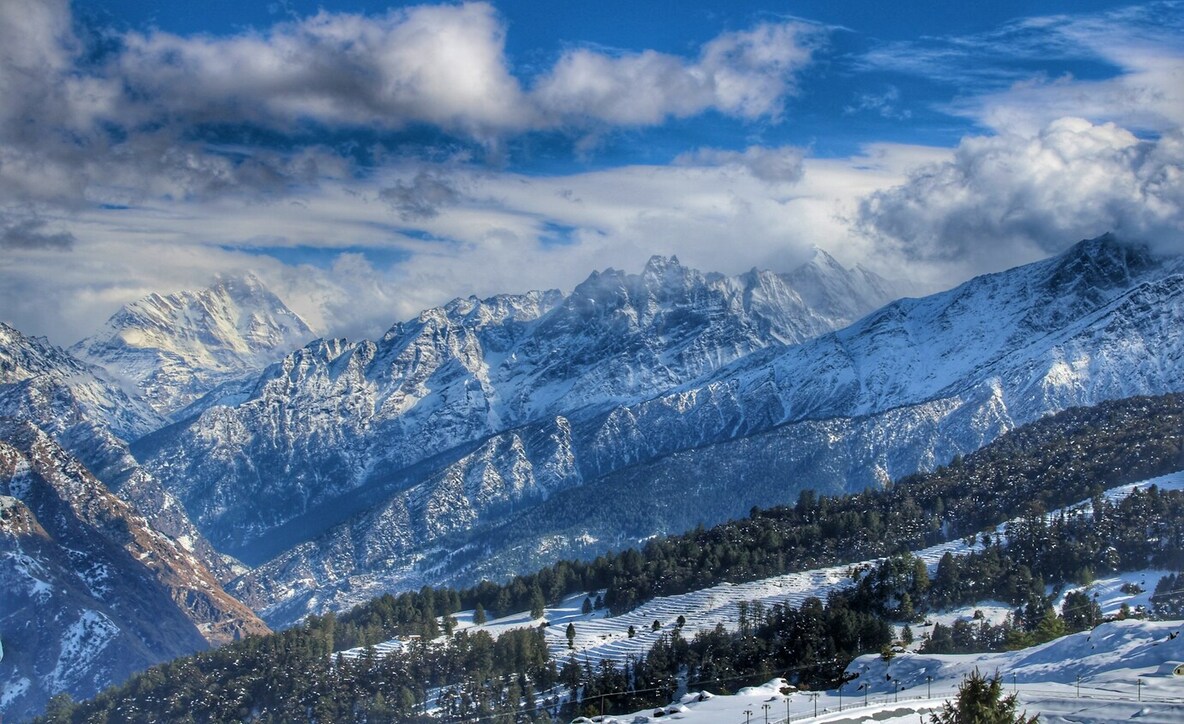
Winter is fundamentally different from the summer and monsoon trekking environment.
At this altitude, snow covers the landscape, and normal recreational access to the national park is not comparable to the regular trekking season.
This is where the existing version of this article was misleading: Valley of Flowers should not be marketed as a routine winter trekking destination simply because snow-covered photographs sound attractive.
The national park is primarily experienced during its seasonal accessible period, while winter brings substantial snow and harsh high-altitude conditions.
For itinerary planning, refer to the Valley of Flowers travel guide and itinerary.
How Much Does It Rain in Valley of Flowers?
Rain is an essential feature of the Valley's summer ecology.
The monsoon supplies moisture to its alpine meadows, streams and vegetation, helping create the lush landscape associated with the destination.
Uttarakhand Tourism specifically promotes Valley of Flowers as a monsoon trek and notes that its flowers become particularly vibrant during the rainy period.
For trekkers, rainfall has practical consequences:
Trails Become Slippery
Mud, wet stones and roots require slower walking.
Streams Can Carry More Water
Rain and snowmelt influence water levels along the landscape.
Visibility Can Drop
Cloud and mist may temporarily hide mountain views.
Road Travel Can Be Affected
Heavy monsoon rain elsewhere in Uttarakhand can affect approach roads even when conditions inside the Valley are manageable.
This is why weather checking should begin before the road journey, not only on the morning of the trek.
Does It Rain All Day During Monsoon?
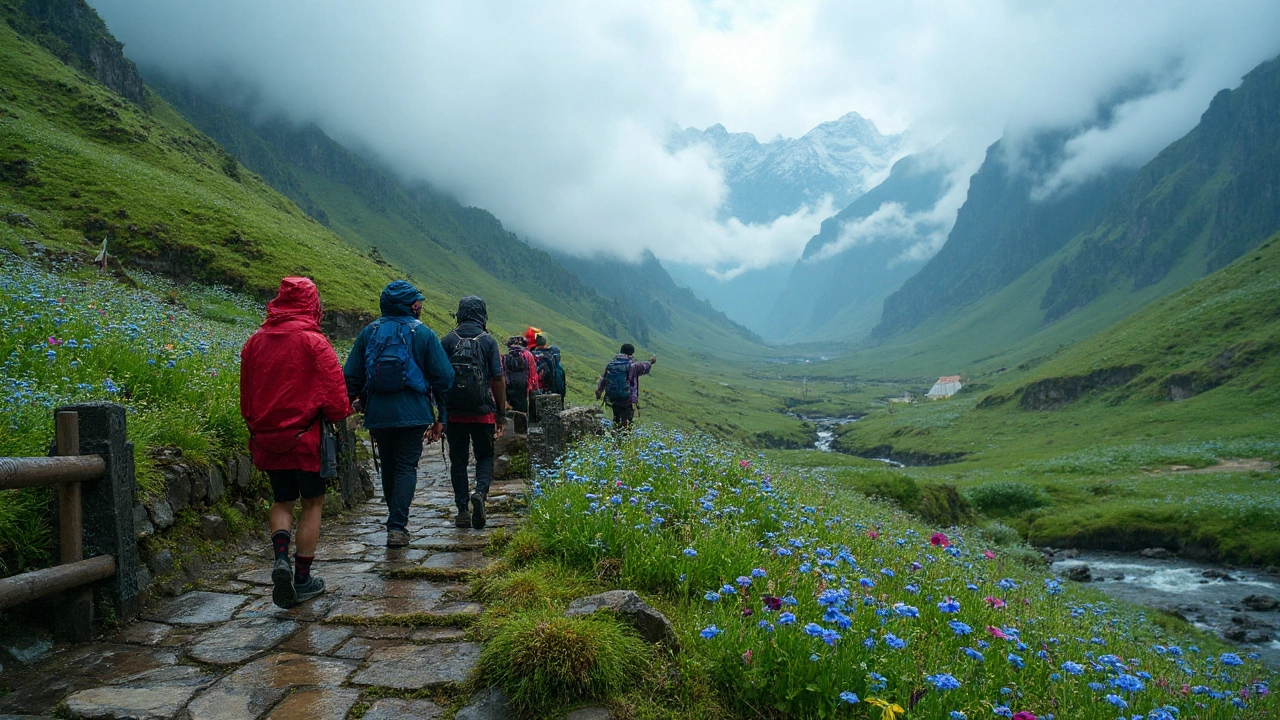
Not necessarily.
Himalayan monsoon weather is variable.
You may experience:
- Rain during part of the day
- Light drizzle
- Short dry periods
- Cloudy weather without rain
- Mist
- Occasional brighter intervals
The bigger planning mistake is trying to predict the entire day's conditions from the sky at breakfast.
Carry your rain protection regardless.
Why Can Govindghat and Valley Weather Be Different?
Govindghat lies much lower than the main Valley.
As you climb towards Ghangaria and then Valley of Flowers, elevation increases substantially.
For comparison, Uttarakhand Tourism places Ghangaria at about 3,050 metres and Valley of Flowers at around 3,600 metres.
This elevation difference means:
-
Higher sections are colder.
-
Cloud behaviour can differ.
-
Rain intensity may differ.
-
Wind chill becomes more noticeable.
-
Forecasts for lower towns may not perfectly represent conditions higher on the trail.
Use nearby forecasts as guidance, not as a guarantee of exact Valley conditions.
What Should You Wear for Valley of Flowers Weather?

Layering works better than packing one bulky piece of clothing.
A practical weather-focused clothing system includes:
Base Layer
A breathable trekking T-shirt or quick-drying layer.
Warm Layer
Fleece or light insulating layer for cold mornings and evenings.
Waterproof Outer Layer
A reliable rain jacket or poncho suitable for prolonged showers.
Trekking Bottoms
Quick-drying trousers rather than heavy cotton jeans.
Proper Footwear
Shoes with dependable grip for wet stones and muddy terrain.
Dry Socks
Carry at least one protected dry pair.
The complete equipment checklist belongs in our Valley of Flowers trekking, camping and adventure guide.
How Does Weather Affect Trek Difficulty?
Rain can make the same trail feel harder.
Wet ground may reduce traction, while mist and cold conditions can increase fatigue.
However, weather is only one factor affecting difficulty.
Gradient, distance, fitness, altitude and walking duration are separate considerations.
For a complete assessment, read Is Valley of Flowers a difficult trek?.
First-time trekkers can separately use our Valley of Flowers trek for beginners guide.
Weather and the Valley's Biodiversity
Monsoon moisture is not merely an inconvenience for trekkers.
It is part of the ecological cycle that supports the Valley's alpine vegetation.
Uttarakhand Tourism notes that the greatest abundance of flowers occurs from July to September, overlapping with the monsoon period.
Rather than duplicating plant information here, read our dedicated Valley of Flowers biodiversity and flora guide to understand how moisture, altitude and seasonal change shape the ecosystem.
How to Check Valley of Flowers Weather Before Travelling
Do not rely exclusively on generic smartphone weather apps.
Before travelling, check:
- Short-range weather forecast for Chamoli district.
- Rainfall warnings for Uttarakhand.
- Road-condition advisories.
- Local information from your accommodation, guide or trek operator.
- Conditions again on the morning of the trek.
For authoritative weather alerts, travellers can check the India Meteorological Department district-wise weather and nowcast service. IMD provides district-level nowcasts, warnings and forecast products.
For official destination information, refer to Uttarakhand Tourism's Valley of Flowers page.
Weather Mistakes to Avoid
Assuming a Sunny Morning Means a Dry Day
Cloud can develop quickly in Himalayan terrain.
Depending on a Long-Range Forecast
Forecast uncertainty increases further into the future, especially in mountainous regions.

About The Author
Kaushal Khantwal, Travel Planner at TourMyHoliday, has 3+ years of experience planning trips across India and abroad. From offbeat Himalayan treks to popular international destinations, he personally vets routes, accommodations, and logistics before any package is published.


