
Is Valley of Flowers a difficult trek?
Published on September 02, 2025 | Updated on August 28, 2026
Valley of Flowers is generally a moderate trek, but it can feel challenging if you are not used to long uphill walks, high altitude or wet mountain trails.
It is not a technical mountaineering trek. You do not normally need ropes, climbing equipment or advanced trekking skills for the standard Valley of Flowers route.
However, calling it simply “easy” can also be misleading.
Uttarakhand Tourism describes the Valley of Flowers trek as moderate to challenging on its main destination page, while another official Uttarakhand Tourism guide rates the broader trek as moderate. An official tourism article has also described it as suitable for beginners because the route is not generally considered extremely arduous.
The most accurate way to think about it is:
Technically straightforward, but physically demanding enough to require preparation.
The difficulty comes mainly from long walking days, uphill sections, altitude, consecutive trekking days and monsoon trail conditions rather than technical climbing.
Valley of Flowers Trek Difficulty at a Glance
| Factor | Difficulty |
|---|---|
| Overall difficulty | Moderate |
| Technical climbing | No |
| Long walking days | Yes |
| Continuous uphill walking | Yes, on some sections |
| Rocky or uneven trail | Yes |
| Monsoon slipperiness | Possible |
| High-altitude effect | Possible |
| Suitable for beginners | Yes, with preparation |
| Porter/pony assistance | Available on suitable approach sections |
| Requires mountaineering experience | No |
The official Uttarakhand Tourism trek itinerary describes the Ghangaria-to-Valley section as an uphill trail through forest, while its destination information says the overall trek can range from moderate to challenging depending on the traveller and conditions.
Why Does Valley of Flowers Feel Difficult?

There is no single steep wall or technical obstacle that defines the trek.
Difficulty builds gradually from several factors.
Long Walking Days
The first major challenge is simply the amount of walking.
Official Uttarakhand Tourism sources themselves use slightly different measurements for the Govindghat-to-Ghangaria approach. One official itinerary describes it as approximately 15 km, while the Ghangaria destination page refers to an approximately 13 km trek from Govindghat.
Rather than focusing on one exact kilometre figure, plan for a long mountain approach involving several hours of walking.
For someone who already walks, hikes or exercises regularly, this may feel manageable.
For someone with a mostly sedentary lifestyle, the same route can feel significantly harder.
Sustained Uphill Sections
The trek is not completely flat.
You encounter climbing on the way towards Ghangaria and again while heading from Ghangaria towards Valley of Flowers.
The official Uttarakhand Tourism itinerary specifically describes the trail from Ghangaria to the Valley as passing through dense forest and going uphill.
The challenge is less about extreme steepness and more about maintaining a steady pace over repeated uphill sections.
High Altitude
Valley of Flowers lies at around 3,600 metres above sea level, while Ghangaria is around 3,050 metres.
At these elevations, walking can feel more tiring than covering the same distance at lower altitude.
Some people adapt quickly, while others notice that they need:
-
More frequent breaks
-
A slower walking pace
-
More recovery after climbing
This is one reason trek difficulty cannot be judged only by kilometres.
For detailed elevation and acclimatisation information, read our Valley of Flowers Altitude & Elevation Guide.
Rain and Wet Trails
Valley of Flowers is famous as a monsoon trek.
Uttarakhand Tourism specifically highlights the trek during the rainy season, when flowering and greenery become especially vibrant.
That same rain can make the trail more physically demanding.
Depending on current conditions, you may encounter:
-
Wet stone
-
Mud
-
Slippery sections
-
Puddles
-
Reduced visibility
-
Stronger streams and waterfalls
A trail that feels moderate in dry conditions may feel more demanding after prolonged rain.
For detailed rainfall and seasonal conditions, read our Valley of Flowers Weather & Climate Guide.
Consecutive Trekking Days
Another challenge is cumulative fatigue.
You do not simply complete one walking day and return home.
A typical trip involves:
-
Trekking towards Ghangaria
-
Visiting Valley of Flowers the following day
-
Possibly trekking to Hemkund Sahib
-
Descending afterwards
Your legs therefore need to recover while you are still in the middle of the trip.
This makes basic endurance more important than short bursts of speed.
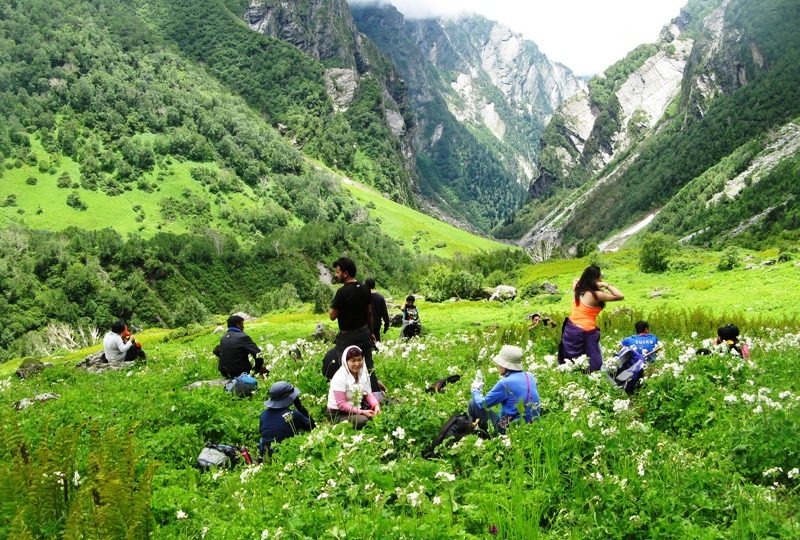
Which Part of Valley of Flowers Trek Is the Hardest?
The answer depends on your fitness and whether Hemkund Sahib is included.
For the Valley of Flowers trek itself, the long approach towards Ghangaria is often one of the more tiring sections because of its duration.
The Valley day is shorter in terms of reaching the main Valley access, but you are walking at higher altitude and may continue farther inside the National Park.
Govindghat to Ghangaria Difficulty
This is the first substantial trekking section.
Uttarakhand Tourism's official Valley itinerary describes Govindghat to Ghangaria as approximately 15 km, while its Ghangaria page uses approximately 13 km.
What Makes This Section Difficult?
The primary challenges are:
- Long walking duration
- Gradual and sustained ascent
- Uneven mountain surfaces
- Carrying luggage
- Rain or wet trail conditions
- First-day fatigue
This is not normally a technical trail, but it can expose poor fitness very quickly.
Someone who begins too fast may struggle during the later kilometres.
How to Make It Easier
Keep a steady pace from the beginning.
Avoid trying to match faster trekkers.
If suitable local support is available, porter or pony assistance can reduce the burden of carrying heavy luggage. Uttarakhand Tourism also notes the availability of ponies and porters on the Valley route.
Ghangaria to Valley of Flowers Difficulty

The main Valley is approximately 4 km from Ghangaria according to Uttarakhand Tourism's trek itinerary.
Do not interpret that as meaning your entire day's walking is only 4 km.
Once you reach the Valley, you may continue exploring farther inside before turning back towards Ghangaria.
What Makes This Section Challenging?
You are now:
- Walking above 3,000 metres
- Following an uphill trail
- Trekking after the previous approach day
- Potentially walking in rain
- Continuing farther inside the Valley depending on your plan
The official itinerary describes the approach as winding through dense forest and going uphill.
For many reasonably fit trekkers, this day is manageable because they can adjust how far they explore inside the Valley.
Walking Inside Valley of Flowers
Reaching the main Valley does not mean your walking is finished.
The landscape extends much farther inside, and visitors choose their turnaround point according to:
- Fitness
- Weather
- Time
- Trail conditions
- Current park instructions
This actually gives the Valley day some flexibility.
You do not need to walk to the farthest possible point to experience the National Park.
If your legs are tired or weather conditions deteriorate, turning around earlier is often more sensible than chasing a distance target.
Is Valley of Flowers Trek Easy?

It depends on what you mean by “easy”.
If “easy” means:
No technical climbing and manageable for a reasonably fit first-time trekker
then Valley of Flowers can fit that description.
But if “easy” means:
Anyone can arrive without preparation and walk comfortably for several mountain days
then no.
An official Uttarakhand Tourism article describes Valley of Flowers as a trek that is generally not considered very arduous and presents it as a good beginner trek. At the same time, the main Uttarakhand Tourism destination page uses the more cautious classification moderate to challenging.
These descriptions are not necessarily contradictory.
The trek is accessible in technical terms but still physically meaningful.
Is Valley of Flowers Trek Suitable for Beginners?

Yes, a fit beginner can attempt Valley of Flowers.
You do not need previous Himalayan trekking experience in every case.
But first-time trekker does not mean unprepared trekker.
A beginner should ideally be comfortable with:
- Walking for several hours
- Climbing stairs
- Moderate uphill exercise
- Carrying a light daypack
- Exercising on consecutive days
If you become exhausted after a short flat walk at home, the Himalayan trail will probably feel difficult.
For full beginner preparation, training and first-trek expectations, read our Valley of Flowers Trek for Beginners.
How Fit Do You Need to Be?
You do not need athlete-level fitness.
You do need basic cardiovascular endurance and leg strength.
A practical benchmark is being able to walk continuously for a reasonable period and handle stairs or inclines without becoming completely exhausted.
Fitness Helps With
- Long ascents
- Carrying a daypack
- Recovering overnight
- Descending without excessive leg fatigue
- Maintaining balance on uneven trails
Speed Is Not Important
Trekking is not a race.
For most recreational trekkers, consistent pacing matters more than moving quickly.
A slower trekker who maintains a steady rhythm often manages better than someone who starts aggressively and becomes exhausted early.
Does Altitude Make Valley of Flowers More Difficult?

Yes.
Altitude is one reason a moderate walking route can feel harder than expected.
Valley of Flowers is around 3,600 metres, and Ghangaria is around 3,050 metres.
At higher elevations, physical effort may feel greater.
That does not mean every visitor will have difficulty, but altitude should be treated separately from normal muscle fatigue.
For a complete explanation of elevation progression and acclimatisation, use our Valley of Flowers Altitude & Elevation Guide.
Does Monsoon Make the Trek Harder?
Yes, it can.
Valley of Flowers is strongly associated with monsoon trekking because rainfall supports the lush vegetation and flowering for which the National Park is famous. Uttarakhand Tourism itself lists Valley of Flowers among Uttarakhand's notable monsoon treks.
Rain can increase physical difficulty through:
- Slippery rocks
- Wet footwear
- Mud
- Reduced grip
- Lower visibility
- Colder-feeling conditions when wet
This is why proper footwear and rain protection matter.
However, detailed weather decisions belong on our Valley of Flowers Weather & Climate Guide.
For deciding which month to travel, read Best Time to Visit Valley of Flowers.
Is There Any Technical Climbing?
For the standard Valley of Flowers trek, technical mountaineering is not normally required.
You are hiking on an established mountain trail rather than climbing a technical summit.
That means the standard visitor route does not normally involve:
- Rock climbing
- Rappelling
- Rope techniques
- Ice climbing
- Mountaineering equipment
The challenge is primarily hiking endurance rather than climbing skill.
This distinction is important when evaluating whether the trek is suitable for a first-time Himalayan visitor.

Does Carrying a Backpack Make the Trek Harder?
Definitely.
Even a moderate trail feels harder when you carry unnecessary weight uphill for several hours.
A small daypack is much easier to manage than carrying your entire travel luggage yourself.
Keep your trekking load practical.
Carry what you need for the day, such as:
- Rain protection
- Water
- Snacks
- Warm layer
- Personal medicines
- Basic essentials
For the complete packing checklist, read Things to Know Before Visiting Valley of Flowers.
Is the Descent Difficult?
Descending usually requires less cardiovascular effort than climbing, but it can be demanding on your knees and leg muscles.
Wet trails can make descents especially tiring because you need to control each step rather than walking freely.
Useful habits include:
- Taking shorter steps
- Avoiding unnecessary speed
- Maintaining balance
- Wearing shoes with reliable grip
- Giving faster trekkers room to pass safely
Fatigue can affect coordination, so do not underestimate the return journey simply because you are walking downhill.
Is Hemkund Sahib Harder Than Valley of Flowers?

Yes, Hemkund Sahib generally adds a more demanding trekking day.
This distinction matters because many online articles combine the Valley and Hemkund routes and then describe their combined difficulty as if they were one trek.
Uttarakhand Tourism specifically refers to the Hemkund section as a steep and challenging climb in its monsoon trekking guidance.
Therefore:
Do not use Hemkund Sahib's difficulty to judge Valley of Flowers itself.
A traveller can find Valley of Flowers manageable while finding Hemkund Sahib considerably more strenuous.
For the combined journey, read our Valley of Flowers with Hemkund Sahib Travel Guide.
Valley of Flowers vs Hemkund Sahib Difficulty
| Factor | Valley of Flowers | Hemkund Sahib |
|---|---|---|
| General trail character | Moderate trekking | Steeper high-altitude climb |
| Technical climbing | No | No standard technical climbing |
| Altitude | High | Higher |
| Gradient | Moderate/uphill sections | Significantly steeper |
| Beginner experience | More approachable | More demanding |
| Best planned as | Separate day from Ghangaria | Separate day from Ghangaria |
The key SEO and planning distinction is simple:
Valley of Flowers itself is moderate. Adding Hemkund Sahib increases the overall physical difficulty of the trip.
What Type of Traveller May Find Valley of Flowers Difficult?

Difficulty is highly individual.
The trek may feel significantly harder if you:
- Rarely exercise
- Are uncomfortable walking uphill
- Carry too much luggage
- Start too fast
- Do not recover well between walking days
- Are uncomfortable with wet or uneven trails
- Have no experience walking for several hours
A reasonably active traveller may describe the same route as manageable.
That is why online statements such as “very easy” or “very hard” are not particularly useful without context.
Can You Make Valley of Flowers Trek Easier?
You cannot remove the mountains, but you can reduce unnecessary difficulty.
Travel With a Light Pack
Carry only what you need during the trekking day.
Start Early
Early starts give you more time and reduce the temptation to rush.
Maintain a Steady Pace
Use a pace you can sustain for hours.
Take Short Breaks
Frequent short rests can be more useful than repeatedly stopping for long periods.
Wear Proper Trekking Shoes
Grip becomes especially important on wet trails.
Allow Enough Days
Do not compress the trek simply to create a shorter itinerary.
For a sensible day-wise schedule, use our Valley of Flowers Travel Guide & Itinerary.
How Does Valley of Flowers Compare With a Regular Day Hike?
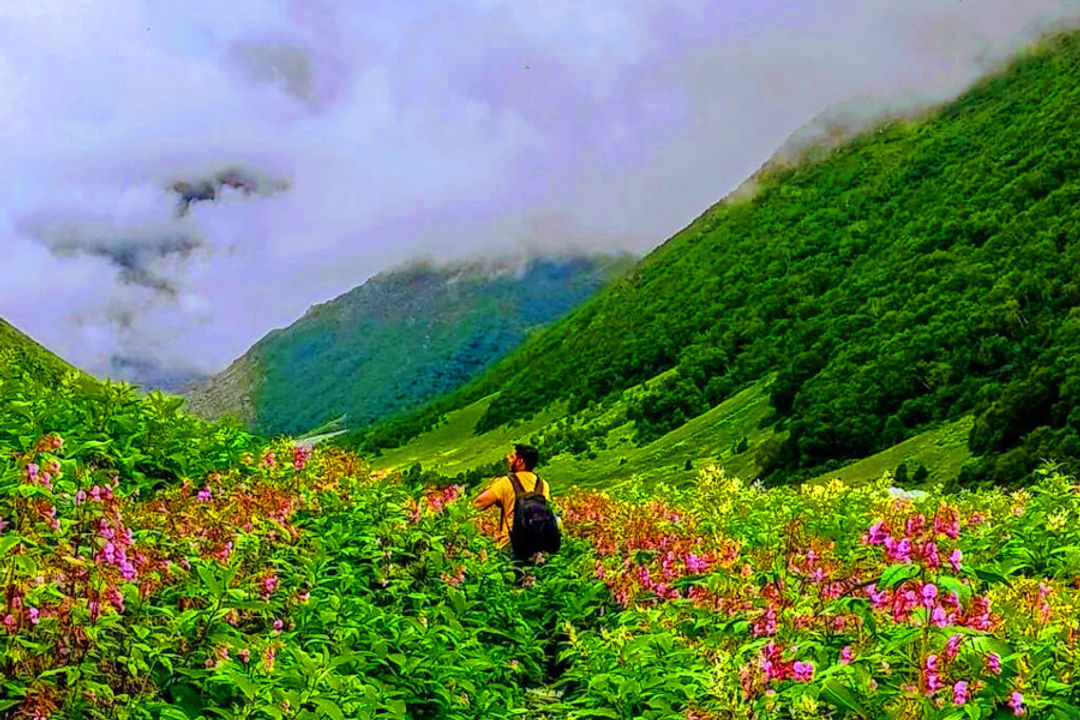
The main difference is cumulative effort.
A normal day hike may involve one morning of walking followed by full recovery at home.
Valley of Flowers involves travelling into the mountains, reaching Ghangaria, completing a high-altitude Valley day and then trekking back.
So even if no single section seems extreme, the complete trip can still be tiring.
This is why the label moderate is more useful than simply calling it easy.
Who Should Not Underestimate the Trek?
Do not underestimate Valley of Flowers simply because:
-
It is popular with beginners.
-
Porter or pony services exist.
-
There is no technical climbing.
-
Thousands of travellers visit the region.
-
Online blogs call it easy.
Popularity does not remove altitude, distance or mountain weather.
If you have an existing health condition or uncertainty about whether sustained high-altitude walking is appropriate for you, seek individual medical advice before planning the trek.
Valley of Flowers Difficulty: Final Rating
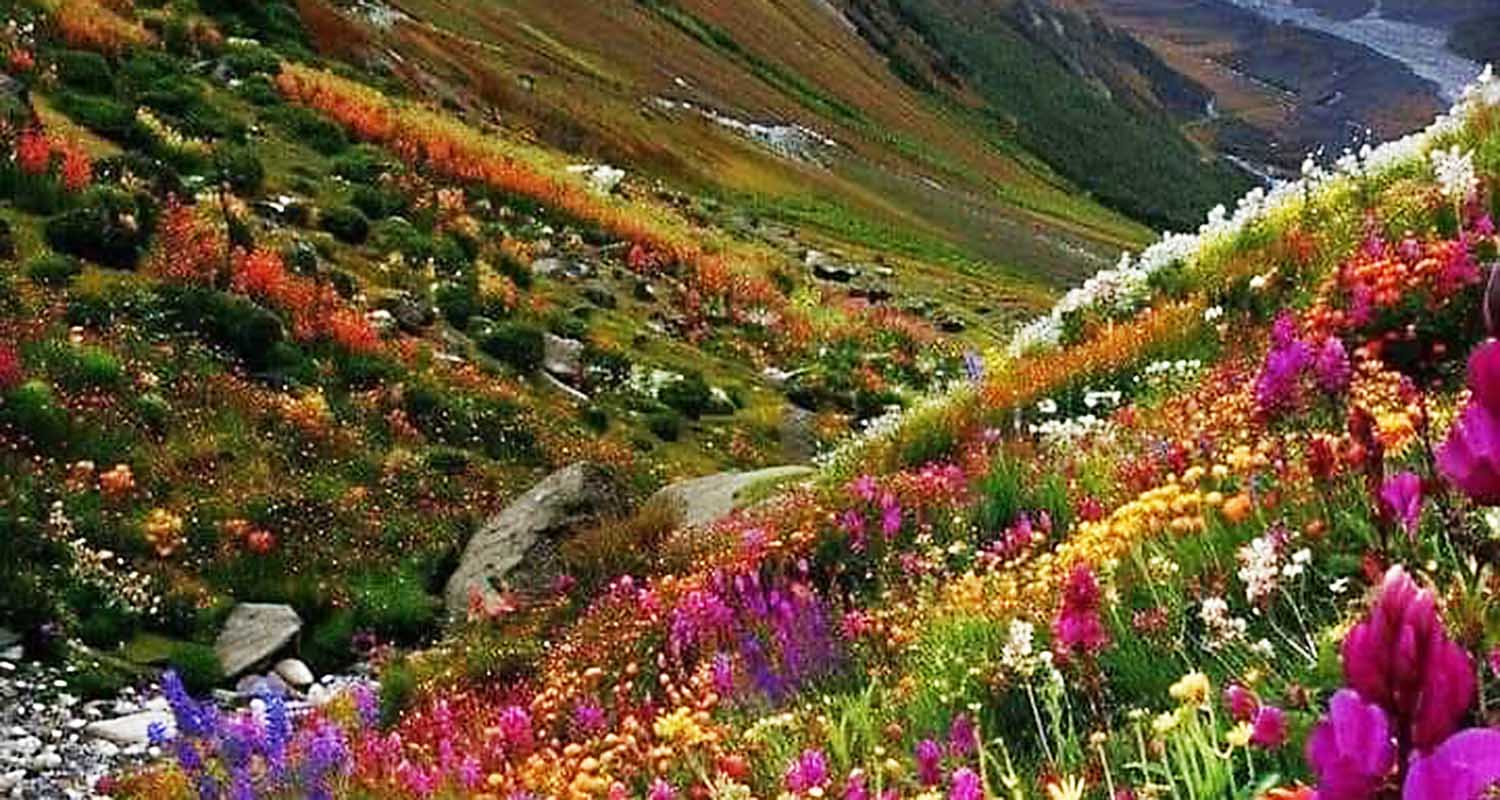
For the standard Valley of Flowers trek without Hemkund Sahib, a reasonable overall rating is:
Overall Difficulty: Moderate
Technical Difficulty: Easy
No mountaineering or technical climbing is normally required.
Physical Endurance: Moderate
Long walking and uphill sections require stamina.
Altitude Challenge: Moderate
Walking above 3,000 metres can increase perceived effort.
Weather Challenge: Variable
Monsoon rain can make the same trail noticeably harder.
Beginner Suitability: Good With Preparation
The trek is approachable for fit first-timers, but should not be treated as effortless.
Frequently Asked Questions
1. Is Valley of Flowers trek difficult?
Valley of Flowers is generally a moderate trek. It does not normally involve technical climbing, but long walking days, uphill sections, altitude and monsoon conditions can make it physically challenging. Uttarakhand Tourism uses classifications ranging from moderate to challenging depending on the source and itinerary context.
2. What is the difficulty level of Valley of Flowers trek?
A practical overall rating is moderate. The route is technically straightforward but requires enough stamina for long mountain walks and consecutive trekking days.
3. Is Valley of Flowers trek suitable for beginners?
Yes. A reasonably fit first-time trekker can attempt Valley of Flowers with preparation. Uttarakhand Tourism has also described it as a good beginner trek because it is generally not considered extremely arduous.
4. Which is the hardest part of Valley of Flowers trek?
For the Valley trek itself, the long approach towards Ghangaria can be tiring because of its distance and sustained walking. The Ghangaria-to-Valley route is shorter but involves uphill walking at higher altitude.
5. Is technical climbing required for Valley of Flowers?
No technical mountaineering is normally involved on the standard tourist trek. The challenge comes from hiking distance, gradient, terrain and altitude rather than climbing skills.
6. How fit do I need to be for Valley of Flowers?
You should be comfortable walking for several hours and handling stairs or uphill terrain. You do not need athlete-level fitness, but arriving completely unprepared can make the trek significantly harder.
7. Is Valley of Flowers harder during monsoon?
It can be. Rain can create wet, muddy or slippery trail conditions. Valley of Flowers is also a recognised monsoon trek, so visitors should expect rainfall to be part of the experience during the main flowering season.
8. Does altitude make Valley of Flowers difficult?
Altitude can increase the effort required. Valley of Flowers is around 3,600 metres above sea level, while Ghangaria is around 3,050 metres.
9. Is Hemkund Sahib harder than Valley of Flowers?
Yes. Hemkund Sahib involves a steeper high-altitude climb and generally makes the combined trip considerably more demanding. Uttarakhand Tourism specifically describes the Hemkund climb as steep and challenging.
10. Can senior citizens do Valley of Flowers trek?
Age alone does not determine whether someone can complete the trek. Individual fitness, walking ability, health, altitude tolerance and current trail conditions matter more. Older travellers should assess their individual suitability rather than assuming the trek is automatically suitable or unsuitable based only on age.
11. Is Valley of Flowers trek easy or hard?
It sits between the two. It is technically easy compared with mountaineering routes, but physically moderate because of long walks, elevation and mountain conditions.
12. Can I do Valley of Flowers without previous trekking experience?
Yes, previous Himalayan trekking experience is not always necessary. However, basic fitness and preparation are important, especially if you are not used to walking uphill for several hours.
Final Thoughts
So, is Valley of Flowers a difficult trek?
For most reasonably fit travellers, Valley of Flowers is a moderate trek rather than an extremely difficult one.
There is no standard technical climbing, but the combination of long walking days, uphill terrain, altitude and monsoon conditions means you should not treat it like an ordinary sightseeing walk.
The trek becomes much easier to manage when you:
-
Build basic walking fitness beforehand
-
Carry a light backpack
-
Maintain a steady pace
-
Wear good-grip footwear
-
Allow enough time for each trekking day
-
Keep weather and altitude in mind
For first-time trekkers, Valley of Flowers can be an excellent introduction to Himalayan trekking—but beginner-friendly does not mean effortless.
If you are mainly concerned about preparation, use our Valley of Flowers Trek for Beginners.
For altitude, read our Valley of Flowers Altitude & Elevation Guide.
For rain and seasonal trail conditions, read our Valley of Flowers Weather & Climate Guide.
And for the day-wise trip structure, see our Valley of Flowers Travel Guide & Itinerary.


