
McLeodganj & Triund Trek 2026 — The Complete Travel Guide
Published on February 18, 2026 | Updated on August 28, 2026
By TourMyHoliday | Updated: 2026 | Reading Time: ~9 minutes
There are places in India that stay with you long after you've left — places where the mountains feel closer, the air smells different, and time seems to slow down just a little. McLeodganj is one of those places.
Tucked into the Dhauladhar ranges of Himachal Pradesh at an altitude of 1,770 metres, this small hill town in the Kangra district is unlike anywhere else in India. It is home to the Tibetan government in exile, the residence of His Holiness the 14th Dalai Lama, and one of the most vibrant Tibetan communities outside Tibet. Walk its narrow lanes, and you'll hear monks chanting, smell butter lamps and incense drifting from monastery doorways, see colourful prayer flags fluttering against a backdrop of snow-capped peaks, and find yourself seated in a cosy café nursing a bowl of Tibetan thukpa while rain clouds roll in over the Dhauladhars.
And then, rising just above this remarkable town, is Triund — one of India's most beloved Himalayan treks. Easy enough for beginners, spectacular enough to take your breath away, and close enough to do over a weekend from Delhi or Chandigarh.
This is your complete 2026 guide to both McLeodganj and the Triund trek — everything you need to plan the perfect trip.
About McLeodganj — Little Lhasa of India
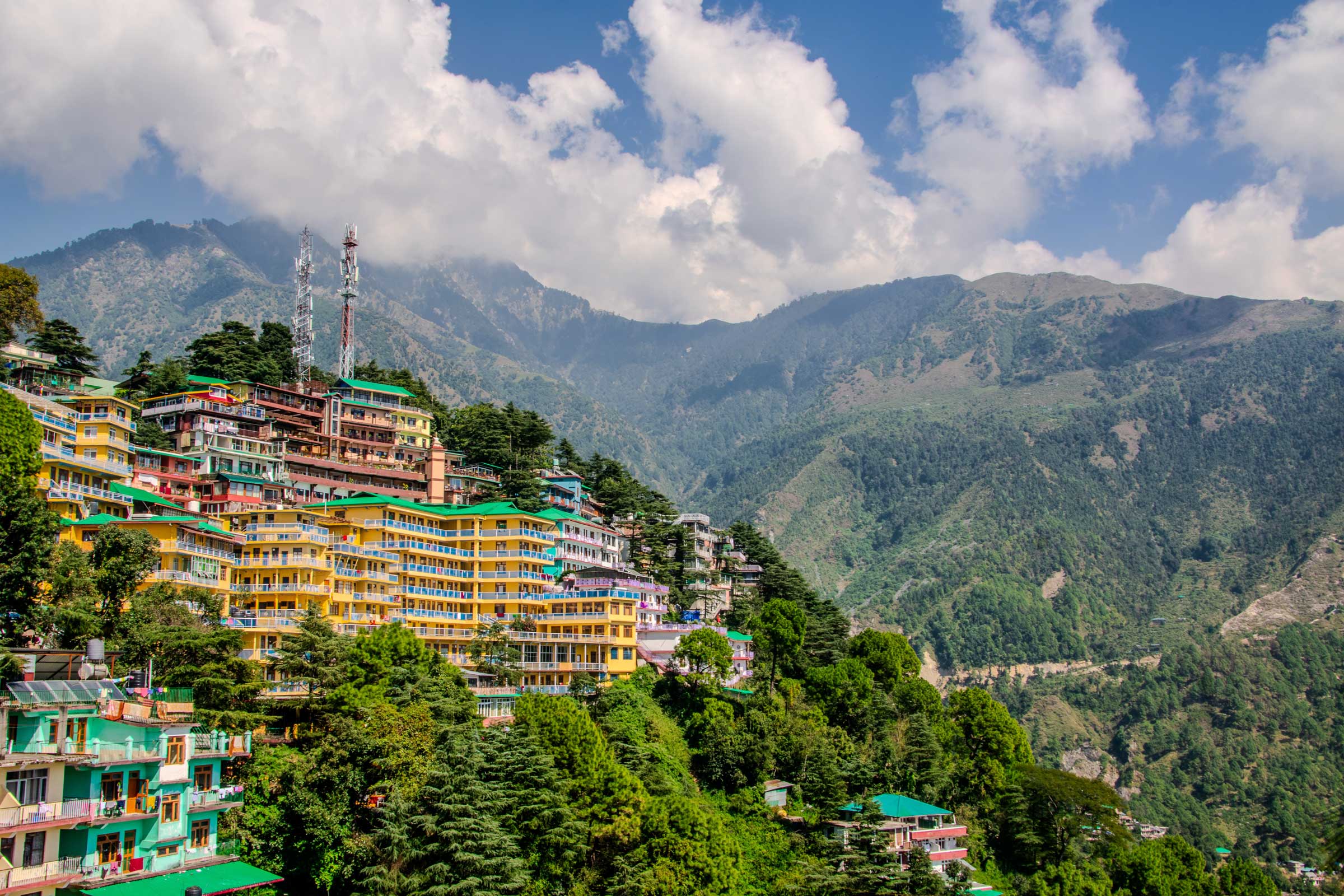
McLeodganj is a suburb of Dharamshala, the winter capital of Himachal Pradesh, sitting about 5 km uphill from Dharamshala town. In May 1960, after Prime Minister Jawaharlal Nehru allowed the Dalai Lama and his followers to settle here, the Central Tibetan Administration was moved to McLeodganj, where the Tibetan community established a government-in-exile and the Namgyal Monastery. Since then, McLeodganj has grown into a thriving cultural hub that attracts Buddhist pilgrims, backpackers, spiritual seekers, trekkers, and travellers from across the world.
The indigenous people of the Dharamshala area are the Gaddis, a predominantly Hindu community who traditionally lived a nomadic or semi-nomadic lifestyle. Today, the town is a beautiful blend of Garhwali Hindu heritage and Tibetan Buddhist culture, all set against some of the most dramatic mountain scenery in the Indian Himalayas.
Top Places to Visit in McLeodganj 2026
1. Tsuglagkhang Complex — The Dalai Lama Temple
The spiritual heart of McLeodganj and the most important attraction in the town, the Tsuglagkhang Complex — commonly known as the Dalai Lama Temple — is a must-visit for every traveller, regardless of religious background.
The complex houses the Photang (the Dalai Lama's residence), the Tibet Museum, the Tsuglagkhang Temple, and the Namgyal Gompa. The Tsuglagkhang Temple is the largest Tibetan temple outside Tibet, with a grand meditation hall containing beautiful thangkas, statues, and the adjoining Kalachakra Temple decorated with extraordinary murals.
Inside the main temple, the centrepiece is a magnificent statue of Lord Buddha Shakyamuni, flanked by statues of Avalokiteshvara and Padmasambhava. The atmosphere inside is one of profound calm — monks in maroon robes move through the halls, butter lamps burn continuously, and the low hum of prayer fills every corner.
The complex is a functional monastic and spiritual space rather than a single standalone shrine. On most days, you will see monks walking briskly, local Tibetans circumambulating with malas, and travellers slowly absorbing the environment.
One of the most meaningful things you can do at the complex is walk the Kora — a clockwise circumambulation of the temple complex while spinning the prayer wheels. The walk takes about 30–45 minutes and is a deeply meditative experience.
When the Dalai Lama is in residence, the public may attend his speaking engagements, which are always free. Visitors must register with the complex in advance for any personal audience.
Timings: 8:00 AM – 6:00 PM (open all days) Entry Fee: No entry fee for the main temple complex. Tibet Museum Entry Fee: Small fee applicable. Dress Code: Modest clothing required. Remove shoes before entering the temple.
2. Namgyal Monastery
Namgyal Monastery is the largest Tibetan temple in India and serves as the personal monastery of the Dalai Lama. The complex features traditional Tibetan architecture, intricate murals, and a peaceful meditation hall where visitors can observe monks during their daily prayers and debates.
In the afternoons, it is common to find groups of monks engaged in spirited religious debate in the courtyard — a unique and energising sight that reveals the intellectual rigour at the heart of Tibetan Buddhist practice. Visitors are welcome to observe respectfully.
3. Bhagsu Nag Temple & Bhagsu Waterfall
The Bhagsu Nag Temple, dedicated to the serpent god Nag (also associated with Lord Shiva), is one of the oldest temples in the region and a significant pilgrimage site for both Hindus and the local Gaddi community. The sacred pool within the temple premises is believed to have healing properties.
A short 30-minute walk from the temple leads to the Bhagsu Waterfall — a beautiful cascade tumbling down from the Dhauladhar rocks. The waterfall cascades from a height of about 20 metres and is a popular destination for both pilgrims and trekkers. The walk to the waterfall is gentle and shaded, passing through rocky terrain and mountain streams. The waterfall is most spectacular during and immediately after the monsoon season (July–September).
Distance from McLeodganj: 2.5 km Trek to Waterfall: 30 minutes from Bhagsu Nag Temple
4. Tibet Museum

The Tibet Museum provides a remarkable account of Tibetan history, culture, and heritage. The museum offers visitors a window into the Tibetan people's struggles and their journey into exile through traditional artefacts, photographs, and carefully curated displays.
Located near the Tsuglagkhang Complex, this is one of the most emotionally powerful museums in India. The exhibitions document the Chinese occupation of Tibet, the exodus of Tibetan refugees, and the remarkable story of how an entire culture has survived and flourished in exile. A visit here adds profound context and depth to everything else you experience in McLeodganj.
Location: Near Tsuglagkhang Complex, McLeodganj Entry: Small fee applicable
5. Library of Tibetan Works and Archives
In 1970, the Dalai Lama opened the Library of Tibetan Works and Archives, which has become one of the most important institutions for Tibetology in the world. The library houses thousands of rare Tibetan manuscripts, books, and artefacts that form an irreplaceable record of Tibetan history and Buddhist scholarship. It also hosts regular courses in Tibetan language, culture, and philosophy — ideal for those wanting to deepen their understanding of Buddhism during a longer stay.
6. Tushita Meditation Centre
Nestled in the forest above McLeodganj, Tushita Meditation Centre is dedicated to the study and practice of Tibetan Mahayana Buddhism. Established in 1972 by Lama Thubten Yeshe, Tushita provides a welcoming space for individuals of all backgrounds to explore Buddhist philosophy and meditation.
Day sessions and longer residential retreats are available. This is one of the most popular spiritual experiences for travellers who come to McLeodganj seeking more than sightseeing — a chance to sit still, learn, and go inward.
7. Kalachakra Temple
The Kalachakra Temple, located adjacent to the Tsuglagkhang, features fresco decorations of 722 deities of the mandala, Shakyamuni Buddha, and the central Kalachakra image. The Dalai Lama personally directed the painting of the frescos, completed by three master painters over three years. The walls and columns are covered with traditional Tibetan Thangka paintings.
For those interested in Tibetan Buddhist art, this temple is an extraordinary visual experience.
8. St. John in the Wilderness Church

A surprising and charming detour from the Buddhist temples that dominate McLeodganj, St. John in the Wilderness is a charming colonial-era church located 8 km from Dharamshala, between Forsythganj and McLeodganj. Under the shade of deodar branches, a memorial stands over the burial place of Lord Elgin, British Viceroy of India, who died at Dharamshala in 1863. A well-tended old graveyard adds to the historical atmosphere.
The church itself is a beautifully preserved piece of British colonial architecture, quiet and peaceful, surrounded by towering deodar trees.
9. Norbulingka Institute
Located about 6 km from McLeodganj near Sidhpur, the Norbulingka Institute is dedicated to the preservation and promotion of traditional Tibetan arts and crafts — thangka painting, wood carving, metal casting, and appliqué. The institute has beautiful Japanese-style gardens and a temple with stunning wall paintings. An excellent half-day excursion that most first-time visitors to McLeodganj miss, and shouldn't.
10. McLeodganj Market & Café Lanes
No trip to McLeodganj is complete without spending time in its lively market lanes. The main square and the lanes leading off it are filled with shops selling Tibetan handicrafts, prayer flags, singing bowls, thangka paintings, handmade jewellery, Himalayan tea, and warm woollens.
The café culture in McLeodganj is exceptional. From rooftop Tibetan restaurants serving steaming momos and thukpa to Israeli-influenced bakeries and European-style coffee shops, eating and drinking your way through McLeodganj is genuinely one of the great pleasures of the trip. Do not leave without trying a bowl of thenthuk (Tibetan hand-pulled noodle soup) on a cold mountain evening.
Triund Trek 2026 — Complete Guide
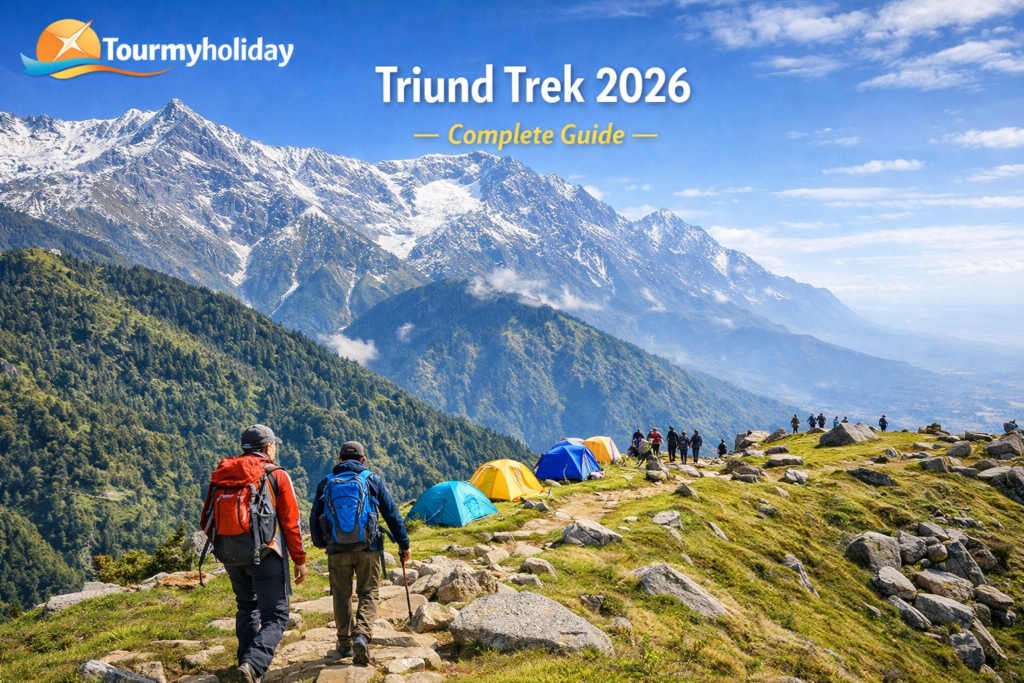
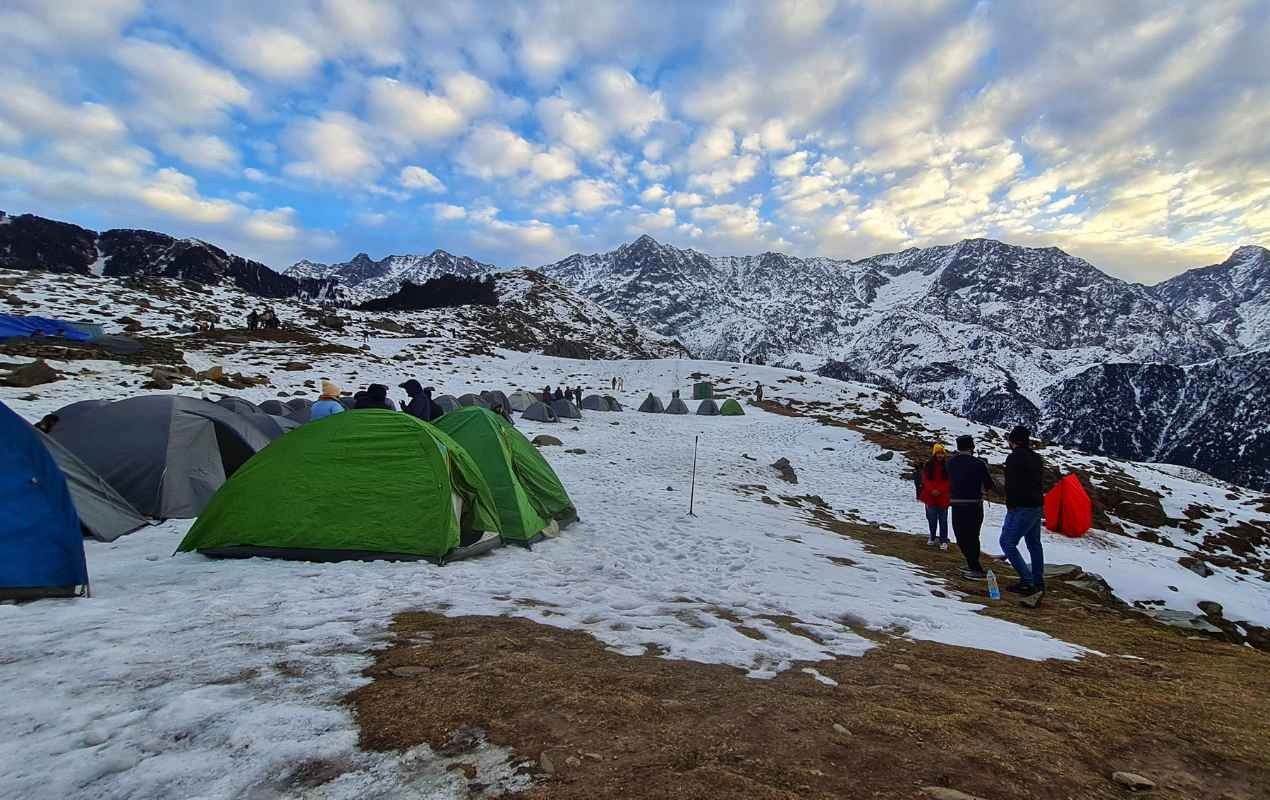
Rising above McLeodganj at an altitude of 2,850 metres (9,350 feet), Triund is the crown jewel of Dharamshala trekking and one of the most beloved short treks in all of India. Standing at 9,284 feet, Triund is an easy trek that gives you a high-altitude experience without much hassle, and can be done over a weekend. On one side, the flat grassy meadow at the top commands a dramatic close-up view of the snow-capped Dhauladhar range. On the other hand, the entire Kangra Valley stretches out below you like a painting. At sunset, both views turn to gold.
Why Triund is Special
Triund offers some of the best Himalayan views with very little climbing required compared to deeper valleys or multi-day treks. You can see Moon Peak, Rifle Horn, Arthur's Seat, and the mighty Dhauladhar range clearly visible from the moment the tree line opens at the top.
The trek also passes through a beautiful section of dense rhododendron, oak, and pine forest that provides welcome shade and a rich sensory experience — songbirds call from the canopy, wildflowers line the path in spring, and mountain streams run beside the trail.
And then there is the night at Triund. Camping under a sky bursting with stars, with the dark silhouette of the Dhauladhars against the moonlight, is an experience that stays with you for years.
Triund Trek Details at a Glance
| Detail | Information |
|---|---|
| Altitude | 2,850 m (9,350 ft) |
| Trek Distance | 9–10 km one way from McLeodganj |
| Duration | 4–6 hours one way |
| Difficulty | Easy to Moderate |
| Starting Points | Dharamkot / Gallu Devi Temple / Bhagsu Nag |
| Permit Required | No (permit required only beyond Snowline Café) |
| Best Season | March–June, September–November |
| Camping | Permitted in designated areas at Triund top |
| Trek Type | Day hike or overnight camping trek |
"Want a hassle-free experience? Explore our McLeodganj Triund Package with stay, transfers, and guided trek included."
Triund Trek Routes — Which One to Choose?
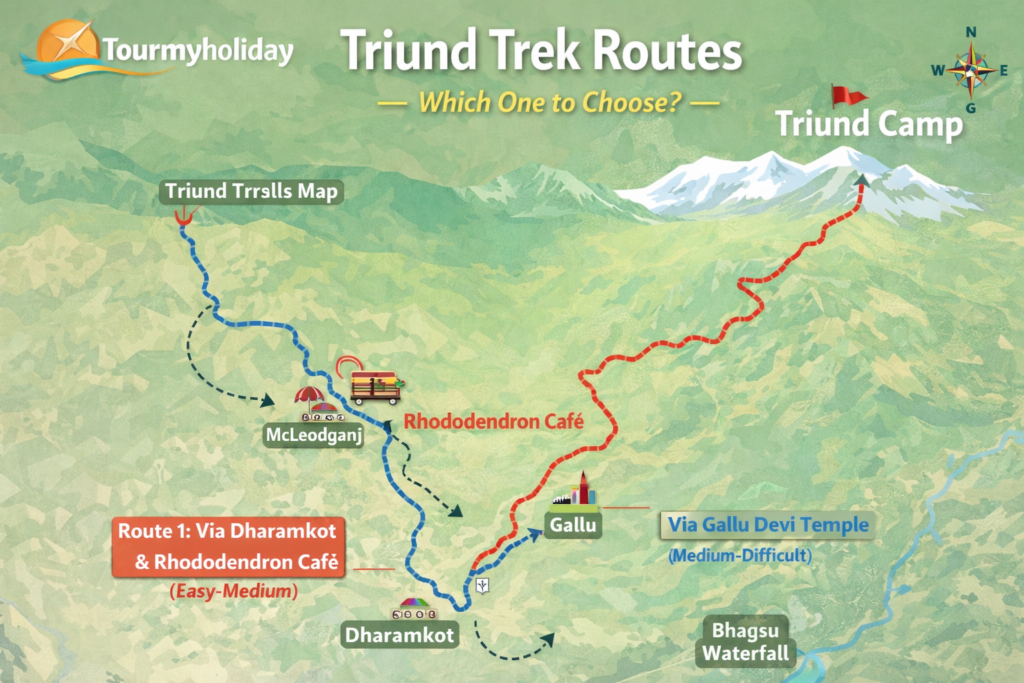
There are three main routes to reach Triund:
Route 1 — Gallu Devi Temple (Most Popular) Starting from Gallu Devi Temple (reachable by taxi from McLeodganj or Dharamkot), this is the most straightforward and most commonly used route. From the temple, it is about 9.5 km return. The route is well-marked and popular, so expect company on weekends. The trail climbs steadily through oak and rhododendron forests before opening onto the Triund ridge.
Route 2 — Dharamkot (Scenic Forest Route) The trail from Dharamkot is arguably the nicer one, as it climbs through a thick crown of pine forests. Dharamkot is a small village above McLeodganj and is a hub for trekkers and yoga enthusiasts. This route is preferred by those who want a more forested, atmospheric approach.
Route 3 — Bhagsu Nag Temple (Steeper & Quieter) Starting from Bhagsu Nag Temple, this route passes the Bhagsu Waterfall and then ascends steeply to Triund. It is much steeper than the Gallu Devi route, but far less crowded. This route offers more open and expansive views for much of the ascent. Recommended for those who want to combine the waterfall visit with the trek, or for those seeking a quieter experience.
Step-by-Step Trek Guide (Gallu Devi Temple Route)
Phase 1 — Gallu Devi Temple to Magic View Café (5 km, approx. 2–3 hours) From Gallu Devi Temple, the trail begins as a clearly marked path climbing through dense oak and rhododendron forest. The first section is steady and shaded, with the sound of birds and the occasional mountain stream for company. Red and white paint markers on rocks and trees guide the way. Several small tea stalls along the route offer chai, Maggi, and refreshment breaks. After about 5 km of gradual climbing, you reach the Magic View Café — a beloved trail landmark perched on a rocky outcrop with the first dramatic views of the Dhauladhar range opening up. This is an excellent spot for a rest, lunch, and photography.
Phase 2 — Magic View Café to Triund Top (4 km, approx. 1–2 hours) The trail becomes progressively steeper from Magic View Café. The final 1–2 km before the summit involves a sustained climb on rocky terrain that requires care and steady pacing. The initial part of the trek is easy, while the last 2 km is considerably steeper. But as you push through the final section, the forest gives way to open sky, the trail levels out, and suddenly you are at the top — a vast, flat green meadow with the enormous white wall of the Dhauladhars directly above you and the entire Kangra Valley laid out far below.
At Triund Top, the meadow at Triund Top is spacious and open. Designated camping zones are marked, and tea stalls/basic dhabas operate during the trekking season, selling chai, Maggi noodles, omelettes, and basic meals. Sunset here is legendary — the Dhauladhars catch the last golden light while the Kangra Valley below fades into shadow. On a clear night, the stargazing from Triund is extraordinary.
Day-by-Day Recommended Itinerary
Option A — Day Trek (Return same day)
| Time | Activity |
|---|---|
| 6:00 AM | Start from Dharamkot / Gallu Devi Temple |
| 9:00–10:00 AM | Arrive at Triund Top |
| 10:00 AM – 12:00 PM | Explore the meadow, have lunch, and rest |
| 12:00 PM | Begin descent |
| 3:00–4:00 PM | Arrive back at base |
Option B — Overnight Camping (Recommended)
Day 1: Arrive McLeodganj → Explore McLeodganj market, visit Tsuglagkhang Complex and Bhagsu Waterfall → Overnight in McLeodganj hotel.
Day 2: Start trek early (6:00–6:30 AM) from Gallu Devi Temple → Reach Triund Top by 11:00 AM → Set up camp / check in to tent accommodation → Afternoon at leisure exploring the meadow and ridgeline → Sunset at Triund (extraordinary experience) → Overnight in tent camp with bonfire and star-gazing.
Day 3: Wake up for sunrise over the Dhauladhar range → Breakfast at campsite → Begin descent by 8:00 AM → Arrive at base by 11:00 AM → Rest, lunch in McLeodganj → Explore the local market and Tibetan cafés → Depart or extend stay.
Beyond Triund — Advanced Trekking Options
Triund is not the last destination on the trek — it acts as a gateway to many more adventures. From Triund, experienced trekkers can continue to the Snow Line (3,500 m), explore the Lakha Cave, and, on multi-day expeditions, traverse all the way to the Indrahar Pass (4,300 m).
Snowline Café (3,500 m) — 3.5 km above Triund, crossing into permanent snow even in summer. Requires a permit obtainable at the Forest Department in McLeodganj. A thrilling addition for confident trekkers.
Indrahar Pass (4,300 m) — A serious, multi-day alpine trek that crosses the Dhauladhar range and connects McLeodganj with the Chamba district. Only for experienced, well-equipped trekkers. Requires good fitness and ideally a local guide.
Accommodation at Triund
Tent Camping: Multiple trekking operators and campsite vendors at Triund top offer tent packages including sleeping bag and mattress. Cost: approximately ₹500–₹1,000 per person per night. Always book through certified trekking providers and follow Forest Department guidelines.
Forest Rest House: A small forest rest house near Triund top is operated by the Himachal Pradesh Forest Department. Booking must be done in Dharamshala at the Divisional Forest Office. Space is very limited.
Tea Stall Huts: A few basic overnight stays in simple wooden structures near the tea stalls at the top are available at low cost, but these are extremely basic.
TourMyHoliday Tip: Even in May–June, temperatures at Triund drop sharply after sunset — often to 5°C or below. Always carry a warm sleeping bag, an extra fleece, and a waterproof jacket regardless of the season.
Best Time to Visit McLeodganj & Triund 2026

| Season | McLeodganj | Triund Trek | Notes |
|---|---|---|---|
| January–February | ✅ Open | ❌ Snowy/icy | McLeodganj is beautiful in winter. The Triund trek is icy and risky. |
| March–April | ✅ Excellent | ✅ Very Good | Rhododendrons bloom, clear skies, pleasant temperatures. Highly recommended. |
| May–June | ✅ Peak Season | ✅ Best Time | Warmest weather, busiest season. Go on weekdays to avoid crowds at Triund. |
| July–August | ⚠️ Monsoon | ❌ Avoid | McLeodganj is lush but rainy. Triund trails are slippery and potentially dangerous. |
| September–October | ✅ Excellent | ✅ Best Time | Post-monsoon clarity. Dramatic skies, fewer crowds. Highly recommended. |
| November–December | ✅ Good | ⚠️ Cold | McLeodganj is peaceful and less touristy. Triund is cold but doable for experienced trekkers. |
Overall Best Time: March–April for spring blooms or September–October for post-monsoon clarity. Both are excellent.
How to Reach McLeodganj 2026
By Air: The nearest airport is Gaggal Airport (Kangra Airport), approximately 15–22 km from McLeodganj. Daily flights connect Gaggal to Delhi, with a flight time of approximately 1.5 hours. Tickets range from approximately ₹3,000 to ₹6,000. From the airport, a taxi to McLeodganj costs approximately ₹800–₹1,200.
By Train: The nearest major railway station is Pathankot, approximately 85 km from McLeodganj. From Pathankot, a taxi to McLeodganj takes about 2.5 hours and costs approximately ₹1,500–₹2,000. The Pathankot–Jogindernagar toy train (narrow gauge) also runs to Kangra and Ahju, both of which are closer to Dharamshala.
By Bus: HRTC Volvo overnight buses run from ISBT Delhi to Dharamshala, with tickets priced at approximately ₹1,200–₹1,800. From the Dharamshala bus stand, local buses and shared taxis run frequently to McLeodganj (5 km, approximately 15 minutes).
By Car (Self-Drive): From Delhi, the route runs via NH 44 through Ambala, Chandigarh, Kiratpur, Bilaspur, Mandi, and Palampur to Dharamshala — a journey of approximately 480 km taking 10–12 hours depending on traffic and road conditions.
Where to Stay in McLeodganj 2026
McLeodganj offers accommodation for every budget, from budget backpacker guesthouses to comfortable mid-range hotels. Most travellers stay in the McLeodganj main area, Bhagsu, or Dharamkot — all within easy walking distance of the major attractions and the Triund trek starting points.
Budget (₹500–₹1,500/night): Numerous guesthouses and hostels in McLeodganj and Bhagsu. Ideal for backpackers and solo travellers. Many have rooftop views of the Dhauladhars.
Mid-Range (₹1,500–₹4,000/night): A good selection of comfortable hotels in McLeodganj's main area and on the outskirts. Most include breakfast. Good options in Dharamkot as well.
Premium (₹4,000+/night): A handful of boutique hotels and resorts in and around McLeodganj and Dharamshala with better amenities, views, and services.
Booking Tip: McLeodganj gets very busy in May–June and September–October. Book accommodation at least 3–4 weeks in advance during peak seasons. Weekends see a significant influx of visitors from Delhi and Chandigarh.
McLeodganj Food Guide — What to Eat
McLeodganj's food scene is one of the most eclectic and satisfying of any small Indian hill town. Must-try dishes and food experiences include:
Tibetan Food: Steaming momos (dumplings) with spicy chilli sauce, thukpa (noodle soup), thenthuk (hand-pulled noodle soup), shapale (fried meat pies), and butter tea. The authentic Tibetan restaurants around the main square and monastery area are excellent.
Israeli & Continental Cafés: McLeodganj has a long tradition of Israeli and Western travellers, resulting in an unusual number of excellent cafés serving falafel, hummus, shakshuka, fresh juices, good espresso, and baked goods. Nick's Italian Kitchen and Jimmy's Italian Kitchen are local legends.
Indian Food: Standard North Indian thali, parathas, dal makhani, and street food are all available in the lower market and Dharamshala town.
Bakeries: Excellent bread, croissants, and cakes from several Tibetan-run bakeries around the main square.
Cafés with a View: Several rooftop cafés and café terraces offer dramatic Dhauladhar views. Shiva Café near Bhagsu is famous as a post-trek relaxation spot.
Essential Packing List for McLeodganj & Triund
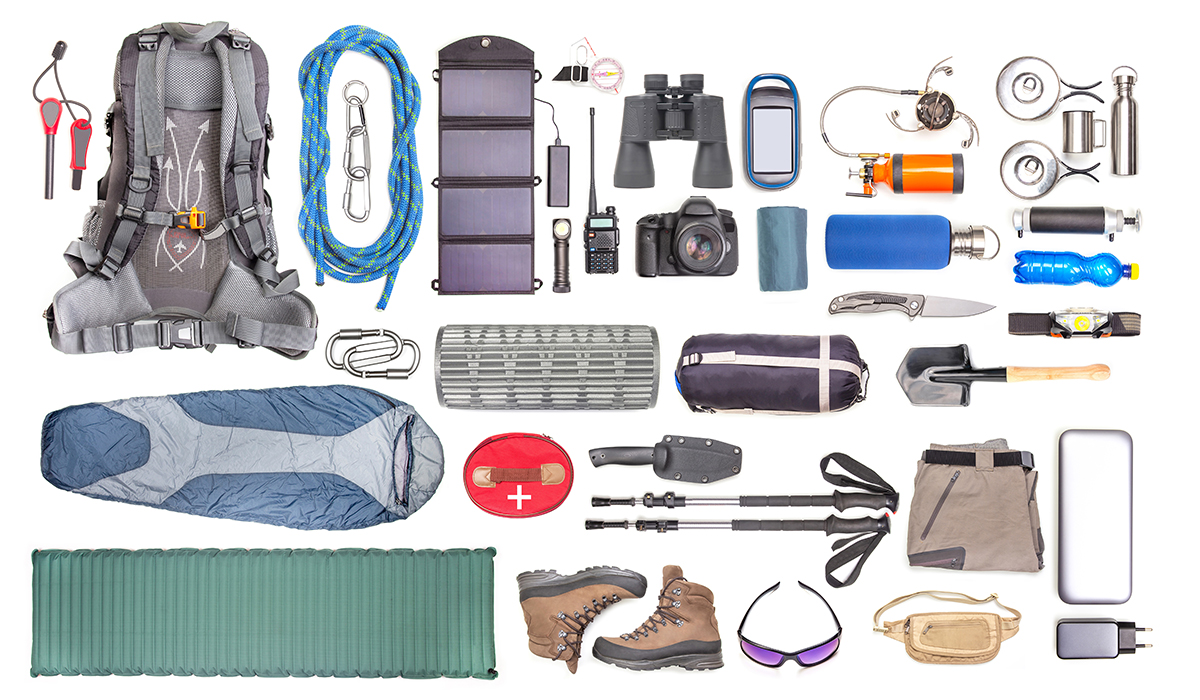
For McLeodganj town visit: comfortable walking shoes, light warm layer for evenings (temperatures drop to 10–15°C even in summer), light rain jacket, sunscreen, and personal ID.
For the Triund Trek: sturdy waterproof trekking shoes or boots, warm layers (fleece + down jacket), waterproof rain jacket, trekking poles (optional but helpful on the descent), at least 2 litres of water, energy snacks (dry fruits, trail mix, energy bars), headlamp with extra batteries, basic first aid kit, sunscreen and sunglasses, offline maps downloaded (BSNL/Airtel coverage is limited on the trail), cash (no ATMs beyond McLeodganj), sleeping bag rated to 0°C if camping overnight.
Important Travel Tips for McLeodganj & Triund 2026
Carry cash: ATMs are available in the McLeodganj main market. There are no ATMs on the Triund trail or at Triund top. Carry sufficient cash before starting the trek.
Start early: Begin the Triund trek as early as 5:30–6:00 AM. The first half of the trail faces the sun and becomes hot by mid-morning. Starting early also gives you the best chance of clear mountain views before afternoon clouds roll in.
Avoid weekends in peak season: Triund is one of the most popular weekend treks from Delhi and Chandigarh. Weekdays are much better for a peaceful experience.
Respect Tibetan culture: McLeodganj is a deeply spiritual community. Dress modestly when visiting temples and monasteries, remove shoes before entering any place of worship, and always spin prayer wheels in a clockwise direction. Photography inside temple halls is often restricted — check signage.
No plastic rule: The Triund forest area enforces a plastic deposit rule. Carry a reusable water bottle and avoid single-use plastic as much as possible.
Weather can change rapidly: Mountain weather in McLeodganj is highly changeable. A clear morning can turn into an afternoon thunderstorm very quickly, especially from May onwards. Always carry a rain jacket and do not push on if conditions deteriorate on the trail.
Mobile network: BSNL and Airtel work in McLeodganj town, but coverage becomes patchy or absent on the Triund trail. Download offline maps and inform people of your plan before heading out.
Frequently Asked Questions (FAQs)
Q1. What is McLeodganj famous for?
McLeodganj is famous as the home of the Tibetan government in exile and the residence of the 14th Dalai Lama. It is known as "Little Lhasa" because of its strong Tibetan culture, monasteries, and large Tibetan refugee community. It is also famous as the base for the popular Triund trek and for its unique blend of Tibetan, Indian, and international café culture.
Q2. How far is McLeodganj from Delhi?
McLeodganj is approximately 480–520 km from Delhi by road, a journey of 10–12 hours by car or overnight bus. By air, the journey takes about 1.5 hours to Gaggal (Kangra) airport, followed by a 30-minute taxi ride.
Q3. Is the Triund trek suitable for beginners?
Yes. Triund is one of the best treks for beginners. It has a well-marked trail, a moderate incline, and does not require prior trekking experience. The last 2 km before the summit are steeper, but manageable with a steady pace and regular breaks.
Q4. What is the distance and time for the Triund trek?
The Triund trek is approximately 9–10 km one way from McLeodganj or Dharamkot. It takes 4–6 hours to reach the top, depending on your fitness level and pace. The descent takes 2–3 hours.
Q5. Is camping allowed at Triund?
Yes. Camping is permitted but regulated. Campsites are in designated areas, and it is advisable to book through a certified trekking provider to follow forest department rules.
Q6. What is the best time to visit McLeodganj in 2026?
The best times are March–April (spring, rhododendron blooms, clear skies) and September–October (post-monsoon clarity, fewer crowds). May–June is also excellent, but it is peak tourist season and can be very busy.
Q7. Is a permit required for the Triund trek?
No permit is required for Triund itself. Permits are needed only for the Snowline Café area and beyond.
Q8. Can I see the Dalai Lama in McLeodganj?
It is possible to attend public teachings when His Holiness is in residence, and these are free. For the best chances, check his schedule online and plan your trip accordingly. Visitors must register with the complex before attending any personal audience.
Q9. What is the temperature at Triund?
During the trekking season (March–November), daytime temperatures at Triund range from 12°C to–22°C. Nights are significantly colder, dropping to 5°C–10°C in summer and below 0°C from October onwards. Always carry warm layers for the night, regardless of the season.
Q10. How far is Triund from McLeodganj?
Triund is approximately 9–10 km from McLeodganj by the most commonly used trail. The trek starts from Dharamkot or Gallu Devi Temple, both of which are a short taxi ride from McLeodganj main square.
McLeodganj & Triund 2026 — Quick Summary
| Detail | McLeodganj | Triund |
|---|---|---|
| Altitude | 1,770 m | 2,850 m |
| District | Kangra, Himachal Pradesh | Kangra, Himachal Pradesh |
| Distance from Delhi | ~480 km | ~490 km |
| Best Time | March–June, Sept–Oct | March–June, Sept–Nov |
| Trek Distance | — | 9–10 km one way |
| Trek Difficulty | — | Easy to Moderate |
| Trek Duration | — | 4–6 hours up |
| Permit Required | No | No (beyond Snowline: Yes) |
| Camping | — | Yes (designated areas) |
| Nearest Airport | Gaggal (15 km) | Gaggal (30 km) |
| Nearest Railhead | Pathankot (85 km) | Pathankot (95 km) |
Also Read:
- Is McLeodganj Good for Solo Travelers?
- How to Reach McLeodganj
- Weather in McLeodganj – Best Time to Visit & Seasonal Travel Guide 2025
- Top 10 Places to Visit in McLeodganj – Complete 2025 Travel Guide
Ready to experience the magic of McLeodganj and the Triund trek for yourself? Let TourMyHoliday plan your perfect Himachal Pradesh escape — customised itineraries, hand-picked stays, expert guidance, and zero stress. Contact us today.


