Kalpeshwar & Rudranath Temple 2026 — Complete Guide with Opening Dates, Trek Route & Travel Tips

Kalpeshwar & Rudranath Temple 2026 — Complete Guide with Opening Dates, Trek Route & Travel Tips

Published on February 18, 2026

By TourMyHoliday | Updated: 2026 | Reading Time: ~9 minutes


Hidden deep within the Chamoli district of Uttarakhand, away from the crowds that flock to Kedarnath and Badrinath, lie two of the most spiritually powerful and scenically magnificent temples of the Panch Kedar circuit — Kalpeshwar and Rudranath.

While both are part of the same sacred yatra route, they offer completely different experiences. Kalpeshwar is the only Panch Kedar temple open throughout the year, with one of the easiest approaches in the entire circuit. Rudranath, on the other hand, is the most remote, most challenging, and arguably the most mystical of all five Panch Kedar shrines — a temple so difficult to reach that locals have a saying: "Rudranath ki chadai, German ki ladai" (Climbing Rudranath is like fighting a war).

Together, these two temples of Chamoli form an unforgettable combination for serious pilgrims and adventure trekkers. This complete guide for 2026 covers everything you need to know before you go.

Understanding Kalpeshwar & Rudranath — Their Place in the Panch Kedar

The Panch Kedar circuit consists of five sacred Shiva temples, each enshrining a different body part of Lord Shiva that emerged from the earth after he disguised himself as a bull to evade the Pandavas. The five temples are Kedarnath, Tungnath, Rudranath, Madhyamaheshwar, and Kalpeshwar.

In this circuit:

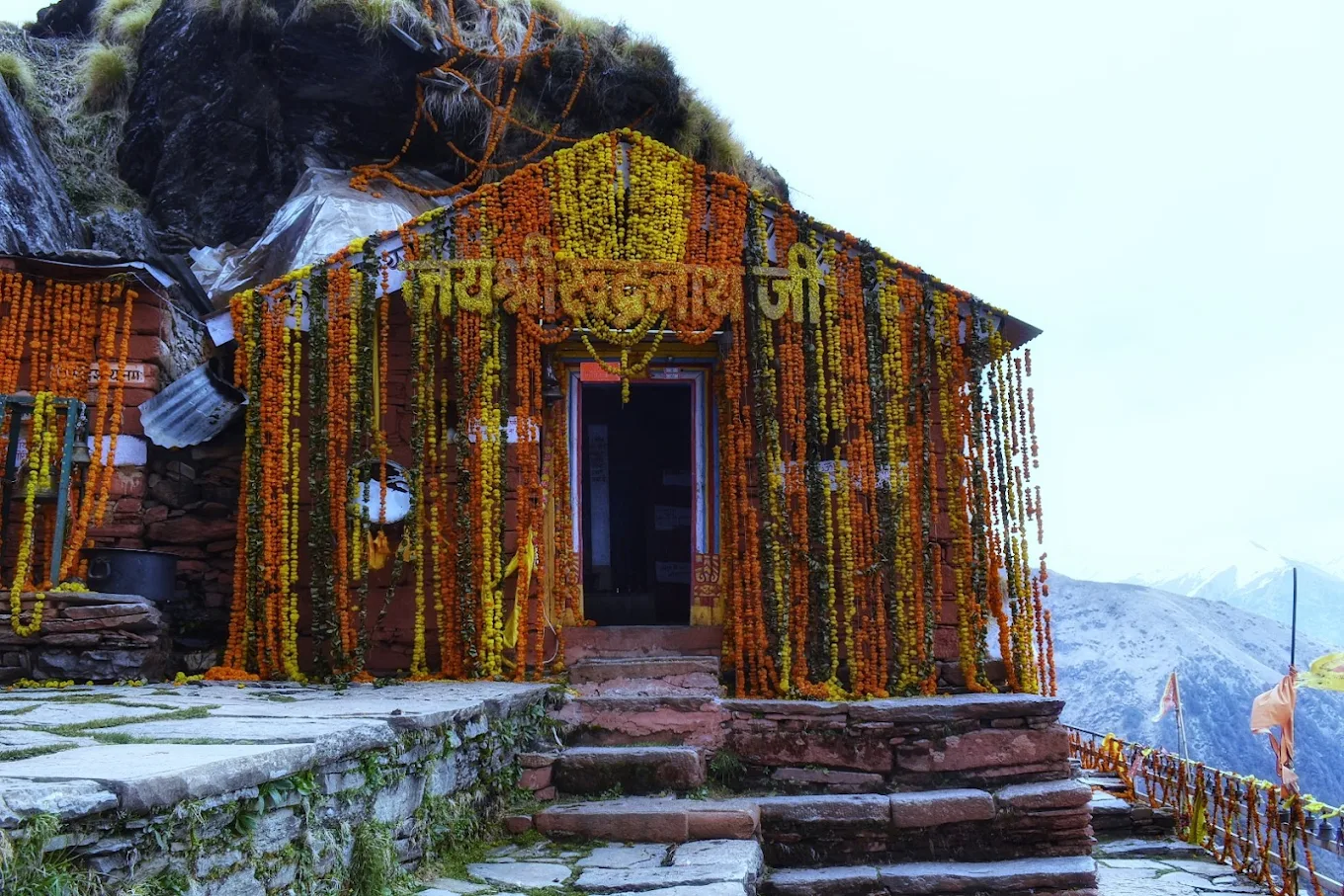
Rudranath is the Third Kedar — the face (mukh) of Lord Shiva is worshipped here. Lord Shiva at Rudranath is revered as Neelkanth Mahadev — the blue-throated god who swallowed the world's poison during the churning of the cosmic ocean. The idol here is a naturally occurring rock formation in which the face of Lord Shiva is visible, protruding from the stone in a breathtaking display of natural divinity.

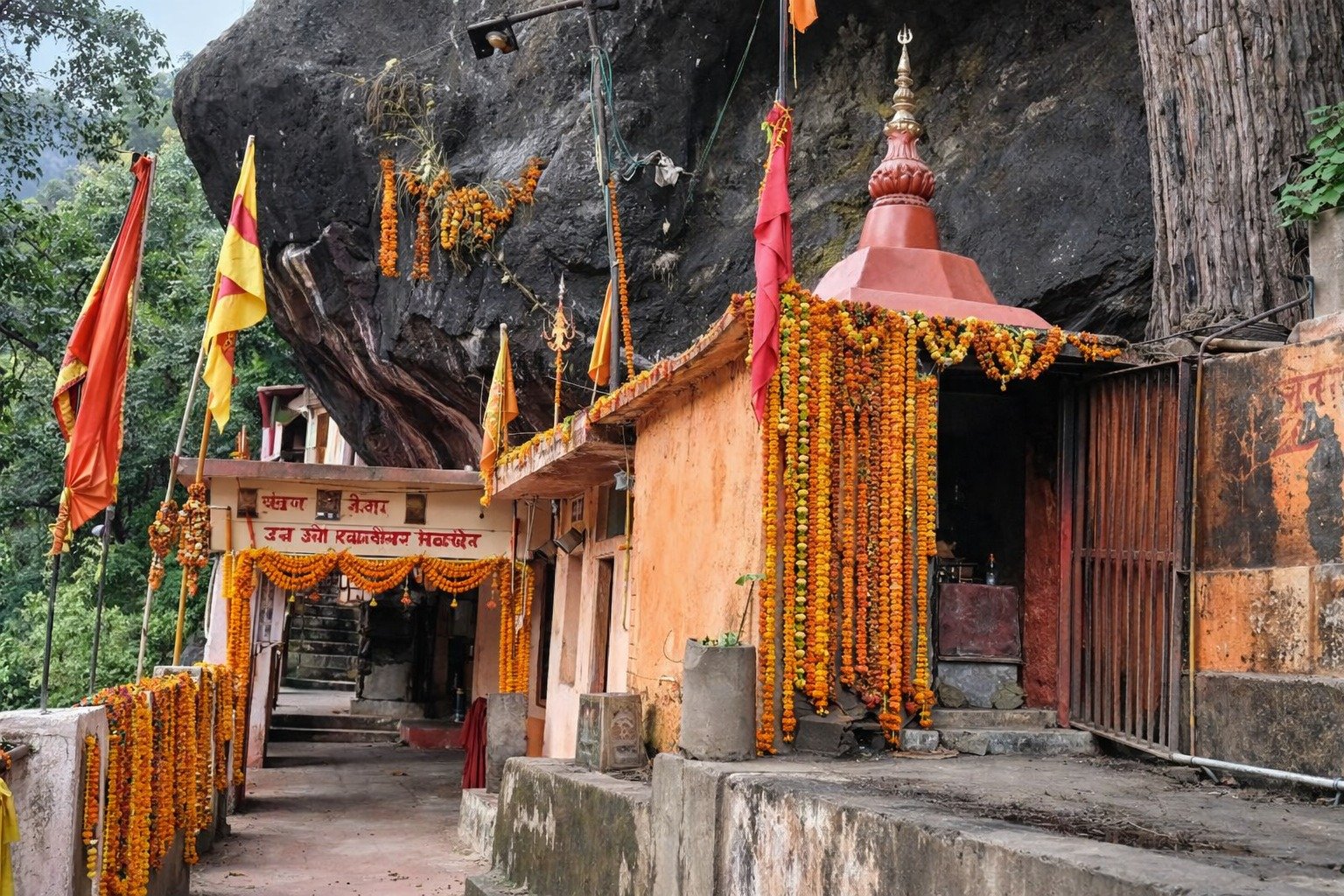
Kalpeshwar is the Fifth and Final Kedar — the jata (matted hair locks) of Lord Shiva are worshipped here. Lord Shiva at Kalpeshwar is known as Jatadhar or Jateshwar, the holder of the sacred locks. The temple is approached through a narrow natural cave passage, making the darshan experience uniquely intimate and powerful.

Both temples are located in the Chamoli district of Uttarakhand and are closely linked — many pilgrims and trekkers combine both temples in a single extended journey.

kalpeshwar and rudranath

The Pandava Legend — Why These Temples Were Built

After the devastating Kurukshetra War, the Pandavas were overcome with guilt for killing their own relatives, teachers, and kin. They sought Lord Shiva's forgiveness and blessings to cleanse themselves of this sin. However, Lord Shiva did not wish to meet them easily and disguised himself as a bull, hiding among cattle in the Garhwal Himalayas.

Bhima, the mightiest of the Pandavas, recognised the divine bull and tried to hold it. Lord Shiva dove into the earth to escape, but before fully disappearing, different parts of his body re-emerged at five separate locations across the Himalayas. His face appeared at Rudranath, and his matted hair locks appeared at Kalpeshwar. At each location, the Pandavas built a temple to honour Lord Shiva's divine form, and so the Panch Kedar was born.

Part 1: Kalpeshwar Temple — The Fifth and Final Kedar

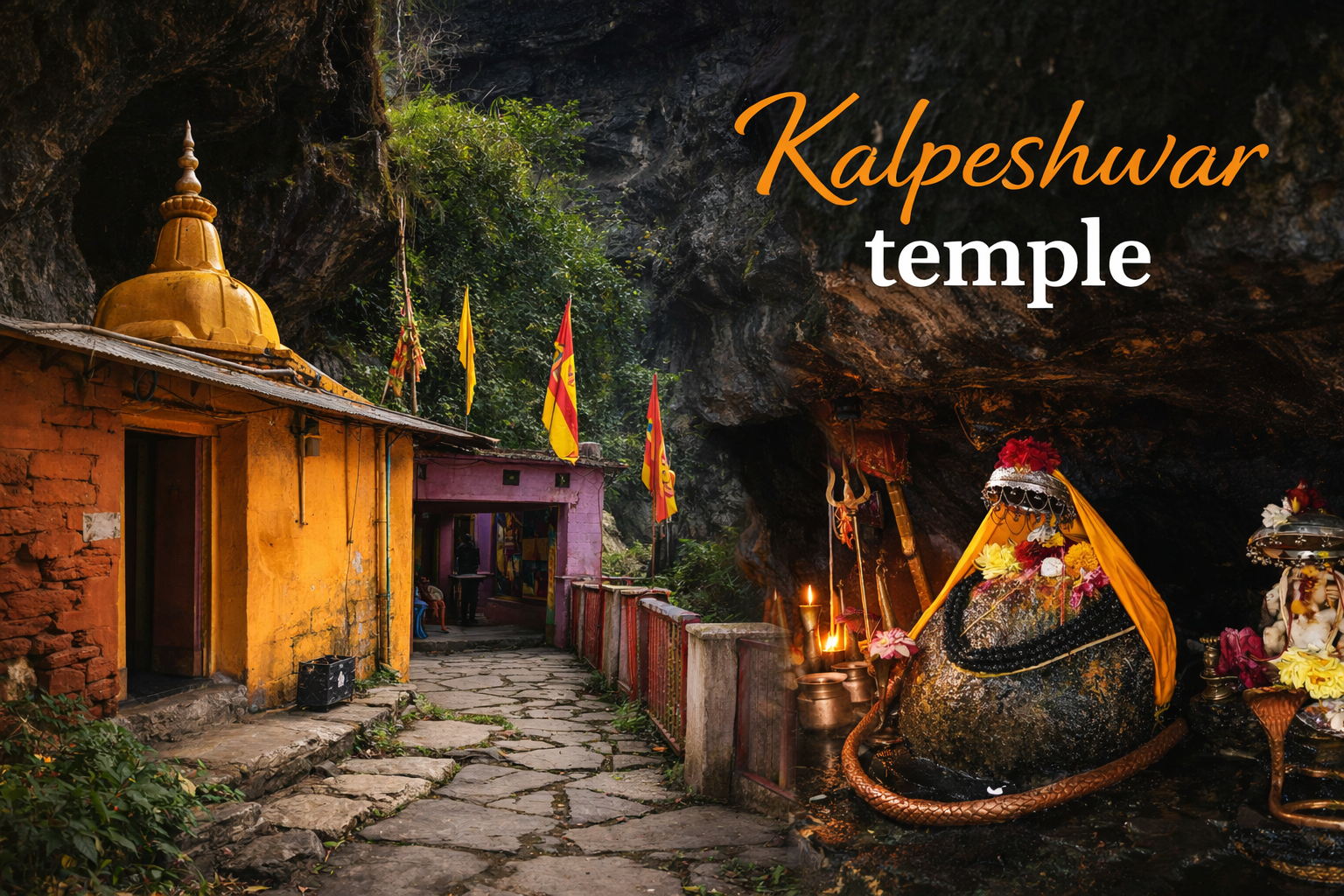
kalpeshwar temple

About Kalpeshwar Temple

Kalpeshwar is a small, ancient stone temple situated at an altitude of 2,200 metres (7,217 feet) in the serene Urgam Valley of the Chamoli district. The temple is unique not just because it enshrines the hair locks of Lord Shiva, but also because it is approached through a natural cave passage — one of the most atmospheric and spiritually charged temple entrances anywhere in the Himalayas.

Inside the cave, devotees worship a naturally formed rock depiction of Lord Shiva's matted locks. The temple is surrounded by the rushing waters of the Kalpganga River, dense forests of oak and rhododendron, terraced fields of potato and apple orchards, and the timeless beauty of the Urgam Valley.

A Kalpavriksha (wish-fulfilling tree) is believed to exist near the temple, and legend holds that Lord Shiva granted the divine tree to sages who meditated here. This ancient belief gives the valley its name — Kalpeshwar, the Lord of the Kalpavriksha.

The most remarkable feature of Kalpeshwar: unlike any other temple in the entire Panch Kedar circuit, it remains open throughout the year, including winter months, making it accessible to every pilgrim regardless of the season.

Kalpeshwar Temple Opening & Timings 2026

Open: Year-round (no seasonal closure)

Timings Schedule
Temple Opens 6:00 AM
Morning Aarti 6:30 AM – 7:00 AM
Afternoon Recess 12:00 PM – 4:00 PM
Temple Closes 8:00 PM

TourMyHoliday Tip: Arrive by 6:00 AM to attend the morning aarti and enjoy the temple in quiet serenity. Avoid arriving between 12:00 PM and 4:00 PM as the temple is closed during this time.

Kalpeshwar Trek Details

kalpeshwar trek details

Base Town: Helang (on the Rishikesh–Badrinath Highway, NH-7) Motorable Road Endpoint: Urgam Village / Devgram Trek Distance: 1–2 km from Urgam Village / approximately 300 metres from Devgram Trek Duration: 30–45 minutes one way Difficulty Level: Very Easy — suitable for children as young as 5, senior citizens, and first-time trekkers

The road from Helang to Urgam / Devgram is now motorable (jeep accessible), meaning the actual walking distance to the temple has reduced significantly in recent years. From Urgam, the trail is a gentle, clearly marked walk through meadows, apple orchards, and along the Kalpganga river. A short suspension bridge leads to the opposite bank, followed by a brief stone-stepped ascent to the cave entrance and the temple beyond.

What the trek looks like: The path begins as a cemented track through village settlements and terraced fields. As you proceed, the trail opens into a lush green valley with the Kalpganga river sparkling to your right. You will cross a wooden suspension bridge, and on the other side, steps carved into the hillside lead you up to the cave entrance of the temple. The entire experience is peaceful, meditative, and deeply beautiful.

What to See Near Kalpeshwar

Dhyan Badri Temple — Located in the Urgam Valley itself, Dhyan Badri is one of the Panch Badri temples dedicated to Lord Vishnu. It is a rare opportunity to pay respects at both a Panch Kedar and a Panch Badri shrine in the same visit.

Budha Kedar Temple — A small, ancient Shiva temple on the route, surrounded by potato fields, offering a tranquil stop.

Kalpganga River — The pristine mountain river flowing behind the temple offers a beautifully serene riverside walk and a natural spot for quiet meditation.

Urgam Valley Views — On a clear day, the valley frames stunning views of surrounding Himalayan peaks,  including Barmal and Dronagiri.

How to Reach Kalpeshwar

From Rishikesh (253 km): Take the Rishikesh–Badrinath highway (NH-7) to Helang (between Chamoli and Joshimath). From Helang, shared taxis and jeeps are available to Urgam / Devgram. From there, it is a short walk to the temple.

By Bus: Buses from Rishikesh toward Joshimath or Badrinath stop at Helang. From Helang, local transport is available to the Urgam Valley.

By Car: Drive to Helang, then take the Urgam Valley road (rough road, 4WD/jeep strongly recommended) to Urgam or Devgram.

By Air: Nearest airport is Jolly Grant Airport, Dehradun — approximately 272 km away. By Rail: Nearest railhead is Rishikesh — approximately 255 km away.

Accommodation at Kalpeshwar

Kalpeshwar is not a large pilgrimage centre, so accommodation is simple and limited. Options include:

homestays in Urgam Village (affordable, warm, authentic Garhwali hospitality), a dharamshala (rest house) within the temple premises, and basic guesthouses in Devgram (rooms available for approximately ₹300–600 per night). For more comfortable stays, Joshimath (27 km away) and Auli (52 km away) offer a wider range of hotels and resorts.

Part 2: Rudranath Temple — The Most Mystical Panch Kedar

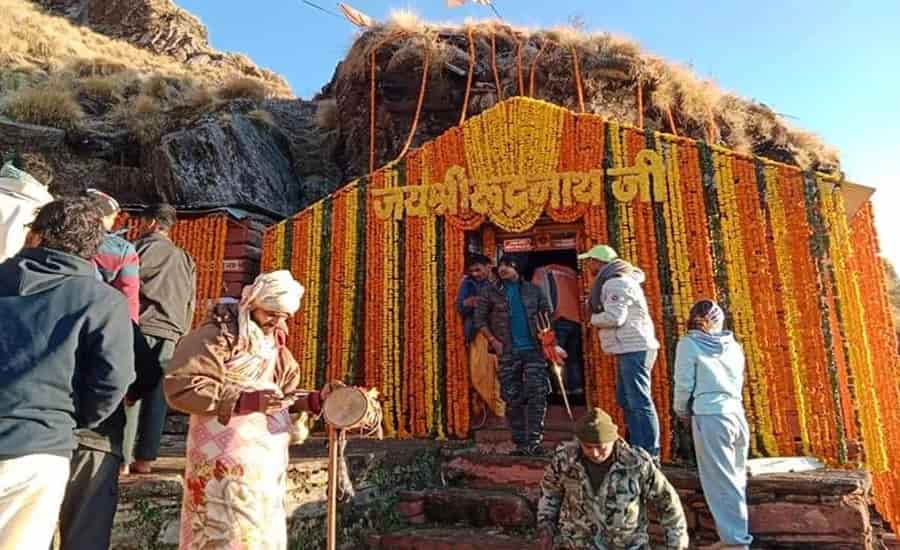
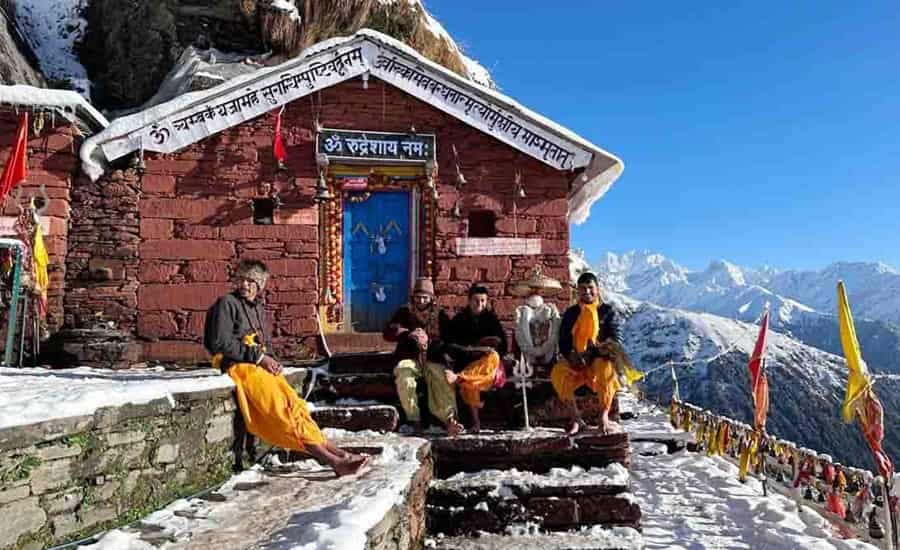
rudranath temple

About Rudranath Temple

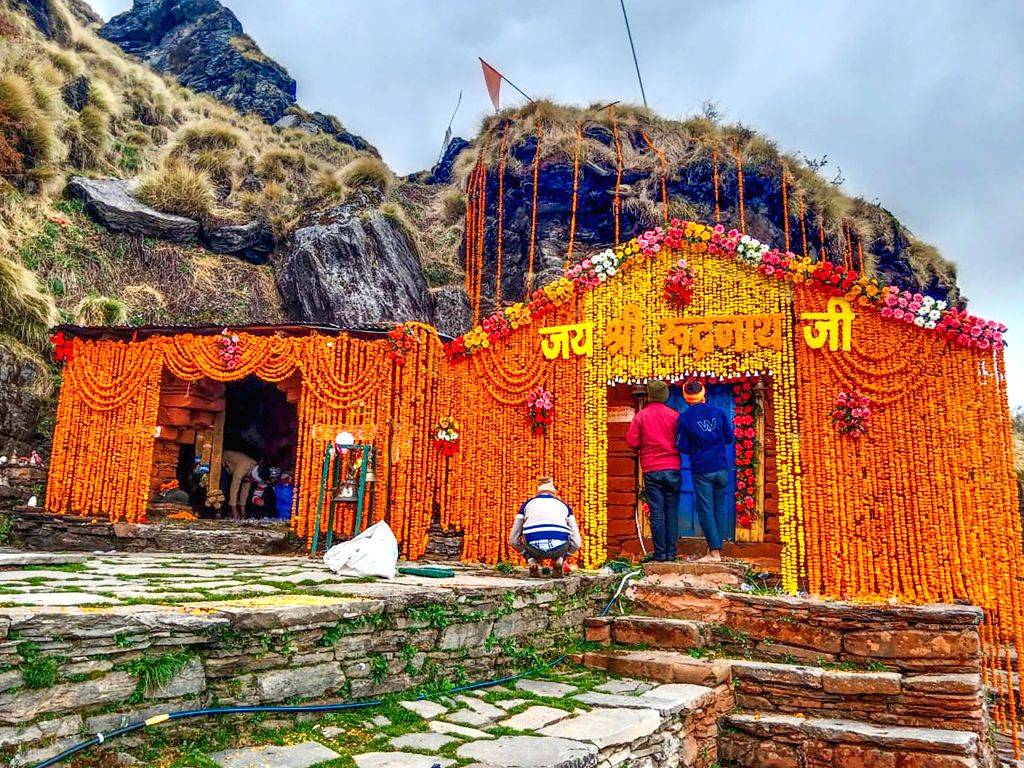
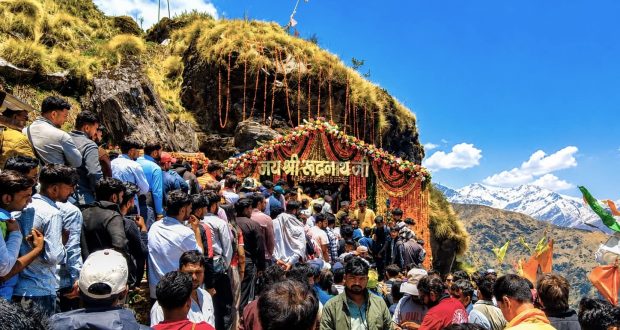
Rudranath is, without question, the most remote and most challenging of all five Panch Kedar temples. Located at an altitude of 3,600 metres (11,800 feet) in the Chamoli district, deep within the Kedarnath Wildlife Sanctuary, the temple can only be reached by a long and demanding trek through dense rhododendron forests, sweeping alpine meadows (bugyals), and ancient Himalayan trails.

What makes Rudranath truly extraordinary is its natural setting. The temple is not an enclosed stone building like most shrines — the idol of Lord Shiva's face is a Swayambhu (self-manifested) natural rock formation, and the main sanctum is partly open to the sky. Around the temple lie four sacred pools — Surya Kund, Chandra Kund, Tara Kund, and Manas Kund — believed to purify the soul of every pilgrim who bathes in them. Near the temple flows the Vaitarini stream, known as the "Water of Salvation."

The Himalayan peaks that watch over Rudranath are among the most spectacular in Uttarakhand — Nanda Devi, Trishul, Nanda Ghunti, and Hathi Parvat rise dramatically on the horizon, creating a panorama that feels otherworldly.

Ancient swords are said to be embedded in the rocks near the temple — local tradition holds these belonged to the Pandavas themselves, left behind as an offering to Lord Shiva. Every morning and evening, priests from the hereditary Bhatt and Tiwari families of Gopeshwar perform rituals that have remained unchanged for centuries.

Rudranath Temple Opening Date 2026 — Official & Confirmed

The doors of Rudranath Temple will open for the 2026 summer season on 18 May 2026 at 7:00 AM. The date was officially announced on Basant Panchami at a ceremony held at Gopinath Temple in Gopeshwar, in the presence of the temple priest Ved Prakash Bhatt, rights holders, and temple committee officials. Himalayan Hikers

The official Rudranath Doli Yatra schedule for 2026:

Date Event
14 May 2026 The idol of Lord Rudranath was brought from the sanctum sanctorum of Gopinath Temple to the temple premises after rituals
16 May 2026 Idol procession (Doli Yatra) departs from Gopeshwar for Panar
18 May 2026 Temple doors open at 7:00 AM for devotees

Closing Date 2026: The Rudranath Temple is expected to close on 17 October 2026, after which the deity returns to Gopinath Temple in Gopeshwar for winter worship. Shivkhori

Rudranath Temple Timings 2026

Session Timing
Morning Aarti 8:00 AM
Afternoon Closure 1:00 PM – 4:00 PM
Evening Aarti 6:30 PM

Both the morning and evening aartis at Rudranath are deeply moving experiences. If you are staying overnight at the temple, attending both is highly recommended.

Rudranath Temple Trek — Detailed Guide

rudranath trek guide

The trek to Rudranath is the longest and most challenging in the Panch Kedar circuit. There are three different trekking routes to the temple:

Route 1 — Sagar Village Route (Most Popular) Distance: 20 km (one way) Starting Point: Sagar Village, near Gopeshwar Duration: 2–3 days (1.5 days up, 1 day down) Difficulty: Moderate to Difficult

This is the most commonly used route and passes through the village of Sagar, dense oak and rhododendron forests, the vast alpine meadow of Lyuti Bugyal, and then the spectacular Panar Bugyal — one of the most beautiful high-altitude meadows in Uttarakhand — before the final ascent to the temple.

Route 2 — Helang Route (Via Kalpeshwar) Distance: 38 km from Kalpeshwar to Rudranath Starting Point: Helang / Urgam Valley (Kalpeshwar area) Difficulty: Difficult

This route connects Kalpeshwar and Rudranath for pilgrims who wish to combine both temples in a single extended trek. The trail passes through thick forests, crosses several streams, and traverses remote Himalayan terrain. A guide is essential for this route.

Route 3 — Mandal Village Route (Via Anusuya Temple) Distance: Approximately 24 km one way Starting Point: Mandal Village (near Gopeshwar) Difficulty: Moderate to Difficult

This route passes through the Anusuya Devi Temple — itself a revered pilgrimage destination — before ascending to Rudranath through varied and scenic terrain.

Day-by-Day Trek Itinerary (Sagar Village Route — Recommended)

Day 1: Rishikesh / Haridwar → Sagar Village Drive approximately 240 km from Rishikesh to Sagar Village via Devprayag, Rudraprayag, Karnaprayag, Chamoli, and Gopeshwar. The drive takes 7–8 hours. Check in and rest at a local homestay or guesthouse in Sagar Village. Acclimatise and prepare for the trek ahead.

Day 2: Sagar Village → Panar Bugyal (12 km trek) Start early after breakfast. The trek begins with a steady ascent through Sagar Village's terraced fields and settlements, entering dense forest within the first 2–3 km. The trail climbs consistently through oak, pine, and rhododendron forests before emerging at Lyuti Bugyal — a small, serene meadow offering your first unobstructed Himalayan views. Continue upward to Panar Bugyal (approximately 2,286 metres), one of the most beautiful campsites on the entire trail. Snow-capped peaks, wildflower-carpeted grasslands, and a 180° Himalayan panorama greet you at your campsite. Overnight in tents or a basic shepherd's hut.

Day 3: Panar Bugyal → Rudranath Temple → Panar Bugyal (16 km round trip) This is the most important day of the trek. Start as early as possible, ideally by 5:00–5:30 AM. The trail from Panar ascends through Pitra Dhar, passing flower-filled meadows with magnificent views of Nanda Devi, Trishul, Nanda Ghunti, and Bandarpunch. The final 2 km before the temple crosses rocky, uneven terrain that demands careful footing. Arrive at Rudranath Temple for morning aarti at 8:00 AM. Spend time at the sacred kunds (Surya Kund, Chandra Kund, Tara Kund, Manas Kund). Attend the evening aarti at 6:30 PM if staying overnight. Return to Panar Bugyal or overnight at the basic temple accommodation.

Day 4: Panar Bugyal → Sagar Village (18 km descent) Begin descent after breakfast. The return trek follows the same trail back through Lyuti Bugyal and the forests to Sagar Village. The downward journey, while easier, requires care on steep sections. Arrive at Sagar Village by afternoon/evening.

Day 5: Sagar Village → Rishikesh (240 km drive) Drive back to Rishikesh via Gopeshwar, Chamoli, Karnaprayag, Rudraprayag, and Devprayag. En route, visit Devprayag (the sacred confluence of Alaknanda and Bhagirathi rivers). Arrive in Rishikesh by evening.

Trek Difficulty & What to Expect

Locals say: "Rudranath ki chadai, German ki ladai" — the climb to Rudranath is like a battle. This is not an exaggeration.

The Rudranath trek involves significant altitude gain over a relatively short distance. You start at Sagar Village (approximately 1,568 metres) and reach the temple at 3,600 metres — a gain of over 2,000 metres across the trekking days. Approximately 80% of the trail involves uphill climbing on steep, rocky, and often uneven terrain. The final approach to the temple is particularly demanding.

That said, the trail is deeply rewarding. The diversity of landscapes — from forested valleys to open meadows to alpine rocky terrain — and the sheer power of the natural environment around the temple make every step absolutely worth it.

Fitness Requirement: Regular trekking experience strongly recommended. Begin physical training (daily walking, stair climbing, light jogging) at least 6–8 weeks before the trek.

What to See Near Rudranath

what to see rudranath temple trek

Panar Bugyal — One of Uttarakhand's most beautiful high-altitude meadows, blanketed with wildflowers in May and June. A paradise for photographers, birdwatchers, and nature lovers.

The Sacred Kunds — Surya Kund, Chandra Kund, Tara Kund, and Manas Kund are four holy pools near the temple. Bathing in these is considered purifying and is an essential part of the pilgrimage ritual.

Vaitarini Stream — The stream flowing near the temple is considered the sacred river of salvation in Hindu tradition. Sitting beside its banks is a deeply calming spiritual experience.

Nandi Kund — A stunning glacial lake located between Madhyamaheshwar and Rudranath at 3,500–4,800 metres, from which the Madhyamaheshwar Ganga river originates. A rewarding side excursion for experienced trekkers.

Gopinath Temple, Gopeshwar — The winter residence of Lord Rudranath. If you are visiting outside the temple season (or before the temple opens), you can seek the deity's blessings at the Gopinath Temple in the town of Gopeshwar.

How to Reach Rudranath

Starting Point: Sagar Village (nearest motor point to Rudranath)

From Rishikesh: Drive approximately 240 km via Devprayag → Rudraprayag → Karnaprayag → Chamoli → Gopeshwar → Sagar Village. Journey time: 7–8 hours.

By Bus: Rishikesh to Gopeshwar buses are available. From Gopeshwar, local shared jeeps run to Sagar Village.

By Air: Nearest airport — Jolly Grant Airport, Dehradun (approximately 275 km).

By Rail: Nearest railhead — Rishikesh (approximately 241 km).

There is no road beyond Sagar Village. The entire journey to Rudranath from Sagar Village is on foot.

Accommodation at Rudranath

Accommodation at and near Rudranath is basic and limited, which is part of what keeps the temple uncrowded and spiritually pure.

At Sagar Village — guesthouses and homestays. Basic but comfortable. Most trekkers stay overnight here before and after the trek.

At Panar Bugyal — shepherd huts, basic camps. Trekking operators can arrange tents. The campsite is extraordinary.

At Rudranath Temple, a small dharamshala maintained by the temple committee offers very basic accommodation for pilgrims staying overnight. Space is limited and basic, but the experience of spending a night at this remote temple is unforgettable.

Kalpeshwar & Rudranath Together — How to Combine Both Temples

kalpeshwar or rudranath combine

Many pilgrims and trekkers choose to combine Kalpeshwar and Rudranath in a single journey, as both temples are in the Chamoli district and relatively close to each other by Himalayan standards. Here are two ways to do this:

Option A — The Road & Trek Combination (Recommended for Most Pilgrims) Visit Kalpeshwar first (via Helang → Urgam Valley) for a quick, spiritually satisfying darshan. Then drive to Gopeshwar / Sagar Village and begin the Rudranath trek. Total trip: 7–9 days from Rishikesh.

Option B — The Full Kalpeshwar–Rudranath Trek (For Experienced Trekkers Only) Begin at Kalpeshwar and trek directly to Rudranath via the forest route (approximately 38 km). This challenging multi-day wilderness trek connects both temples through some of the most remote and beautiful terrain in the Garhwal Himalayas. A local experienced guide is essential for this route. Total trip: 10–12 days.

Best Time to Visit Kalpeshwar & Rudranath 2026

Month Kalpeshwar Rudranath Notes
January–March ✅ Open ❌ Closed Only Kalpeshwar is accessible. Cold but peaceful.
April ✅ Open ❌ Closed Good for Kalpeshwar. Rudranath is still closed.
May–June ✅ Open ✅ Open (from 18 May) Best time. Clear skies, blooming meadows.
July–August ✅ Open ⚠️ Open but risky Monsoon. Avoid the Rudranath trek in heavy rain.
September–October ✅ Open ✅ Open Excellent. Post-monsoon clarity. Recommended.
November ✅ Open ❌ Closes Oct 17 Only Kalpeshwar is accessible after mid-October.
December ✅ Open ❌ Closed A winter visit to Kalpeshwar is peaceful and unique.

Overall Best Time: May–June for both temples (peak season, best weather, all facilities operational). September–October for quieter, equally beautiful conditions with fewer crowds.

Essential Packing List for Kalpeshwar & Rudranath Trek

packing list of kalpeshwar or rudranath trek

For Kalpeshwar (easy trek, day visit): comfortable walking shoes, light warm layer, water bottle, basic snacks, and personal ID.

For Rudranath (multi-day challenging trek): warm woollen layers (temperature can drop to 5°C or below even in May), waterproof rain jacket and trousers, sturdy waterproof trekking boots with ankle support, trekking poles (highly recommended), headlamp with spare batteries, sleeping bag (rated to 0°C), first aid kit including altitude sickness tablets (Diamox — consult doctor first), energy snacks (dry fruits, trail mix, energy bars), water purification tablets or filter bottle, minimum 2 litres of water capacity, sun protection (sunscreen SPF 50+, sunglasses, hat), offline maps downloaded, personal ID for permits and registration.

Important Travel Tips

For Kalpeshwar: Arrive early to beat the afternoon closure (12 PM–4 PM). If driving from Rishikesh, start by 6:00 AM to reach comfortably by mid-morning. Mobile network is limited beyond Helang — download offline maps before leaving. The road to Urgam Valley is rough; a 4WD vehicle is strongly recommended.

For Rudranath: Never attempt the trek without a local guide — the trail passes through remote areas with limited signage, and conditions can change rapidly. Start each trekking day as early as possible (5:00–5:30 AM). Register for the trek at the registration office in Sagar Village. Carry sufficient cash — there are no ATMs beyond Gopeshwar. Do not rush the acclimatisation — altitude sickness is a real risk and must be taken seriously. The Kedarnath Forest Division charges a security deposit of ₹100 per plastic item you carry in — show the wrappers on return to retrieve the deposit.

Frequently Asked Questions (FAQs)

Q1. Is Kalpeshwar open in winter 2026?

 Yes. Kalpeshwar is the only Panch Kedar temple open throughout the year, including all winter months. The temple timings are 6:00 AM to 8:00 PM daily, with a break from 12:00 PM to 4:00 PM.

Q2. What is the Rudranath opening date in 2026?

 Rudranath Temple will open on 18 May 2026 at 7:00 AM. This has been officially confirmed by the temple committee based on Panchang calculations announced on Basant Panchami.

Q3. When does Rudranath close in 2026?

 Rudranath is expected to close on 17 October 2026, after which the deity idol is moved to Gopinath Temple in Gopeshwar for the winter season.

Q4. What is the trek distance to Rudranath?

 The most popular route from Sagar Village to Rudranath is approximately 20 km one way. The trek typically takes 2 days to ascend and 1 day to descend, covering some of the most stunning alpine terrain in Uttarakhand.

Q5. What body part of Lord Shiva is worshipped at Kalpeshwar and Rudranath?

 At Kalpeshwar, the matted hair locks (jata) of Lord Shiva are worshipped. At Rudranath, the face (mukh) of Lord Shiva is worshipped in the form of a natural Swayambhu rock formation.

Q6. Can I visit Kalpeshwar and Rudranath in the same trip?

 Yes, and it is highly recommended. Both temples are in the Chamoli district. The best approach is to visit Kalpeshwar first (short, easy trek), then drive to Sagar Village and begin the Rudranath trek. Allow 7–9 days for the combined journey from Rishikesh.

Q7. Is Rudranath suitable for beginners?

 Rudranath is not recommended for beginner trekkers. The trek is 20 km one way with significant altitude gain and challenging terrain. Prior trekking experience, good physical fitness, and the company of an experienced guide are essential.

Q8. Which is harder — Kedarnath or Rudranath?

 Most experienced trekkers and pilgrims consider Rudranath harder than Kedarnath. Kedarnath has a well-paved 16 km trail with multiple facilities, pony rides, and helicopter options. Rudranath's 20 km trail is remote, largely unpaved, with limited facilities and no alternative transport — it requires sustained physical effort over multiple days.

Q9. Are there helicopter services to Rudranath or Kalpeshwar?

 No. Unlike Kedarnath and Badrinath, there are no helicopter services to Rudranath or Kalpeshwar. Both temples are accessible only by trekking.

Q10. What is the nearest town to Kalpeshwar?

 The nearest town is Joshimath (approximately 27 km from Kalpeshwar), which offers a good range of hotels, restaurants, ATMs, and medical facilities.

Quick Reference Summary

  Kalpeshwar Rudranath
Kedar Number Fifth Kedar Third Kedar
What's Worshipped Jata (Hair Locks) Mukh (Face)
Altitude 2,200 m 3,600 m
District Chamoli Chamoli
Trek Distance 1–2 km (from Urgam) 20 km (from Sagar Village)
Difficulty Very Easy Moderate–Difficult
Open Date 2026 Year-round 18 May 2026
Close Date 2026 Year-round 17 October 2026
Winter Abode N/A (always open) Gopinath Temple, Gopeshwar
Nearest Town Joshimath (27 km) Gopeshwar (20 km by trek)
Best Time April–June, Sept–Oct May–June, Sept–Oct
Helicopter Not available Not available

Planning to visit Kalpeshwar and Rudranath in 2026? Let TourMyHoliday craft the perfect itinerary for you — experienced guides, comfortable stays at every base camp, seamless logistics, and a deeply personal pilgrimage experience. Contact us today.