Where is the Kauri Pass Trek located?
Kauri Pass is located in the Garhwal Himalayas of Uttarakhand, near the famous town of Joshimath and the Auli ski slopes.
Is Kauri Pass Trek suitable for beginners?
Yes, the Kauri Pass trek is considered easy to moderate, making it suitable for fit beginners. The trail is well-marked and doesn’t involve technical climbing.
What’s the best time to do the Kauri Pass trek?
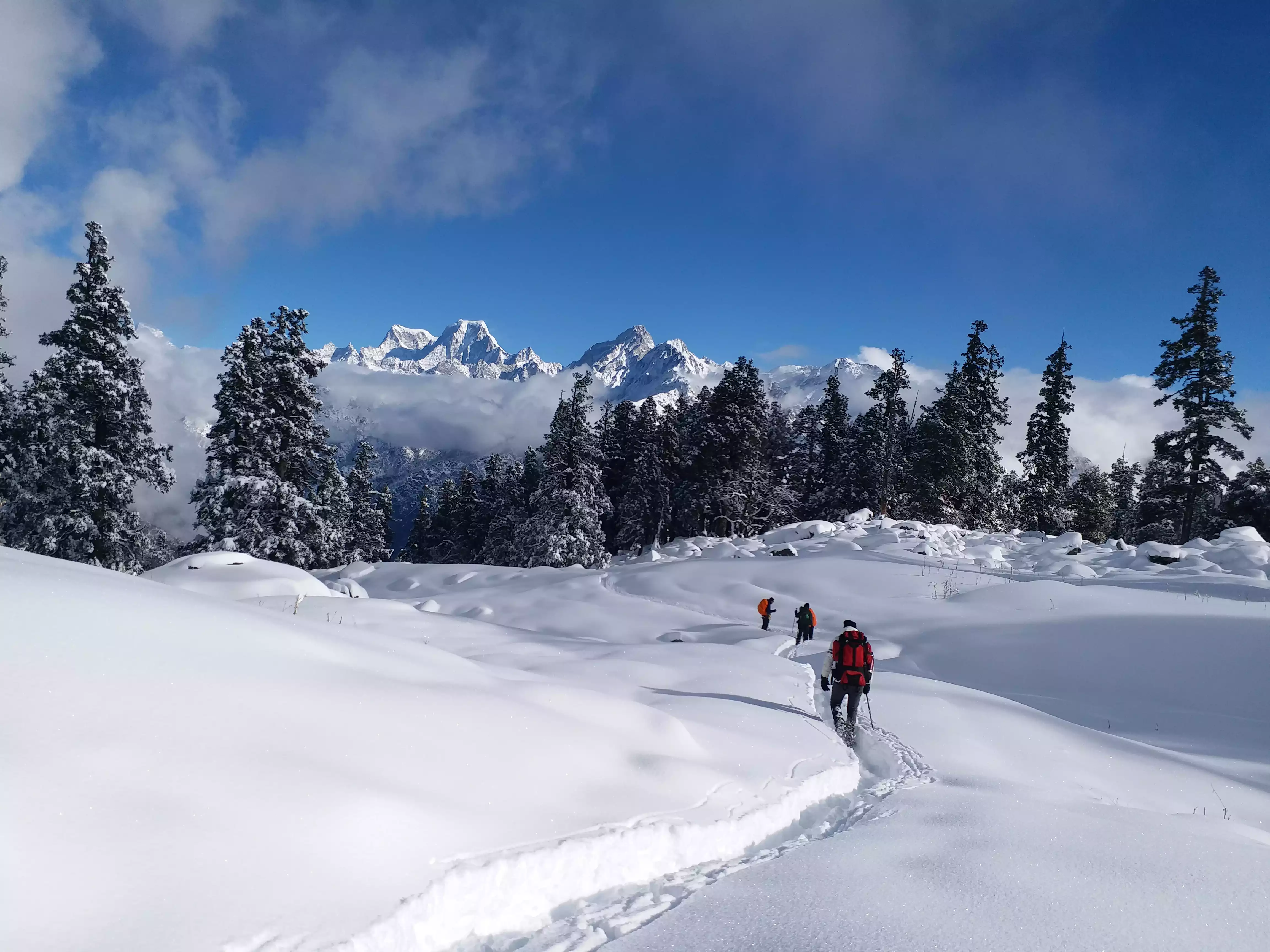
The best time to visit is from March to June and September to early December. In winter, it transforms into a stunning snow trek, while spring offers green meadows and blooming rhododendrons.
How high is the Kauri Pass?
The pass sits at an altitude of around 12,516 feet (3,815 meters), offering panoramic views of Nanda Devi, Dronagiri, and Hathi-Ghoda peaks.
Where does the trek start from?
The trek usually starts from Dhak village, which is about 12 km from Joshimath. Joshimath can be reached via road from Haridwar or Rishikesh.
What are the major attractions on the trek?
Key highlights include Auli meadows, Gorson Bugyal, Tali Lake, Chitrakantha forest, and the Kauri Pass summit with unmatched Himalayan views.
Do I need any permits for this trek?
Yes, basic forest entry permits are required, which are generally arranged by trek organizers or local guides as part of the package.
The Kuari Pass Trek, also known as the Curzon Trail, is one of the most iconic and scenic treks in the Indian Himalayas. Located in the Garhwal region of Uttarakhand, this legendary trail offers uninterrupted views of some of India’s highest and most majestic Himalayan peaks. From dense oak forests to high-altitude meadows and snow-covered landscapes, Kuari Pass perfectly captures the raw beauty of the Himalayas.
This trek is famous for its accessibility, panoramic views, and historical importance, making it a favourite among both beginners and experienced trekkers.
Where Is Kuari Pass Located?
Kuari Pass is situated in the Chamoli district of Uttarakhand, at an altitude of approximately 3,876 meters (12,716 feet). The trek lies within the Nanda Devi Biosphere Reserve, one of India’s most ecologically rich Himalayan zones.
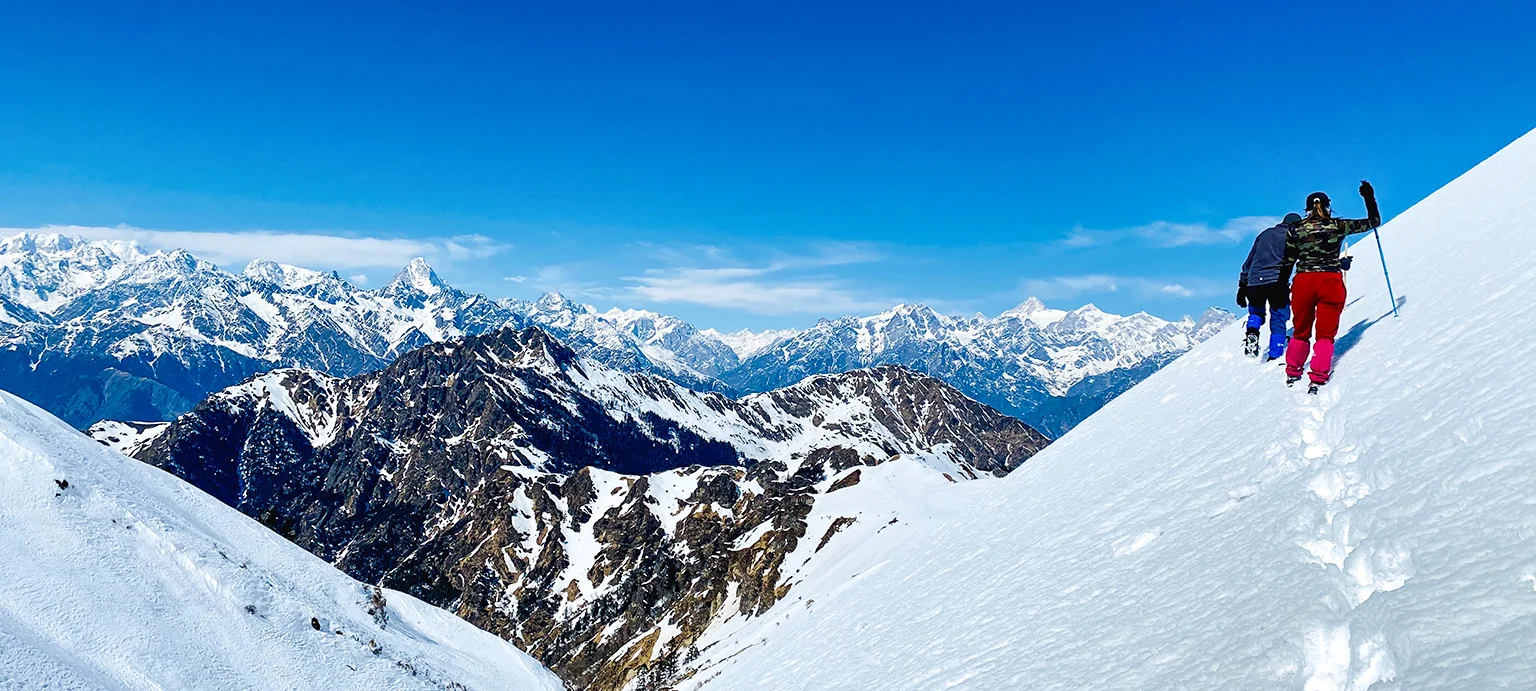
The pass acts as a natural balcony offering stunning 180-degree views of Himalayan giants, making it one of the best viewpoints in Uttarakhand.
Historical Significance of Kuari Pass
Kuari Pass gained global recognition in 1905, when Lord Curzon, the then Viceroy of India, traversed this route during an expedition to view Mount Nanda Devi. Since then, the trail has been known as the Curzon Trail.
For centuries before that, local shepherds used this route for seasonal migration and grazing. The trek holds deep cultural importance for villages in the region and continues to be an important path connecting high-altitude pastures.
Landscape & Natural Beauty
The Kuari Pass Trek offers one of the most diverse landscapes in the Himalayas:
- Dense forests of oak, rhododendron, and deodar
- High alpine meadows locally known as bugyals
- Snow-covered trails during winter
- Open ridges with endless mountain views
In spring, rhododendrons bloom in vibrant red and pink shades, while winter transforms the region into a snow paradise.
Himalayan Peaks Visible from Kuari Pass
Kuari Pass is often described as a natural Himalayan balcony, offering breathtaking panoramic views of some of the most iconic peaks in the Garhwal Himalayas. The sight of these towering, snow-covered mountains is one of the main highlights of the Kuari Pass Trek.
Nanda Devi (7,816 m)
Nanda Devi is the second-highest mountain in India and the highest peak entirely within the country. Deeply revered in Uttarakhand, it holds immense religious and cultural significance. From Kuari Pass, Nanda Devi dominates the skyline with its massive and graceful presence, creating a truly awe-inspiring view for trekkers and photographers.
Dronagiri Peak
Dronagiri is one of the most legendary peaks in the Garhwal Himalayas and is closely linked to the Ramayana. It is believed to be the mountain from which Lord Hanuman carried the Sanjeevani herb. The peak appears steep and rugged from Kuari Pass, standing out for its dramatic rock faces and mystical aura.
Kamet Peak
Kamet is the second-highest peak in Uttarakhand and one of the most prominent mountains visible from Kuari Pass. Known for its massive size and glacier-covered slopes, Kamet reflects golden hues during sunrise and sunset. Its grandeur and remoteness add to the dramatic Himalayan panorama.
Trishul Peak
Named after Lord Shiva’s trident, Trishul is a striking group of three peaks that form a sharp and recognisable silhouette. From Kuari Pass, Trishul appears bold and majestic, especially during clear weather. It is also one of the earliest peaks in the Himalayas to be successfully climbed.
Hathi–Ghoda Peaks
The Hathi–Ghoda peaks get their name from their shape, which resembles an elephant and a horse standing side by side. Though lesser known, these peaks add character and depth to the Kuari Pass skyline and enhance the overall Himalayan view with their unique formations.
Neelkanth Peak
Neelkanth is a sacred and visually stunning mountain associated with Lord Shiva, often referred to as the “Garhwal Queen.” Its steep, pyramid-like structure and constant snow cover make it one of the most beautiful peaks visible from Kuari Pass, especially during early morning light.
On clear days, these peaks appear so close that they feel almost within reach, making Kuari Pass one of the finest viewpoint treks in India.
Difficulty Level & Who Can Do This Trek
Kuari Pass is considered a moderate trek, suitable for:
- First-time trekkers with basic fitness
- Adventure enthusiasts
- Nature lovers and photographers
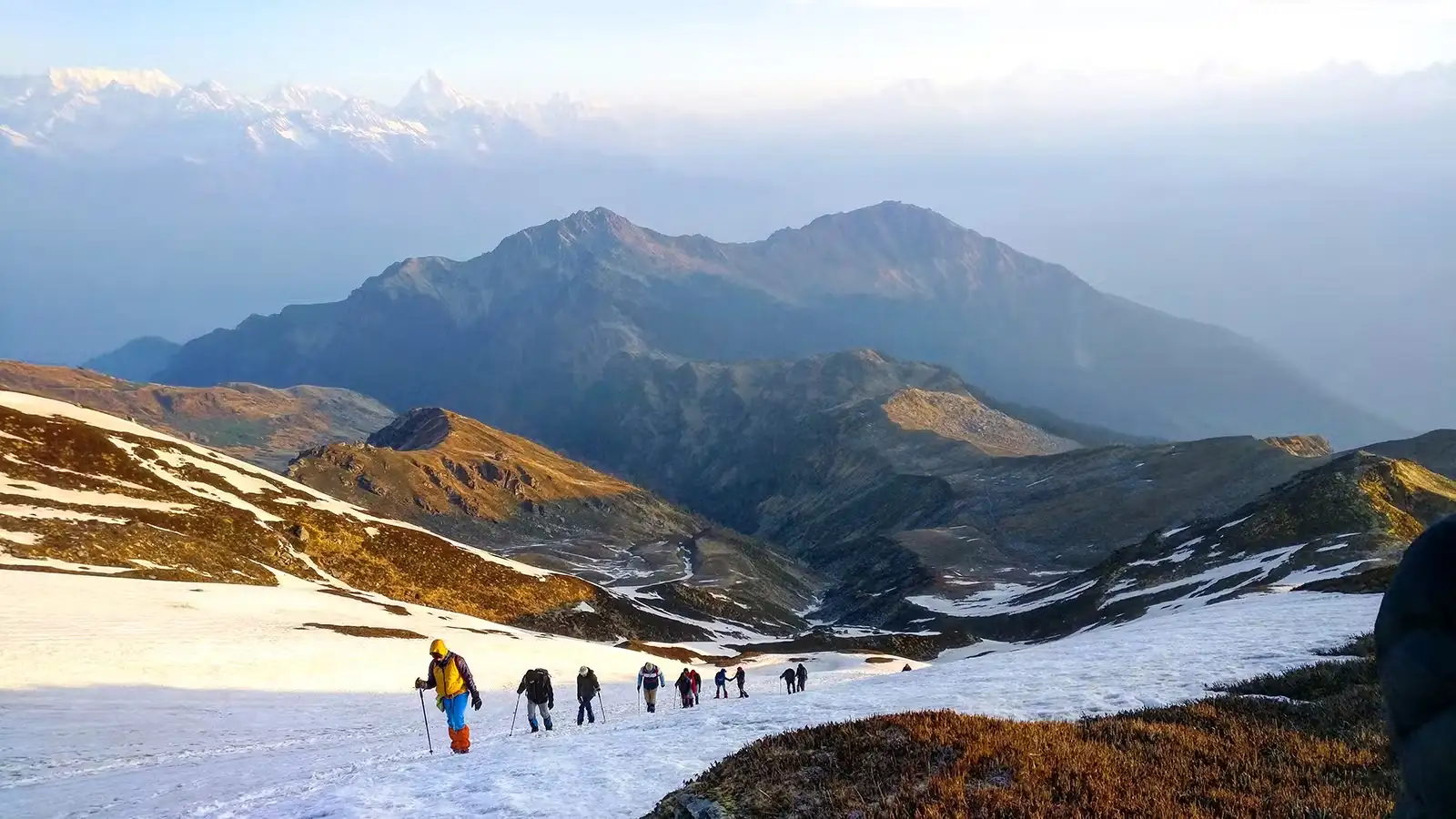
The trail involves gradual ascents, well-marked paths, and manageable altitude gain, making it ideal for beginners while still offering enough challenge to experienced trekkers.
Altitude & Acclimatization
With a maximum altitude of under 4,000 meters, Kuari Pass is relatively safe compared to higher Himalayan treks. However, altitude sickness can still occur if proper acclimatisation is ignored.
Key points:
- Gradual altitude gain
- Proper hydration is essential
- Avoid alcohol and smoking
- Listen to your body
Best Time to Do Kuari Pass Trek
Spring (March to April)
- Blooming rhododendrons
- Pleasant temperatures
- Clear mountain views
Summer (May to June)
- Lush green meadows
- Stable weather
- Excellent visibility
Winter (December to February)
- Heavy snow
- Frozen trails
- Ideal for snow trekking lovers
Autumn (September to November)
- Crisp air
- Clear skies
- Golden forest landscapes
Flora & Fauna of Kuari Pass
The trek passes through the Nanda Devi Biosphere Reserve, home to rich Himalayan biodiversity.
Flora
- Oak forests
- Rhododendron trees
- Alpine flowers and grasses
Fauna
The region is strictly protected, and trekkers are encouraged to follow eco-friendly trekking practices.
Weather & Temperature Conditions
The weather changes quickly in the Himalayas.
- Summer: 10°C to 20°C (day), 0°C to 5°C (night)
- Winter: −10°C to 5°C
- Snowfall is common in winter
- Sudden fog and wind are possible near the pass
Proper layering is essential throughout the trek.
Cultural Experience & Local Villages
Kuari Pass trails pass near traditional Garhwali villages where life moves at a peaceful pace. Locals follow age-old customs and depend on agriculture and animal husbandry.
Trekkers often experience:
- Warm Garhwali hospitality
- Traditional wooden houses
- Local cuisine made from millet and grains
- Stories of mountain gods and folklore
Photography & Scenic Highlights
Kuari Pass is a dream destination for photographers:
- Sunrise over Nanda Devi
- Snow-covered trails in winter
- Rhododendron forests in spring
- Milky Way views at night
Early morning and golden hours offer the best light for landscape photography.
Safety & Environmental Responsibility
- The weather can change suddenly
- Trek with proper gear and guidance
- Avoid plastic; carry waste back
- Respect wildlife and local culture
Preserving Kuari Pass is essential for future generations.
Why Kuari Pass Trek Is So Popular
? Beginner-friendly
? Panoramic Himalayan views
? Rich biodiversity
? Historical significance
? Year-round trekking option
The Kuari Pass Trek is a perfect blend of history, nature, adventure, and culture. Whether you seek snow-covered trails, blooming forests, or legendary mountain views, Kuari Pass delivers an unforgettable Himalayan experience.
This trek is not just about reaching a pass — it’s about walking through history and witnessing the soul of the Himalayas.