
Places to visit in Valley Of Flowers
Published on September 29, 2025 | Updated on August 28, 2026
Valley of Flowers is not a destination where you move from one monument to another. Its main attractions are the alpine landscape, flower-covered meadows, mountain streams, waterfalls and viewpoints encountered while walking through the National Park.
There are also several places around the trek that can add cultural, spiritual and scenic variety to your trip, including Ghangaria, Hemkund Sahib, Badrinath, Mana and Auli.
Valley of Flowers National Park forms part of the UNESCO-listed Nanda Devi and Valley of Flowers National Parks World Heritage property and is internationally recognised for its alpine meadows, natural beauty and Himalayan biodiversity.
This guide focuses specifically on what to see in Valley of Flowers and which nearby places are genuinely worth adding to your trip.
For the day-wise trip sequence, use our Valley of Flowers Travel Guide & Itinerary.
Best Places to Visit Inside Valley of Flowers
The Valley itself is the main attraction.
Instead of expecting dozens of separately developed tourist spots, think of your visit as a continuous nature trail through changing alpine scenery.
1. Valley of Flowers National Park
.jpg)
The National Park is the reason for the entire journey.
Spread across a high-altitude Himalayan landscape in Chamoli district, the Valley is known for its broad alpine meadows surrounded by mountains.
UNESCO describes Valley of Flowers as an exceptionally beautiful high-altitude Himalayan valley with diverse alpine flora representative of the West Himalayan biogeographic zone.
Once inside, the experience is primarily about walking slowly through the landscape rather than rushing towards one final viewpoint.
What to Look For
During your visit, pay attention to:
- Alpine meadows
- Natural flower patches
- Mountain streams
- Waterfalls
- Mist moving through the slopes
- Snow-covered peaks
- Birch and rhododendron vegetation
- Changing views as you move deeper into the Valley
The exact appearance of the landscape changes through the trekking season.
For detailed plant and ecosystem information, read our Valley of Flowers Biodiversity & Flora Guide.
2. Alpine Wildflower Meadows
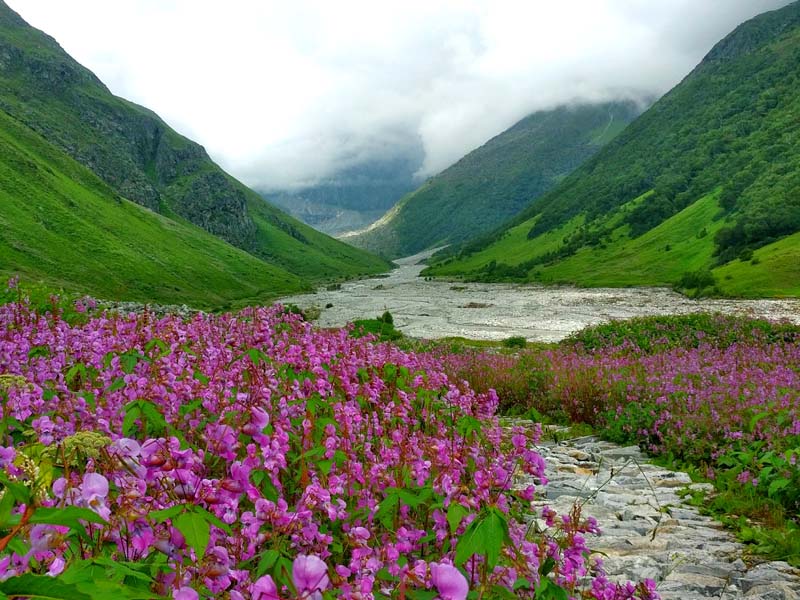
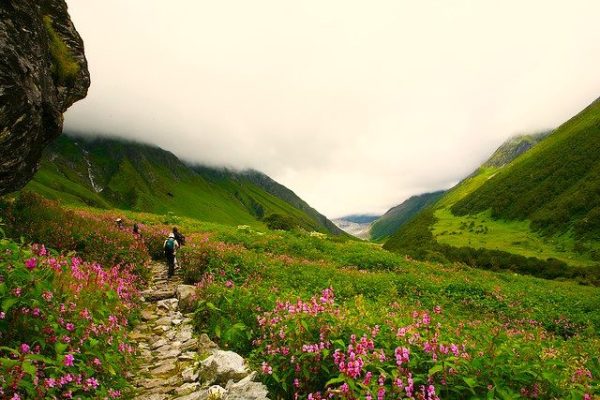
The colourful alpine meadows are the most recognisable sight associated with Valley of Flowers.
Uttarakhand Tourism describes the park as containing hundreds of flowering species and notes that the landscape includes alpine flowers along with birch and rhododendron vegetation.
However, this page does not need to turn into a flower-identification guide.
The important sightseeing experience is seeing large natural plant communities growing across the mountain landscape, rather than searching only for one famous flower.
Responsible Viewing
Stay on the established trail and avoid:
- Walking into flower beds
- Plucking flowers
- Collecting plants
- Moving rocks or vegetation for photographs
Valley of Flowers is a protected National Park, not a botanical garden where visitors can handle specimens.
For individual species and rare flowers, see our Rare Flowers in Valley of Flowers National Park.
3. Pushpawati River, Wild Streams and Waterfalls
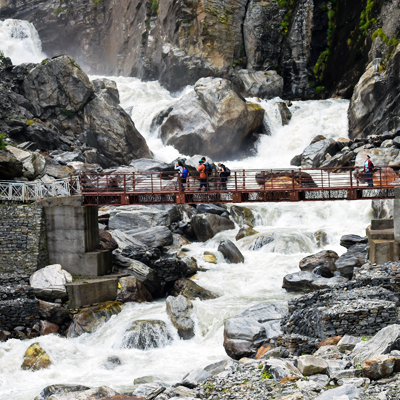
Flowers may get most of the attention, but water is a major part of the Valley's landscape.
The broader Nanda Devi Biosphere Reserve is crossed by several rivers and tributaries, including the Pushpawati, while Uttarakhand Tourism specifically highlights wild streams and cascading waterfalls along the Valley of Flowers trek.
Depending on rainfall and trail conditions, you may encounter:
- Mountain streams
- Small cascades
- Waterfalls descending from surrounding slopes
- Bridge crossings
- Glacially influenced river scenery
These water features are especially photogenic when low clouds move through the mountains.
Photography Tip
Use established trails and bridges rather than approaching fast-moving water simply for a photograph.
Mountain streams can become much stronger during periods of heavy rainfall.
For rainfall and trail-weather conditions, read our Valley of Flowers Weather & Climate Guide.
4. Joan Margaret Legge Memorial

One of the few historical landmarks inside the Valley is the memorial associated with Joan Margaret Legge, a botanist who came to the Valley in 1939 to collect botanical specimens.
The Himalayan Club records that Legge died on July 4, 1939 after slipping while collecting specimens on the slopes near Khulia Garva. Her sister later visited and erected a memorial in the Valley.
Today, the memorial adds a human story to an otherwise nature-dominated landscape.
You do not need to turn the visit into a detailed history lesson; simply knowing the story gives the location more meaning.
For Frank Smythe, Joan Legge and the Valley's historical development, read our Valley of Flowers History & Mythology Guide.
5. Himalayan Mountain Views and Natural Viewpoints

There is no need to search for one designated observation deck.
The trail itself provides constantly changing views of the Himalayan landscape.
As you walk through the Valley, different sections may reveal:
- Mountain ridges
- Cloud-filled slopes
- Flower meadows
- Rocky formations
- Streams below the trail
- Distant snow-covered summits
- Wide views across the Valley floor
The experience changes quickly with cloud cover and light.
This makes Valley of Flowers especially rewarding for landscape photography.
Don't Chase Unsafe Viewpoints
Avoid leaving the recognised trail to reach an isolated rock, slope or ridge for a better photograph.
The best viewpoint is one you can reach safely without damaging the protected landscape.
Places to Visit Around Valley of Flowers Trek
Some important locations are not technically attractions inside the National Park but form a natural part of the Valley of Flowers journey.
6. Ghangaria
Ghangaria is the main trekking base for Valley of Flowers.
Uttarakhand Tourism describes it as the last human settlement on the way to Valley of Flowers, located at around 3,050 metres and reached by trekking from the Govindghat side.
This is an important correction to a common misconception:
Ghangaria is not the final road-access point.
It is a mountain settlement reached during the trekking journey.
Why Ghangaria Matters
You normally use Ghangaria for:
- Overnight accommodation
- Meals
- Rest between trekking days
- Access to Valley of Flowers
- Access to Hemkund Sahib
The settlement also sits near the meeting of the Pushpawati and Hemganga rivers.
Ghangaria is therefore better described as a trekking base rather than a conventional sightseeing attraction.
7. Hemkund Sahib
Hemkund Sahib is one of the most important places travellers combine with Valley of Flowers.
Both routes use Ghangaria as their common base, making Hemkund a logical additional day excursion if you have enough time and fitness.
It is a major Sikh pilgrimage site set in a dramatic high-altitude Himalayan environment. Uttarakhand Tourism also lists Hemkund Sahib among the important attractions of the wider Badrinath–Valley region.
Should You Add Hemkund Sahib?
Consider adding it if:
-
You have an extra day in Ghangaria.
-
You want a pilgrimage experience as well as a nature trek.
-
You are prepared for a steeper trekking day.
Do not try to cover Valley of Flowers and Hemkund Sahib in the same rushed day.
For route, difficulty and planning, use our dedicated Valley of Flowers with Hemkund Sahib Travel Guide.
Govindghat: Gateway Rather Than Sightseeing Attraction
Govindghat is important, but it should not be artificially presented as one of the major tourist attractions of Valley of Flowers.
Its main role is as a gateway between the motorable road journey and the trekking route.
Most travellers use Govindghat for:
- Overnight stay before or after the trek
- Transport arrangements
- Trekking preparations
- Luggage or porter arrangements
- Continuing towards the current trekking roadhead
For complete access information, read our How to Reach Valley of Flowers.
Best Places to Visit Near Valley of Flowers
If you have additional days after completing the trek, several destinations in the wider Chamoli region can be added.
These should be treated as trip extensions, not as attractions inside Valley of Flowers.
8. Badrinath
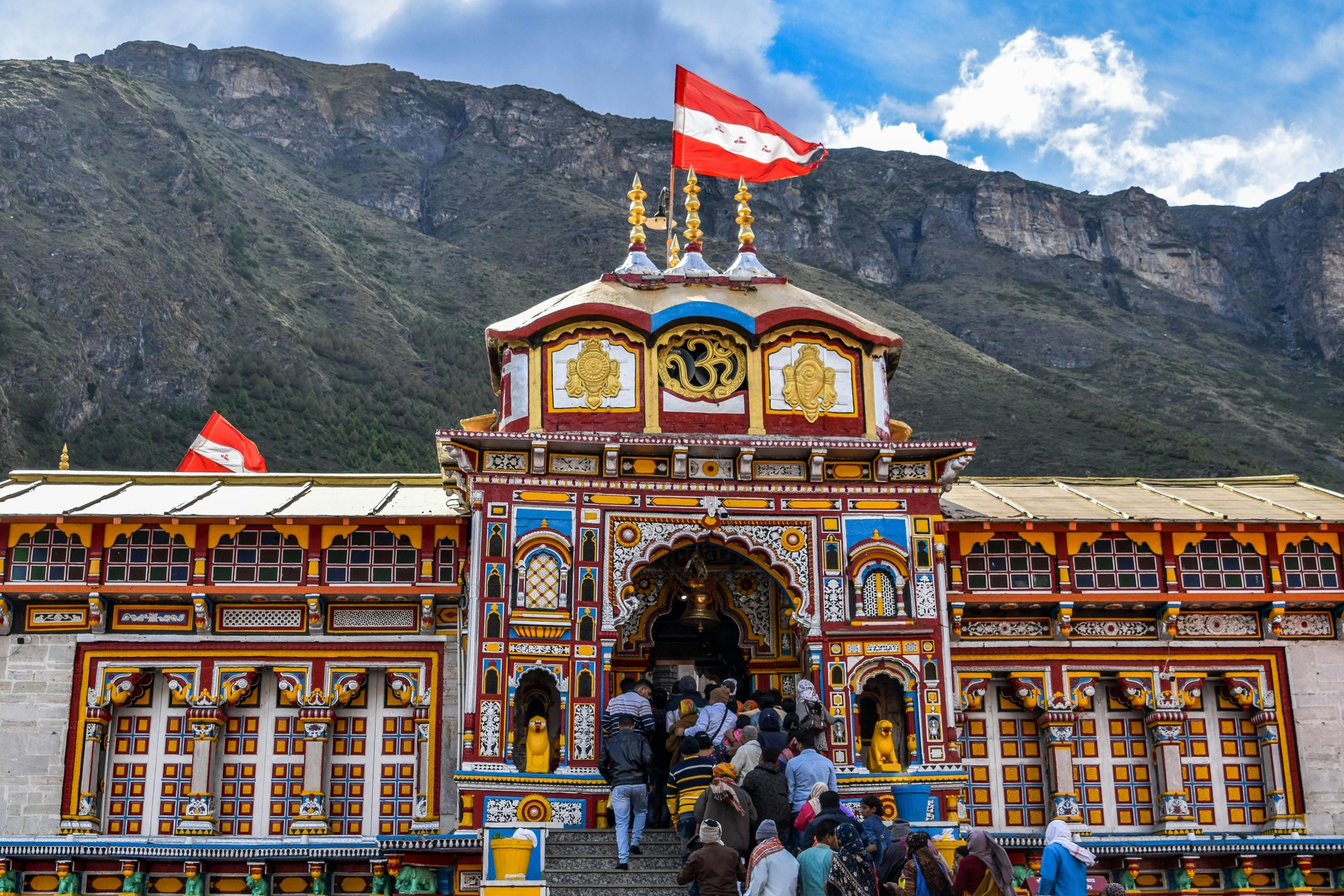
Badrinath is one of the most important pilgrimage destinations in Uttarakhand and can be combined with Valley of Flowers when road and seasonal conditions permit.
The town is centred around Badrinath Temple, dedicated to Lord Vishnu, and lies on the banks of the Alaknanda River in the Garhwal Himalayas. Uttarakhand Tourism identifies it as one of the state's Char Dham pilgrimage destinations.
Why Add Badrinath?
Badrinath adds a completely different dimension to the trip:
- Religious significance
- Himalayan town experience
- Temple architecture
- Alaknanda River scenery
- Easy access to Mana Village
If your Valley itinerary is already physically demanding, add Badrinath after the main trek rather than trying to squeeze it between trekking days.
9. Mana Village
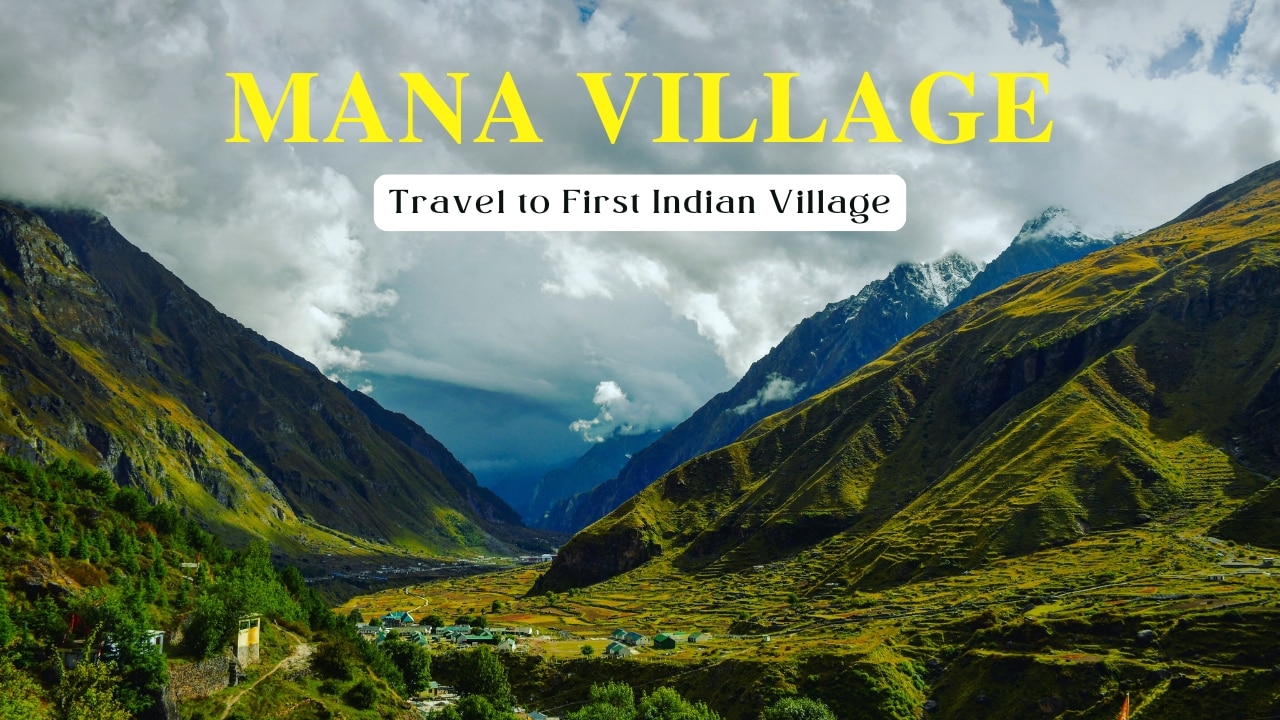
Mana is one of the most interesting cultural additions near Badrinath.
Uttarakhand Tourism places Mana only a few kilometres from Badrinath and describes it as a high-altitude village on the banks of the Saraswati River near the Indo-Tibetan border.
What to See Around Mana
Depending on available time and current access, visitors may explore:
- Saraswati River
- Bheem Pul
- Traditional village lanes and houses
- Mountain scenery
- Nearby walking routes
Uttarakhand Tourism also identifies Vasundhara Falls as an excursion from Mana, but this involves additional walking and should not be casually added if you are already tired from the Valley trek.
Mana works best as an extension to a Badrinath visit rather than as a separate rushed detour from Ghangaria.
10. Auli
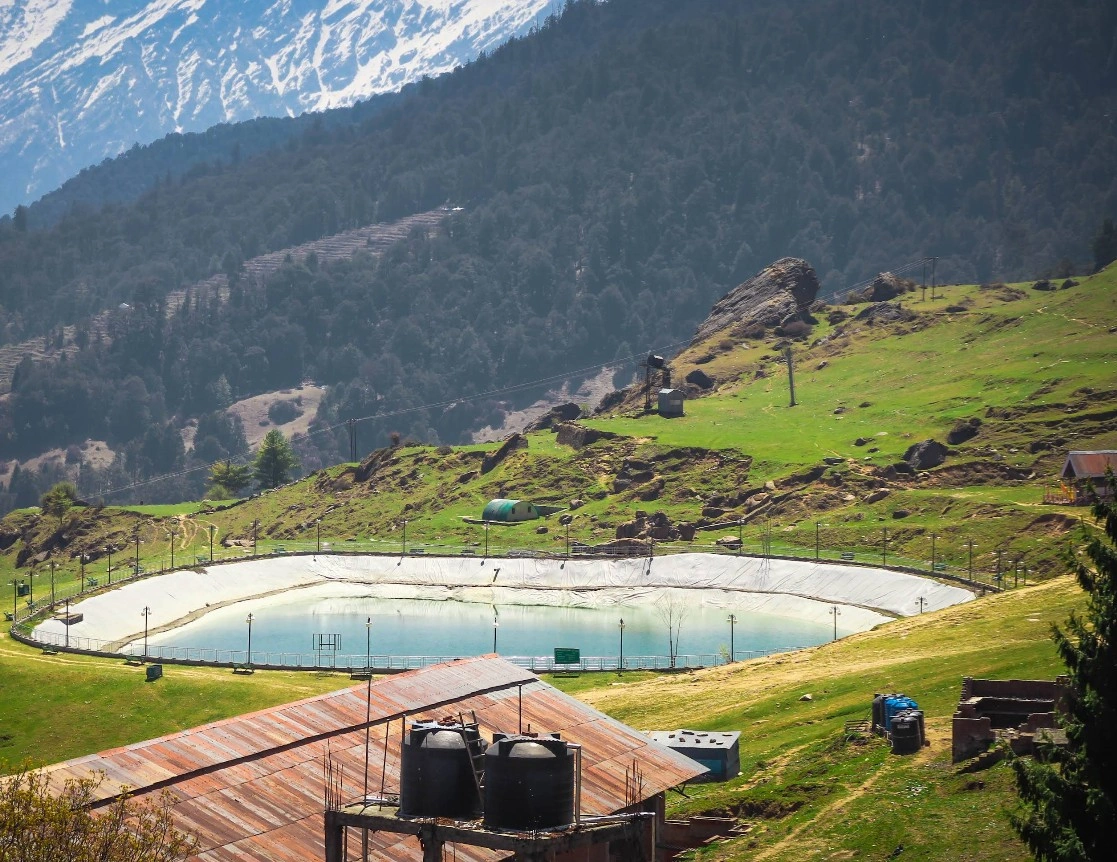
Auli is a good option if you want to add panoramic mountain scenery to your Valley of Flowers trip.
Uttarakhand Tourism describes Auli as one of India's major ski destinations, located at around 2,800 metres and surrounded by oak and conifer forests with views towards major Himalayan peaks including Nanda Devi.
Why Visit Auli After Valley of Flowers?
Auli offers a different landscape:
- Broad mountain views
- Forests
- Open slopes
- Cable-car and mountain-resort experience
- Easier sightseeing compared with another major trek
It can be especially useful for travellers who want an additional scenic destination without immediately committing to another long trekking route.
Auli should be treated as an extra-day destination, not something to force into the standard Valley itinerary.
What About Nanda Devi National Park?
Nanda Devi National Park and Valley of Flowers National Park together form the UNESCO World Heritage property called Nanda Devi and Valley of Flowers National Parks.
However, this does not mean Nanda Devi National Park should be marketed as an easy nearby sightseeing stop during a Valley of Flowers trip.
UNESCO describes Nanda Devi as a much more rugged and inaccessible mountain wilderness, while Valley of Flowers has a gentler landscape and comparatively easier visitor access.
For that reason, this guide does not list Nanda Devi National Park as a casual side excursion.
How to Choose Which Nearby Places to Add
Do not add every nearby destination simply because it appears on a map.
Choose according to your available time.
If You Have Only 5 Days
Focus on:
-
Valley of Flowers
-
Ghangaria
-
Govindghat
Skip additional major destinations.
If You Have 6 Days
Add:
-
Hemkund Sahib
This is the most natural additional excursion because it shares Ghangaria as the base.
If You Have 7–8 Days
Consider adding:
-
Badrinath
-
Mana Village
If You Have More Time
You can also consider:
-
Auli
The goal should be a comfortable itinerary rather than collecting as many place names as possible.
For a complete day-wise structure, see our Valley of Flowers Travel Guide & Itinerary.
What Should You Prioritise Inside Valley of Flowers?
If your time inside the National Park is limited, prioritise the experience rather than a checklist.
Focus on:
- Walking through the main alpine landscape
- Observing the natural flower meadows
- Enjoying streams and waterfalls
- Taking photographs without leaving the trail
- Reaching the Joan Margaret Legge Memorial only if time and conditions allow
- Returning to Ghangaria comfortably
You do not need to see every possible corner of the Valley for the visit to be worthwhile.
Best Time for Sightseeing
The appearance of the Valley of Flowers changes throughout its accessible season.
This page intentionally does not repeat a month-by-month seasonal guide.
If your main question is when flowers are at their best, how July compares with August, or which month offers the right balance of bloom and weather, read our Best Time to Visit Valley of Flowers.
For July specifically, see our Valley of Flowers in July Guide.
Responsible Sightseeing in Valley of Flowers
Valley of Flowers is a protected ecosystem, so sightseeing should remain low impact.
Stay on the Trail
Avoid entering flower-covered meadows for photographs.
Do Not Pick Flowers
Leave plants where they grow.
Keep Noise Low
The Valley is a natural habitat, not an entertainment zone.

Carry Your Waste Back
Do not leave food wrappers, plastic or other rubbish inside the park.
Observe Wildlife from a Distance
Do not chase, feed or disturb animals for photographs.
UNESCO notes that the World Heritage property remains important partly because of its relatively low levels of human pressure and protected natural processes.
Frequently Asked Questions
1. What are the best places to visit in Valley of Flowers?
The main attractions are the alpine meadows, flower-covered landscapes, mountain streams, waterfalls, natural viewpoints and the Joan Margaret Legge Memorial. The National Park itself is the primary sightseeing experience.
2. What places can I visit near Valley of Flowers?
Popular additions include Hemkund Sahib, Badrinath, Mana Village and Auli. The number of places you should add depends on how many extra days you have.
3. Is Ghangaria a place to visit or just a trekking base?
Ghangaria is primarily the trekking base for Valley of Flowers and Hemkund Sahib. It is also the last inhabited settlement on the way to the Valley and provides accommodation and basic traveller facilities.
4. Is Hemkund Sahib near Valley of Flowers?
Yes. Both Valley of Flowers and Hemkund Sahib are accessed from Ghangaria, which makes Hemkund Sahib the most natural additional day excursion during the trip.
5. Can I visit Badrinath with Valley of Flowers?
Yes. Badrinath can be added if you have additional time after completing the trek. It is better treated as a separate trip extension rather than squeezed into a Valley trekking day.
6. Is Mana Village worth visiting with Valley of Flowers?
Yes, particularly if you are already visiting Badrinath. Mana lies only a few kilometres from Badrinath and offers Himalayan village scenery, the Saraswati River and several local points of interest.
7. Can I visit Auli with Valley of Flowers?
Yes. Auli can be added as an extra scenic destination if your itinerary has additional days. It is known for mountain views and skiing rather than for the alpine flower landscape found in Valley of Flowers.
8. Is Nanda Devi National Park a nearby sightseeing place?
It belongs to the same UNESCO World Heritage property as Valley of Flowers, but Nanda Devi National Park is a much more rugged and inaccessible protected wilderness. It should not be treated as a routine Valley of Flowers side trip.
9. Is there anything to see inside Valley of Flowers besides flowers?
Yes. The landscape also includes mountain streams, waterfalls, forest sections, Himalayan views, wildlife habitat and the Joan Margaret Legge Memorial.
10. How many extra days should I keep for nearby places?
One extra day is useful for Hemkund Sahib. Two or more additional days give you more flexibility to include destinations such as Badrinath and Mana, while Auli generally works better when you have additional time beyond the core trek.
Final Thoughts
The best places to visit in Valley of Flowers are not conventional tourist attractions.
The real experience comes from the landscape itself:
alpine meadows, wildflowers, streams, waterfalls, mountain views and the quiet historical landmark of Joan Margaret Legge.
Outside the National Park, Ghangaria acts as your trekking base, while Hemkund Sahib is the most natural additional day excursion.
If you have more time, Badrinath and Mana add culture and pilgrimage to the journey, while Auli provides a scenic mountain extension.
The key is not to add every nearby destination.
Give Valley of Flowers enough time first, then choose nearby places according to the number of days, your fitness and the type of experience you actually want.


