
Madhyamaheshwar Weather Guide 2026: Best Time to Visit, Monthly Temperature & Seasons
Published on June 28, 2026
Planning a trip to Madhyamaheshwar in 2026? Understanding the weather is essential for a safe and enjoyable journey. Located at an altitude of around 3,289 metres in the Garhwal Himalayas, Madhyamaheshwar experiences pleasant summers, heavy monsoon rains, colourful autumns, and snowy winters. Each season offers a different experience, from comfortable trekking conditions to breathtaking snow-covered landscapes.
This guide covers the month-wise weather, average temperatures, rainfall, snowfall, and the best time to visit Madhyamaheshwar for trekking, pilgrimage, photography, and nature lovers. Whether you're planning your first visit or returning to the Second Kedar, this weather guide will help you choose the ideal season for your journey.
Best Time to Visit Madhyamaheshwar by Travel Purpose
Different travellers visit Madhyamaheshwar for different reasons. While some come for the sacred pilgrimage, others visit to enjoy Himalayan trekking, photography, or peaceful mountain landscapes. Here's the best season based on your travel purpose:
| Travel Purpose | Best Time |
|---|---|
| Trekking | May, June, September |
| Pilgrimage | May to October |
| Photography | May, June, October |
| Clear Mountain Views | September and October |
| Snow Experience | Late October (depends on yearly snowfall) |
| Avoid Travel | July and August due to heavy monsoon rainfall and possible landslides |
If you're looking for the most comfortable weather with clear skies and safe trekking conditions, May, June, September, and early October are generally the best months to plan your trip.
Why Weather Matters More in Madhyamaheshwar Than Most Treks
Madhyamaheshwar isn't a roadside destination. The trek begins from Ransi village and winds through Gaundar, Bantoli, and Khatara before reaching the temple — a route that climbs steadily through forest, meadow, and ridge terrain. Because the trail gains significant elevation over a relatively short distance, weather conditions can shift quickly between the base villages and the temple itself.
A sunny morning in Ransi can turn into a foggy, drizzly afternoon by Khatara. Snow that melts in the lower meadows by April can still be lying thick near the temple in May. This is why a generic "best season for Himalayan treks" answer doesn't quite work here — you need month-specific detail, which is exactly what this guide provides.
Madhyamaheshwar Climate Overview
Broadly, Madhyamaheshwar experiences four climatic phases:
- Winter (December–February): Heavy snowfall, temple closed, route largely inaccessible beyond mid-altitude villages.
- Spring/Pre-summer (March–May): Snowmelt begins, temple reopens, trails turn green, weather is pleasant but unpredictable in early spring.
- Monsoon (June–September): Heavy, often unpredictable rainfall, landslide-prone sections, leech-heavy forest stretches.
- Post-Monsoon/Autumn (October–November): Clear skies, crisp air, the most stable and scenic weather window before winter sets in again.
Plan Smart, Trek Better — Check live trail updates and book your Madhyamaheshwar trek package with TourMyHoliday today.
Let's go month by month.
January
Madhyamaheshwar is buried under snow in January, with the temple shrine closed for the winter and the deity moved to Ukhimath, where worship continues in the lower valley. Average daytime temperatures near the temple hover between -5°C and 2°C, dropping well below freezing at night. Even the base villages of Ransi and Gaundar see frequent snow showers, and the upper trail is generally not attempted by trekkers this month due to high avalanche and exposure risk.
Verdict: Not recommended for trekking. Only suitable for snow photography in lower villages if you're experienced with winter terrain.
February
February remains firmly in winter's grip. Temperatures around the upper Madhyamaheshwar region remain very cold, with freezing conditions particularly likely during nights and early mornings.
Verdict: Still off-season. Better suited to acclimatised winter trekkers with proper gear, not first-timers.
March
This is the transition month. Lower elevations like Ransi and Gaundar start shedding snow, rhododendrons begin to bloom in the forest sections, and daytime temperatures climb to a more comfortable 5°C to 12°C in the villages. However, the upper stretch toward the temple can still hold snow patches well into late March, especially after a fresh spell. Trail visibility is good, and skies are mostly clear with occasional light showers.
Verdict: Early-season trekkers with experience in mixed snow-trail conditions can attempt this month, but check local advisories before committing.

April
April marks the transition from winter towards the main trekking season around Madhyamaheshwar. Lower areas such as Ransi and Gaundar begin to experience milder daytime conditions, while snow or colder conditions can still remain on higher sections towards the temple.
In 2026, Madhyamaheshwar Temple opened on 21 May, so April should be treated as a pre-opening transition month rather than part of the regular temple pilgrimage season.
Travellers considering the region in April should check local trail conditions carefully, as snowmelt, cold nights and changing mountain weather can still affect higher sections.
Verdict: Better for experienced travellers exploring accessible lower sections. For the main temple pilgrimage in 2026, plan after the seasonal opening and confirm current route conditions before travelling.
May
May is widely considered one of the best months to trek to Madmaheshwar. Daytime temperatures in Ransi and Gaundar reach a comfortable 14°C to 20°C, while the temple area stays cooler at 5°C to 12°C. Snow has mostly melted except on the highest surrounding peaks, meadows are in full bloom, and rainfall is still low before monsoon onset. This is also the busiest pre-monsoon month for the Panch Kedar yatra circuit.
Verdict: Highly recommended. Ideal balance of warm days, cool nights, and clear trails.
June
Early June often extends the pleasant spring weather, but by mid-to-late June, pre-monsoon showers begin appearing, especially in the afternoons. Temperatures stay similar to May — around 13°C to 19°C lower down and 4°C to 10°C near the temple — but humidity rises noticeably. Trail sections through dense forest can get slippery after rain.
Verdict: Good in the first half; trek with rain gear ready in the second half as monsoon approaches.
July
July falls within the monsoon period around Madhyamaheshwar. Rainfall can make forest trails muddy and slippery, while mountain-road disruptions and landslide risk can affect travel across the wider Rudraprayag region.
Cloud cover may also reduce Himalayan visibility, and trekking schedules need much more flexibility than during the pre-monsoon or post-monsoon seasons.
Travellers planning a July visit should check current road, weather and trail conditions immediately before departure rather than relying only on a fixed itinerary.
Verdict: Generally not the preferred month for a Madhyamaheshwar trek. If travel is unavoidable, keep buffer days and use local guidance.
For detailed monsoon-specific risks, read our Madmaheshwar Trek in Monsoon – Landslide Risk & Safety Guide.
August
August continues the monsoon pattern with heavy, often erratic rainfall. Trail conditions mirror July — muddy paths, reduced visibility, and a higher chance of leeches in the lower forest sections. Temperatures stay in a similar mild range of 11°C to 17°C. Some clear windows do occur between spells, offering brief but rewarding mountain views.
Verdict: Off-season for most pilgrims and trekkers; road and trail disruptions are common across the wider Rudraprayag-Chamoli belt during this month.
September
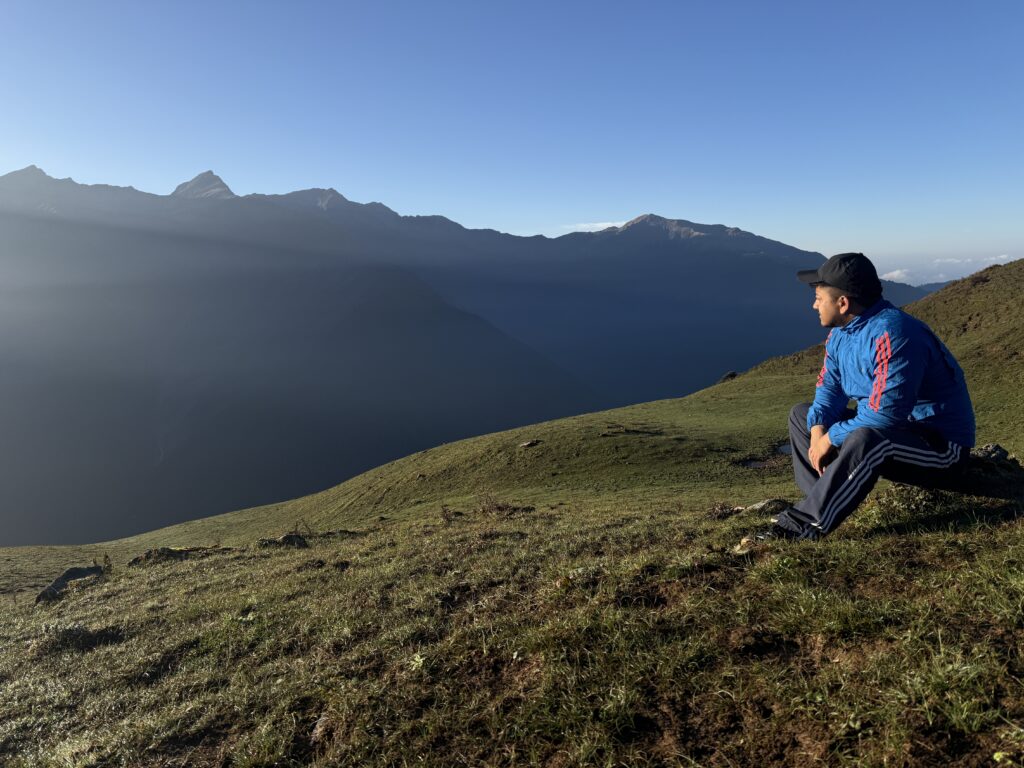
September brings welcome relief as monsoon intensity gradually tapers, especially in the latter half of the month. Early September can still see residual rain, but by mid-to-late September, skies clear up noticeably. Daytime temperatures range from 12°C to 18°C in the villages, dipping to 4°C to 10°C near the temple. Forest trails dry out, and the route becomes considerably safer to walk.
Verdict: Late September is a good shoulder-season window, especially for those wanting fewer crowds with reasonably stable weather.
October
October is arguably the best month to visit Madhyamaheshwar. Post-monsoon skies are crystal clear, offering some of the best Himalayan views of the year, including sharp sightlines to the Chaukhamba peaks. Daytime temperatures sit comfortably at 10°C to 16°C lower down, cooling to 0°C to 6°C near the temple, especially at night. Rainfall is minimal, and trail conditions are firm and dry.
Verdict: Top recommendation for trekkers, photographers, and pilgrims alike. This is peak season for a reason.
What to Wear in Madhyamaheshwar in Every Season
Dressing according to the season is essential because weather conditions in Madhyamaheshwar can change quickly, especially at higher altitudes.
Summer (May–June):
- Light trekking clothes
- Fleece jacket
- Trekking shoes
- Sunglasses
- Sunscreen
Monsoon (July–August):
- Waterproof jacket
- Rain cover for backpack
- Quick-dry clothing
- Anti-slip trekking shoes
Autumn (September–October):
- Warm jacket
- Thermal innerwear
- Woollen cap
- Gloves
- Windproof layer
Winter (November onwards):
- Heavy down jacket
- Thermal layers
- Woollen socks
- Waterproof gloves
- Snow trekking boots (if applicable)
Layering is always the best strategy, as mornings and evenings remain much colder than daytime temperatures.
November
November maintains much of October's clarity but turns noticeably colder. Daytime temperatures in the villages range from 5°C to 12°C, while nights near the temple can drop close to freezing or below, sometimes 0°C to -3°C. Light snowfall can begin appearing in late November, particularly near the shrine, signalling the approach of winter closure. The temple typically closes for the season around this time, with the deity moving back to Ukhimath.
Verdict: Good for early-to-mid November with proper cold-weather layers; late November depends heavily on the closure date for that year.
December
By December, winter has firmly returned. Snowfall becomes frequent and heavy near the temple, with the entire upper trail generally inaccessible. Temperatures plunge well below freezing at higher elevations, and even the base villages see regular cold spells with occasional snow. The temple remains closed throughout this month.
Verdict: Not recommended for trekking; suitable only for distant snow viewing from accessible lower villages.
Weather at Different Points of the Madhyamaheshwar Trek
The weather changes significantly as you gain altitude during the Madhyamaheshwar trek. Lower villages remain relatively warmer, while temperatures near the temple can be several degrees colder, especially during the early morning and night.
| Location | Approx. Altitude | Typical Weather |
|---|---|---|
| Ransi Village | 1,900 m | Pleasant in summer, cool mornings and evenings |
| Gaundar Village | 2,000 m | Mild days, colder nights throughout the trekking season |
| Bantoli | 2,400 m | Cool weather with occasional rain during monsoon |
| Madhyamaheshwar Temple | 3,289 m | Cold throughout the year with frequent weather changes |
| Budha Madhyamaheshwar | 3,500+ m | Much colder and windier than the temple, especially in the morning and evening |
As you move higher, always expect lower temperatures and changing weather conditions. Carry warm clothing even if the weather feels comfortable at the trek's starting point.
Best Time to Visit Madhyamaheshwar: Season-Wise Summary
| Season | Months | Weather Snapshot | Suitability |
|---|---|---|---|
| Pre-Monsoon (Best) | April–June (early) | Clear skies, blooming meadows, mild cold near the temple | Excellent |
| Monsoon | July–August | Heavy rain, muddy trails, leeches, and low visibility | Avoid |
| Post-Monsoon (Best) | September (late)–November (early) | Clearest skies, crisp air, stable trails | Excellent |
| Winter | December–March (early) | Heavy snow, temple closed, extreme cold | Avoid trekking |
If you can choose only one window, late September to mid-November and April to early June are your two strongest options, with October standing out as the single best month overall for clarity, temperature, and trail safety.
What to Pack Based on Season

- April–June: Light layers for daytime, a warm fleece or jacket for nights near the temple, comfortable trekking shoes, and sun protection.
- September–November: Heavier insulated jackets, thermal layers, gloves and a cap for early morning and evening cold, sturdy waterproof trekking shoes.
- Avoiding Monsoon Trips (if unavoidable): Waterproof trekking shoes, rain poncho, dry bags for electronics, leech socks, and a flexible itinerary in case of trail closures.
Why Local, Season-Specific Knowledge Matters
Generic Himalayan trekking advice often misses the nuance that makes or breaks a Madhyamaheshwar trip. Trail conditions here depend heavily on micro-seasonal shifts — a week of unseasonal rain in April, or an early snowfall in November, can change the experience entirely. Always cross-check current conditions with local trekking operators or recent traveller updates from Ransi and Gaundar before finalising your dates, since the temple's exact opening and closing dates shift each year slightly based on weather and religious calendar observations.
Final Thoughts
Madhyamaheshwar rewards patience and good timing more than almost any other trek on the Panch Kedar circuit. Get the season right, and you're treated to blooming meadows, clear Himalayan panoramas, and a genuinely peaceful pilgrimage experience far from the crowds of Kedarnath. Get it wrong, and you're looking at snowbound trails or monsoon mudslides. Use this month-by-month breakdown as your planning anchor, but always confirm real-time trail and temple status closer to your travel dates.
Frequently Asked Questions
Q1. What is the best month to visit Madhyamaheshwar?
October is widely considered the best month, offering clear skies, stable trails, and excellent mountain visibility. Late September and April–May are also strong alternatives.
Q2. Does it snow in Madhyamaheshwar?
Yes, Madhyamaheshwar receives heavy snowfall from December through early March, and light snow can appear as early as late November or persist into April near the temple.
Q3. When does the Madhyamaheshwar temple close for winter?
The temple typically closes around mid-to-late November, with the deity moved to Ukhimath for the winter months, though exact dates vary each year slightly.
Q4. Is the Madhyamaheshwar trek possible during the monsoon?
It's generally not recommended. July and August bring heavy rainfall, muddy and leech-prone trails, and a higher risk of landslides on certain sections.
Q5. What is the temperature near the Madhyamaheshwar temple in summer?
During April to June, daytime temperatures near the temple typically range from 5°C to 12°C, while base villages like Ransi and Gaundar are noticeably warmer.
Q6. Is Madhyamaheshwar colder than Kedarnath?
The two are at broadly similar altitudes, but Madhyamaheshwar's denser forest cover and narrower valley can make certain sections feel cooler and more sheltered compared to Kedarnath's open exposure.
Q7. What should I pack for a Madhyamaheshwar trek in October–November?
Pack insulated jackets, thermal layers, gloves, a warm cap, and sturdy waterproof trekking shoes, as nighttime temperatures near the temple can approach freezing.
Q8. Can beginners trek to Madhyamaheshwar?
Yes, with the right season choice. April–June and September–November offer moderate trail conditions suitable for fit beginners, while monsoon and winter months are best avoided by first-time trekkers.
Q9. How much rainfall does Madhyamaheshwar get in the monsoon?
Rainfall is heavy and frequent through July and August, often accompanied by reduced visibility and temporary trail disruptions across the wider region.
Q10. Is there a risk of landslides on the Madhyamaheshwar trail?
Landslide risk increases primarily during the peak monsoon (July–August) on certain forested and slope-heavy sections, which is one of the main reasons this period is best avoided.
Helpful Madhyamaheshwar Travel Resources
-
Madhyamaheshwar Trip Plan: Budget, Stay & Travel
Complete journey planning, recommended trip duration, accommodation and travel scheduling. -
Madhyamaheshwar Temple Guide 2026
Darshan, rituals, visitor information and temple-related planning. -
Madhmaheshwar Trek Preparation Guide
Fitness, preparation, safety and trekking readiness. -
Ukhimath to Madmaheshwar Route Explained
Route stages, road approach and trekking-route information. -
Ransi to Madmaheshwar Village-by-Village Guide
Ransi, Gaundar, Bantoli and the settlements encountered along the route. -
Budha Madmaheshwar Complete Guide 2026
Route, viewpoints, sunrise and visit planning for Budha Madmaheshwar. -
Madhyamaheshwar Trek in August 2026
August rain, trail conditions, monsoon risks and travel considerations. -
Madmaheshwar Trek in June 2026
June-specific weather and trekking conditions. -
Madmaheshwar Trek in October
Post-monsoon weather, visibility and autumn trekking conditions. -
Madmaheshwar Trek in Monsoon: Landslide Risk & Safety
Rainfall, landslide risk and monsoon travel precautions. -
Madmaheshwar vs Kedarnath Trek
Compare difficulty, experience and travel style. -
Madmaheshwar vs Tungnath Trek
Compare two Panch Kedar trekking experiences. -
Madmaheshwar vs Rudranath Trek
Compare route difficulty, pilgrimage experience and trekking requirements.


