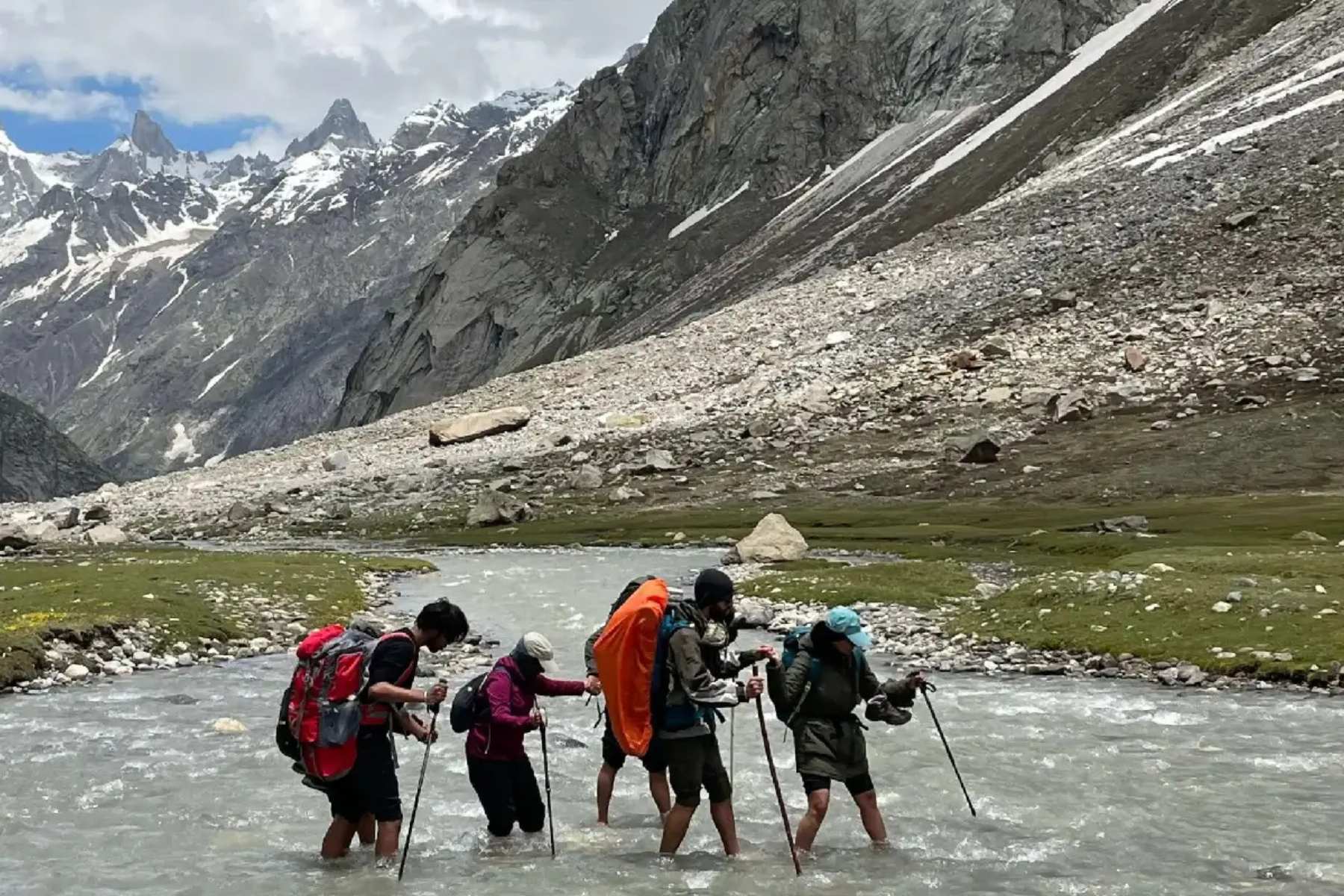
Is Hampta Pass Trek difficult?
Published on August 18, 2025
The Hampta Pass Trek is one of the most exciting and scenic treks in Himachal Pradesh. Starting from Manali, the manali to hampta pass trek takes you through lush valleys, snow-covered paths, and high-altitude passes. With a moderate level of difficulty, it’s suitable for beginners who are reasonably fit and adventurous.
The hampta pass trek distance is around 26–30 km, covered in 4–5 days depending on your hampta pass itinerary. The route is managed by experienced groups like Hampta Pass India Hikes and comes with various options like a hampta pass trek package, hampta pass tour package, or a complete hampta pass trekking package that includes food, camping gear, and guides.
Choosing the hampta pass trek best time is important — June to September offers clear trails and pleasant hampta pass weather. The hampta pass trek cost varies depending on services, but packages make it affordable and well-organized.
With breathtaking views, changing landscapes, and professional support, this trek is challenging yet doable — a perfect introduction to high-altitude trekking in the Himalayas.
Why Visit Hampta Pass?
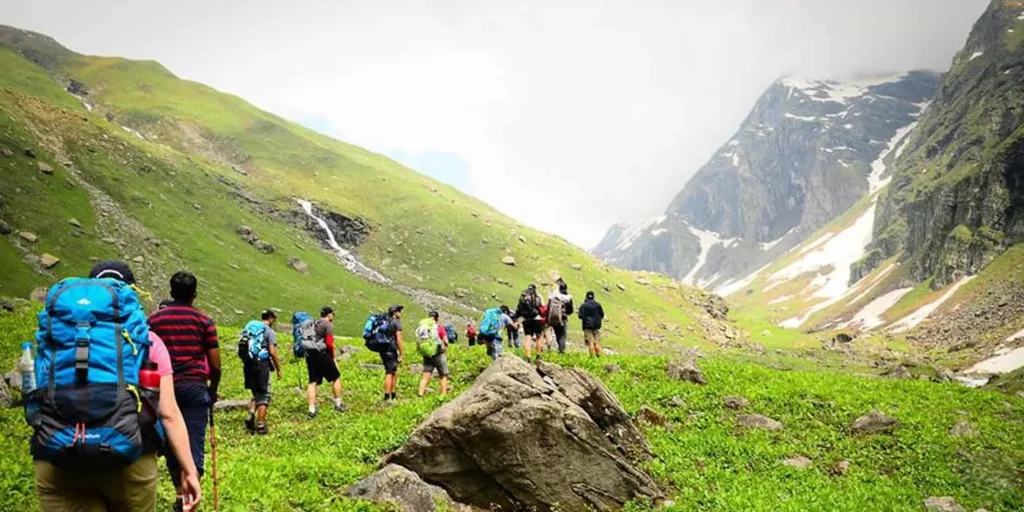
The Hampta Pass Trek is one of the most exciting Himachal Pradesh trekking routes, known for its changing scenery on a single trail. Starting with the green meadows of Kullu Valley and moving into the barren landscapes of Lahaul, the Manali to Hampta Pass trek feels like traveling between two different worlds.
This trek is moderately challenging, making it perfect for beginners as well as experienced trekkers. The Hampta Pass trek distance is around 26–30 km, and the usual Hampta Pass trek duration is 4 to 5 days. Many travel companies offer well-planned options — whether you go for a budget plan to control your Hampta Pass trek cost or choose a premium Hampta Pass tour package. You’ll also find detailed Hampta Pass itinerary options to help plan your route easily.
The Hampta Pass trek best time is between June and September, when the weather is clear, rivers flow strongly, and snow patches add to the beauty. If you’re looking for the best treks near Manali, the Hampta Pass trek 2025 should be at the top of your list. The adventure comes with beautiful Hampta Pass camping spots by rivers and meadows, nights under starlit skies, and panoramic views of the Himalayas.
More than just crossing the pass, this trek is about enjoying the journey — discovering high-altitude trails, breathtaking campsites, and experiencing one of Himachal’s most loved treks step by step.
How to Reach Hampta Pass
The Hampta Pass Trek starts near Manali, making it easy to access through multiple routes. Whether you choose a Hampta Pass trek package, Hampta Pass tour package, or a customized Hampta Pass trekking package, reaching the starting point is simple.
➤ By Air
The nearest airport is Bhuntar (around 50 km from Manali). From there, you can hire a taxi or take a bus to start your Manali to Hampta Pass trek. Most Hampta Pass trek packages include airport pickup to make travel hassle-free.
➤ By Train
Joginder Nagar is the closest railway station (about 160 km from Manali). You can take a taxi or bus to Manali and then follow your Hampta Pass itinerary as planned. Many trekkers combine this with a Hampta Pass tour package for smooth transfers.
➤ By Road
Manali is well connected by road from Delhi, Chandigarh, and other major cities. Overnight buses are popular, and Hampta Pass India Hikes as well as other operators often include transfers in their Hampta Pass trek cost. This makes it easy to reach the trek base even if you’re booking last-minute.
With the right Hampta Pass trek best time (June–September), pleasant Hampta Pass weather, and an organized Hampta Pass trekking package, your journey to this Himalayan adventure is as memorable as the trek itself.
Best Time to Visit Hampta Pass
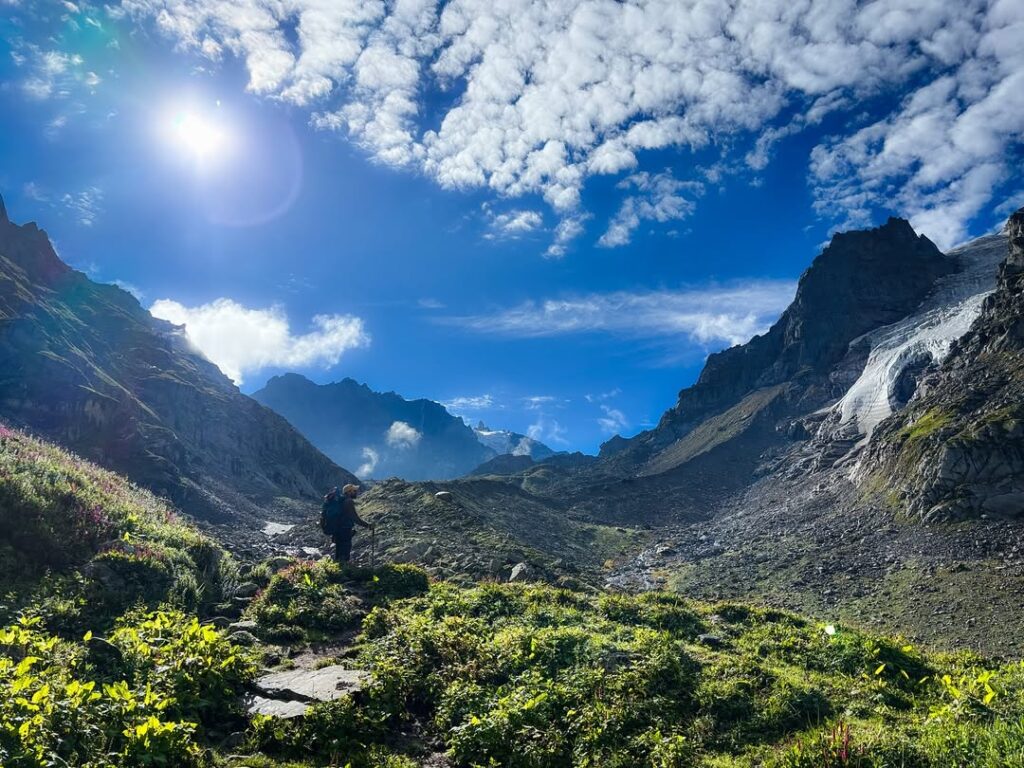
Choosing the Hampta Pass trek best time is important to enjoy the scenery, weather, and overall experience. The trek is usually open from June to September, when Hampta Pass weather is at its best.
Month-wise Weather Info
-
June – Early Snow & Cool Breeze
Perfect for first-time trekkers. The Hampta Pass trek distance feels refreshing with snow patches and blooming flowers. -
July to August – Lush Valleys & Flowing Streams
The route from Manali to Hampta Pass trek is full of greenery, though occasional rain makes trails slippery. -
September – Clear Skies & Stunning Views
Ideal for photography lovers. This is when most Hampta Pass India Hikes groups recommend starting your trek.
Pros & Cons of Each Season
-
June: Snow adds beauty, but nights are colder.
-
July-August: Valleys are vibrant, but monsoon showers may slow your pace.
-
September: Best weather overall, but fewer snow patches.
Whether you pick a Hampta Pass trek package, Hampta Pass trekking package, or Hampta Pass tour package, travel planners adjust your Hampta Pass itinerary to match the season. The Hampta Pass trek cost may vary slightly, but all packages ensure safety and comfort during the journey.
With the right timing, this Himalayan trail offers a perfect balance of adventure and natural beauty — making the Hampta Pass Trek one of the best experiences in Himachal.
Places to Visit Near Hampta Pass
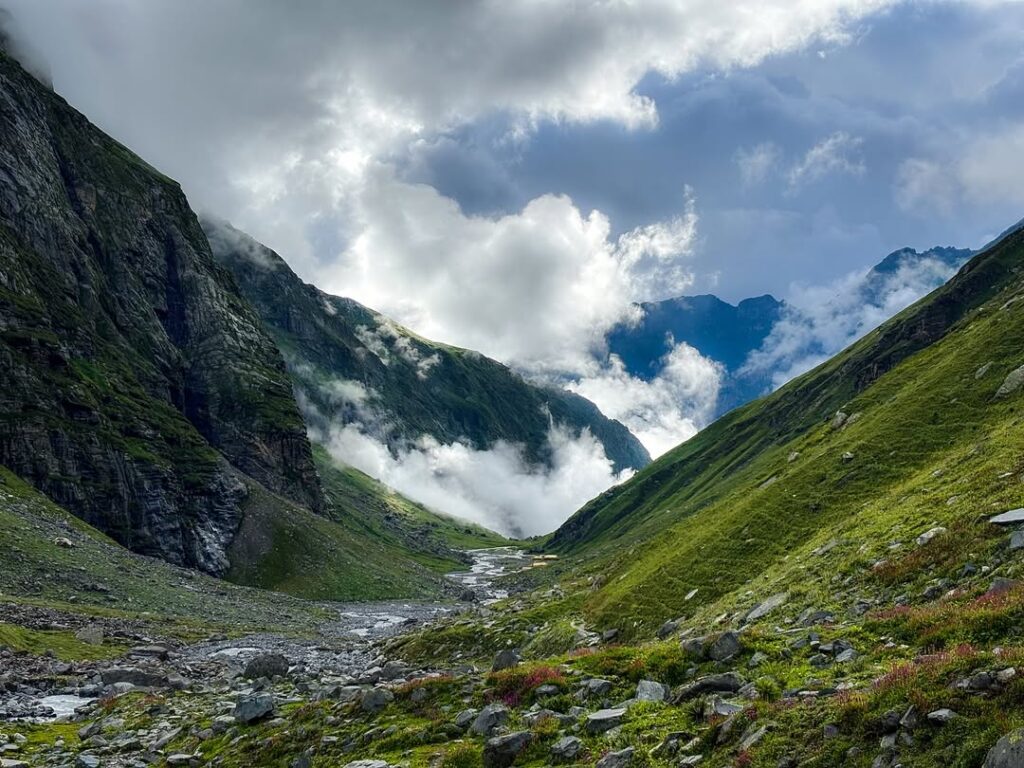
The Hampta Pass Trek isn’t just about reaching the pass — the entire route is filled with stunning locations that make the journey unforgettable. Whether you choose a Hampta Pass trek package, Hampta Pass trekking package, or a detailed Hampta Pass itinerary, these spots are the highlights of your adventure from Manali to Hampta Pass trek:
-
Jobra – The trek’s starting point, surrounded by lush pine forests and scenic streams. Perfect for acclimatization before the Hampta Pass trek distance begins.
-
Chika – A beautiful meadow campsite with waterfalls and rocky cliffs. Many Hampta Pass India Hikes groups set their first camp here.
-
Balu Ka Ghera – A sandy riverbed offering panoramic snow-peak views, making it a favorite stop on any Hampta Pass trekking package.
-
Hampta Pass – The high-altitude pass itself, with dramatic views of both Kullu and Lahaul valleys. Clear Hampta Pass weather in September makes it even more magical.
-
Shea Goru – A glacier-fed valley with rugged terrain, giving trekkers a taste of barren Spiti landscapes.
-
Chatru – Located at the meeting point of three valleys, this rugged terrain is included in most Hampta Pass tour package plans.
-
Chandratal Lake – A crescent-shaped high-altitude lake with crystal-clear water. Many Hampta Pass trek cost packages include a drive to this lake after completing the trek.
From green valleys to stark mountains, these locations make the Hampta Pass trek best time (June to September) even more rewarding. With the right Hampta Pass trekking package or Hampta Pass tour package, you’ll get to experience all these gems without worrying about logistics.

Your Complete Hampta Pass Trek Itinerary
DAY 1: Drive from Manali to Jobra and Trek to Chika
- Reporting Point: Old Manali (09:00 AM – 10:00 AM)
- Altitude: 9,800 ft to 10,100 ft .
- Drive for 2 hours to Jobra. Then, a short trek through pine, maple, and birch forests along the Rani River to Chika.
- Overnight Stay: Camping at Chika
DAY 2: Trek from Chika to Balu ka Ghera
- Trek along Rani Nallah with views of the Dhauladhar range
- Cross meadows, rocks, and alpine flowers
- Reach the wide-open campsite, Balu Ka Ghera
- Overnight stay in Balu Ka Ghera
DAY 3: Trek from Balu ka Ghera to Siagoru via Hampta Pass Summit
- Steep trek to Hampta Pass (14,100 ft) – toughest yet most rewarding day
- Enjoy stunning views of valleys, glaciers & peaks at the summit
- Descend into Lahaul Valley and reach the Siagoru campsite
- Overnight Stay in Siagoru
DAY 4: Trek from Siagoru to Chatru & Drive to Chandra Tal
- Trek to Chatru, a junction of Spiti, Lahaul & Kullu valleys
- Post-lunch drive to Chandratal Lake (subject to road conditions)
- Return to the Chatru campsite for a night's stay
DAY 5: Drive from Chatru to Manali
- Scenic return drive via Rohtang Pass or Atal Tunnel
- Witness changing landscapes from Spiti to Kullu Valley
- Arrive in Manali by morning/early afternoon
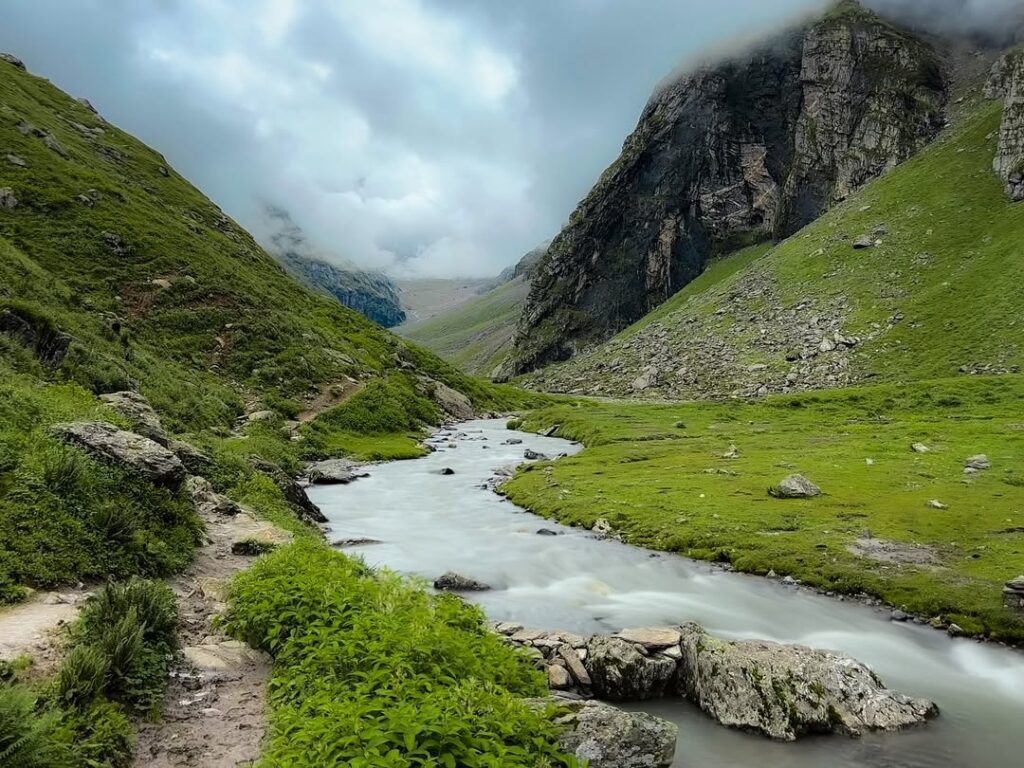
Trek Difficulty in Hampta Pass – What to Expect Before You Go
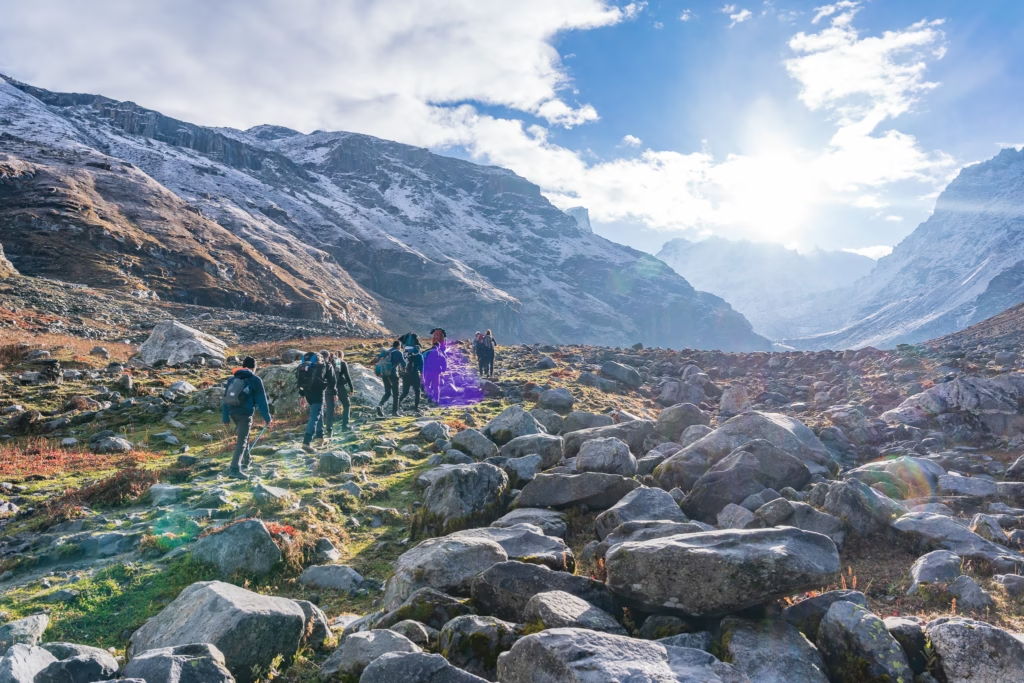
The Hampta Pass Trek is considered a moderate-level Himalayan trek — perfect for beginners looking for a challenge and experienced trekkers who enjoy variety. The Hampta Pass trek distance of 26–30 km is usually completed in 4–5 days, with daily walks of 5–7 hours.
-
Altitude: The trek reaches a height of about 14,000 feet, so proper acclimatization in Manali to Hampta Pass trek is important.
-
Terrain: Expect a mix of forest trails, rocky paths, river crossings, and snow patches — making it an exciting adventure.
-
Weather: Hampta Pass weather can change quickly. Even in summer (June–September, the Hampta Pass trek best time), mornings are sunny, afternoons can bring rain, and nights are cold.
-
Fitness Level: A basic fitness routine of walking or jogging for a few weeks helps a lot. Packages like Hampta Pass trek package, Hampta Pass trekking package, and Hampta Pass tour package usually guide you on preparation.
-
What to Carry: Sturdy shoes, layered clothing, rain gear, and a backpack are essentials. Your Hampta Pass itinerary will list specific items.
-
Cost & Support: The Hampta Pass trek cost is affordable, especially when booked with organized operators such as Hampta Pass India Hikes or local travel agencies. They provide guides, porters, and camping support to make the trek safe and enjoyable.
With the right preparation, trekking through Hampta Pass is more about enjoying the beauty of the Himalayas than struggling with difficulty.

Accommodation in Hampta Pass – Camps, Homestays, and Guesthouses
On the Hampta Pass Trek, staying close to nature is part of the adventure. Most trekkers spend their nights in camps set up at beautiful spots like Jobra, Chika, Balu Ka Ghera, Shea Goru, and Chatru. These camps are usually included in organized options such as a Hampta Pass trek package, Hampta Pass trekking package, or Hampta Pass tour package. They provide sturdy tents, sleeping bags, mats, and freshly cooked meals, so you can enjoy the trek without extra hassle.
Before starting your Manali to Hampta Pass trek, you can choose to stay in homestays or guesthouses in Manali. Many operators — including Hampta Pass India Hikes — arrange these stays as part of a Hampta Pass itinerary to help you rest, meet your trek leaders, and adjust to the Hampta Pass weather before heading out.
The Hampta Pass trek cost changes depending on whether you choose budget-friendly shared tents, standard camps, or more comfortable homestays and guesthouses. All options offer a unique Himalayan experience, surrounded by mountains, rivers, and starry skies.
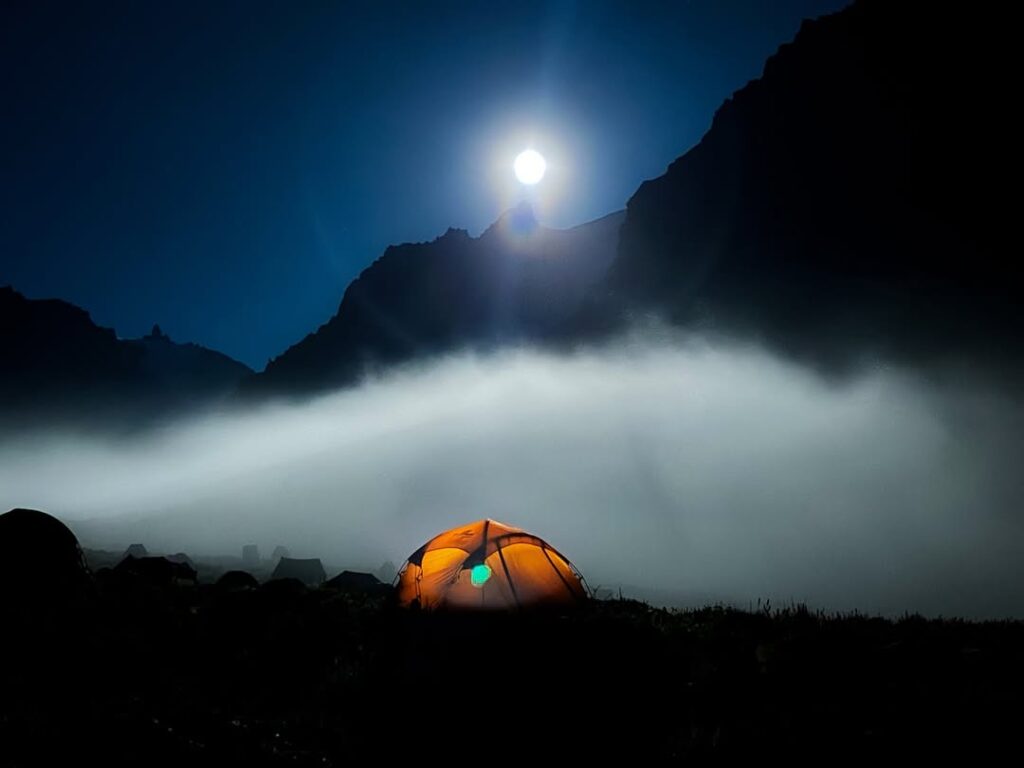
Hampta Pass Trek Cost – A Complete Trip Under ₹6,500
Planning the Hampta Pass trek is easier and more affordable than you think. With TourMyHoliday and other trusted operators like Hampta Pass India Hikes, you can complete this beautiful Himalayan trek in just ₹6,500. Packages such as a Hampta Pass trek package, Hampta Pass trekking package, or Hampta Pass tour package usually include everything — accommodation, meals, guides, camping gear, and permits — so you don’t have to worry about extra arrangements.
Starting from Manali to Hampta Pass trek, this route covers a Hampta Pass trek distance of around 26–30 km in 4–5 days. The detailed Hampta Pass itinerary takes you through stunning campsites like Jobra, Chika, Balu Ka Ghera, Shea Goru, Chatru, and even Chandratal Lake.
The Hampta Pass trek best time is June to September when Hampta Pass weather is pleasant and full of clear mountain views. Compared to many Himalayan treks, the Hampta Pass trek cost is very budget-friendly, making it perfect for solo travelers, students, and groups looking for a value-packed adventure.
By booking with TourMyHoliday, you get a hassle-free experience, guided by professionals, without compromising comfort or fun — all under ₹6,500.
Weather in Hampta Pass – Season-wise Guide
The Hampta Pass trek is known for its changing landscapes and unpredictable yet beautiful weather. Knowing the Hampta Pass weather by season helps you plan better, choose the right Hampta Pass trek best time, and pack properly.
Spring to Early Summer (May – June)
This is when the Hampta Pass trek from Manali begins. Snow starts melting, the valleys turn green, and the weather is pleasant during the day. Nights are still cold, so warm layers are essential.
Monsoon (July – August)
The route remains open, but rainfall in Kullu Valley can make trails slippery. Higher campsites like Balu Ka Ghera and Shea Goru stay cold, while the Hampta Pass trek distance of 26–30 km feels more adventurous with misty clouds and streams.
Autumn (September – mid-October)
Clear skies, crisp air, and breathtaking views make this the Hampta Pass trek best time. Most Hampta Pass trek packages, Hampta Pass trekking packages, and Hampta Pass tour packages — from operators like Hampta Pass India Hikes or TourMyHoliday — prefer this season for its stable weather.
Winter (Late October – April)
Heavy snowfall blocks the trail, making it unsuitable for normal trekking. Only experts with special gear attempt winter routes, but regular Hampta Pass itineraries remain closed until late spring.
Whether you choose a Hampta Pass trek package, Hampta Pass tour package, or Hampta Pass trekking package, checking the weather is crucial. It affects not just your safety but also the Hampta Pass trek cost (as off-season prices may vary).
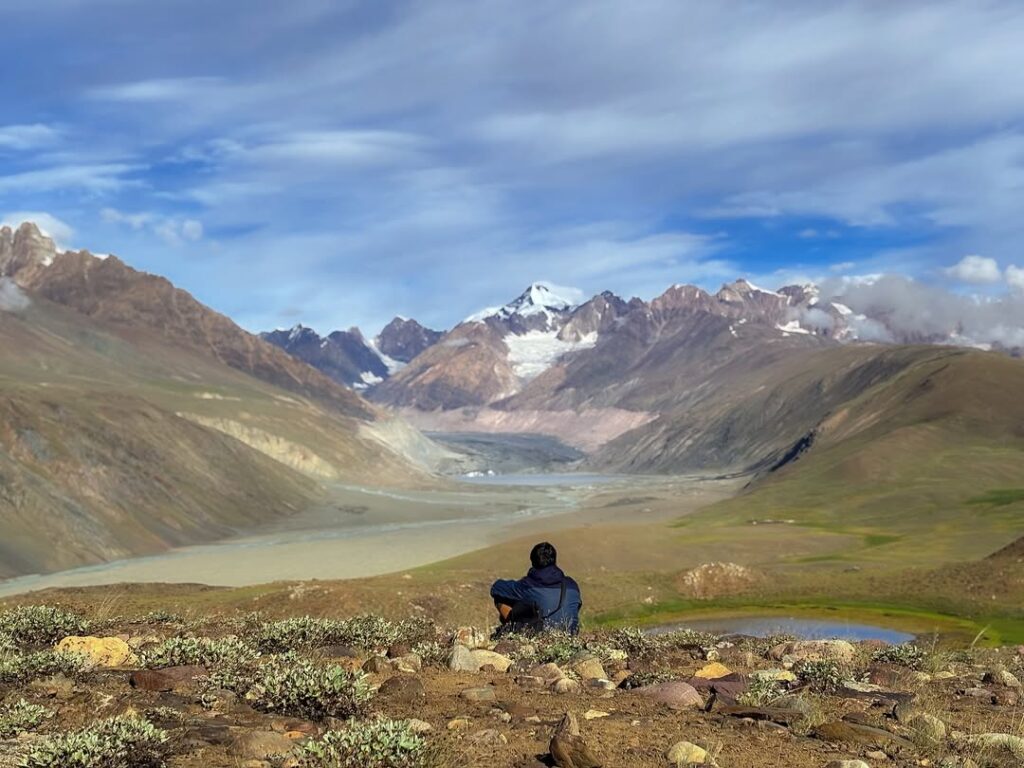
Packing List for Hampta Pass Trip – Travel Light, Trek Smart
Preparing well is the key to enjoying the Hampta Pass trek. Whether you book with TourMyHoliday, Hampta Pass India Hikes, or any operator offering a Hampta Pass trek package, Hampta Pass trekking package, or Hampta Pass tour package, carrying the right gear ensures safety and comfort.
Essential Clothing
-
Warm layers – fleece jackets, thermal inners, windproof down jacket (as Hampta Pass weather can change quickly).
-
Trekking pants – quick-dry and lightweight for covering the Hampta Pass trek distance comfortably.
-
Rain gear – poncho or raincoat if trekking in July or August.
Footwear and Accessories
-
Sturdy trekking shoes with good grip for the Manali to Hampta Pass trek.
-
Woolen socks, gloves, and a beanie for cold campsites like Shea Goru and Balu Ka Ghera.
-
Sunglasses and sunscreen to avoid snow glare and sunburn.
Gear and Personal Items
-
Backpack (50–60L) with rain cover.
-
Water bottle or hydration pack.
-
Headlamp with extra batteries.
-
Personal medicines and first-aid kit.
Optional but Useful
-
Trekking poles for stability.
-
Power bank to charge devices at camps like Jobra or Chika.
-
Lightweight snacks for long trail days.
Whether you follow a Hampta Pass itinerary through Jobra, Chika, Shea Goru, Chatru, or even visit Chandratal Lake, this packing list will help you stay prepared. Choosing the right items not only keeps you comfortable but also makes your trek with TourMyHoliday or any other operator stress-free.
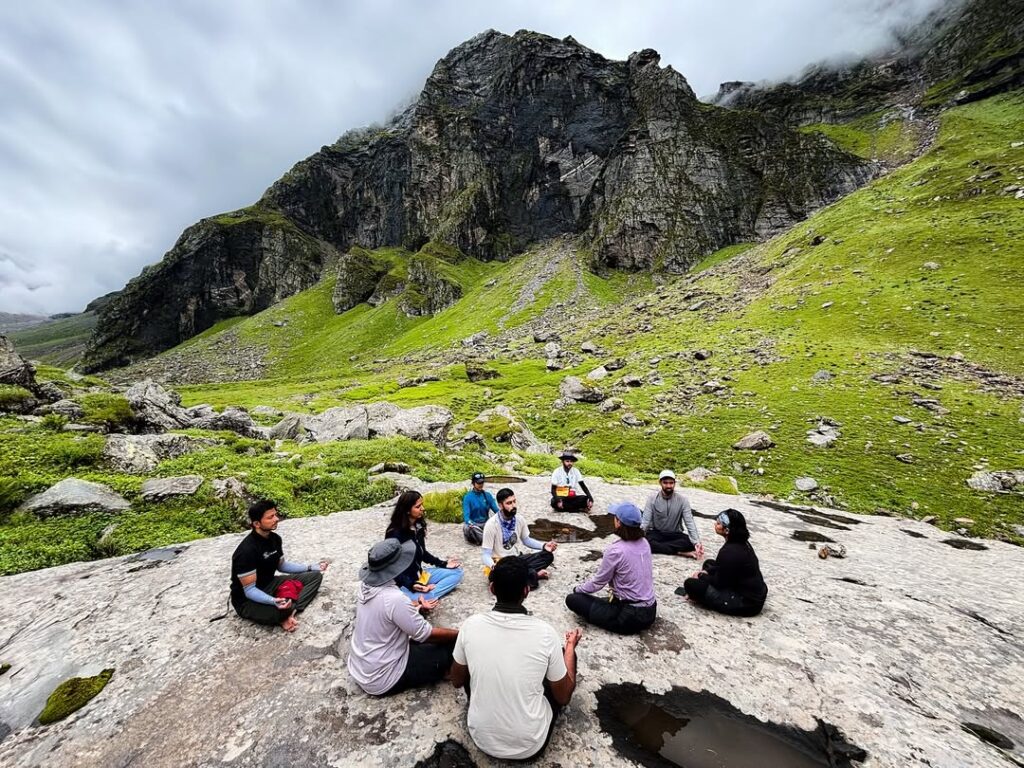
Customer Testimonials – Real Experiences on the Hampta Pass Trek
Travelers who booked their Hampta Pass trek package with TourMyHoliday or operators like Hampta Pass India Hikes share how this Himalayan adventure exceeded their expectations. From the scenic Manali to Hampta Pass trek route to the budget-friendly Hampta Pass trek cost, here’s what they say:
Rohit from Ahmedabad
"I booked a Hampta Pass tour package with TourMyHoliday. Everything was perfectly arranged — camps at Jobra, Chika, and Shea Goru were comfortable, meals were hot, and the guides knew the entire Hampta Pass itinerary by heart. The Hampta Pass weather in September was amazing — crystal-clear skies and stunning valley views."
Neha & Varun – Honeymoon Trekkers
"We chose a customized Hampta Pass trekking package. The 26 km Hampta Pass trek distance looked tough at first, but with proper guidance, we enjoyed every bit. Passing through Balu Ka Ghera and Shea Goru was magical, and ending at Chandratal Lake was the highlight of our trip."
Aditya – Solo Traveler
"This trek was my first high-altitude experience, and the Hampta Pass trek best time (June) made it perfect. Booking through TourMyHoliday kept my expenses under control — the entire Hampta Pass trek cost stayed within ₹6,500. Highly recommended for budget travelers."
Whether you take a Hampta Pass tour package, Hampta Pass trekking package, or simply plan with a detailed Hampta Pass itinerary, these experiences show why this trek is one of India’s most loved Himalayan routes.
Frequently Asked Questions:
1. What is the Hampta Pass trek distance?
The Hampta Pass trek distance is about 26–30 km, covered in 4–5 days.
2. What is the Hampta Pass trek best time?
June to September offers clear skies, pleasant Hampta Pass weather, and snow patches.
3. How much does the Hampta Pass trek cost?
With TourMyHoliday or similar operators, the Hampta Pass trek cost starts around ₹6,500.
4. Is the Hampta Pass trek difficult?
It’s a moderate trek — suitable for beginners with basic fitness and good guidance.
5. What does a Hampta Pass trek package include?
A Hampta Pass trek package usually covers meals, camping, guides, and gear.
6. Can I start the Hampta Pass trek from Manali?
Yes, most Hampta Pass trekking packages begin with a drive from Manali to Jobra.
7. Who organizes the Hampta Pass trek?
Popular operators include Hampta Pass India Hikes, TourMyHoliday, and local agencies.
8. What are the main stops on the Hampta Pass itinerary?
Jobra, Chika, Balu Ka Ghera, Shea Goru, Chatru, and sometimes Chandratal Lake.
9. What should I pack for the Hampta Pass trek?
Warm layers, trekking shoes, rain gear, personal medicines, and a sturdy backpack.
10. Do I need prior trekking experience?
No, with a guided Hampta Pass tour package, even first-timers can complete the trek safely.


