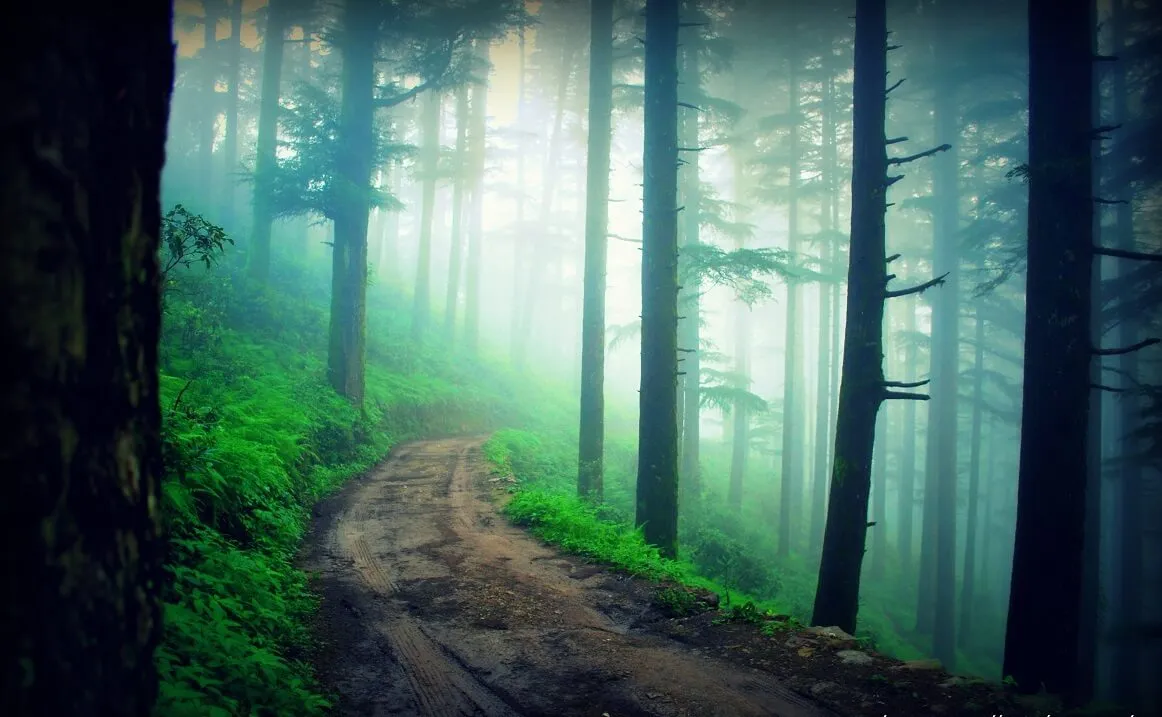
Kaudia Forest
Published on April 11, 2025
Kaudia Forest, located near Kanatal in Tehri Garhwal district of Uttarakhand, is one of the most beautiful natural forests of the Himalayan region. Known for its peaceful environment, dense green cover, and wildlife, the forest has become a favorite spot for nature lovers, trekkers, and eco-tourists. But behind its current popularity lies a long story of natural evolution, local traditions, historical changes, and conservation efforts. To understand the origin and history of Kaudia Forest, one needs to look at the natural geography of Garhwal Himalayas, the lifestyle of the early settlers, the rule of local kings, the period of British control, and finally, the modern development of eco-tourism and preservation.
Natural Origin of Kaudia Forest
The origin of Kaudia Forest is linked with the geological history of the Himalayas. Millions of years ago, the collision of the Indian plate with the Eurasian plate led to the rise of the Himalayan mountains. Over time, valleys, ridges, and dense forests developed in the region. The climate of Tehri Garhwal—with cold winters, moderate summers, and regular rainfall—allowed thick forests of deodar, oak, rhododendron, and pine trees to grow.
The area where Kaudia Forest exists today was naturally covered with these trees and shrubs, making it a rich habitat for birds, animals, and insects. This natural formation gave the forest its unique biodiversity. People later gave the name “Kaudia,” which is said to have come from the local word for “water container” (kaudi), since small natural springs and streams were found here that served as water sources for villagers and travelers.
Early Human Settlements
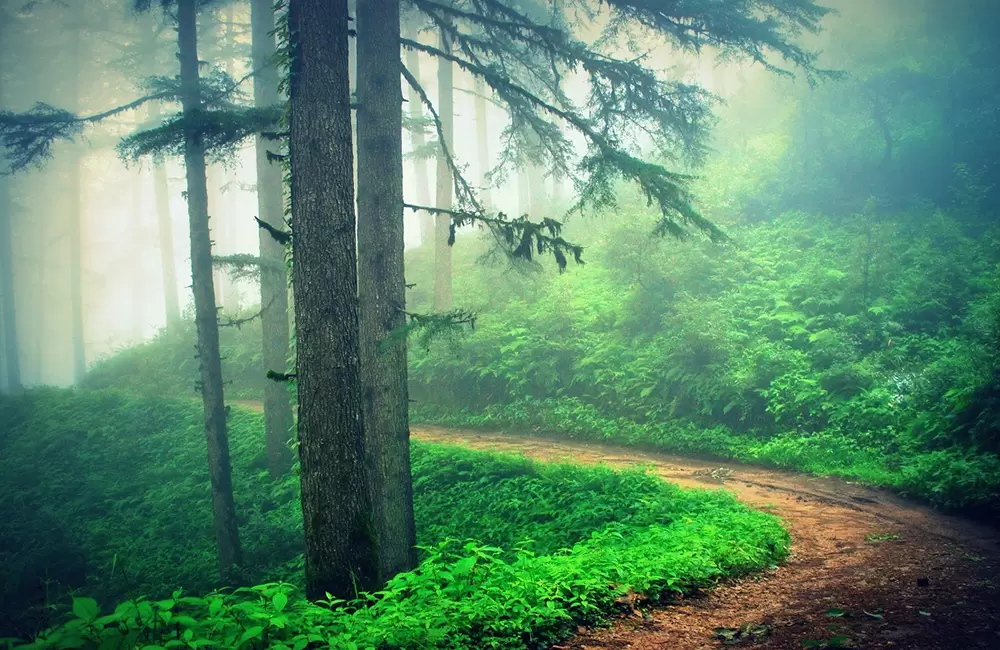
Long before Kaudia Forest became known to travellers and tourists, it was home to small groups of local villagers. These people lived a simple life, depending on agriculture, cattle rearing, and forest produce. The forest provided them with wood for fuel, leaves for fodder, wild fruits, herbs, and medicinal plants.
Kaudia Forest also had a cultural connection. The people of Garhwal considered forests sacred because they believed deities and spirits lived among the tall trees. Rituals were sometimes performed before cutting wood or grazing animals in the forest. This respect towards nature helped in preserving the richness of Kaudia for centuries.
Kaudia Forest During the Garhwal Kingdom
Kaudia Forest was part of the Garhwal Kingdom, which existed for many centuries under the rule of the Panwar dynasty. The Garhwal kings valued forests because they were important for the survival of local people and also served as natural protection. Forests like Kaudia were full of wildlife, and kings often allowed controlled hunting for survival or royal sport.
The Garhwal Kingdom faced many struggles, especially when the Gorkhas from Nepal invaded in the early 19th century. During this time, many areas of Garhwal, including Tehri, were affected. Forests like Kaudia saw the movement of troops, and resources from forests were sometimes used to supply armies. However, Kaudia itself remained largely untouched because of its location in the interior hills.
British Colonial Period and Kaudia Forest
The history of Kaudia Forest took a new turn during the British colonial period. After the Anglo-Nepalese War (1814–1816), Garhwal was divided. The eastern part went to the British, while the western part, including Tehri and the Kaudia region, remained under the Tehri Garhwal princely state.
The British, however, had a strong influence even in princely states. They introduced forest management policies and focused on timber extraction. Deodar and oak from forests like Kaudia were in demand for building and railway works. Although Kaudia was not exploited heavily compared to lower-altitude forests, the British laid the foundation of scientific forestry, which included rules for tree felling, replanting, and protecting wildlife.
During the colonial era, nearby hill stations like Mussoorie and Dhanaulti became popular. Travellers looking for less crowded and more peaceful spots discovered forests like Kaudia. It slowly became a hidden attraction for those who wanted to explore nature away from the busy towns.
Kaudia Forest After Indian Independence
After India gained independence in 1947, Tehri Garhwal became part of the Indian Union. The government created new forest departments, and Kaudia Forest came under state protection.
In the early years after independence, villagers still depended heavily on forests for daily needs. Firewood collection, grazing, and small-scale timber use continued. But soon, the government realised the importance of preserving forests for ecology, water sources, and tourism. This marked the beginning of conservation in Kaudia.
Over the decades, awareness grew about wildlife protection. Hunting was banned, and Kaudia Forest became known as a safe zone for many animals like barking deer, wild boar, ghoral (mountain goat), langurs, and leopards. Birds like the Himalayan Monal, woodpeckers, and eagles also made the forest famous among birdwatchers.

Rise of Eco-Tourism and Kaudia Forest’s Historical Importance
The real historical importance of Kaudia Forest grew in the late 20th and early 21st century when eco-tourism became popular. Unlike traditional tourism, which sometimes damages nature, eco-tourism focuses on enjoying nature responsibly.
Kaudia Forest became a favourite place for activities like:
-
Jungle safaris in jeeps to explore hidden trails.
-
Trekking and hiking, where people could walk through thick oak and deodar trees.
-
Photography and birdwatching, since the forest is home to colourful species.
-
Camping and picnics allow families to connect with nature.
Local villagers also started participating by offering guided tours and homestays, which gave them income while ensuring the forest was respected.
Kaudia Forest in Modern Times
Today, Kaudia Forest is not just a natural attraction but also a part of modern history. It represents the shift from forests being seen only as sources of wood to being valued for their ecological balance, tourism, and cultural identity.
The Uttarakhand government promotes Kaudia Forest as a green escape for travellers visiting Kanatal, Mussoorie, and Dhanaulti. Strict rules are followed to maintain cleanliness and protect wildlife. Plastic use is discouraged, and visitors are advised to leave nothing behind except footprints.
Modern conservation also connects Kaudia Forest with the history of the Chipko Movement, which began in Garhwal in the 1970s. The movement taught the world about the importance of forests and inspired people to hug trees to stop deforestation. Though the Chipko Movement did not directly start in Kaudia, its influence spread across Uttarakhand, including this forest.
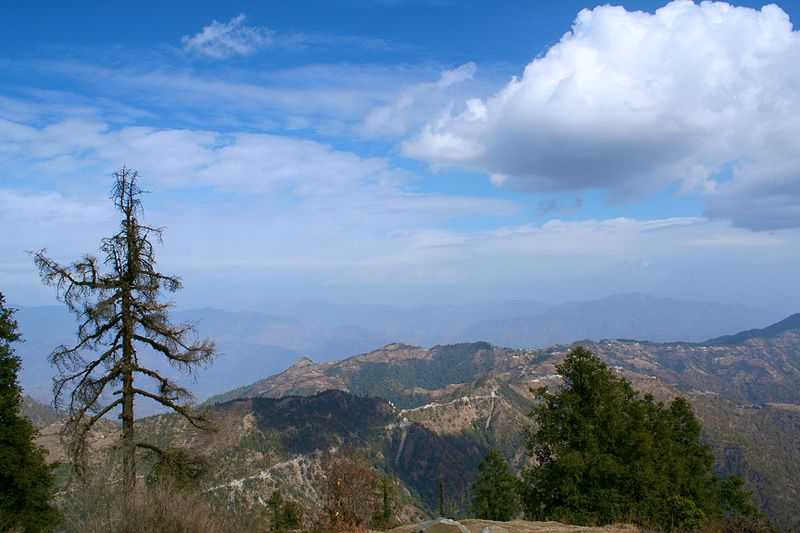
The origin and history of Kaudia Forest show how nature, culture, and human responsibility are linked together. From its natural birth millions of years ago to its use by villagers, rule under Garhwal kings, influence of the British, protection after independence, and growth as an eco-tourism hub, Kaudia Forest has travelled a long journey.
It is not just a collection of trees but a living example of history. Every oak and deodar tree carries the memory of generations who lived with respect for the forest. Today, Kaudia is seen as a symbol of harmony between people and nature. Its story reminds us that protecting forests is protecting our future.
Kaudia Forest: The Lush Himalayan Enclave of Kanatal (2026 Deep Dive)
Building on the earlier mentions tied to Kanatal's adventures, Kaudia Forest (also spelt Kodia Jungle or Kaudia Range) emerges as a verdant, underexplored gem in Uttarakhand's Tehri Garhwal district. Spanning dense deodar stands and rolling meadows at 2,500–2,800 meters, this 6–8 km² woodland isn't just a backdrop for the Burma Bridge—it's a thriving ecosystem where pine-scented trails lead to hidden springs and panoramic ridges. In 2025, with Uttarakhand's eco-tourism push, it's evolving from a local picnic hideaway into a model for community-led conservation, blending biodiversity hotspots with sustainable livelihoods. Drawing from recent forest surveys and traveller tales, this guide uncovers its wild heart.
Flora and Fauna: A Biodiversity Haven in the Garhwal Hills
Kaudia Forest's natural bounty stems from its ancient Himalayan soil, fostering a mosaic of subtropical to temperate ecosystems. Towering deodars (Cedrus deodara) dominate the canopy—some over 200 years old—interwoven with oaks (Quercus leucotrichophora), rhododendrons that burst pink in spring, and rare orchids like the ghost orchid spotted in 2025 surveys. Understory gems include ferns, wild berries (juniper and seabuckthorn), and medicinal herbs such as ashwagandha and brahmi, harvested sustainably by locals for Uttarakhand's "Herbal State" legacy. The forest supports over 150 plant species, per the 2025 Uttarakhand Forest Department report, with Miyawaki-inspired dense plantations accelerating regeneration amid climate threats.
Fauna thrives in this quiet corridor: Himalayan langurs chatter from branches, while elusive leopards and barking deer roam edges (camera traps captured a leopard family in March 2025). Birders tally 80+ species, including the vibrant Himalayan monal (state bird) and cheer pheasants nesting in meadows. Insects buzz in spring wildflower blooms, and streams teem with mahseer fish—ideal for ethical angling. As a buffer to the Rajaji National Park fringe, Kaudia aids wildlife corridors, but 2025's eco-trails emphasise "observe, don't disturb" to protect against tourism's footprint.
Activities: Trails, Tales, and Tranquil Escapes
Kaudia's 6 km level hike from Kanatal Adventure Camp unfolds like a forest symphony: Start with a narrow dirt path through pines, crest a plateau for valley vistas, then dip into undulating hills dotted with gurgling springs—perfect for a 2–3 hour immersion. Jeep safaris (₹1,500–2,500/group) rumble along the track for less mobile explorers, halting at picnic meadows for rhododendron squash picnics. Women-led nature walks (₹500/person, via Himachal Village Stays initiative) weave in cultural lore, like spotting the "52 Garhs" heritage ruins near Silkoti village—abandoned forts from Garhwal's medieval era, now storytelling spots for kids.
Picnicking reigns supreme: Pack pahadi thalis amid boulders, or join 2025's truffle hunts (July–August, ₹2,000/guide) in monsoon-dampened groves. For adrenaline, link to Burma Bridge (500m away) or extend to potato farm rambles in nearby fields. Birdwatching dawns yield monal sightings; stargazing nights under Bortle 2 skies cap eco-camps. In 2025, the Uttarakhand Forest Resource Management Project (UFRMP) added AR audio guides on trails, narrating Chipko Movement echoes—where locals "hugged" trees in the 1970s to halt logging, influencing Kaudia's preservation.
Accommodation: Forest-Edged Retreats with Local Soul
Nestle into Kanatal's eco-hubs, 1–2 km from trails: Budget homestays like those in Chopriyal village (₹1,500–2,500/night) offer wooden rooms, home-cooked siddu, and guided walks led by women like Pushpa Devi, who've earned over ₹1 lakh via 65 tours since 2023. Mid-range gems include Amaya Resort (₹4,000–6,000), with balconies overlooking the range and farm-to-table meals. For immersion, Bakri Chhap's jungle camps (₹3,000–5,000) blend agro-tourism with goat herding demos and meadow tents—book via their 2025 eco-packages including Kaudia explorations.
Luxury seekers: Kanatal Heights' glass cottages (₹6,000–9,000) frame forest sunrises. Daily budgets: ₹2,500–4,500/person, including meals and a trail fee. 2025 trend: Homestays tied to UFRMP's livelihood programs, ensuring 70% earnings stay local.
Safety Tips: Treading Lightly in the Woods
Kaudia's trails are welcoming but wild—moderate fitness suits the 6 km loop, but slippery post-monsoon paths demand grippy shoes and walking sticks (₹100 rental). Carry 2L water (springs seasonal), insect repellent (leeches in July), and a whistle for wildlife alerts—leopards are shy but present. No solo night hikes; join groups (₹300–500). Monsoon? Skip for landslide risks; winters add snow but crampons (₹200). Eco-rules: No plastics (fines ₹500), stick to marked paths, and support women guides for safe, insightful jaunts. Signal spotty (BSNL best); emergencies: Dhanaulti PHC (12 km). Solos, including women, praise the protected vibe—community patrols enhance security.
Nearby Attractions: Kanatal's Forested Fringe
Kaudia anchors a compact adventure web:
- Burma Bridge (0.5 km): Swaying thrills over the valley.
- Dhanaulti Eco Park (12 km): Twin deodar parks for gentle strolls.
- Surkanda Devi Temple (8 km): Ridge-top Shakti Peetha with peak panoramas.
- Tehri Lake (40 km): Houseboat sunsets post-hike.
- Silkoti Village (5 km): Heritage garhs and nature trails.
Itinerary: Day 1 Kaudia hike + picnic; Day 2 Burma Bridge + Eco Park; Day 3 Surkanda trek.
| Attraction | Distance from Kaudia | Trek/Drive Time | Highlights |
|---|---|---|---|
| Burma Bridge | 0.5 km | 10 min walk | Rope-crossing adrenaline |
| Dhanaulti Eco Park | 12 km | 30 min drive | Ancient trees, meadows |
| Surkanda Devi | 8 km | 45 min drive + 1 hr trek | Snow-peak views, temple rituals |
| Tehri Lake | 40 km | 1.5 hr drive | Water sports, floating stays |
| Silkoti Village Trails | 5 km | 20 min drive | Cultural walks, heritage ruins |
FAQ: Kaudia Forest Essentials (2026)
- Best time for blooms and quiet? March–June for rhododendrons; weekdays year-round for solitude.
- Hike difficulty? Easy-moderate; 6 km with minimal gain—fits families, ponies for ease (₹400).
- Fees or permits? ₹20 entry; UFRMP trails free with guides.
- Winter access? Viable (–5–12°C snow magic), but check for closures; chains for jeeps.
- Wildlife risks? Low—noise deters; join tours for sightings.
- Pack essentials? Layers, snacks, eco-bag—trails wild, no shops.
- Connectivity? Patchy beyond Kanatal—offline maps key.
- Local eats? Siddu, herbal teas at homestays; picnic spots galore.
- Women-led tours? Yes—empowering walks with history and herbs (₹500).
- Combine with? Burma Bridge + Dhanaulti for half-day forest fun.
Kaudia Forest isn't a destination—it's a whisper from the Garhwal wilds, where every trail tells a Chipko tale and every meadow invites pause. In 2025's green wave, it's thriving as Uttarakhand's eco-heart. Lace up; the pines await.