
Traditional Music, Folk Dance & Colors of Sangla Holi – Authentic Himalayan Celebration
Published on January 30, 2026 | Updated on August 28, 2026
Author: Ashutosh Sharma
Travel Writer & Himalayan Culture Explorer | 15+ Years of Mountain Travel Experience
I am a travel enthusiast based in Bareilly with over 15 years of experience exploring lesser-known Himalayan regions across Himachal Pradesh and Uttarakhand. I have visited Sangla Valley multiple times in different seasons, including during Holi celebrations, to understand its cultural depth and local traditions.
Traditional Music, Folk Dance & Colours of Sangla Holi – Authentic Himalayan Celebration
Holi in Sangla is not just a festival of colours; it is a soulful cultural experience deeply rooted in the ancient traditions of Himachal Pradesh’s Kinnaur region. Celebrated in the serene surroundings of the Baspa Valley, Sangla Holi reflects a slower, more meaningful way of welcoming spring. Unlike the loud and commercial Holi celebrations of urban areas, Sangla village observes the festival with calmness, spiritual depth, and strong community values. Here, Holi becomes a harmonious blend of traditional music, graceful folk dance, natural colours, and the quiet beauty of the Himalayas.
During Sangla Holi 2026, travellers can witness an authentic Himalayan celebration where rituals, temple prayers, and community bonding take centre stage. The festival brings together villagers dressed in traditional Kinnauri attire, gathering around wooden temples as the sound of folk instruments echoes through the valley. Soft gulal, respectful colour play, and cultural performances create an atmosphere that feels timeless and deeply connected to nature.
What makes Sangla Holi truly special is its setting—snow-capped peaks, pine forests, and centuries-old architecture provide a stunning backdrop to the celebrations. For travellers seeking an offbeat, peaceful, and culturally rich Holi experience, Sangla Holi 2026 offers a rare opportunity to celebrate the festival in its most authentic Himalayan form.
Planning to celebrate Holi amidst the serene valleys of Sangla? Download our detailed Sangla Holi itinerary 2026 to get a complete day-wise travel plan, local Holi celebration experience, sightseeing spots, and essential travel tips for a peaceful and memorable trip.
The Cultural Essence of Sangla Holi
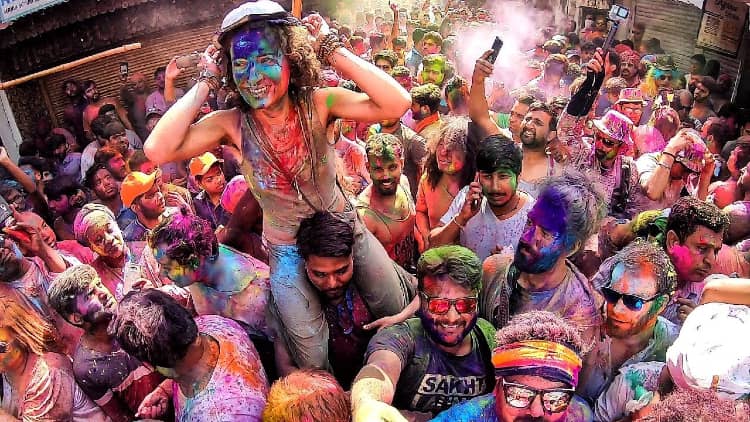
Sangla Holi reflects the true spirit of Kinnauri culture. The festival is celebrated with simplicity, respect for nature, and strong community involvement. Locals gather in temple courtyards and open village spaces to mark the arrival of spring and the victory of good over evil.
Instead of chemical colours, people often use natural or dry colours, maintaining harmony with the environment. The focus is less on chaos and more on shared happiness, music, dance, and prayers. This makes Holi in Sangla ideal for travellers seeking meaningful cultural experiences rather than crowded parties.
Traditional Music of Sangla Holi – Sounds of the Himalayas
Music plays a central role in Sangla Holi celebrations. The traditional instruments used during the festival are unique to the Himalayan region and reflect centuries-old traditions.
Common musical instruments include:
- Karnal (long metal trumpet)
- Dhol & Nagara (traditional drums)
- Ransingha (curved horn instrument)
These instruments are played in rhythmic patterns that echo through the Baspa Valley, creating a magical atmosphere. The music is slow, powerful, and deeply spiritual, often performed near temples or village squares. Each tune carries stories of local gods, seasons, and ancestral traditions.
For visitors, hearing these sounds against the backdrop of snow-covered mountains feels surreal and meditative.
Folk Dance During Sangla Holi – Stories Told Through Movement
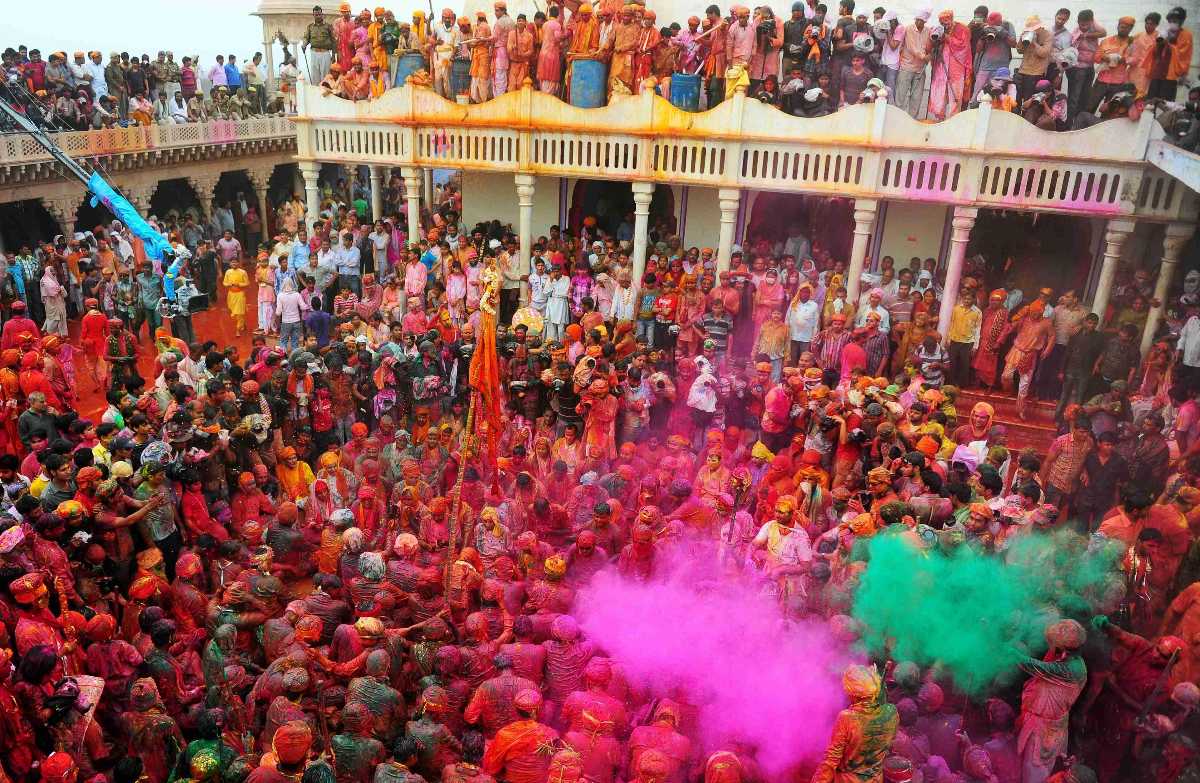
Folk dance is another highlight of Sangla Holi. Local men and women, dressed in traditional Kinnauri attire, perform group dances that symbolise unity, gratitude, and joy.
The dances are not flashy but graceful and meaningful. Every movement reflects respect for nature and local deities. The slow pace of the dance allows even visitors to observe and understand the cultural expressions behind it.
Women often wear colorful woolen shawls and traditional caps, while men wear long coats and woollen headgear. The dance formations are circular, representing togetherness and equality within the community.
Tourists are usually welcomed to join the celebrations, making Sangla Holi a warm and inclusive festival experience.
Colours of Sangla Holi – Subtle, Natural & Meaningful
The colours of Sangla Holi are soft, earthy, and symbolic. Unlike city Holi, where bright synthetic colours dominate, Sangla prefers natural hues that blend with the surroundings.
The emphasis is on:
- Dry colors
- Gentle application of gulal
- Respectful colour play among friends and family
This approach keeps the festival eco-friendly and peaceful. The colours look stunning against wooden houses, ancient temples, and snow-dusted landscapes, making Sangla Holi a paradise for photographers.

Spiritual Connection & Temple Celebrations
Holi celebrations in Sangla often begin with prayers at local temples. Devotees seek blessings from village deities before participating in music and dance. This spiritual element makes Sangla Holi more than just a festival—it becomes a sacred cultural event.
Temple courtyards turn into gathering spaces where elders share stories, musicians perform, and children learn about their heritage. For travellers, this offers a rare chance to witness living traditions that are still preserved in their original form.
Why Sangla Holi Is Different from City Holi
Holi in Sangla stands apart because of its peaceful nature and deep cultural roots. There are no loud DJs, no massive crowds, and no aggressive celebrations. Instead, there is:
- Community bonding
- Cultural performances
- Natural surroundings
- Slow, meaningful celebrations
This makes Sangla Holi perfect for travellers who want to escape commercialisation and experience the true essence of Indian festivals in the Himalayas.
A Paradise for Culture & Travel Lovers
Sangla Holi is a perfect destination for travellers who seek more than just sightseeing—it offers a deep connection with culture, nature, and slow Himalayan living. For cultural explorers, the festival opens a window into the authentic traditions of the Kinnaur region, where music, folk dance, temple rituals, and community bonding still follow age-old customs. It’s a rare chance to witness Himalayan culture in its purest, untouched form.
Photographers find Sangla Holi especially rewarding, as the soft colours of the festival blend beautifully with snow-capped peaks, wooden houses, ancient temples, and traditional Kinnauri attire. Every corner of the Baspa Valley becomes a frame filled with natural light, emotions, and timeless stories.
For slow travellers and peace-seeking tourists, Sangla offers calm celebrations far from crowds and noise. The village atmosphere encourages mindful travel, relaxed walks, and meaningful interactions with locals. Nature lovers are equally drawn to the region’s pristine landscapes, fresh mountain air, and scenic river valleys.
Beyond the festival, Sangla Holi allows travellers to explore nearby gems like Chitkul, the last inhabited village near the Indo-Tibetan border, Rakcham with its dramatic valley views, and Kalpa, famous for Kinner Kailash mountain vistas. Together, these destinations turn Sangla Holi into a complete and unforgettable Himalayan holiday experience.
Best Time & Travel Tips for Sangla Holi
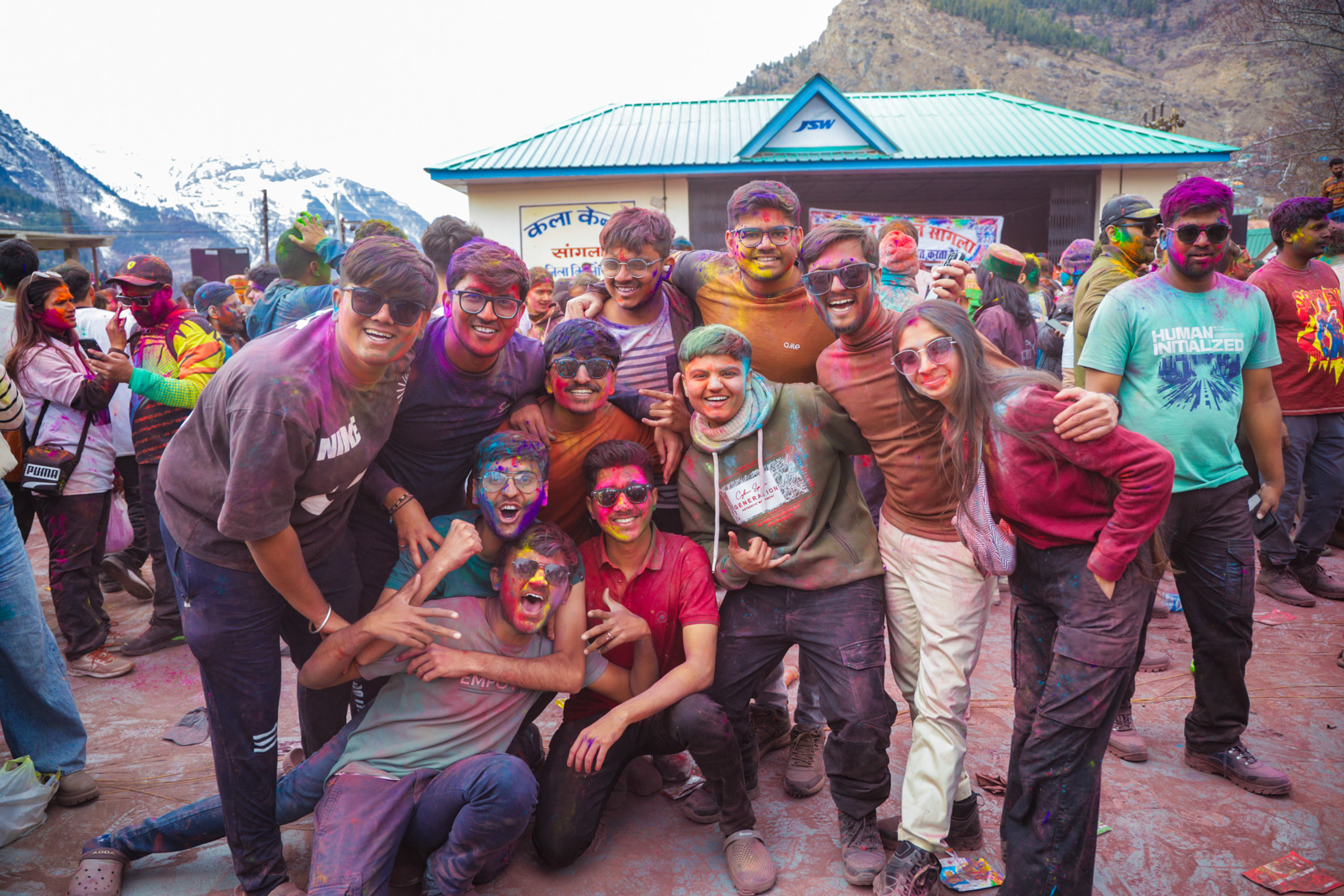
Holi usually falls in March, when Sangla still experiences cold weather and occasional snow. Travellers should carry warm clothing and be prepared for mountain conditions.
Basic travel tips:
- Book stays in advance (limited accommodations)
- Respect local customs
- Avoid loud behaviour
- Participate responsibly in celebrations
Experience Holi the Himalayan Way
Traditional music, folk dance, and natural colours make Sangla Holi one of the most authentic and soulful Holi celebrations in India. It is not just a festival but a journey into Himalayan culture, traditions, and simplicity.
For those seeking a peaceful, cultural, and unforgettable Holi experience, Sangla village offers a rare opportunity to celebrate the festival in its purest form—surrounded by mountains, music, and timeless traditions.
Frequently Asked Questions (FAQs) – Sangla Holi Festival
1. What makes Sangla Holi different from Holi celebrations in cities?
Sangla Holi is celebrated peacefully and traditionally, focusing on folk music, local dance, temple rituals, and community bonding rather than loud music and crowded colour parties.
2. Is Sangla Holi safe and suitable for tourists?
Yes, Sangla Holi is very safe for travellers. Locals are welcoming, celebrations are calm, and tourists are often invited to participate respectfully in cultural activities.
3. What kind of music and dance is performed during Sangla Holi?
Traditional Himalayan instruments like dhol, nagara, and karnal are used, along with slow-paced folk dances that represent Kinnauri culture and village traditions.
4. Are chemical colours used during Holi in Sangla?
Mostly dry and natural colours are preferred in Sangla Holi, keeping the celebrations eco-friendly and respectful to people and the environment.
5. What should tourists wear during Sangla Holi?
Warm clothing is essential as March is still cold in Sangla. Wearing comfortable clothes, jackets, and waterproof footwear is recommended.
6. Can photographers capture festival activities freely?
Yes, Sangla Holi is a great festival for photography, but travellers should always ask permission before clicking close-up portraits of locals or religious rituals.
7. Which nearby places can be explored during Sangla Holi?
Travellers can visit Chitkul, Rakcham, and Kalpa along with Sangla, making it a complete cultural and scenic trip in the Baspa Valley.
8. Is Sangla Holi suitable for families and solo travellers?
Absolutely. The calm atmosphere and cultural nature of Sangla Holi make it ideal for families, couples, and solo travellers alike.
9. How many days are enough to experience Sangla Holi properly?
A 3 to 4-day trip is ideal to enjoy the Holi celebrations and explore nearby attractions without rushing.
10. Why is Sangla Holi considered an authentic Himalayan Holi experience?
Because it preserves traditional music, folk dance, spiritual rituals, and eco-friendly practices, Sangla Holi reflects the true essence of Holi in the Himalayas.


