
Rudranath and Kalpeshwar Trek Guide: Route, Distance & Difficulty
Published on March 16, 2026 | Updated on August 28, 2026
Rudranath and Kalpeshwar are two sacred Panch Kedar temples in Chamoli, Uttarakhand, but the physical journey to each shrine is very different.
The Rudranath trek is a long and demanding Himalayan trail involving forests, bugyals, sustained climbs, remote stretches and limited facilities. Kalpeshwar, on the other hand, is considerably easier to access because road connectivity now reaches much farther into the Urgam Valley.
For pilgrims planning both temples, understanding the Rudranath and Kalpeshwar trek route, distance and difficulty beforehand is important. This guide compares the two trails without going into detailed itinerary, seasonal planning or temple opening dates.
For complete trip arrangements, travelers can also check the Rudranath and Kalpeshwar Tour Package.
Rudranath vs Kalpeshwar Trek at a Glance
| Trek Factor | Rudranath | Kalpeshwar |
|---|---|---|
| Location | Chamoli, Uttarakhand | Urgam Valley, Chamoli |
| Common Base | Sagar Village | Urgam Valley |
| Approx. Altitude | 2,290 m | 2,200 m |
| Trek Distance | Approx. 20–22 km one way | Varies with current roadhead; usually a short walk from the accessible Urgam side |
| Difficulty | Challenging | Easy to relatively easy |
| Trail Type | Forest, bugyal, ridge and mountain trail | Village road/trail and short mountain approach |
| Time Required | Usually requires substantial trekking time | Generally possible within a few hours once in Urgam |
| Best For | Fit pilgrims and trekkers | Most reasonably mobile travelers |
The main point is simple: Rudranath is the trekking challenge; Kalpeshwar is the more accessible pilgrimage.
Rudranath Trek Route from Sagar Village

Sagar Village, near Gopeshwar, is one of the main starting points for the Rudranath Temple trek.
The broad route commonly follows:
Sagar Village → forest trail → Panar Bugyal region → Pitradhar → Rudranath Temple
The trail gradually leaves the inhabited area around Sagar and enters remote mountain terrain.
Sagar Village
Sagar acts as a practical starting point for the trek.
Trekkers should complete final preparations here because facilities become increasingly limited once they move deeper into the mountains.
Forest Sections
The early parts of the route pass through Himalayan forest.
Although trees provide some protection from direct sun, the continuous climbing can make this section physically demanding, particularly with a heavy backpack.
Panar Bugyal
Panar is one of the most scenic parts of the Rudranath trekking route.
The dense forest begins opening into broad mountain meadows, offering a completely different landscape from the lower trail.
Pitradhar
Pitradhar is among the more exposed sections associated with the approach toward Rudranath.
Weather, wind and visibility become especially important in such open terrain.
Rudranath Temple
The final sections eventually lead toward the temple and its surrounding sacred landscape.
Travelers wanting detailed information about the shrine, religious significance, accommodation and practical pilgrimage planning should use the dedicated Rudranath Temple Trek travel guide.
What Is the Rudranath Trek Distance?
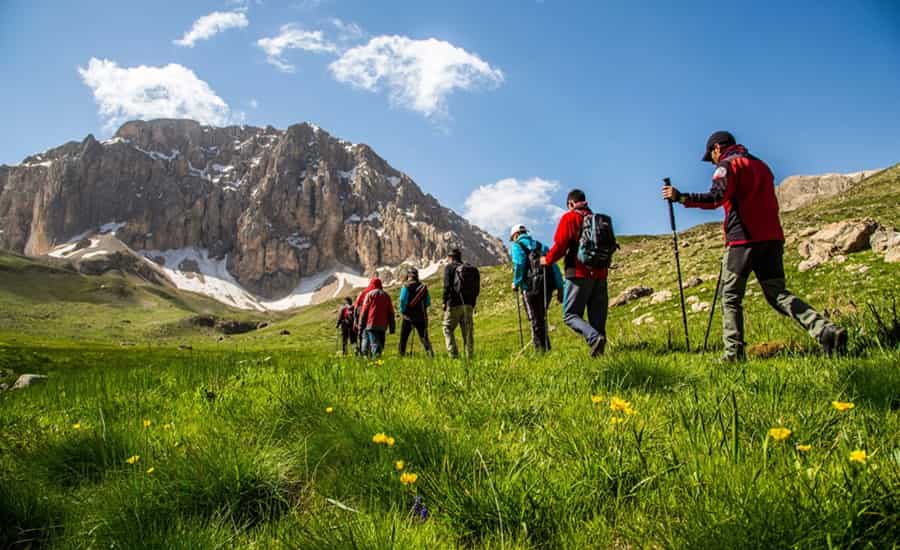
The Government of Uttarakhand's Chamoli District Administration describes the trek from Sagar to Rudranath as approximately 20 km.
Its trekking information also describes Rudranath as roughly a 22 km trek, so travelers will commonly see the distance presented as 20–22 km one way.
The small variation can occur because trekking distances are measured differently depending on the exact trail, stopping points and GPS tracking method.
This means a return journey through the same route can involve approximately 40 km or more of mountain walking.
It should therefore not be treated like a short temple trek simply because the destination is relatively well known.
For official information, travelers can refer to the Chamoli District Administration's Rudranath Temple guide.
How Difficult Is the Rudranath Trek?
The Rudranath trek is challenging.
Chamoli District's official trekking information describes Rudranath as one of the toughest and most exciting Panch Kedar treks.
Its difficulty comes primarily from the combination of:
- Long trekking distance
- Sustained uphill and downhill walking
- Remote mountain terrain
- Forest trails
- Open ridges and bugyals
- Changing weather
- Limited food and accommodation points
- Weak or unavailable mobile connectivity
- Carrying personal trekking equipment
This is important because trek difficulty is not determined by altitude alone.
A long remote trail at a relatively lower altitude can still be considerably harder than a shorter and more developed high-altitude route.
Is Rudranath Trek Suitable for Beginners?

A fit beginner can consider Rudranath with proper preparation and experienced guidance, but it is not the ideal trek for someone who has never done long-distance mountain walking.
Before attempting Rudranath, a traveler should ideally be comfortable with:
- Walking for several hours
- Climbing stairs or steep slopes
- Carrying a daypack
- Walking on uneven trails
- Basic trekking footwear
- Limited mountain facilities
- Staying in simple accommodation
Beginners should build endurance rather than focusing only on gym strength.
Regular brisk walking, stair climbing, jogging, cycling and weekend hikes can help prepare the body for repeated climbing and long walking days.
Kalpeshwar Trek Route
Kalpeshwar Temple is located in the Urgam Valley of Chamoli district.
The traditional approach begins from Helang, which lies on the Badrinath-side highway, and continues into Urgam Valley.
A simple route can be understood as:

Helang → Urgam Valley → road-accessible village area → short walk to Kalpeshwar Temple
Older travel guides may describe a much longer Kalpeshwar trek because road connectivity previously ended farther from the shrine.
Improved road access now allows vehicles to travel much deeper into Urgam Valley, reducing the actual walking distance for many visitors.
Therefore, travelers should always ask:
“How far is the current motorable roadhead from Kalpeshwar Temple?”
rather than relying entirely on an old trekking-distance figure.
What Is the Kalpeshwar Trek Distance?
This is where online information can appear contradictory.
The Government of India's Incredible India guide describes the traditional journey from Helang as approximately 10 km.
However, current road access reaches much farther into the Urgam Valley. TourMyHoliday's present Kalpeshwar Rudranath package lists the walking section at approximately 1–2 km, depending on where the vehicle can reach.
Road conditions can change because of:
- Rainfall
- Landslides
- Road maintenance
- Local traffic restrictions
- Seasonal weather
For that reason, the practical walking distance to Kalpeshwar should be confirmed close to the travel date.
How Difficult Is the Kalpeshwar Trek?

Compared with Rudranath, Kalpeshwar is much easier.
Most travelers reaching the current road-accessible section of Urgam Valley face only a relatively short walking approach.
The route does not require the same level of endurance as Rudranath.
However, travelers should still expect:
- Uneven village or mountain paths
- Some uphill and downhill sections
- Slippery surfaces after rain
- Basic facilities
- Changing Himalayan weather
Comfortable walking shoes are still recommended even though specialized trekking preparation is generally unnecessary for the short approach.
Kalpeshwar is also notable because Uttarakhand Tourism identifies it as the only Panch Kedar shrine that remains open throughout the year.
Which Trek Is Harder: Rudranath or Kalpeshwar?

Rudranath is significantly harder than Kalpeshwar.
The difference can be understood through four factors.
Distance
Rudranath involves approximately 20–22 km of trekking one way.
Kalpeshwar requires far less walking when current road access into Urgam is available.
Terrain
Rudranath crosses forests, remote mountain trails, meadows and exposed sections.
Kalpeshwar's current approach is much shorter and closer to inhabited areas.
Time
Rudranath generally needs to be treated as a substantial trekking journey.
Kalpeshwar darshan can often be completed much more quickly after reaching Urgam Valley.
Physical Preparation
Rudranath requires endurance and trekking fitness.
Kalpeshwar generally requires only normal walking fitness for most travelers using the current accessible route.
Rudranath vs Kalpeshwar: Who Should Choose Which?
Rudranath May Suit You If:
- You are physically fit.
- You enjoy long Himalayan treks.
- You are comfortable with basic facilities.
- You can handle long walking days.
- You want a remote pilgrimage experience.
- You have sufficient time for trekking.
Kalpeshwar May Suit You If:
- You prefer a shorter pilgrimage walk.
- You have limited trekking experience.
- You are traveling with family.
- You have limited time.
- You want to visit a Panch Kedar shrine without a long trek.
- You are combining it with other Uttarakhand destinations.
Pilgrims can also visit both temples in the same journey, provided sufficient time is allocated for Rudranath.
Can Rudranath and Kalpeshwar Be Combined in One Trek?

Yes, but there are different ways to plan the journey.
Some experienced trekkers explore connecting mountain routes, while most regular pilgrims prefer a simpler logistical plan that combines road transportation with the established Rudranath trek.
For most travelers, the safer approach is to plan each temple according to its practical access route rather than attempting an unfamiliar cross-mountain shortcut.
For the day-wise journey, use the dedicated Kalpeshwar Rudranath travel guide and itinerary.
This keeps route information and itinerary information separate and makes planning easier.
How Fit Should You Be for Rudranath?
A traveler preparing for Rudranath should focus mainly on cardiovascular endurance and leg strength.
A useful preparation routine can include:
- 30–45 minutes of brisk walking
- Stair climbing
- Jogging or cycling
- Squats and lunges
- Weekend hikes
- Walking while carrying a small backpack
Start gradually rather than suddenly increasing exercise immediately before departure.
Anyone with a significant medical condition should seek appropriate medical advice before attempting a strenuous Himalayan trek.
Do You Need a Guide for Rudranath?

A local guide is particularly valuable for first-time Rudranath trekkers.
The trail passes through remote sections where:
- Mobile connectivity can disappear.
- Weather can change quickly.
- Trail conditions may change.
- Food and stay options are limited.
- Navigation is more important than on heavily developed pilgrimage routes.
Experienced local guidance can therefore improve both route management and safety.
For Kalpeshwar, navigation is generally much simpler once travelers reach Urgam Valley.
When Should You Trek Rudranath and Kalpeshwar?
Season has a major effect on trail condition, visibility and accessibility.
Instead of duplicating a month-by-month weather guide on this page, travelers should read the dedicated guide to the best time to visit Rudranath and Kalpeshwar.
Similarly, travelers planning their pilgrimage around seasonal temple access should check the separate Rudranath and Kalpeshwar opening dates guide.
Final Words
The Rudranath and Kalpeshwar trek routes offer two very different Panch Kedar experiences.
Rudranath requires approximately 20–22 km of serious mountain trekking one way and should be approached with proper fitness, sufficient time and realistic expectations.
Kalpeshwar is considerably more accessible. Although the traditional route from Helang was longer, current road connectivity into Urgam Valley can reduce the final walking distance substantially.
If both temples are on your pilgrimage plan, prepare physically for Rudranath and treat Kalpeshwar as the easier part of the journey.
For travelers who prefer transportation, accommodation, meals and trek coordination to be arranged together, explore the Kalpeshwar Rudranath Tour Package.

Frequently Asked Questions
1. What is the Rudranath trek distance from Sagar Village?
The Rudranath Temple trek is approximately 20–22 km one way from Sagar Village. Actual walking distance can vary slightly depending on the trail and measurement method.
2. How difficult is the Rudranath trek?
Rudranath is a challenging trek because of its long distance, sustained climbing, remote terrain and limited facilities. Good walking endurance is important.
3. What is the Kalpeshwar trek distance?
The traditional approach from Helang is longer, but improved road connectivity into Urgam Valley has reduced the walking section considerably. Current TourMyHoliday trips generally involve around 1–2 km of walking, subject to road conditions.
4. Which trek is harder, Rudranath or Kalpeshwar?
Rudranath is significantly harder. It requires a long mountain trek, while Kalpeshwar can now be reached with a relatively short walk from the accessible Urgam Valley side.
5. Can beginners do the Rudranath trek?
Fit beginners may attempt Rudranath with proper preparation and experienced guidance. However, they should be comfortable walking long distances on mountain terrain.
6. Is Kalpeshwar suitable for beginners?
Yes. Kalpeshwar is considerably easier than Rudranath and can generally be visited by travelers with normal walking fitness when road conditions allow access into Urgam Valley.
7. Can Rudranath and Kalpeshwar be covered in the same trip?
Yes. Both Panch Kedar temples can be combined within one trip. Travelers should allow sufficient time for the long Rudranath trek and road transfers between the two access areas.
8. Where does the Rudranath trek start?
Sagar Village near Gopeshwar is one of the main starting points for the Rudranath Temple trek.


