
Is Yulla Kanda a sacred place?
Published on September 06, 2025 | Updated on August 28, 2026
Yes, Yulla Kanda is considered a sacred place, especially because of the Krishna temple located in its high-altitude mountain landscape and the religious importance the site holds for local communities and pilgrims.
Located in Kinnaur, Himachal Pradesh, Yulla Kanda attracts both trekkers and devotees. For some visitors, reaching the destination is an adventure; for others, it is a pilgrimage connected with faith, prayer and the sacred character of the surrounding mountains.
The religious importance of the site is not based only on travel stories. The official Kinnaur district website specifically mentions “The Krishna temple at Yula Kanda” in its trekking information, confirming the recognised presence of the shrine within the region.
What makes Yulla Kanda distinctive is the combination of a remote Himalayan setting, a Krishna shrine and local traditions that continue to give the destination spiritual meaning.
Why Is Yulla Kanda Considered Sacred?
The strongest reason is the presence of the Krishna temple in the upper Yulla Kanda region.
Unlike a monument visited purely for sightseeing, the temple is associated with living religious belief. Local residents and pilgrims regard the destination with respect, and the journey towards the shrine can have the character of a pilgrimage as much as a trek.
The natural setting also contributes to the experience. Mountains, lakes and remote landscapes have long held religious significance in different Himalayan traditions, and at Yulla Kanda the temple and surrounding environment are closely connected.
Visitors interested specifically in the shrine can read our detailed Krishna Temple at Yulla Kanda guide.
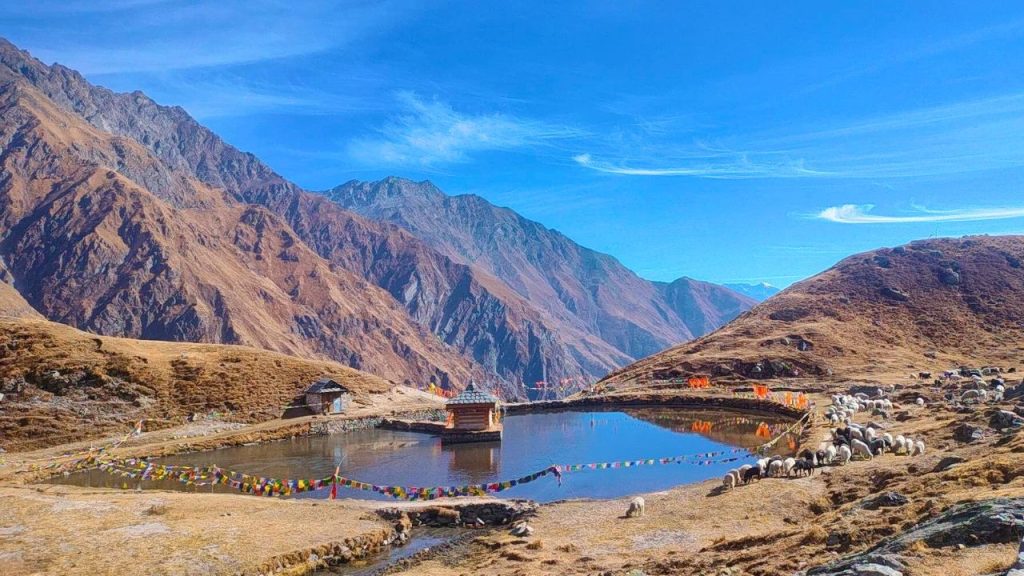
The Sacred Yulla Kanda Lake
The Yulla Kanda Lake forms an important part of the landscape surrounding the shrine.
For travellers, the lake may appear to be a scenic high-altitude attraction. For people approaching the destination through faith, however, the setting carries a deeper meaning because of its association with the Krishna temple and local religious traditions.
This is why visitors should avoid treating the shoreline merely as a camping or photography location.
Keep food, plastic, soap and other waste away from the water, avoid unnecessary noise and follow any guidance given by local residents or trek leaders.
Is Yulla Kanda the Highest Krishna Temple?
Yulla Kanda is frequently described as the highest Krishna temple or one of the highest Krishna temples in the world.
There is some official support for the wording: the Government of Himachal Pradesh has published a photograph captioned “Highest Krishna Temple, Yulla Kanda.”
However, that government caption should not automatically be interpreted as an independently certified global altitude record.
For responsible travel content, a safer description is:
Yulla Kanda is popularly regarded as one of the highest Krishna temple sites in the Himalayas.
This preserves the importance of the location without presenting an uncertain world-record claim as fact.
Faith, Tradition and Yulla Kanda
A large part of Yulla Kanda's spiritual identity comes through local traditions passed between generations.
Stories associated with the region may connect the destination with Lord Krishna, the Pandavas and other elements of Hindu tradition. These accounts are culturally meaningful, but they should be described as local belief, folklore or mythology unless independent historical evidence exists.
That distinction is important for trustworthy travel content.
A traveller can respect a religious tradition without claiming that every story connected with it has been archaeologically or historically proven.
For the detailed legends associated with the destination, read What Is the Story Behind Yulla Kanda?.

Yulla Kanda as a Pilgrimage Trek
Yulla Kanda is unusual because the physical effort required to reach the destination becomes part of the religious experience.
Visitors do not simply drive to the temple entrance. The journey involves travelling into Kinnaur and then walking through mountain terrain towards the higher Yulla Kanda area.
For a devotee, this effort can give the journey the character of a pilgrimage. For a trekker who is not religious, understanding this context helps explain why the destination should be approached differently from an ordinary viewpoint or campsite.
The official Kinnaur district trekking page also identifies the Krishna temple at Yula Kanda within the region's trekking landscape.
Role of Yulla Khas in the Sacred Journey
The journey towards Yulla Kanda is closely associated with Yulla Khas Village.
Mountain pilgrimage traditions are often connected not only with the final shrine but also with the communities living along the route. Residents help preserve knowledge of the landscape, religious customs and stories associated with these places.
Visitors should therefore treat the village as a living community rather than merely a starting point for a trek.
Simple behaviour such as asking before photographing people, keeping noise low and respecting local instructions can make the journey more considerate.
Do You Need to Be Religious to Visit Yulla Kanda?
No.
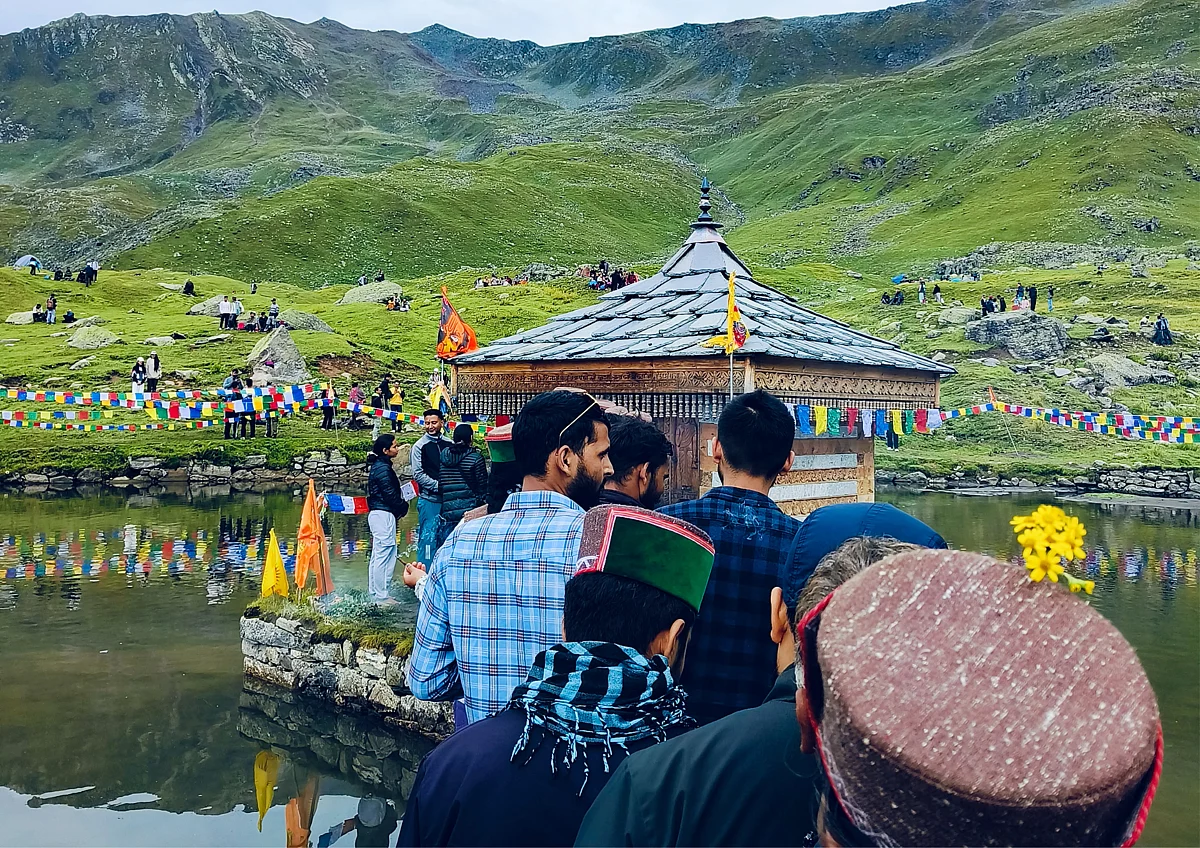
Yulla Kanda can be appreciated by trekkers, photographers, nature lovers and travellers who do not personally follow the religious traditions associated with the temple.
Respect does not require participation in worship.
A non-religious visitor can appreciate the mountain landscape while recognising that the temple and lake have genuine spiritual meaning for other people.
That balance is important at any pilgrimage destination.
How to Visit Yulla Kanda Respectfully
Because Yulla Kanda combines a fragile mountain environment with a religious site, responsible behaviour matters.
When visiting:
- Keep the temple and lake surroundings free from litter.
- Avoid loud music near the sacred area.
- Ask before photographing worship, ceremonies or local residents at close range.
- Do not damage religious objects, prayer items or structures.
- Keep soap, shampoo and other pollutants away from the lake.
- Follow instructions from residents, guides or temple representatives.
- Treat local beliefs respectfully even when they differ from your own.
These are simple practices, but they help protect both the physical environment and the character of the pilgrimage site.
What Is Documented and What Is Tradition?

This is an important distinction when researching Yulla Kanda online.
The presence of a Krishna temple at Yula Kanda is documented by the Kinnaur district administration. The Himachal Pradesh government has also used the description “Highest Krishna Temple, Yulla Kanda” in its official photo material.
Stories about exactly how the lake originated, who first established the shrine or specific events involving the Pandavas are better treated as traditional accounts unless reliable historical evidence can be established.
Separating these two categories makes the information more trustworthy without dismissing the cultural value of local beliefs.
Is Yulla Kanda a Good Spiritual Destination?
For travellers interested in quiet mountain environments and pilgrimage landscapes, Yulla Kanda can be a meaningful destination.
Its appeal comes from the combination of:
a remote Himalayan journey, the Krishna temple, the lake, local faith and the sense of effort involved in reaching the site.
However, spirituality is personal. Claims such as guaranteed healing, divine energy or purification should not be presented as measurable facts.
Visitors may experience peace, reflection or religious devotion there, but these remain individual experiences.
Frequently Asked Questions
1. Is Yulla Kanda really a sacred place?
Yes. Yulla Kanda has religious significance because of its Krishna temple and the traditions associated with the surrounding mountain landscape. The Kinnaur district administration officially references the Krishna temple at Yula Kanda.
2. Which god is worshipped at Yulla Kanda?
The shrine at Yulla Kanda is dedicated to Lord Krishna.
3. Why is the Yulla Kanda temple famous?
It is known for its remote Himalayan setting and exceptionally high-altitude location. The Himachal Pradesh government has itself captioned the site as “Highest Krishna Temple, Yulla Kanda.”
4. Is Yulla Kanda the world's highest Krishna temple?
It is widely described that way, but a formally certified global altitude record is not established by the official sources reviewed. It is safer to call it one of the highest or a very high-altitude Krishna temple site.
5. Is Yulla Kanda a pilgrimage or a trek?
It can be both. Devotees may approach the journey as a pilgrimage, while other visitors come primarily for trekking and mountain scenery.
6. Can non-Hindus visit Yulla Kanda?
Visitors of different backgrounds can experience the destination, provided they respect the temple, local traditions and any rules followed at the sacred site.
7. Is the lake also considered sacred?
The lake is closely associated with the temple and local spiritual traditions. Visitors should therefore treat the water and shoreline respectfully and avoid pollution.
Respect the Faith Behind the Landscape
So, is Yulla Kanda a sacred place? Yes—its importance comes primarily from the Krishna shrine, local devotion and religious traditions associated with the high Himalayan landscape.
The destination can be enjoyed as a trek, but visitors should remember that they are also entering a place that carries cultural and spiritual meaning for local communities.
The best approach is to distinguish documented information from folklore, respect both without exaggeration and travel responsibly.
For official information about trekking in the region, travellers can refer to the District Kinnaur, Government of Himachal Pradesh website, which specifically mentions the Krishna temple at Yula Kanda.
Travellers who prefer transport, accommodation, meals, camping and trek coordination to be organised together can explore our Yulla Kanda Trek Package from Delhi.


