
Best Places to Visit in Darma Valley, Uttarakhand: A Complete Travel Guide
Published on October 15, 2026 | Updated on October 15, 2026
Most people planning a Himalayan trip in Uttarakhand think of Kedarnath, Auli or Valley of Flowers. Darma Valley rarely makes that list, and that is exactly why it is worth knowing. It sits in the far eastern corner of Pithoragarh district, along the Dhauliganga river, with the Tibet border not far beyond the last villages.
Here you do not queue for sunrise points or fight for a homestay bed. You walk through Shauka villages, cross wooden bridges over loud rivers, and wake up to the Panchachuli range. This guide covers the best places to visit in Darma Valley, in the order you will actually reach them, with practical notes on each.
Darma Valley at a Glance
| Place | What it is known for | Type of stop |
|---|---|---|
| Dharchula | Base town, permits, last big market | Stay / supplies |
| Tawaghat | Confluence of Dhauliganga and Kali rivers | Sightseeing |
| Sobla | Roadhead and start of the walking trail | Trek start |
| Sela | First Shauka village, homestays | Overnight |
| Nagling Waterfall | Highlight waterfall on the route | Scenic stop |
| Baling | Quiet village in a forested stretch | Overnight |
| Dugtu | Main village, culture and rest | Overnight / rest day |
| Sipu | Panchachuli views, open meadows | Viewpoint / camp |
| Sinla Pass | High-altitude crossing to Byans valley | Advanced trek |
1. Dharchula: Where Your Journey Really Begins

Dharchula is a busy little town on the banks of the Kali river, which forms the border with Nepal here. You can see Darchula town on the other side. Most travellers treat it as a transit point, but spend an evening walking around the market. This is where you should finish your last-minute shopping, cash withdrawal and permit formalities.
Why visit: Local food, a feel of the border culture, and the last reliable network and ATMs.
Tip: Stock up on snacks, medicines and cash here. Options become very limited further in.
2. Tawaghat: The Meeting of Two Rivers

A short drive from Dharchula, Tawaghat is the point where the Dhauliganga meets the Kali river. The two rivers have visibly different colours and speeds, and where they merge you can see the water churning side by side before it blends. Even from the road, the sound of the water tells you that this valley is going to be wild.
Tawaghat has a small settlement, a few tea stalls and a government rest house. It is not a place to spend days, but it is a very convenient pause on the drive. Stretch your legs, have a cup of tea and walk down towards the river for a few minutes. Many travellers also use this stop to check their permit papers and confirm vehicle arrangements for the next stretch.
Why visit: A calm riverside stop that sets the mood for the trek.
Tip: Keep your camera ready. Morning light on the river makes for the best photographs here.
3. Sobla: The Roadhead and First Steps

Sobla is generally the point from where the real walking begins, depending on road conditions that year. The roads in this belt keep changing because of landslides and construction work, so the exact roadhead may shift. In some seasons vehicles go further up, and in others you start walking earlier than planned. Always confirm with your driver or local operator before finalising your first day.
This is also where the landscape starts to feel different. You get your first look at terraced fields, stone-roofed houses and villagers going about their daily routine. Before you start walking, check your bag weight, tighten your shoe laces and keep water and snacks within easy reach. The first day sets the rhythm for the whole trek, so start slowly.
Why visit: It is the gateway to the valley and the first look at terraced fields and village life.
Tip: Keep a rain cover handy, since weather in this valley can change within an hour.
4. Sela: Your First Shauka Village

Sela is often the first overnight halt. The walk takes you through farmland, small settlements and stretches beside the Dhauliganga. There is no hurry on this day, and the gentle pace helps your body adjust before the longer sections ahead.
In the evening you usually stay in a village homestay, where the family cooks simple, warm meals, often dal, rice, local vegetables and fresh rotis. Sitting in a family’s home after a day of walking, with tea in hand, is where many trekkers get their first real taste of the Shauka way of life. If you are comfortable, talk to your hosts about village life, farming and how families move between seasonal homes. Always ask before taking photographs of people or their homes.
Why visit: Homestay hospitality and a slow start that helps your body adjust.
Tip: Nights can be cold even in summer, so keep a warm layer easily accessible.
5. Nagling Waterfall: The Highlight Most Trekkers Remember

If there is one thing people talk about after coming back, it is the Nagling waterfall. It drops down a steep rock face close to the trail, and the spray can be felt from a distance on a windy day. The stretch around it is green, damp and full of small streams.
Why visit: It is one of the most photogenic spots on the route.
Tip: Rocks near the waterfall are slippery. Keep your camera protected and avoid going too close in or just after rain.
6. Baling: A Quiet Forested Stretch
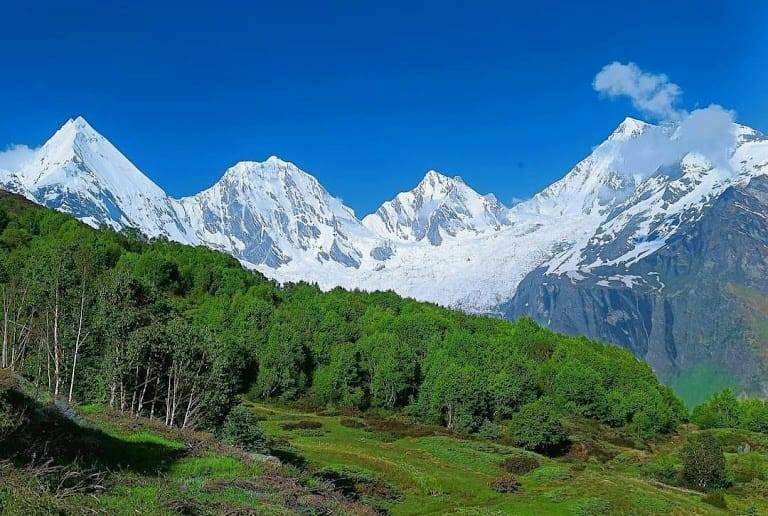
Beyond Nagling, the trail enters a more forested and peaceful section leading to Baling. There is less to “see” here in the conventional sense, and that is the point. You walk, listen to the river, and watch the valley slowly change.
Why visit: For the silence and the feeling of being far from everything.
7. Dugtu: The Cultural Heart of the Valley

Dugtu is one of the larger villages in Darma Valley and the best place to understand the Shauka community. Stone and wood houses, small shops and homestays make it a comfortable halt. Many itineraries use Dugtu as a rest stop before moving higher.
Why visit: Culture, food and a chance to rest properly. If you can, talk to elders about how families migrate seasonally between higher and lower villages.
Tip: Ask before photographing people or homes. A small conversation first goes a long way.
8. Sipu: Where the Panchachuli Views Open Up

Sipu is the part of the trip most people come for. The valley widens, and the Panchachuli massif appears with its five snow peaks. According to local belief, the Pandavas cooked their last meal here before leaving for heaven, and the five peaks are seen as their five stoves. Whether you take it as legend or just a lovely story, the view in the early morning light is hard to forget.
Why visit: Open meadows, the best mountain views in the valley, and a real sense of altitude.
Tip: Keep a buffer day here. Clouds can cover the peaks for a whole day, and a second morning often makes the difference.
9. Sinla Pass: For Experienced Trekkers Only

Sinla Pass is a high-altitude crossing that connects Darma Valley with the Byans valley. It is a serious trek, with snow, rough terrain and unpredictable weather. It needs proper permissions, acclimatization, a trained guide and good gear.
Why visit: An adventure for experienced Himalayan trekkers, not a casual add-on.
Reminder: Do not attempt it as a beginner or without local support.
Best Time to Visit These Places
| Season | Suitability |
|---|---|
| May to June | Very good: clear skies, green valleys |
| July to August | Not recommended: landslides and heavy rain |
| September to October | Best for views and photography |
| November to April | Cold and snowy, for experienced trekkers only |
For a detailed breakdown, read our best time to visit Darma Valley guide.
Practical Tips Before You Go
- Permits: Darma Valley is a border region, so an Inner Line Permit is required. Rules can change, so confirm locally or through a registered operator.
- Network: Expect weak or no signal beyond the early villages. Tell family your plan in advance.
- Cash: Carry enough cash from Dharchula, since ATMs are not available further up.
- Stay: Homestays are the norm. Book through a trusted operator or confirm in advance during peak months.
- Pack smart: Broken-in shoes, rain jacket, warm layers, headlamp, power bank and a basic first-aid kit.
- Respect the place: Carry your waste back, use local guides and buy from village shops where you can.How Many Days Do You Need?
To see the main places comfortably (Tawaghat, Sela, Nagling, Dugtu and Sipu), plan for 7 to 9 days including travel from Kathgodam. A shorter plan means rushing through the best parts. If you want a full itinerary and cost breakdown, check our Darma Valley trek guide.
Frequently Asked Questions (FAQs)
1. What are the best places to visit in Darma Valley?
Tawaghat, Nagling waterfall, Dugtu, Sipu and the Panchachuli viewpoints are the main highlights. Dharchula and Sela are important stops along the way.
2. Which is the most beautiful spot in Darma Valley?
Most travellers feel Sipu, for its open views of the Panchachuli peaks, and Nagling waterfall are the most memorable.
3. Is Darma Valley worth visiting?
Yes, if you like quiet Himalayan landscapes, village culture and less crowded trails. It is not ideal for people who want resorts or easy road access.
4. Do I need a permit to visit Darma Valley?
Yes. An Inner Line Permit is required because of the border location. Check current rules in Dharchula or with your operator.
5. Can I visit Darma Valley without trekking?
Roads reach only up to a certain point, and much of the valley needs walking. Most places are best experienced on foot.
6. What is the best time to visit Darma Valley?
May to June and September to October are the most reliable months.
7. Is Darma Valley safe for families?
Fit families with older children can do the standard route with a guide. Remote location, limited network and long walking days make it less suitable for very young kids or elderly travellers.
8. Where do tourists stay in Darma Valley?
Mostly in village homestays, with camping used at some stretches.
Final Thoughts
Darma Valley does not have one famous temple or one single viewpoint to tick off. Its beauty is in the sequence: the river meeting at Tawaghat, the waterfall at Nagling, the village life at Dugtu and finally the quiet mountain views at Sipu. Go with time, respect for the community and a flexible plan, and it will stay with you long after the trek.
Ready to explore? See our Darma Valley trek package or contact our travel planners for a customised itinerary.


