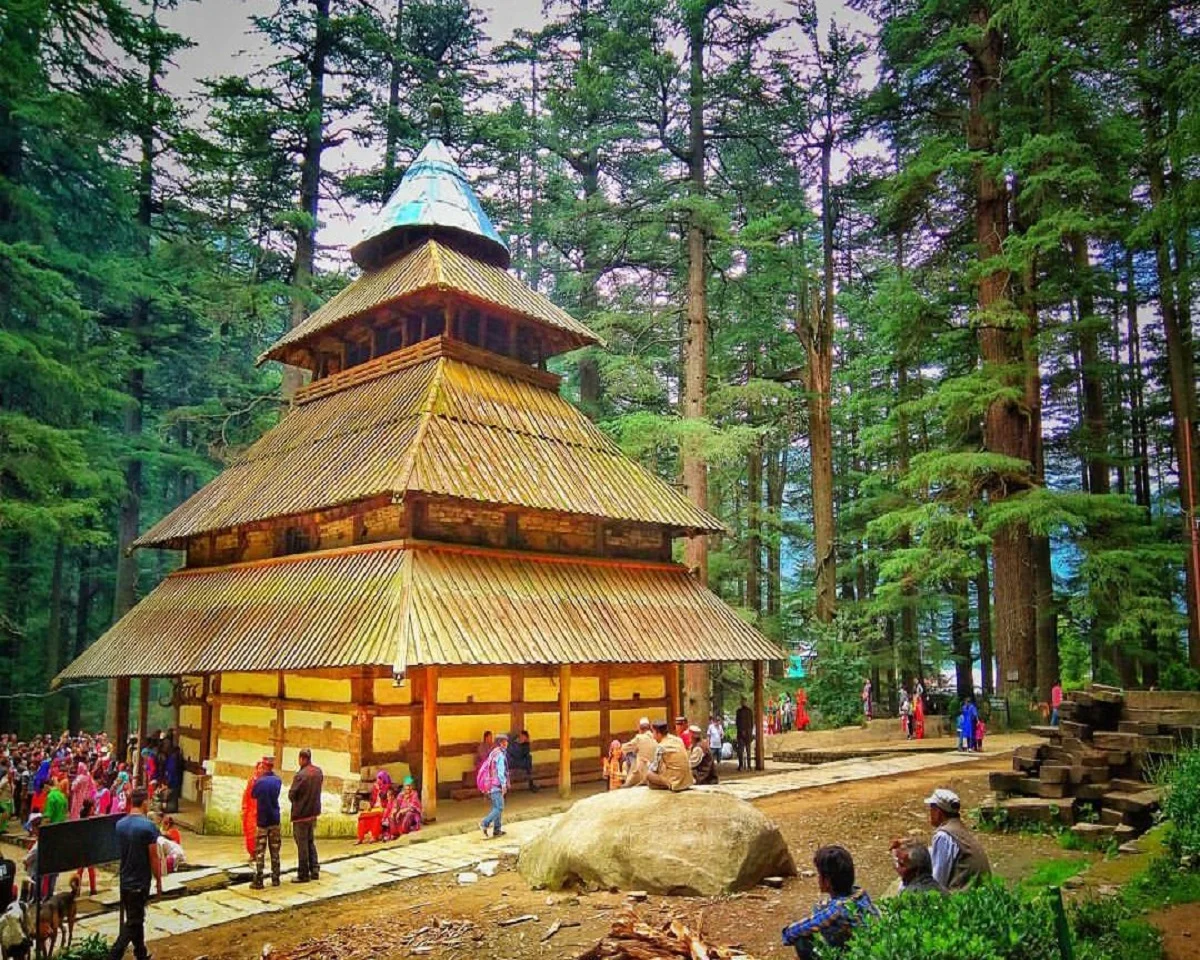
Hadimba Temple
Published on November 13, 2024
In the heart of Manali’s thick cedar forests stands a timeless symbol of devotion, mythology, and Himachali heritage—Hadimba Temple. Unlike the grand marble temples of India’s plains or the gilded shrines of the south, this sacred structure is wrapped in rustic wood, ancient legends, and the quiet of towering deodars. For many, it’s not just a sightseeing spot—it’s a moment of stillness in nature, a connection to the stories we’ve heard growing up, and a gentle reminder of how spirituality and the natural world often go hand in hand.
Important Information About Hadimba Devi Temple
| Information | Details |
|---|---|
| Temple Name | Hadimba Devi Temple |
| Also Known As | Dhungri Temple |
| Location | Manali, Himachal Pradesh |
| District | Kullu |
| Distance from Manali | Approximately 2.5 km from Manali |
| Presiding Deity | Hadimba Devi |
| Religious Association | Hadimba Devi is associated with Bhima of the Mahabharata |
| Temple Architecture | Four-tier pagoda-style architecture |
| Main Materials | Wood and stone |
| Temple Foundation | Strong stone foundation |
| Shrine Type | Cave shrine |
| Historical Period | 16th century |
| Surroundings | Deodar forest |
| Main Attraction | Traditional wood-and-stone architecture and religious significance |
| Nearby Attraction | Mall Road, Manali |
| Annual Celebration | Dhungri Fair |
| Best For | Pilgrimage, heritage, architecture and sightseeing |
| Nearest Airport | Bhuntar Airport |
| Access | Road access from Manali |
The Story Behind Hadimba Temple
Built in 1553 by Raja Bahadur Singh, the temple is dedicated to Hadimba Devi, a mythological figure from the Mahabharata. She wasn’t a goddess by birth—but her story is one of strength, transformation, and deep spiritual power.
According to the epic, the Pandavas spent part of their exile in the forested region now known as Manali. Here, Bhima, one of the five brothers, encountered Hadimba, a forest dweller known for her courage and wisdom. After Bhima defeated her brother Hidimb in battle, Hadimba and Bhima fell in love and were soon married. When Bhima moved on with his family, Hadimba stayed back, meditating in the dense forest until she was eventually deified by the locals for her spiritual strength.
Today, she is worshipped as a powerful protector and revered mother figure. Inside the temple, you won’t find an idol. Instead, a sacred rock is believed to mark the spot where she meditated—a silent but powerful symbol of her presence.
Architecture That Tells a Story

Hadimba Temple stands out immediately. Built in traditional pagoda-style architecture, it features a series of sloping wooden roofs stacked on top of each other, each one smaller than the one below. Unlike most temples built with stone, Hadimba Temple uses hand-carved wooden panels, and its entire structure blends into the surrounding forest as if it has grown there for centuries.
The wooden doorway and walls are intricately carved with images of gods, celestial beings, animals, and folktales. It’s not just a place of worship—it’s a showcase of Himachali craftsmanship passed down through generations.
The temple’s natural setting amplifies its beauty. Surrounded by cedar trees that stretch high into the sky, the temple almost disappears into the forest. Sunlight filters through the thick canopy, casting dappled shadows on the stone path and giving the entire area an ethereal glow.
A Peaceful Break from the Bustle
While Manali is often busy with tourists, shopping streets, and traffic, Hadimba Temple offers a complete contrast. Just a short walk from Mall Road, it feels like stepping into another world. The silence of the woods, broken only by the rustling of trees and chirping birds, creates a space that encourages visitors to slow down.
People often sit on the stone platforms nearby, simply enjoying the stillness. Some come for blessings, others for photography, and many just to experience the peaceful atmosphere. During winters, when the entire area is blanketed in snow, the temple looks like a postcard scene—silent, white, and magical.
Celebrations and Local Traditions
Though it is peaceful year-round, Hadimba Temple becomes a hub of local celebration during certain festivals. One of the biggest is Hadimba Devi’s birthday, celebrated every May. Locals from nearby villages dress in traditional attire and carry decorated palanquins as they pay tribute to the goddess.
Folk music, dance performances, and rituals fill the temple grounds. It’s a beautiful mix of spiritual devotion and community celebration. During the famous Kullu Dussehra, while other temples carry idols of Lord Ram or Krishna, the palanquin of Hadimba Devi is brought to the Dhalpur Maidan. This shows the importance of Hadimba in the region’s culture—even in a festival dominated by male gods, a forest goddess holds equal, if not more, reverence.
What You Can Expect as a Visitor
If you’re planning to visit, Hadimba Temple is open every day from early morning to evening. There is no entry fee. It’s a 10–15 minute walk uphill from Manali’s Mall Road, though you can also take a local taxi or rickshaw.
Outside the temple, you’ll find locals offering traditional Himachali attire for rent so you can take cultural photographs. Some vendors have small rabbits or yaks for kids to interact with. While this may feel touristy, it adds to the unique charm of the area if done respectfully.
Visitors are encouraged to remove their footwear before entering the inner sanctum and to maintain silence or speak softly around the temple grounds.
Other Attractions Nearby
Hadimba Temple isn’t the only reason to visit this part of Manali. Right next to it, there’s a smaller shrine dedicated to Ghatotkacha, the son of Hadimba and Bhima. He, too, is revered by locals and believed to possess supernatural strength and loyalty.
Also nearby:
-
Manali Nature Park: A peaceful green space ideal for walks and photography.
-
Museum of Himachal Culture and Folk Art: A small but rich museum that tells stories of local life, tools, crafts, and customs.
-
Lamadugh Trek: For those interested in hiking, this trail begins near the temple and leads deep into the forest, offering incredible views and solitude.
When Should You Visit?

The temple is beautiful throughout the year, but your experience will vary by season.
-
March to June offers pleasant weather, ideal for sightseeing and short walks.
-
July to September, the monsoon months, bring lush greenery but also slippery paths.
-
October to November is cool and quiet—a good time for those seeking solitude.
-
December to February is for snow lovers. The temple looks like it’s straight out of a winter fairytale, though access can be tricky during heavy snowfall.
Manali and the surrounding region experience distinct seasonal changes throughout the year. To understand the temperature, weather conditions, and seasonal travel patterns in detail, read our Best Time to Visit Manali – Temperature, Weather & Seasons guide.
Related Places to Explore in Himachal Pradesh
Explore these popular destinations and attractions to plan a wider Himachal Pradesh trip:
- Manali
- Solang Valley
- Sissu
- Kasol
- Manikaran Sahib
- Atal Tunnel
- Mall Road Manali
- Jakhoo Temple
- Vashisht Hot Springs
- Solang Valley and Rohtang Pass
FAQs About Hadimba Devi Temple
1. What is Hadimba Devi Temple famous for?
Hadimba Devi Temple is famous for its religious importance, distinctive four-tier pagoda-style architecture, wooden craftsmanship, and peaceful setting among deodar trees in Manali.
2. Where is Hadimba Devi Temple located?
Hadimba Devi Temple is located in the Dhungri area of Manali, Himachal Pradesh, close to the town centre and Mall Road.
3. Who is Hadimba Devi in the Mahabharata?
According to the Mahabharata tradition, Hadimba was the wife of Bhima, one of the five Pandava brothers. At the temple, Hadimba Devi is revered as a goddess.
4. How old is Hadimba Devi Temple?
The present Hadimba Devi Temple dates to the 16th century, according to Himachal Tourism.
5. What type of architecture does Hadimba Devi Temple have?
The temple features a distinctive four-tier pagoda-style design combining stone and wood, with the shikhar rising among the surrounding deodar trees.
6. What is inside Hadimba Devi Temple?
The temple has a cave shrine that is traditionally believed to preserve the footprints of Hadimba Devi.
7. How far is Hadimba Devi Temple from Manali?
Hadimba Devi Temple is approximately 2.5 km from Manali, according to Himachal Tourism.
8. What is the Dhungri Fair at Hadimba Devi Temple?
The Dhungri Fair is a local religious and cultural celebration held near the temple in spring. It is associated with Hadimba Devi and provides an opportunity to experience local traditions and festivities.
9. What are the places to visit near Hadimba Devi Temple?
Visitors can combine Hadimba Devi Temple with attractions around Manali, including Mall Road, Manu Temple, Vashisht Temple and Solang Valley. Himachal Tourism lists Hadimba Temple about 2.5 km from Manali, Manu Temple about 1 km away and Solang Valley about 13 km away.
10. How can you reach Hadimba Devi Temple from Manali?
Hadimba Devi Temple can be reached by road from Manali, followed by a short walk around the temple complex. Manali itself has road connectivity with destinations including Delhi, Chandigarh, Dehradun, Haridwar, Shimla and Dharamshala.
Final Thoughts
Hadimba Temple is more than just another tourist stop in Manali. It’s a sacred place where stories live in the trees, devotion is carved into wood, and silence speaks volumes. Whether you’re a spiritual seeker, a history enthusiast, or just someone looking to escape the chaos of modern travel, this quiet forest shrine offers something lasting.
It doesn’t try to impress with grand scale or shiny marble. Instead, it touches people through its authenticity, its mythology, and the simplicity of nature. When you walk through its wooden doors and breathe in the crisp mountain air, you don’t just see history—you feel it.
If you visit Manali, take a few extra moments here. Not just for the photos—but for the quiet, the calm, and the connection this