
Deoria tal
Published on October 24, 2024
A Complete Guide with Myths, Legends, and Stories
Tucked away at 2,438 meters (7,999 ft) in the lap of the Garhwal Himalayas, Deoria Tal is not just another alpine lake. It is a place where the mountains lean in to whisper ancient stories, where the water is so still that it becomes a perfect mirror for 55 snow-capped peaks, and where every ripple carries a fragment of mythology.
This is the complete story of Deoria Tal — its location, its myths, its untold tales, and why it still feels like a secret even in 2025.
Where Exactly is Deoria Tal?
District: Rudraprayag, Uttarakhand (earlier it fell under Chamoli administrative limits)
Nearest town: Ukhimath (14 km) → Sari village (2.5 km trek starting point)
Altitude: 2,438 m / 7,999 ft
Trek distance: 2.5 km moderate uphill from Sari village (takes 45 min–1.5 hrs depending on fitness)
Best time to visit: March–June and September–December (monsoon turns the trail slippery and leeches appear)
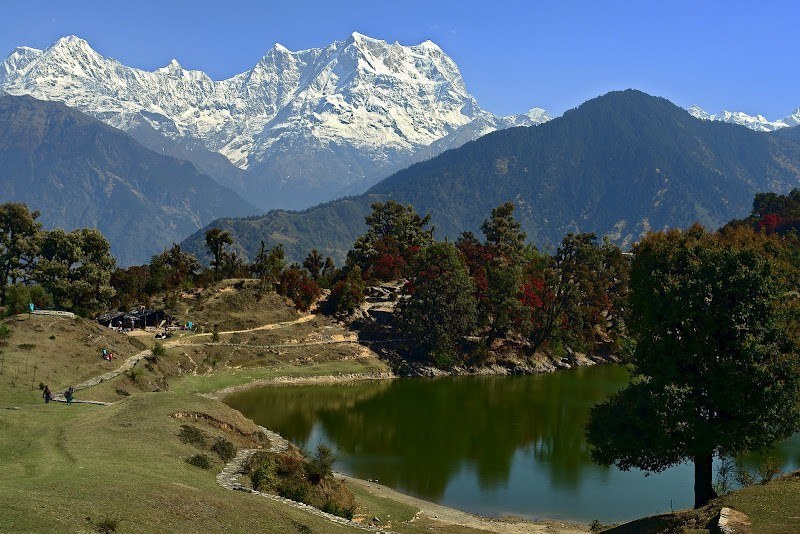
You can see the entire Chaukhamba massif (I, II, III, IV) reflected in the lake on a clear morning — a sight so perfect that photographers call it “the postcard that nature forgot to copyright.”
The Great Myth: Why the Pandavas Came Here
The most famous legend tied to Deoria Tal is from the Mahabharata.
After the Kurukshetra war, the Pandavas were searching for a secluded, pure-water lake where Yudhishthira could perform the final rites and answer the questions of Yaksha (who was actually Lord Yama in disguise). This episode is known as the Yaksha Prashna.
According to Kumaoni and Garhwali folklore, one of the lakes the Pandavas visited during their quest was Deoria Tal (the other major contender being Roopkund, but locals here swear it was Deoria Tal).
When Yaksha asked Yudhishthira the famous 124 questions on dharma, life, and truth, the Pandavas sat on the banks of this very lake. It is believed that the clarity of the water and the silence of the forest helped Yudhishthira give the correct answers that revived his brothers.
Even today, elderly priests in nearby villages narrate that the five large stones on the eastern bank of the lake are the “seats of the five Pandavas.”
The Second Legend: The Demon King Duryodhan and the Broken Reflection
There is a darker, lesser-known Garhwali story.
After the war, it is said that Duryodhan’s soul, still burning with rage, wandered the Himalayas looking for a water body pure enough to dissolve his sins. When he reached Deoria Tal and looked into its mirror-like surface, he saw not his own face but the faces of the 100 Kauravas he had led to death.
Horrified, he struck the water with his mace. That is why, say the locals, the lake is slightly L-shaped — the southern arm was “bent” by Duryodhan’s blow. Even today, on certain windy evenings, villagers claim you can hear a faint metallic clang from under the water.
The Love Story of King Indra and the Apsara Menaka
Another beautiful tale belongs to Indra, king of the gods.
Menaka, the celestial dancer, once displeased Indra and was banished to earth. She chose Deoria Tal as her place of penance because its reflection was so perfect that she could continue practicing her dance by looking at the lake instead of a mirror.
Indra, unable to stay away, would descend every dawn disguised as mist. The rhododendron flowers that bloom crimson around the lake in April–May are said to be drops of Menaka’s anklet-bells that fell during her dance.
When Menaka finally earned forgiveness, Indra lifted her back to heaven, but left behind the tradition that any woman who bathes in Deoria Tal on a full-moon night will be blessed with unmatched beauty and grace.

The Ghost of the British Officer (A Colonial-Era Story)
In 1923, a British forest officer named Captain H. R. Hutchinson camped at Deoria Tal while surveying timber lines. Locals warned him not to light a campfire after sunset — “the devtas don’t like smoke in their mirror.”
The captain laughed, lit a huge bonfire, and took photographs of the reflection with his new Leica camera.
That night, his Garhwali guide woke up to find the captain missing. They found his body the next morning near the water’s edge — eyes wide open, staring into the lake, with an expression of absolute terror. Strangely, his camera was intact, but every single negative was completely black, as if light itself had refused to be captured.
Since then, many campers have reported seeing a man in khaki shorts and a pith helmet walking along the lake at 3 a.m., always stopping at the exact spot where Captain Hutchinson died, staring silently into the water.
The Snake God and the Annual Fair
Every year on Nag Panchami, villagers from Sari, Mastura, and Bheti villages climb up to Deoria Tal carrying milk and flowers. They believe a giant golden serpent (Sheshnaag himself) lives at the bottom of the lake and protects the water.
Pouring milk into the lake is considered equivalent to worshipping Lord Vishnu lying on Sheshnaag in the cosmic ocean. Some years, when the milk is poured, concentric ripples appear from the exact center of the lake even on a windless day — a phenomenon scientists still can’t fully explain (though depth and underwater springs are suspected).
Practical Tips for the Modern Pilgrim
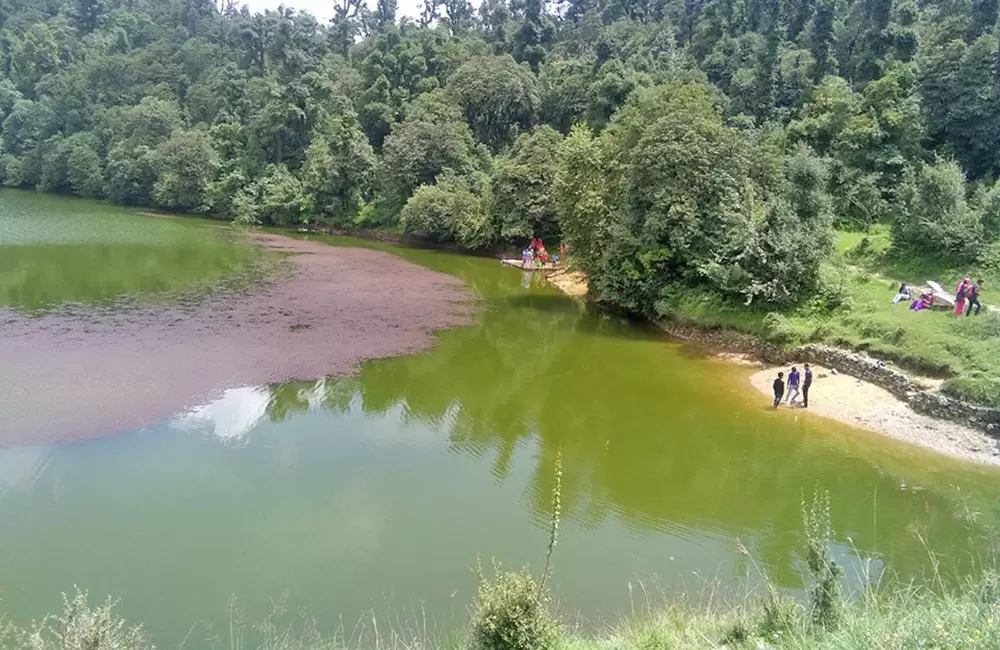
Stay options
Forest Rest House (2 rooms, book via Ukhimath GMVN)
Private campsites and homestays run by Sari villagers
Maggi point shacks that now serve pizza (yes, really)
What you will actually see reflected on a clear day
Chaukhamba massif, Kedar dome, Neelkanth, Thalaysagar, Mandani Parbat, and dozens of unnamed glittering peaks.
Birdwatcher’s paradise
Look for Himalayan monal, koklass pheasant, and the rare cheer pheasant near the oak forests.
Night sky
Because there is zero light pollution, the Milky Way literally drips into the lake. Many astrophotographers rate it higher than even Chandrashila.
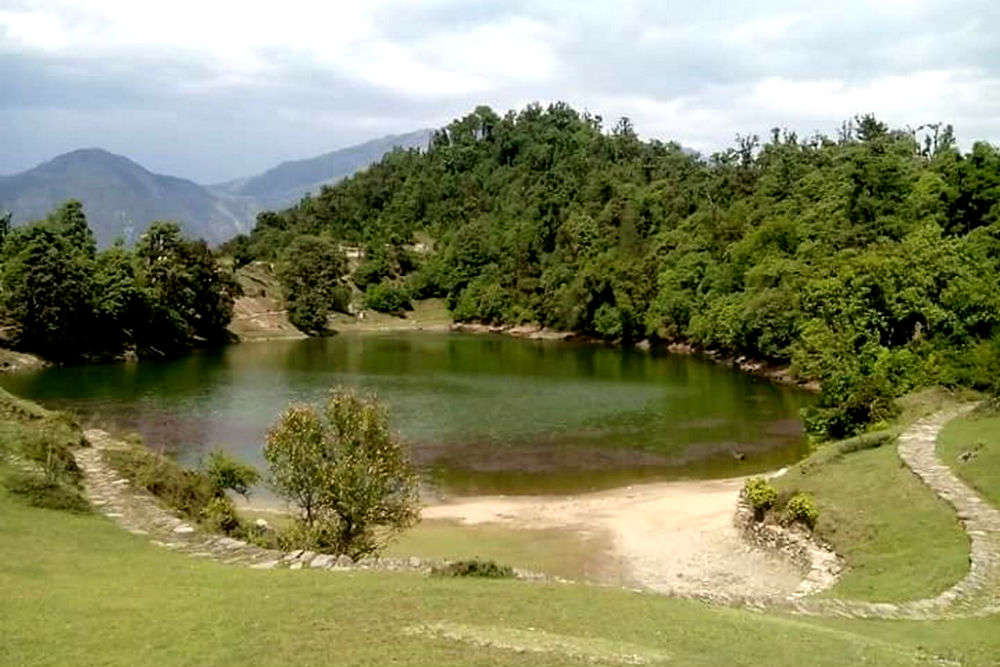
A Quiet Warning from the Locals
“Take nothing but photographs, leave nothing but footprints — and never, ever throw a stone into the lake to ‘see the ripples.’ The devtas are watching.”
Whether you come for the trek, the mythology, the reflection, or the silence, Deoria Tal will give you something no guidebook can describe: a moment when the mountains look straight into your soul — and let you look back.
If you listen carefully at dawn, you might still hear Yudhishthira answering the Yaksha, or Menaka’s anklets, or the faint echo of a British officer’s camera shutter that never clicked.
Deoria Tal keeps its stories alive.
Go, and become a part of one.1sFast
Frequently Asked Questions (FAQ)
Q1. Where exactly is Deoria Tal located?
A: Deoria Tal is in Rudraprayag district, Uttarakhand, India, at 2,438 m altitude. The trek starts from Sari village (also spelled Saari), which is 12–14 km from Ukhimath and about 200 km from Rishikesh.
Q2. How long and difficult is the trek?
A: 2.5 km one way from Sari village, moderate uphill on a well-marked stone-paved path. Takes 45 minutes to 1.5 hours depending on fitness. Even beginners and children above 8 years can do it easily.
Q3. Is the trek open throughout the year?
A: Yes, but heavy snow from mid-December to mid-March can cover the trail (crampons/micro-spikes needed). Monsoon (July–mid Sept) is slippery and full of leeches. Best windows: March–June and mid-September–December.
Q4. Can I reach the lake by car or bike?
A: No. Vehicles can go only till Sari village. From Sari, only walking or pony (for elderly/senior citizens).
Q5. Where can I stay at Deoria Tal?
A: Forest Rest House (2 rooms, ₹800–1200/night, book via GMVN Ukhimath)
Private eco-camps & dome tents (₹1500–3500 per person with meals)
Maggi-point homestays and basic huts run by locals (₹400–800)
Many people do sunrise trip and return same day.
Q6. Is camping allowed right on the lake shore?
A: Strictly NO. Camping is allowed only in designated areas 100–200 m away from the lake to protect the fragile ecosystem.
Q7. Are there food and water facilities?
A: 4–5 Maggi/chai shacks are open from March to December. They now serve pizza, momos, and noodles too. Carry your own water bottle; natural spring water is available near the temple.
Q8. Is there mobile network at the lake?
A: Jio and Airtel get 4G at the lake and on the meadow. BSNL works only in Sari village.
Q9. Can I visit Deoria Tal in one day from Chopta or Tungnath?
A: Yes. Chopta → Sari village is 25 km (1 hour drive). Many people combine Chopta–Tungnath–Chandrashila one day and Deoria Tal the next.
Q10. Which peaks are visible in the reflection?
A: On a clear day you can see Chaukhamba (I, II, III, IV), Kedar Dome, Neelkanth, Thalaysagar, Mandani, Janoli, Nilkantha, and more than 50 named/unnamed peaks.
Q11. Is the Yaksha Prashna story really connected to Deoria Tal?
A: Local folklore of Sari and nearby villages strongly claims so. There is no direct mention in the critical edition of Mahabharata, but oral tradition in Garhwal and Kumaon links several high-altitude lakes (including Deoria Tal) to the Pandavas’ search.
Q12. Why is the lake sometimes green and sometimes blue?
A: It depends on the sky, season, and algae bloom. In April–May it’s emerald green; post-monsoon and winter it turns deep sapphire blue.
Q13. Are there fish in the lake?
A: No fish survive because the lake freezes completely in winter and has very low oxygen levels.
Q14. Can I do Deoria Tal with kids or elderly people?
A: Yes. Many families with children 6+ and senior citizens (60–70 yrs) do it slowly. Ponies are available from Sari till the top (₹500–800 one way).
Q15. How much does a typical 2-day trip cost (2025 prices)?
A: Budget trip (shared cab + homestay + own food): ₹2500–3500 per person
Comfort trip (private cab + tent stay with meals): ₹6000–9000 per person
Q16. Is plastic banned?
A: Yes. Sari village has a strict “no single-use plastic” rule. You have to deposit ₹500–1000 refundable caution money at the village entry which is returned when you show your garbage on the way back.
Q17. When is the best time for photography and Milky Way shots?
A: New-moon nights in April–May and October–November. Zero light pollution makes it one of the best dark-sky spots near Delhi–Dehradun.
Q18. Is there any temple at Deoria Tal?
A: A small ancient temple dedicated to Devi (local goddess) is on the left side of the lake. Locals perform puja here during Nag Panchami.
Q19. Can I see snow at Deoria Tal?
A: Yes, from December to March. Sometimes the lake freezes completely and you can walk on ice.